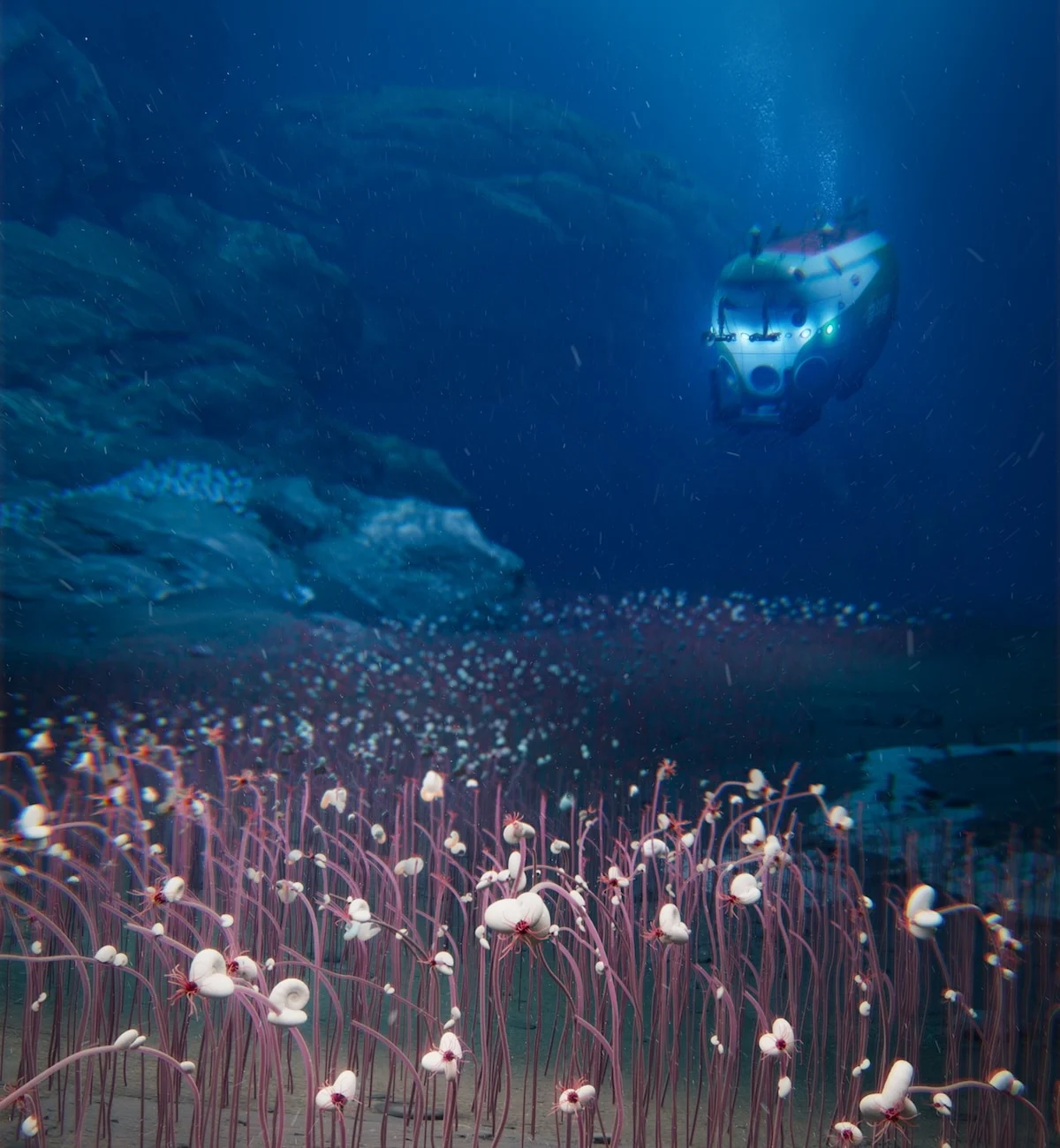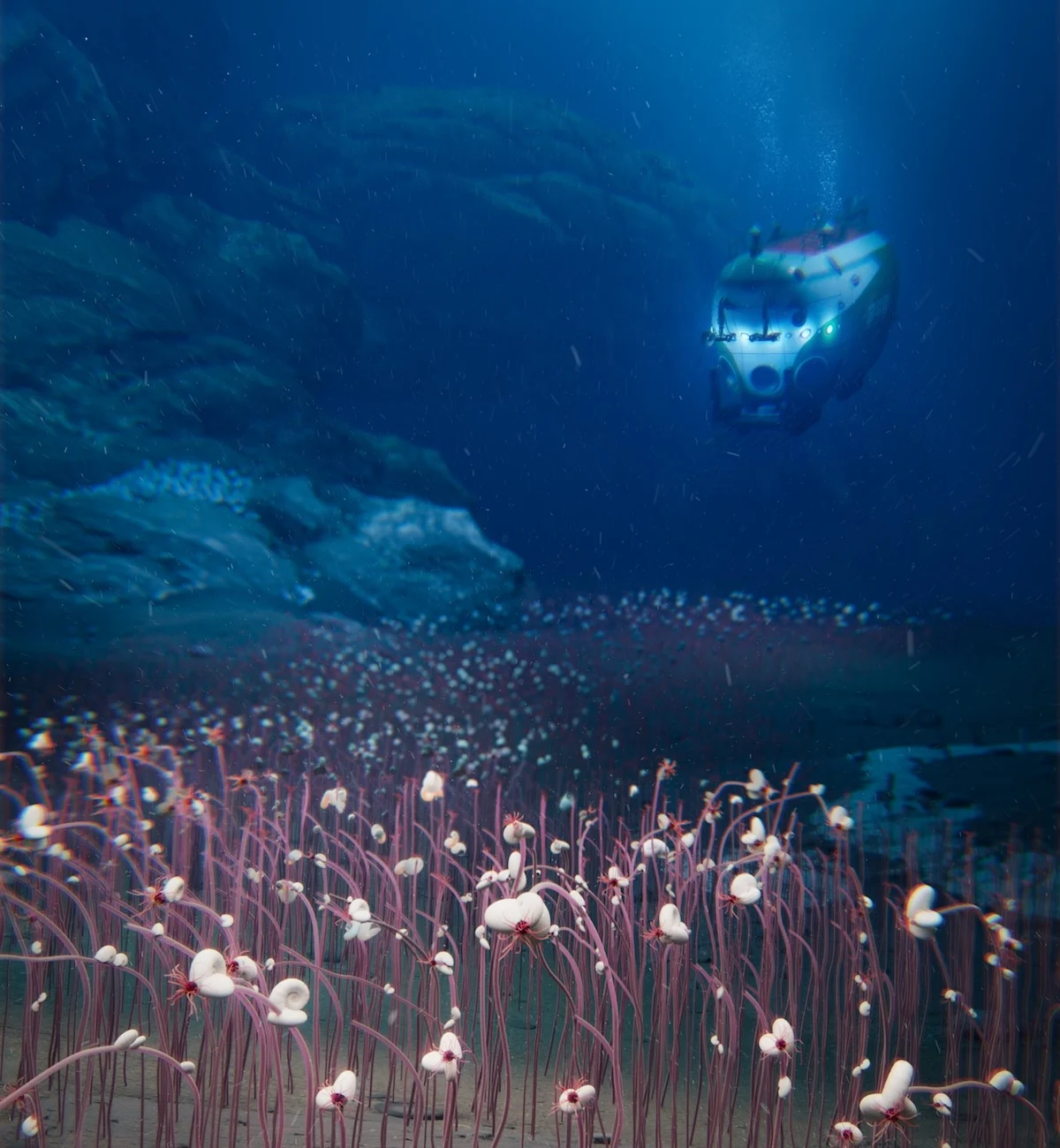
In a landmark revelation that fundamentally alters our understanding of biological limits, researchers have discovered a thriving, extensive ecosystem of complex animals nearly six miles beneath the surface of the Pacific Ocean. The study, published in the journal Nature, details the identification of thousands of mollusks, tubeworms, and crustaceans inhabiting the hadal zones of the Mariana, Kuril-Kamchatka, and western Aleutian Trenches.
This discovery represents the deepest and most expansive chemosynthesis-based community ever documented on Earth. Far from the "desolate" seafloor once envisioned by explorers, these regions are home to vibrant "oases" that exist in total darkness, sustained not by the sun, but by the chemical bounty of the Earth’s crust.
The Main Facts: Life at the Extremes
For decades, the hadal zone—the deepest parts of the ocean—was considered a biological desert, largely inhospitable to all but the most primitive single-celled organisms. The recent expedition, led by the Institute of Deep-sea Science and Engineering at the Chinese Academy of Sciences, utilized the manned submersible Fendouzhe to challenge this paradigm.
The research team documented complex life, including siboglinid polychaetes (tubeworms) reaching lengths of up to a foot, alongside dense clusters of bivalves and various invertebrates, including sea lilies, spiky crustaceans, and sea cucumbers. These organisms were observed at depths ranging from 3.6 to 5.92 miles. The sheer scale of this discovery is unprecedented, with the identified communities spanning a collective distance of over 1,500 miles across the deep-sea trench networks.
A Chronological Perspective: From "Desolate" to Vibrant
The exploration of the deep sea has always been defined by the difficulty of reaching its most extreme depths.
- 1960: The first human descent into the Mariana Trench took place, offering a fleeting glimpse of the abyss. Subsequent decades saw only a handful of visits, most famously by director James Cameron in 2012. Throughout these early missions, observers described the environment as "alien" and "desolate," noting the lack of visible, complex macro-fauna.
- The Fendouzhe Expedition: Throughout the previous year, the Fendouzhe submersible conducted 23 dedicated dives into the Mariana Trench. Unlike previous, shorter missions, these dives were systematic, utilizing high-definition imaging and isotopic analysis to map the seafloor.
- The Breakthrough: During these dives, the team began to notice consistent biological clusters. The transition from observing "isolated pockets" to recognizing an "extensive, interconnected network" of life marked the moment the discovery shifted from a minor biological curiosity to a major scientific paradigm shift.
- July 2025: The findings were formally published in Nature, confirming that these communities are not anomalies but, rather, widespread ecosystems fueled by geological processes.
Supporting Data: The Mechanics of Chemosynthesis
The primary scientific question raised by this discovery is how such large colonies survive at depths where no sunlight can penetrate. The answer lies in the process of chemosynthesis.
Unlike photosynthesis, which relies on solar energy to produce glucose, these deep-sea creatures thrive on chemical energy. The study highlights that the trenches are traversed by faults that act as conduits for hydrogen sulfide-rich and methane-rich fluids. These fluids rise from deep within the sediment layers. Isotopic analysis performed by the research team suggests that this methane is produced microbially from deposited organic matter, creating a "food base" for the animals.
The tubeworms were observed clustering around "snow-like" microbial mats, which act as the foundation of the local food web. This relationship mirrors the hydrothermal vent communities found at shallower depths but demonstrates that these biological processes are significantly more robust and far-reaching than previously calculated by carbon-cycling models.
Official Responses and Researcher Perspectives
The scientific community has reacted to the findings with both excitement and a call for caution. Lead author Xiatong Peng noted that the geological similarities between the explored trenches and other hadal zones suggest that these communities may be far more widespread than previously anticipated.

Co-author Mengran Du, a marine geochemist with the Chinese Academy of Sciences, described the sensory experience of the expedition: "Diving in the submersible was an extraordinary experience—like traveling through time. Each descent transported me to a new deep-sea realm, as if unveiling a hidden world and unraveling its mysteries."
Du emphasized that the significance of the find lies in the "astonishing abundance and diversity" of the life observed. The contrast between the "vast desert" of the deep-sea floor and the "vibrant oases" of the chemosynthetic colonies has forced oceanographers to revise their models of how biomass is distributed in the deepest reaches of our planet.
Implications for Science and Conservation
The discovery of these deep-sea communities arrives at a critical juncture for global environmental policy. As nations and corporations push for the commercialization of the ocean floor, the existence of these fragile, high-density ecosystems adds weight to the arguments of conservationists.
The Threat of Deep-Sea Mining
Deep-sea mining—the extraction of minerals like manganese, nickel, and cobalt from the seafloor—is currently the subject of intense international debate. Proponents argue that these minerals are essential for the global transition to green energy and battery production. However, ocean scientists warn that the seafloor is not an empty landscape of inert rock; it is a repository of biodiversity that we are only just beginning to understand.
If these chemosynthetic communities exist throughout the hadal trenches, mining operations could cause irreversible damage to ecosystems that have existed for millions of years. Because these organisms grow and reproduce in extreme, slow-moving environments, their ability to recover from physical disturbance is likely minimal. The International Seabed Authority (ISA) currently faces the daunting task of establishing a regulatory framework that balances economic interest with the protection of these "last wild zones."
Rewriting the Textbooks
Beyond the immediate political implications, this study forces a rewrite of biological and geological textbooks. Our previous understanding of deep-ocean carbon cycling—which assumed that life at these depths was largely dependent on "marine snow" (detritus falling from the surface)—is now incomplete. We must now account for the significant contribution of localized, subsurface chemosynthesis.
Furthermore, this discovery expands our understanding of the potential for life elsewhere in the universe. If complex, multicellular life can thrive in the high-pressure, lightless, and chemically volatile environments of the Mariana Trench, the possibility of life existing in the subsurface oceans of icy moons—such as Jupiter’s Europa or Saturn’s Enceladus—becomes significantly more plausible.
Conclusion: A Hidden Frontier
The discovery by the Fendouzhe team is a sobering reminder of how little we know about our own planet. While we have mapped the surface of Mars with greater precision than the depths of our own oceans, we are now learning that the "abyss" is not a void. It is a complex, living system that operates on a timeline and a chemistry entirely alien to our terrestrial experience.
As we move forward, the challenge for humanity is twofold: to continue the exploration of these deep-sea frontiers with the reverence they deserve, and to ensure that our pursuit of progress does not destroy the very secrets we are only just beginning to uncover. The "vibrant oasis" found in the Mariana Trench serves as a testament to the resilience of life and a warning that the deepest parts of our world are far more fragile than their depth might suggest.