Smart speakers have evolved from simple voice-activated timers into the central nervous system of the modern household. As we head into the latter half of 2026, these devices serve as the essential bridge between our digital lives and our physical environments. They function as high-fidelity audio systems, personal assistants capable of complex reasoning, and interoperable hubs that unify disparate smart home gadgets.
Choosing the right speaker is no longer just about audio quality; it is a commitment to an ecosystem. Whether you are deeply invested in Amazon’s Alexa, Google’s Gemini, or Apple’s HomeKit, your choice of hardware will dictate your smart home experience for years to come.
Main Facts: The Current State of Smart Audio
As of September 2026, the market has reached a point of maturity where "smart" is the baseline expectation. Consumers are moving away from proprietary "walled gardens" toward universal standards like Matter and Thread, which allow devices from different manufacturers to communicate seamlessly.
The shift toward on-device and cloud-based AI, such as Amazon’s Alexa+ and Google’s Gemini, has transformed how we interact with these speakers. Commands are no longer limited to rigid syntax; modern speakers can now handle multi-turn conversations, contextual follow-ups, and complex, multi-part requests.
Chronology: The Evolution of the Smart Speaker
The trajectory of the smart speaker market reflects the broader advancement of consumer electronics:
- 2014–2017: The "Inception Era," defined by the original Amazon Echo. Speakers were primarily novelty items used for weather updates and music playback.
- 2018–2021: The "Expansion Era," marked by the introduction of the Google Nest Mini and Apple’s original HomePod. Smart home integration became a priority, with manufacturers pushing for whole-home coverage.
- 2022–2024: The "Standardization Era," where the industry rallied around the Matter protocol to solve the fragmentation of smart home devices.
- 2025–2026: The "Generative AI Era." With the integration of Large Language Models (LLMs) into voice assistants, speakers have transitioned from basic command-and-control tools into conversational AI partners.
Supporting Data: Why Ecosystem Matters
When analyzing the current market, performance metrics are divided into three categories: Audio Fidelity, Assistant Intelligence, and Interoperability.
1. The Versatile Performer: Amazon Echo Dot Max
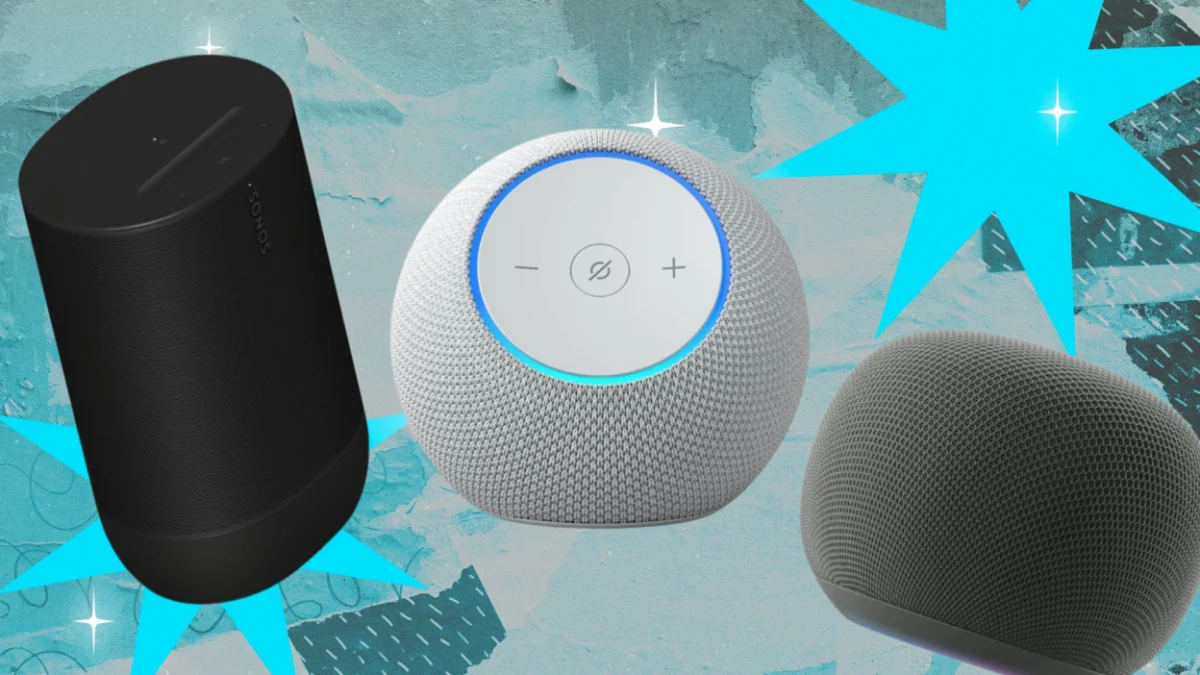
The Echo Dot Max remains the gold standard for the average consumer. Its strength lies in its universal compatibility. By supporting Wi-Fi 6E, Bluetooth 5.3, and the Matter/Thread/Zigbee standards, it acts as a "Swiss Army Knife" for the home.
- Key Advantage: It is platform-agnostic. Whether you use a Windows PC, an iPhone, or a Spotify-heavy music library, the Echo Dot Max integrates without friction.
- Technical Note: It utilizes Amazon’s Alexa+ AI, which excels at routine automation and home management, making it superior for controlling smart lighting, locks, and climate sensors.
2. The AI Powerhouse: Google Home (2026 Edition)
Google’s latest iteration of the Home speaker is a testament to the power of Gemini. Unlike older iterations, this device is designed for complex reasoning.

- Key Advantage: Contextual awareness. You can ask, "What is the weather like for my team’s next game?" and the device will provide a tailored answer based on your personal calendar and search history.
- Data Point: With a 58mm internal driver, reviews from CNET and others indicate it provides the best audio-to-price ratio in the $100 segment, significantly outperforming the legacy Nest Mini.
3. The Premium Ecosystem Choice: HomePod mini
Apple continues to cater to its "walled garden" users with the HomePod mini. While it is the most restrictive in terms of third-party integration, it provides an unparalleled experience for those within the Apple ecosystem.
- Key Advantage: Native integration with iMessage, Apple Music, and the Find My network. The ability to transfer a song from an iPhone to a HomePod simply by bringing the phone close to the speaker remains a peak example of seamless UX design.
- Computational Audio: Apple’s proprietary software allows this compact device to simulate a soundstage typically reserved for much larger, floor-standing speakers.
4. The Portable Exception: Sonos Move 2
For those who refuse to be tethered to a wall outlet, the Sonos Move 2 is the outlier. With an IP56 rating, it is built for outdoor durability.
- Technical Highlight: It features dual left- and right-channel tweeters, providing true stereo sound—a rarity for portable smart speakers. It bridges the gap between a high-end audiophile speaker and a portable utility device.
Official Responses and Industry Outlook
Industry analysts note that while hardware is becoming commoditized, the "Intelligence Layer" (the AI assistant) is the new battleground.
In response to market demands for privacy, Google and Amazon have both issued statements regarding their 2026 privacy architectures. Both companies have shifted toward "Local-First" processing, where basic voice commands are processed on-device rather than in the cloud, reducing latency and increasing data security.
"The goal for 2026 and beyond," says a spokesperson for a major smart home consortium, "is to make the technology invisible. The best smart speaker is one you don’t have to manage—it simply responds to your needs before you have to articulate them."
Implications for the Consumer
As you evaluate your next purchase, consider the following implications:
- Subscription Costs: The "freemium" model is creeping into smart assistants. As seen with Google’s Gemini, the most advanced features—such as deep integration with home security cameras or complex calendar analysis—may eventually require a monthly subscription. Factor this into your long-term budget.
- Longevity: Look for devices with the latest Wi-Fi standards (Wi-Fi 6E or 7). These devices are "future-proofed" for the next five years, ensuring that your home network won’t be bogged down by a dozen connected speakers.
- The "Stereo" Trap: Many mid-range speakers, like the Echo Dot Max, are excellent for voice and casual listening, but they are not replacements for a dedicated home theater setup. If your priority is music, look for speakers that allow for "stereo pairing," which essentially doubles your investment but triples the audio quality.
Final Recommendation
- Choose the Amazon Echo Dot Max if you want the most compatibility and the widest range of smart home device support.
- Choose the Google Home if you are a power user who wants the most intelligent AI assistant available.
- Choose the Apple HomePod mini if your life is already fully managed within the Apple ecosystem and you prioritize design and ease of use.
- Choose the Sonos Move 2 if you require high-fidelity audio that can move from the living room to the patio without sacrificing smart features.
The smart home is no longer a futuristic dream; it is an accessible reality. By selecting the right speaker today, you are laying the foundation for a more efficient, responsive, and connected home for the decade ahead.