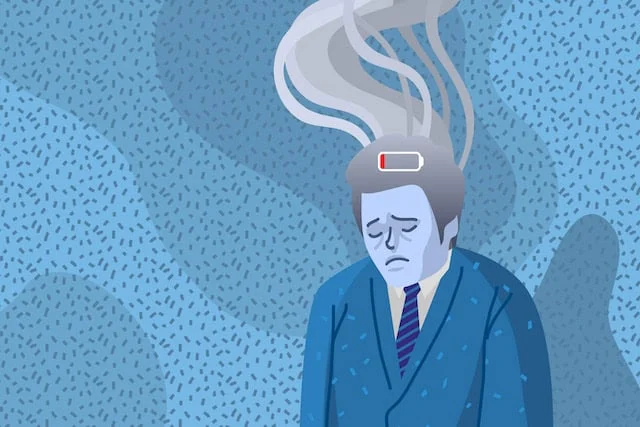
Main Facts: The Anatomy of Modern Digital Compulsion
In an era defined by hyper-connectivity, remote work, and algorithmic validation, the boundary between productive diligence and psychological compulsion has grown increasingly blurred. A recent psychological case study shared by English educator and self-awareness tool creator Kaies Saidi sheds light on a silent epidemic sweeping through knowledge workers, creators, and professionals: post-completion digital rumination.
The phenomenon is characterized by an obsessive need to monitor analytics dashboards, refresh project management portals, and tweak finished work long after productive effort has ceased. Rather than driving tangible results, this behavior functions as a sophisticated emotional defense mechanism—a way to metabolize the acute discomfort of uncertainty when outcomes are entirely out of human hands.
Core Trigger: Deep emotional investment in an outcome that requires time rather than immediate action.
Underlying Driver: An aversion to powerlessness, masquerading as high standards, thoroughness, and work ethic.
The Antidote: Cultivating cognitive restraint—learning to sit with the discomfort of waiting without trying to engineer artificial control.
Chronology: The Anatomy of an Evening Loop
To understand how modern professionals fall into this trap, it is helpful to examine the step-by-step progression of a typical episode of digital compulsion, as documented in contemporary psychological observations.
Phase 1: The Threshold of Completion
The workday has officially concluded. Critical tasks are finalized, core systems are functioning, and no immediate fires require attention. By all logical metrics, the laptop should be shut. Yet, a subtle, physical tension manifests—shoulders tighten, breathing becomes shallow, and a low-grade unease settles in the chest.
Phase 2: The Rationalization
The mind begins to construct plausible justifications for continued engagement. Phrases like "Just one more check,""Small mistakes can slip through," or "Early feedback is valuable" provide moral cover. The individual convinces themselves that they are exercising exceptional diligence.
Phase 3: The Circular Loop
The browser opens. Analytics are scanned. Nothing has changed. Instead of closing the tab, the user navigates to a secondary project, reads an old thread, or compares their metrics against industry benchmarks. Each action delivers a micro-dose of engagement, immediately followed by a resurgence of doubt. Ten tabs deep, the individual is no longer gathering information; they are seeking emotional soothing.
Phase 4: The Epiphany and Resistance
Self-awareness surfaces, but paradoxically, it changes nothing. Knowing why the behavior occurs ("I am anxious about the outcome") becomes a comfortable intellectual exercise that replaces the difficult act of stopping. When the individual finally forces their hand to the trackpad with the intent to close the screen, the body reacts as if facing a genuine threat. The mind generates a fresh wave of panic: What if something breaks? What if someone is working harder?
Phase 5: The Dark Screen and Discomfort
The laptop is shut. Relief does not magically appear. Instead, the mind races, reviewing potential failures and imagined disasters. Walking away to get a glass of water acts as a trigger to nearly reopen the device. Yet, as the minutes tick by without digital intervention, the storm begins to subside.
Phase 6: The Morning After Reality Check
Dawn breaks. The project remains intact. The metrics are modest, but unbroken. The world did not collapse because a human being stepped away from a screen for twelve hours.
Supporting Data: The Cost of Endless Connectivity
While cultural narratives often praise relentless hustle, empirical research into digital work habits reveals a darker side to constant monitoring.
Cognitive Fragmentation: According to workplace productivity studies, knowledge workers switch tasks or check communication channels every 3 to 5 minutes. Recovering deep focus after a single interruption takes an average of 23 minutes.
The Dopamine Trap: Refreshing dynamic dashboards triggers intermittent reinforcement schedules—the exact psychological mechanism that makes slot machines addictive. Users check not because they expect a reward every time, but because sometimes a change occurs, keeping the compulsion alive.
Burnout Metrics: Workplace wellness surveys indicate that over 65% of remote and hybrid professionals struggle to truly disconnect at the end of the day, with digital "after-hours checking" cited as a primary contributor to chronic fatigue and emotional exhaustion.
+-----------------------------------------------------------------+
|                   THE DIGITAL COMPULSION CYCLE                  |
|                                                                 |
|   [ Completed Work ] ---> [ Uncertainty / Fear of Powerlessness ]
|          ^                                           |          |
|          |                                           v          |
|   [ Temporary Relief ] <--- [ Refresh Dashboard / Tweak Details ]
+-----------------------------------------------------------------+
Official Perspectives and Expert Responses
Mental health professionals and productivity experts are increasingly addressing the psychological toll of "always-on" work culture.
Dr. Helena Vance, a cognitive behavioral therapist specializing in digital addictions, notes that modern software is intentionally designed to exploit human vulnerability to uncertainty.
"Dashboards, live metrics, and real-time notifications are engineered to keep us in a state of perpetual vigilance," explains Dr. Vance. "When we care deeply about a project, our brains treat professional uncertainty as a physical danger signal. Because we cannot fight or flee from a data point, our nervous system settles on the closest substitute: frantic micro-activity."
Kaies Saidi, creator of PersonaHaven and author of the underlying framework for these insights, emphasizes that traditional self-awareness is often weaponized by perfectionists.
"For years, I could diagnose my own impatience and perfectionism with clinical precision," Saidi writes. "I realized that understanding my habit had simply become a sophisticated, socially acceptable substitute for actually stopping it. True growth doesn’t happen when we can explain our flaws; it happens when we are willing to tolerate the unbearable lightness of doing nothing."
Implications: Redefining Productivity in the Age of Uncertainty
The realization that excessive work is sometimes a disguised form of emotional avoidance carries profound implications for modern workplaces, educational institutions, and personal well-being.
1. Shifting from Activity to Restraint
In industrial economies, productivity was measured by physical motion—hours logged, units produced. In the knowledge economy, true productivity often requires restraint. Knowing when to stop working is just as vital as knowing how to start. When time is the only remaining variable capable of improving an outcome, any further human intervention is not work; it is interference.
2. The Diagnostic Question
To combat compulsive digital behaviors, experts recommend implementing a simple mental filter before executing any task on a closed project:
"What specific, actionable information do I expect this next step to reveal?"
Specific Answer: There is a genuine problem to fix or a decision to make. Proceed.
Vague Answer: You are searching for emotional reassurance. Close the browser.
3. Embracing the Discomfort of Waiting
Society often equates patience with passivity and weakness. Cultivating mental resilience requires reframing waiting not as a failure of drive, but as an act of disciplined maturity. It is an acknowledgment that human effort has boundaries, and that allowing ideas, projects, and creative works to mature independently is a mandatory part of professional growth.
As professional environments continue to evolve, the ultimate competitive advantage may no longer belong to those who can work the longest hours, but to those who possess the psychological fortitude to close the laptop, leave the dashboard behind, and trust the quiet space between effort and result.