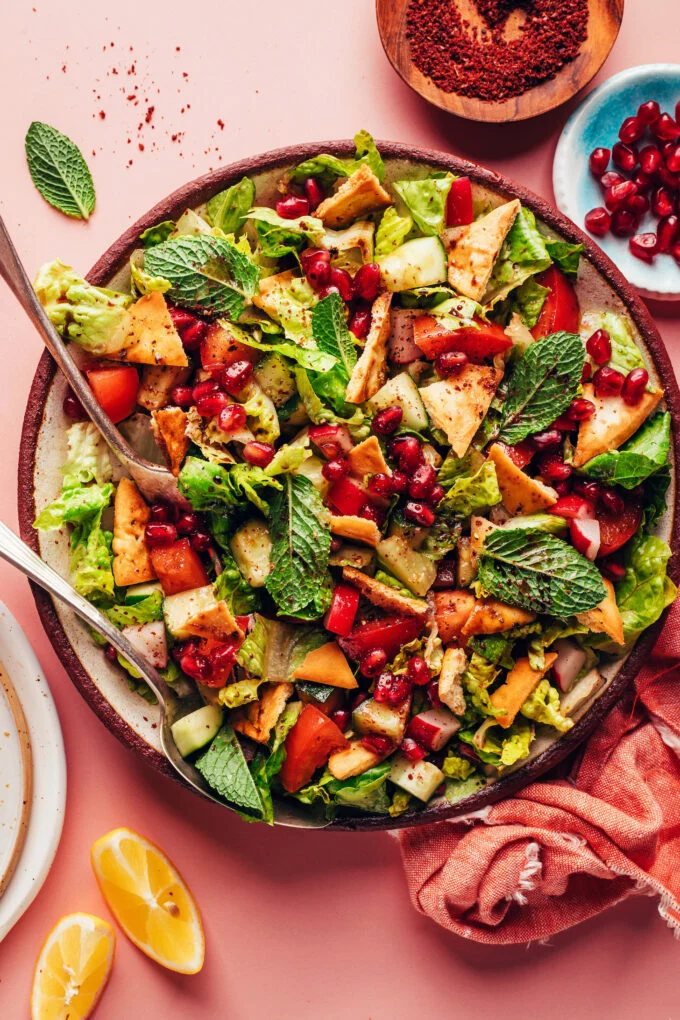
In the fast-paced landscape of modern culinary arts, the challenge of maintaining authentic, vibrant, and nutritious dining habits during the work week often feels like an impossible balancing act. However, the rise of "weeknight-friendly" Mediterranean cuisine is proving that speed does not have to come at the expense of flavor. Among the most popular, time-efficient, and culturally significant dishes making a resurgence is the Levantine Fattoush salad. Recently, the culinary experts at Minimalist Baker have introduced a refined, one-bowl methodology that brings this classic salad to the table in just 20 minutes, offering a masterclass in efficiency for the home cook.
Main Facts: What Defines a Classic Fattoush?
Fattoush is far more than a simple vegetable medley; it is a storied component of Levantine cuisine, originating from the Eastern Mediterranean regions encompassing Lebanon, Syria, Jordan, and Palestine. At its heart, the dish is a celebration of textures and the clever utilization of leftovers.
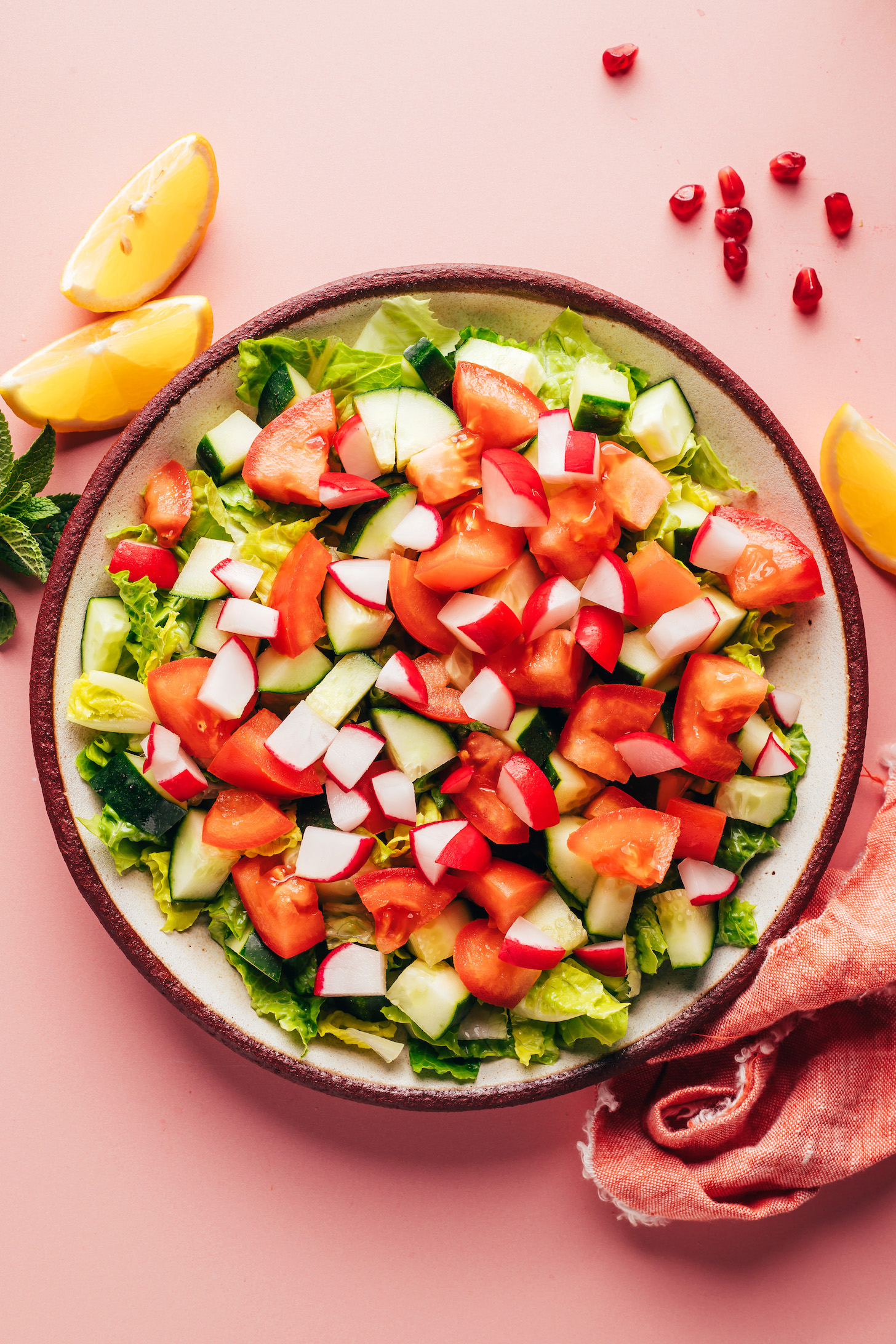
The traditional composition of a fattoush salad relies on a foundation of garden-fresh vegetables—typically romaine lettuce, radishes, cucumbers, and tomatoes—tossed with a distinctive, tangy dressing. What separates a standard garden salad from a true fattoush is the inclusion of khubz (fried or toasted flatbread) and the essential use of sumac. Sumac, a deep-red spice derived from the dried and ground berries of the Rhus shrub, provides a signature tart, lemon-like acidity that is the hallmark of the dish.
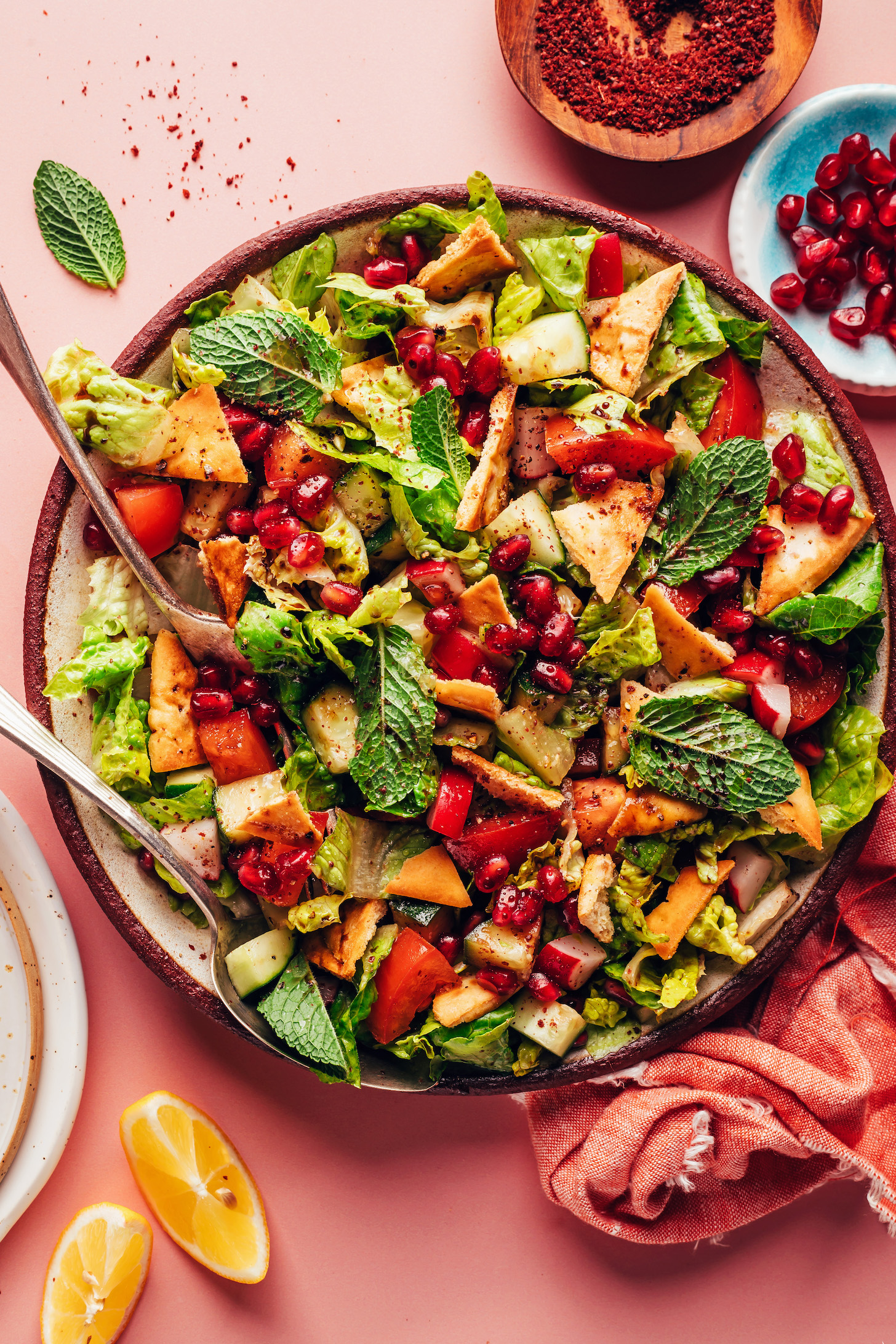
Modern interpretations, such as the one-bowl version popularized by Minimalist Baker, streamline the process by combining these elements into a cohesive, highly accessible format. By utilizing store-bought pita chips and a simplified pomegranate-molasses-based dressing, the dish transitions from a labor-intensive preparation to a rapid 20-minute assembly, making it a viable option for a Tuesday night dinner.
Chronology of a 20-Minute Preparation
For the time-conscious chef, the sequence of preparation is paramount. The following breakdown illustrates how to achieve a restaurant-quality result in less than a half-hour.
0:00–0:05: The Foundation and Prep
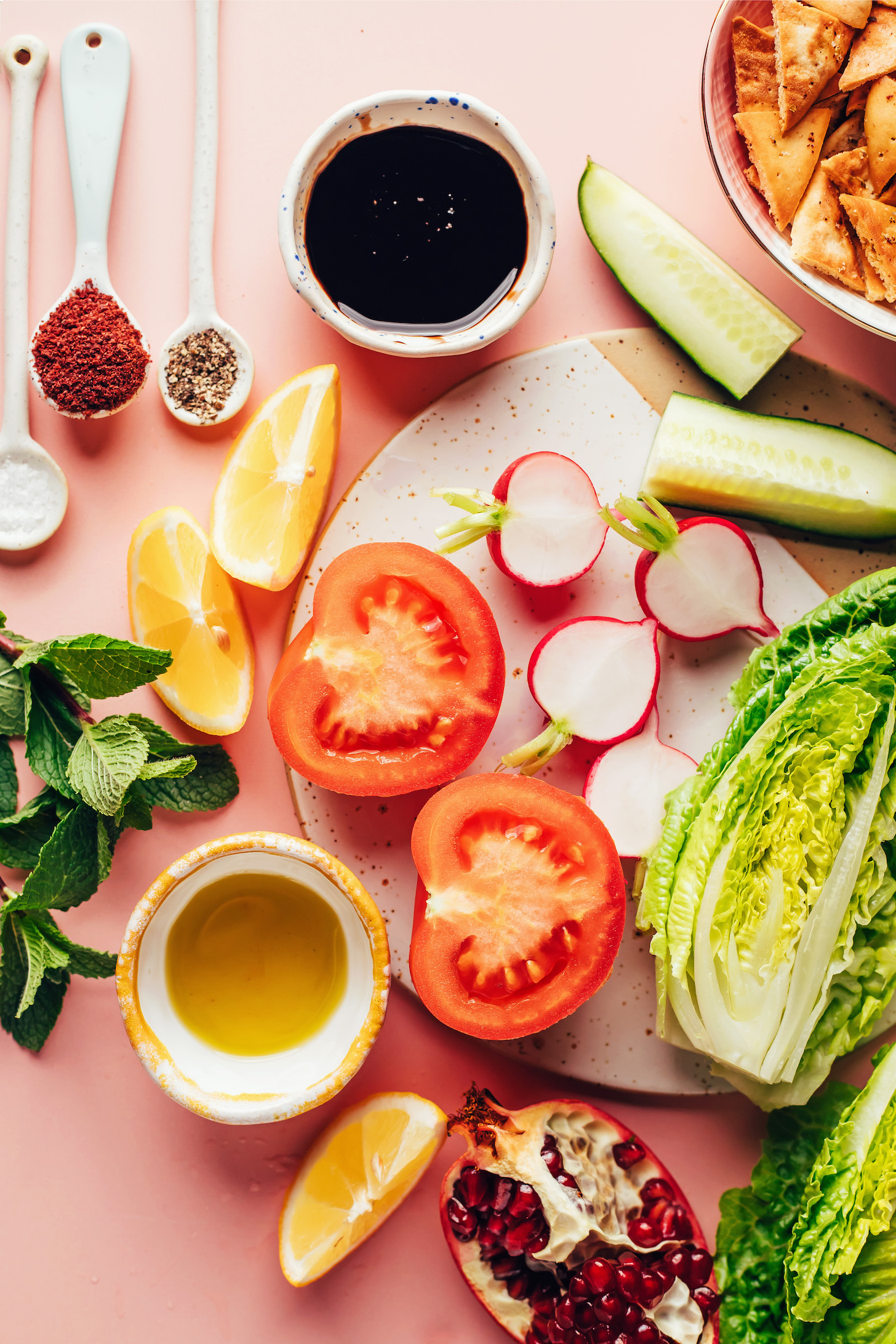
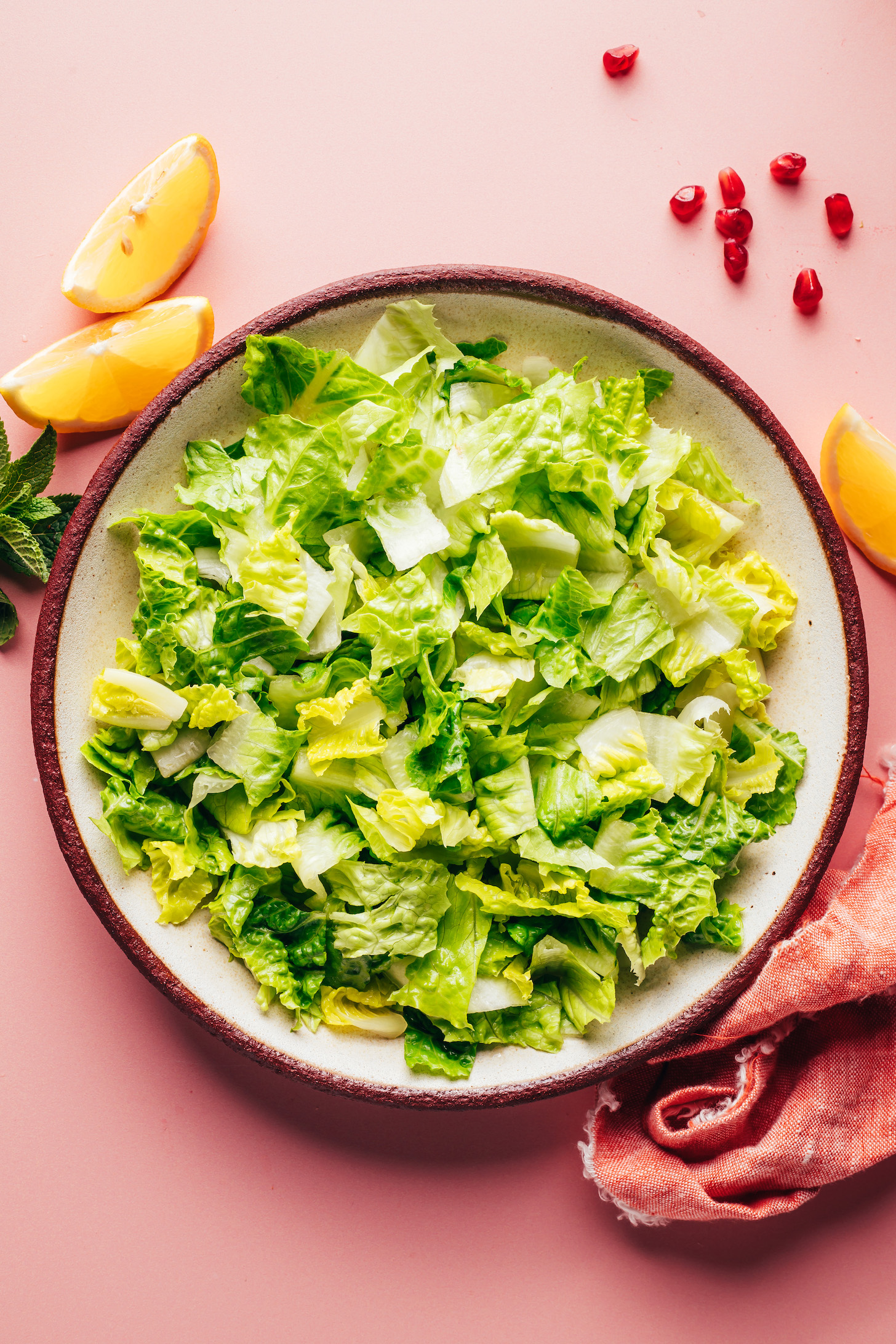
The process begins with the base. Crisp romaine lettuce is washed, dried, and chopped into bite-sized pieces. Fresh vegetables—cucumber, tomato, and radish—are diced uniformly. Consistency in the chop is essential to ensure that each bite contains a balance of the various textures.
0:05–0:12: The Dressing and Emulsion
Unlike complex dressings that require emulsification in a blender, a traditional fattoush dressing relies on the direct interaction of its acidic components. By whisking together lemon juice, high-quality pomegranate molasses, sumac, salt, and black pepper directly in the serving bowl, the home cook creates a base that is both potent and bright. Optional additions, such as a touch of maple syrup or olive oil, can be introduced at this stage to temper the sharpness of the molasses or the acidity of the lemon, depending on the individual’s palate preference.
0:12–0:17: The Toss and Integration
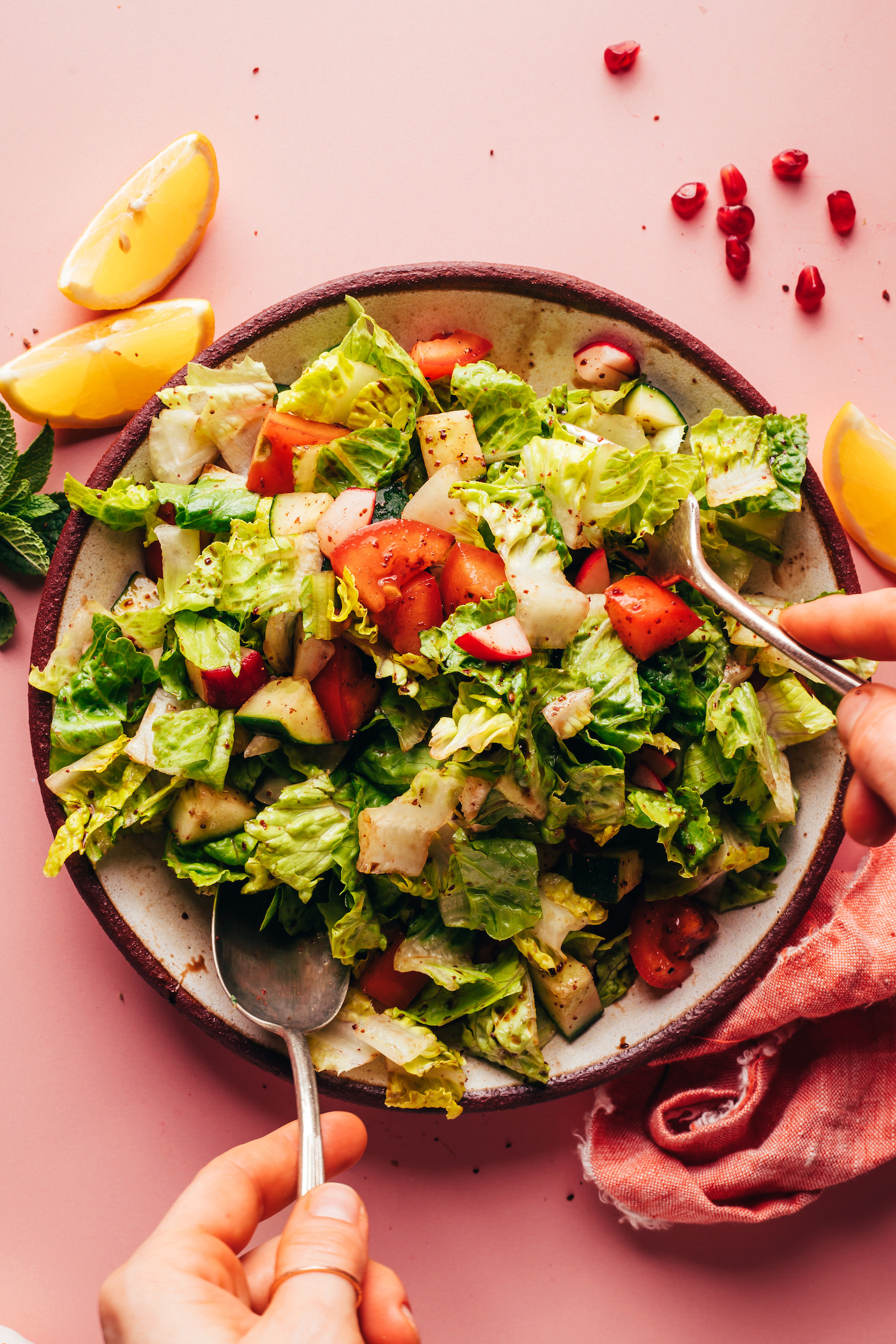
The chopped vegetables are introduced to the dressing. By tossing the greens and produce before adding the bread, the cook ensures that each vegetable is evenly coated with the dressing without prematurely softening the crispy elements of the salad.
0:17–0:20: The Final Flourish
The final, and perhaps most important, step is the inclusion of texture and aromatics. Whole fresh mint leaves are added for their cooling, peppery bite. Finally, the pita chips—either store-bought for speed or homemade if one has extra time—are folded in at the last possible second. This ensures that the bread retains its crunch rather than absorbing the dressing, which is the secret to a high-quality salad experience.
Supporting Data and Nutritional Composition
The appeal of the fattoush salad extends beyond its taste; it is a nutritional powerhouse. A single serving, typically calculated as a side portion, contains approximately 127 calories, making it an excellent low-calorie, nutrient-dense choice.
From a macronutrient perspective, the salad is relatively light, with roughly 4.1 grams of fat (mostly derived from olive oil) and 21.6 grams of carbohydrates. Crucially, the fiber content—averaging 4 grams per serving—highlights the benefit of using fresh, fibrous vegetables like romaine and radish. Furthermore, the salad is rich in micronutrients, providing a significant boost of Vitamin A (562 IU) and Vitamin C (14 mg) per serving, which are essential for immune health and skin vitality.
The inclusion of sumac is not merely for flavor; it is a spice noted in various studies for its antioxidant properties. Similarly, pomegranate molasses, a staple in this recipe, adds a complex depth of flavor without the need for processed sugars, provided the user selects a high-quality, pure extract.
Official Responses and Culinary Reception
The reception of this "1-Bowl" approach has been overwhelmingly positive within the digital culinary community. Home cooks have praised the accessibility of the recipe, specifically citing the ability to utilize "day-old" pita bread—a practice that aligns with the historical origins of fattoush as a "peasant" dish designed to prevent food waste.
Culinary experts note that while the "quick" version deviates slightly from the authentic, labor-intensive methods of traditional Levantine households, it succeeds in democratizing the cuisine. By removing the barrier of complex technique, it encourages individuals to incorporate more plant-based meals into their weekly rotation. The "1-bowl" aspect is specifically highlighted by busy parents and working professionals as a major selling point, as it drastically reduces the post-meal cleanup, a common deterrent to home cooking.
Implications for Modern Dining
The shift toward simplified, globally inspired recipes like this fattoush salad has broader implications for how we view the "weeknight meal." It suggests a movement away from the processed, pre-packaged convenience foods that dominated the mid-20th century and toward a "convenience-fresh" hybrid.
- Reduction of Food Waste: By encouraging the use of leftover bread and seasonal vegetables, this recipe serves as a practical tool for sustainability in the kitchen.
- Cultural Appreciation: Providing a simplified version of a traditional dish can act as a gateway for home cooks to explore more authentic Levantine ingredients, such as sumac and pomegranate molasses, which might otherwise be overlooked.
- Meal Flexibility: The recipe’s versatility is a core feature. By adding chickpeas, the salad is elevated from a side dish to a satiating vegetarian main, making it a flexible solution for various dietary needs, including vegan and, with the use of gluten-free pita, gluten-free diets.
Conclusion: Elevating the Weeknight Routine
The 20-minute fattoush salad is more than just a quick fix; it is a testament to the fact that high-quality, vibrant, and culturally rich food is achievable even under the constraints of a busy schedule. By focusing on the quality of the base ingredients—the crispness of the romaine, the tang of the sumac, and the integrity of the pita—the home cook can create a dining experience that feels both indulgent and healthful.
As we continue to navigate the demands of modern life, the importance of these "inspired takes" on global classics cannot be overstated. They provide the necessary nutrition to sustain us, the creativity to keep us interested, and the efficiency to ensure we can return to our busy lives without sacrificing the pleasure of a well-prepared meal. Whether served alongside a hearty lentil fesenjān or enjoyed as a light lunch on a warm day, the easy fattoush salad stands as a reminder that the best food is often the simplest to make.