
In the high-stakes world of technology and information security, assessing risk is a daily discipline. For professionals like Joe White, a veteran of the tech and startup sectors with over 25 years of experience, identifying vulnerabilities, questioning assumptions, and making critical decisions under pressure are professional second nature. Risk is rarely viewed as an abstract concept; it is a calculated equation where the consequences of failure can be catastrophic.
Yet, even those trained to spot hidden flaws can suffer from the ultimate blind spot. At one of the most critical junctures of his life, White failed to recognize a severe vulnerability residing within himself: advanced, cognitive-level burnout. The fallout was devastating, culminating in the loss of approximately $3 million in retirement savings through an offshore cryptocurrency lending platform.
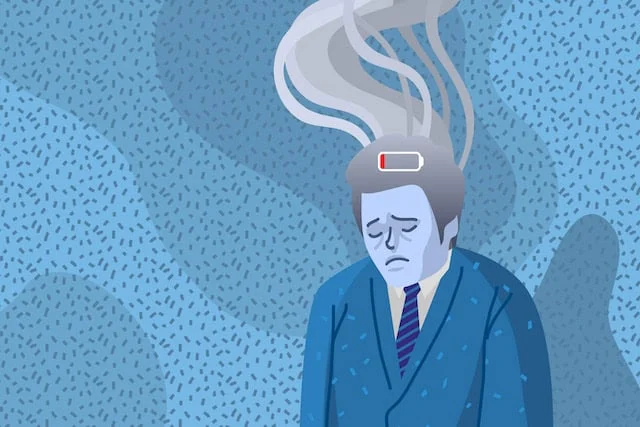
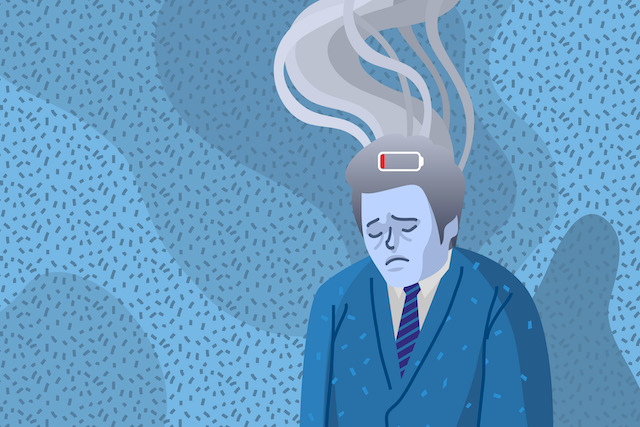
White’s harrowing experience offers a profound and cautionary tale about the insidious nature of modern professional burnout. It exposes a dangerous psychological paradox: when the mind is exhausted, it becomes profoundly ill-equipped to diagnose its own deterioration, often maintaining a facade of high-functioning capability while quietly stripping away the individual’s ability to protect their own interests.
Main Facts: The Anatomy of a High-Stakes Financial Loss
The core of White’s narrative centers on a catastrophic personal and financial loss that occurred during a period of intense professional strain.
- The Loss: White lost approximately $3 million—representing decades of accumulated retirement savings—to an offshore cryptocurrency lending platform whose underlying risks were heavily misrepresented.
- The Culprit: While external bad actors and misrepresented investment vehicles played a primary role, White identifies severe, accumulated professional burnout as the primary internal catalyst that blinded him to obvious red flags.
- The Paradox of Functioning: Unlike popular cultural depictions of burnout—where individuals become bedridden, completely paralyzed, or unable to perform basic daily tasks—White remained outwardly functional. He continued solving complex technical problems, leading high-stakes discussions, and executing decisions.
- The Ultimate Security Flaw: Having spent his career designing layered defenses and redundancy systems for corporate infrastructures, White inadvertently created a personal decision-making architecture with a single point of failure: his own overworked, cognitively depleted brain.
Chronology: The Slow Creep of Cognitive Depletion
To understand how a seasoned security expert could fall victim to a multi-million-dollar financial misstep, one must examine the timeline of burnout. It is rarely a sudden collapse; rather, it is a gradual erosion of mental faculties that normalizes dysfunction over years.
Phase 1: The Normalization of Pressure
For over two decades, White navigated the relentless demands of the technology and startup sectors. In these environments, working grueling hours, sleeping irregularly, and operating under a perpetual state of emergency are normalized as standard operating procedure. Pushing through exhaustion becomes a badge of honor.
Phase 2: The Onset of the Feedback Loop
Over years of sustained pressure, White’s brain adapted to a state of chronic depletion. Because he had spent his career relying on his intellect to solve high-pressure problems, he used that very same impaired intellect to assess his mental state. This created a dangerous feedback loop: Because I am still working and meeting deadlines, I must be fine.
Phase 3: The Critical Vulnerability
By the time White evaluated the offshore cryptocurrency lending platform, his cognitive bandwidth was severely diminished. Subtle inconsistencies, warning signs, and incomplete disclosures that would have normally triggered rigorous professional skepticism were glossed over. The brain fog of burnout had quietly eroded his baseline critical thinking skills.
Phase 4: The Irreversible Consequence
The financial transactions were executed, binding White to a high-risk venture without the safety checks he would normally apply in professional settings. By the time the true nature of the platform became clear, the financial consequences were absolute and irreversible.
Phase 5: The Post-Crisis Realization and Pursuit of Accountability
In the three years following the loss, White embarked on a dual journey: pursuing legal and financial accountability regarding the cryptocurrency platform, and undertaking a profound psychological reckoning to understand how his own internal state allowed the catastrophe to happen.
Supporting Data and Behavioral Insights: The Illusion of High Output
White’s case study aligns with growing psychological and neurological research surrounding chronic workplace stress and executive burnout. While organizations often measure employee wellness through productivity outputs, clinical data indicates that cognitive flexibility, emotional regulation, and risk assessment are among the first executive functions to degrade under chronic exhaustion.
- The Functioning Myth: Clinical psychologists note that high-achieving professionals—particularly those in tech, law, and medicine—frequently suffer from "functional burnout." They maintain high job performance while experiencing severe emotional detachment, cynicism, and cognitive fatigue.
- Impaired Risk Evaluation: Neurological studies show that chronic cortisol exposure shrinks the prefrontal cortex—the brain region responsible for impulse control, long-term planning, and risk calculation—while heightening the reactivity of the amygdala. This neurological shift makes exhausted individuals simultaneously more vulnerable to high-risk gambles and less capable of objective analysis.
- The Self-Diagnosis Trap: Because self-monitoring requires prefrontal cortex energy, a severely depleted brain loses its metacognition: the ability to accurately observe and evaluate its own thinking processes. Consequently, the exhausted mind insists that it is functioning normally precisely when it is least equipped to do so.
Industry and Expert Responses: Rethinking Professional Resilience
White’s transparency has struck a chord within the technology and startup communities, prompting broader discussions about how high-performance industries approach mental health, risk management, and executive oversight.
Industry peers and organizational psychologists have increasingly argued that traditional wellness programs—such as meditation apps or generic stress-management seminars—are wholly inadequate for addressing systemic occupational burnout. Instead, experts advocate for structural safeguards at both the corporate and personal levels.
"In high-risk technical environments, we never allow a single engineer to deploy code to production without a peer review, regardless of how senior they are," notes a prominent Silicon Valley information security consultant. "Yet, we routinely expect executives and founders to make life-altering financial and strategic decisions entirely in isolation while operating under extreme exhaustion. That is a systemic design flaw."
Furthermore, legal and financial advisors emphasize that protecting personal wealth requires the same multi-layered defense strategies used in enterprise cybersecurity. When stakes are high, relying solely on individual intuition—especially for individuals who pride themselves on self-reliance—is an invitation to catastrophic failure.
Implications: Lessons for the High-Achieving Professional
The broader implications of White’s experience extend far beyond the cryptocurrency markets. They serve as a vital blueprint for anyone operating in high-pressure environments where competence can inadvertently become a vulnerability.
1. Redefining Burnout Symptoms
Professionals must stop viewing physical exhaustion and output capability as mutually exclusive. Continuing to meet deadlines, write code, or manage teams is not evidence of well-being. Red flags like chronic fatigue becoming a baseline, narrowing focus, difficulty concentrating, and substituting rest with sheer willpower should be treated as system warnings.
2. Implementing Personal "Two-Person Rules"
In high-security operations, critical actions often require a "two-person rule" to prevent unauthorized or erratic behavior. White suggests that individuals should apply a similar protocol to major personal and financial decisions. When exhausted, stressed, or facing life-altering choices, individuals should deliberately slow down and introduce an independent, trusted set of eyes to review the plan.
3. Competence as a Blind Spot
High independence and decades of professional success can breed a false sense of invulnerability. The longer an individual has successfully solved difficult problems alone, the harder it is to admit when they are too depleted to trust their own judgment. Recognizing that "I cannot solve this alone right now" is not a sign of weakness; it is sophisticated risk management.
4. Systemic Recovery Over Temporary Rest
True recovery from deep burnout requires more than a long weekend or a short vacation. It demands a fundamental redesign of one’s lifestyle and work systems. Prioritizing sleep, enforcing strict digital boundaries, cultivating non-work relationships, and establishing external accountability checks are essential components of sustainable professional longevity.
Conclusion
Joe White cannot reverse the financial loss that altered the trajectory of his retirement, nor can he retroactively gift his past self the profound self-awareness he possesses today. However, by openly dissecting his experience, he has exposed an invisible vulnerability that threatens countless high-performing professionals across the globe.
Burnout does not always announce itself with a dramatic collapse. Often, its most dangerous trick is allowing its victims to keep working, keep deciding, and keep believing they are in control—all while slowly eroding the very judgment they need to save themselves.
As White powerfully summarizes: "I spent a career looking for vulnerabilities in complicated systems. One of the most consequential vulnerabilities I ever encountered was one I couldn’t see while I was inside it. I learned that distinction at an extraordinary cost. I hope someone else can learn it before they have to."