Main Facts
For centuries, common culinary herbs and spices have occupied a modest, secondary role in the global kitchen, viewed primarily as agents of flavor, color, and aroma. However, a growing body of scientific research and nutritional analysis reveals that these pantry staples are potent biochemical powerhouses. Chief among them, cinnamon has long been celebrated by dietitians for its robust antioxidant capacity. Recent data published in Frontiers in Nutrition amplifies this narrative, drawing from a pooled analysis of 21 meta-analyses—encompassing 139 placebo-controlled comparisons—which found that cinnamon supplementation is consistently associated with reductions in HbA1c, total cholesterol, low-density lipoprotein (LDL) cholesterol, and blood pressure.
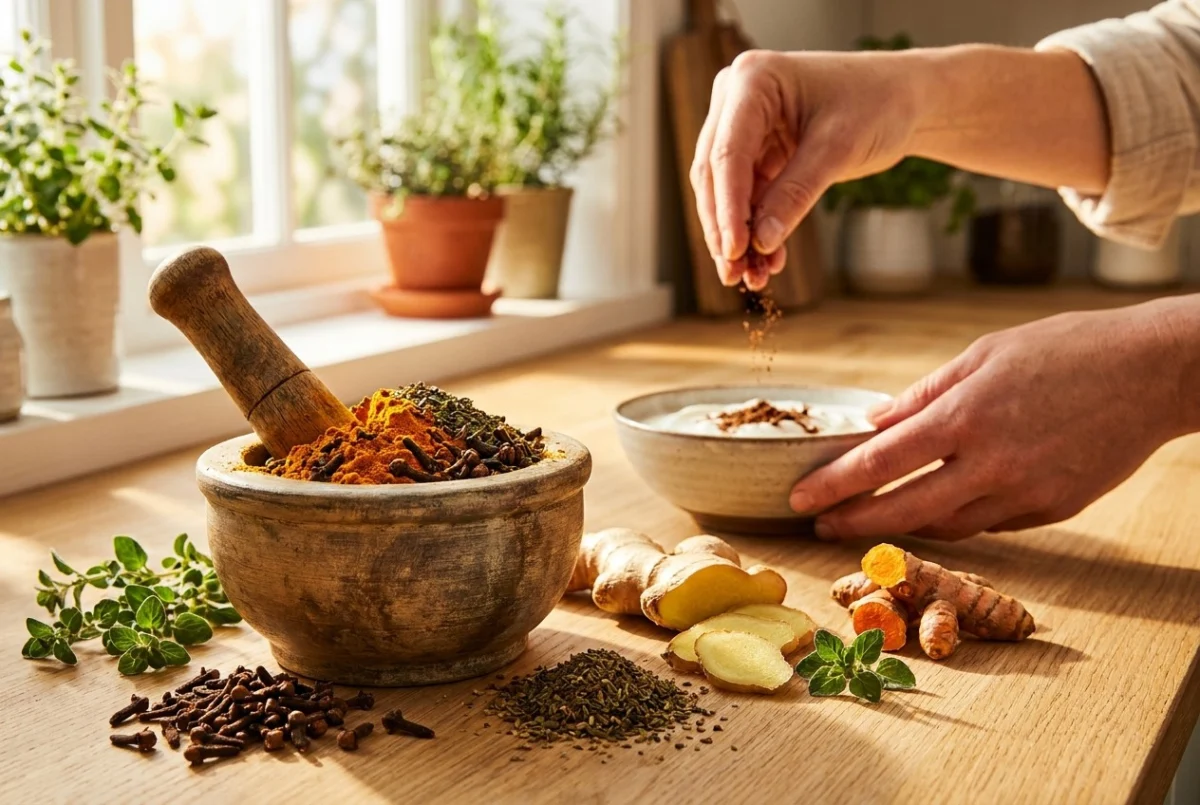
Yet, cinnamon is merely the tip of the iceberg. Registered dietitians Seema Shah, Amanda Crowe, and Jennifer Bianchini emphasize that other everyday kitchen staples—namely cloves, ginger, oregano, and turmeric—contain exceptionally high levels of antioxidants. These bioactive compounds work by neutralizing free radicals, unstable molecules that can weaken the immune system, induce oxidative stress, and pave the way for various chronic diseases.
When measured on a per-gram fresh-weight basis, herbs and spices frequently outrank many common fruits and vegetables in antioxidant activity. Laboratories utilize metrics such as the Oxygen Radical Absorbance Capacity (ORAC) database, compiled by the U.S. Department of Agriculture (USDA), to evaluate this antioxidant potential. Items like unprocessed cocoa beans, cinnamon, pecans, and cloves consistently occupy the upper echelons of these rankings. Beyond simple antioxidant metrics, these botanical ingredients are rich in secondary metabolites exhibiting antibacterial, antifungal, antiviral, and anti-inflammatory properties, establishing the modern kitchen as a veritable "Kitchen Pharmacy."
Chronology of Spice Utilization and Scientific Discovery
The journey of culinary spices from ancient pharmacopeias to modern clinical evaluations spans millennia, marked by distinct eras of traditional use and contemporary scientific validation.
Ancient and Traditional Utilization (Pre-20th Century)
- Ancient Egypt and Asia: Civilizations utilized spices like ginger and turmeric not only for culinary enhancement but as foundational medicines to treat digestive complaints, inflammation, and infections.
- Ancient Rome and Greece: Spices such as ginger, oregano, and cloves were highly prized commodities, frequently employed as food preservatives and therapeutic agents to ward off spoilage and disease.
- Traditional Chinese Medicine (TCM) and Ayurveda: Turmeric, cinnamon, and various herbal mixtures were systematically integrated into holistic healing frameworks to balance internal energies, support metabolic health, and reduce swelling.
Early Scientific Exploration (Late 20th Century)
- 1980s–1990s: Researchers began isolating specific active compounds within plants—such as eugenol in cloves, gingerols in ginger, and curcumin in turmeric—to understand their molecular interactions within mammalian cells.
- 2005: Toxicological and biochemical studies, such as research published in the Journal of Applied Toxicology, began examining the protective antioxidant properties of spices like black cumin and cloves against toxin-induced oxidative damage in animal models.
- 2007: Investigations into muscle metabolism, including a study published in the Journal of Cellular Biochemistry, demonstrated that curcumin could prevent specific protein upregulation linked to muscle mass loss.
Modern Clinical Era (2010–Present)
- 2015: Comprehensive reviews underscored that on a fresh-weight basis, herbs and spices rank higher in antioxidant activity than most traditional fruits and vegetables.
- 2020: Research reviews highlighted the ability of ginger to trigger anti-inflammatory cytokines while suppressing pro-inflammatory pathways.
- Recent Years: A massive pooled analysis in Frontiers in Nutrition synthesized data from 21 meta-analyses, establishing clear clinical links between cinnamon intake and improvements in metabolic markers like HbA1c and lipid profiles. Concurrently, studies published in Nutrients demonstrated that culinary spices actively enhance beneficial gut bacteria and support the microbiome.
Supporting Data and Biochemical Profiles
Understanding how these spices function requires a detailed look at their individual phytochemical profiles and the metrics used to evaluate them. While laboratory benchmarks like the USDA’s ORAC database provide a standardized measure of antioxidant potential in vitro, experts caution that laboratory assays do not automatically mirror human physiological absorption. Nevertheless, the chemical constituents within these plants offer remarkable therapeutic insights.
1. Cloves (Syzygium aromaticum)
Ground cloves boast an ORAC score that surpasses even that of cinnamon.
- Key Compounds: Eugenol, various flavonoids, and gallic acid.
- Mechanisms: Eugenol exhibits strong antibacterial and antioxidant properties. Recent 2025 studies indicate that clove pod antioxidants remain effective even at lower administration doses.
- Clinical Caveat: Because of their high potency, dietitians warn that consuming excessive amounts of ground cloves (over one-fourth of a teaspoon) can place undue stress on the liver.
2. Ginger (Zingiber officinale)
Available in both fresh and dried forms, ginger features distinct chemical profiles depending on its preparation. Fresh ginger contains high levels of aromatic compounds, while its primary active constituent, gingerol, converts into shogaols when dried or heated.
- Key Compounds: Gingerols and shogaols.
- Mechanisms: Both compounds exhibit anti-inflammatory and potential anti-tumor properties. Research demonstrates that ginger can modulate immune response by triggering anti-inflammatory cytokines while dampening pro-inflammatory ones. Furthermore, ginger supports the gut microbiome by feeding beneficial bacteria.
3. Oregano (Origanum vulgare)
Ranking close behind cinnamon in ORAC scoring, oregano is a nutritional heavyweight often relegated merely to pizza toppings.
- Key Compounds: Flavonoids, thymol, carvacrol, and phenolic acids.
- Mechanisms: Flavonoids within oregano can act as signalers for appropriate cellular apoptosis (programmed cell death), assisting in preventing unchecked tumor growth while working synergistically with other antioxidants. Oregano oil exhibits powerful antimicrobial and antifungal properties, helping to balance the human gut microbiome.
4. Turmeric (Curcuma longa)
A cornerstone of South Asian cuisine, turmeric derives its vibrant color and medicinal reputation from its primary polyphenol.
- Key Compounds: Curcumin.
- Mechanisms: Curcumin targets multiple inflammatory pathways, reduces oxidative stress, and has been studied for its potential to alleviate symptoms of metabolic syndrome, arthritis, and anxiety. It also plays a role in preserving muscle mass by preventing catabolic pathways.
- Bioavailability Challenge: Culinary turmeric typically contains only 2% to 9% curcumin, and isolated curcumin is notoriously difficult for the human body to absorb. However, scientific data confirms that pairing turmeric with black pepper (piperine) and dietary fats dramatically increases its bioavailability.
Official Responses and Expert Perspectives
As public interest in functional foods surges, registered dietitians, integrative medical professionals, and nutritional scientists have issued clear guidelines regarding the safe and effective integration of these spices into daily life.
The Role of Culinary Integration vs. Concentrated Supplements
Registered dietitian Seema Shah emphasizes a vital distinction in nutritional science: while laboratory measures like the ORAC database quantify antioxidant potential under controlled conditions, they do not fully illustrate how the human body absorbs, metabolizes, or utilizes these compounds. Consequently, experts advocate for incorporating whole herbs and spices into everyday culinary practices rather than relying indiscriminately on concentrated pills, extracts, or essential oils.
Amanda Crowe, a registered dietitian, suggests simple, practical applications:
- Adding a small pinch of cloves to morning yogurt, oatmeal, or baked goods.
- Utilizing whole cloves in simmered hot beverages.
- Incorporating fresh ginger into stir-fries and teas.
- Using small amounts of ground turmeric in savory soups and broths.
Safety Precautions and Professional Supervision
While culinary doses are universally recognized as safe for the general population, concentrated botanical supplements and potent essential oils carry a different risk profile. Jennifer Bianchini, a registered dietitian, notes that highly concentrated ginger supplements can occasionally cause gastrointestinal upset or interact adversely with prescription medications.
Similarly, high doses of turmeric can interfere with blood-thinning medications, and concentrated oregano oil or high-dose clove supplements are exceptionally strong. Bianchini and Shah jointly advise that potent herbal extracts and oils should be consumed only for short durations and strictly under medical or clinical supervision.
Implications for Public Health and Nutrition
The transition of herbs and spices from culinary decoration to recognized pillars of preventive health holds profound implications for modern lifestyle medicine. Chronic inflammation and oxidative stress are recognized drivers behind the global rise of metabolic syndrome, cardiovascular disease, type 2 diabetes, and autoimmune disorders.
By embracing what integrative physicians term "The Kitchen Pharmacy," individuals have low-cost, accessible tools to support systemic wellness. Incorporating polyphenol-rich spices into daily meals helps nourish beneficial gut microbiota, protect circulating lipids from harmful oxidation, support immune defense mechanisms, and assist the body’s natural detoxification pathways.
Ultimately, while spices are not a standalone cure-all for complex clinical conditions, their regular, moderate inclusion in a balanced diet offers a scientifically validated strategy for enhancing overall metabolic health, reducing low-grade systemic inflammation, and fortifying the body against the ravages of oxidative stress. As nutritional science continues to unravel the complex synergies within everyday foods, the spice rack stands validated as one of the most powerful medicine cabinets available.