The morning routine often feels like a well-oiled, albeit high-stakes, machine. Lunches are packed with precision, permission slips are signed between sips of coffee, and a frantic search for a missing shoe under the sofa is resolved just in time. By the time the school drop-off line is reached, you are already mentally transitioning into professional mode, answering emails and prepping for a conference call. To an outside observer, you are a high-functioning, capable parent.
However, the reality of parental burnout rarely surfaces during the frantic rush of a Tuesday morning. It often arrives in the quiet, hollow spaces of the evening. It is 6:40 p.m. Your daughter begins an earnest, detailed recounting of a playground disagreement. You look at her, you nod, and you offer the appropriate verbal cues, but internally, you are a void. You feel nothing—no empathy, no impatience, no engagement. You are simply waiting for the interaction to conclude so you can return to the silence of your own headspace.
While many might label this as "exhaustion," that term is a gross oversimplification. Exhaustion is a physiological state that a weekend of sleep or a long vacation can typically remedy. What many parents are experiencing is something far more insidious and structural. Parental burnout is a distinct, measurable phenomenon that has little to do with your energy levels and everything to do with your capacity to sustain your identity within your family.
The Four Pillars of Parental Burnout
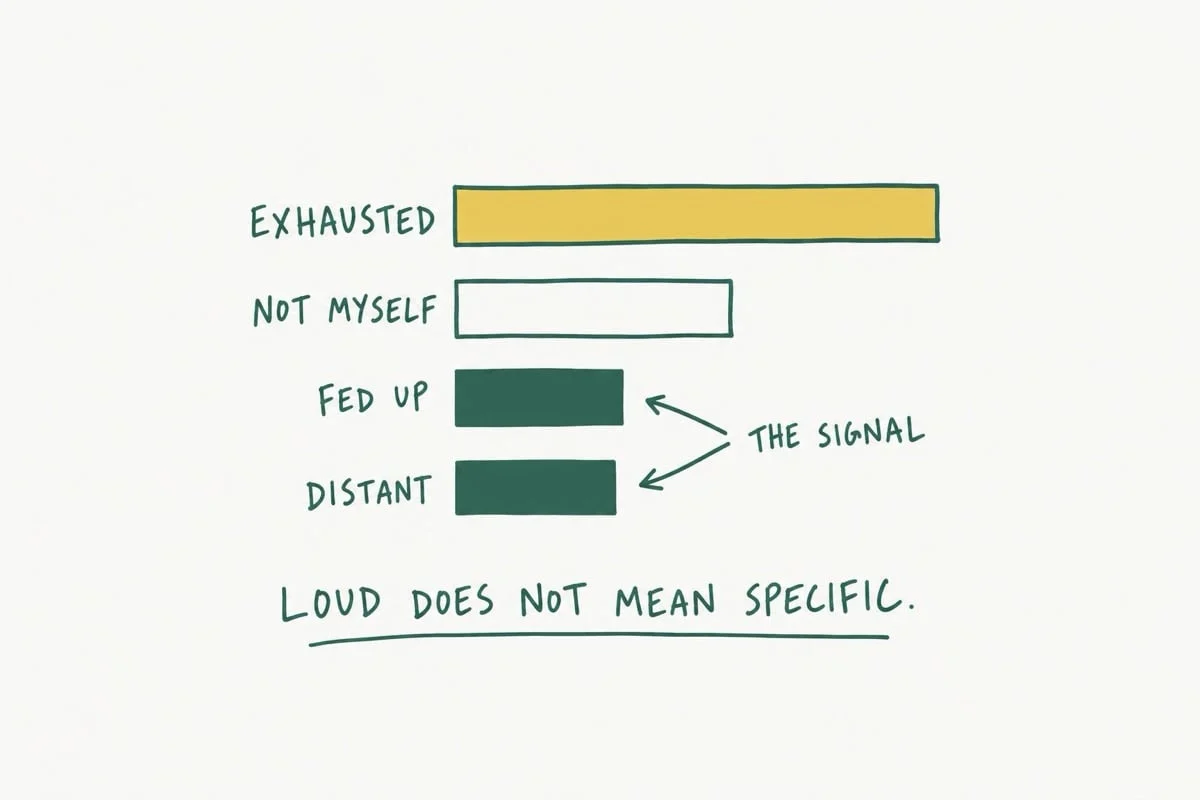
Researchers have moved beyond anecdotal definitions of "tiredness" to quantify parental burnout through four distinct dimensions. This framework was developed by analyzing the experiences of hundreds of parents, providing a diagnostic vocabulary for what was previously dismissed as a "bad phase."
- Exhaustion in the Parental Role: This is the physical and mental depletion specific to caretaking. Unlike general fatigue, this is the feeling of being "done" with the requirements of parenting.
- Contrast with the Past: This dimension measures the distance between the parent you are today and the parent you were before the burnout set in. It is characterized by a haunting sense that you have "gone missing" from your own family.
- Feeling Fed Up: This is a growing, often quiet resentment toward the demands of the parental role. It manifests as a short fuse over trivial matters and a persistent feeling of being trapped.
- Emotional Distancing: This is the most critical and alarming symptom. It involves a mechanical approach to caregiving—you fulfill the duties, but the emotional warmth has vanished.
In an ordinary week, these symptoms show up as a sense of dread before school pickup, autopilot interactions during bedtime, and a pervasive feeling that you are merely a spectator in your own home.
Chronology of a Breakdown: From Stress to Detachment
The trajectory of burnout is rarely sudden; it is a slow accumulation of unmanaged friction. It begins with the chronic imbalance between parenting "risks" and "resources."
Phase 1: The Accumulation of Micro-Stresses
Risks are rarely catastrophic events. They are the accumulation of subtle pressures: a new IEP meeting for a child, a partner’s shifting work schedule, a longer commute, or the self-imposed pressure of maintaining a perfectly curated household. These risks mount quietly, rarely announcing themselves until the system begins to buckle.
Phase 2: The Failure of Recovery
In a healthy state, parenting demands are offset by resources: consistent sleep, shared responsibilities, moments of personal autonomy, or a supportive social network. When these resources are depleted—when the "covered hours" where another adult is responsible vanish—the parent enters a state of chronic deficit.
Phase 3: The Defensive Withdrawal
As the emotional debt grows, the brain begins to protect itself. Emotional distancing is, in many ways, a survival mechanism. By detaching, the parent attempts to conserve the little energy they have left. However, this detachment is precisely what leads to the profound guilt and shame that prevents parents from seeking help. They fear that admitting they have lost interest in their child’s day is an admission of moral failure, rather than a clinical signal of an overwhelmed system.
Supporting Data: Why "Trying Harder" Fails
Recent research suggests that parental burnout is not a character flaw, but an environmental and systemic outcome. In a massive study across 42 countries involving over 17,000 participants, researchers found that the prevalence of parental burnout varies significantly by culture. Notably, individualistic societies—where the burden of child-rearing is placed heavily on the nuclear family rather than a broader community—show significantly higher rates of burnout.
This data is crucial for the working parent: it suggests that the problem is not your lack of willpower, but the lack of an adequate support structure. When the load consistently exceeds the resources, "trying harder" is not a viable strategy; it is a recipe for further deterioration.

Furthermore, studies have identified a correlation between high levels of parental burnout and an increase in child maltreatment and "escape ideation"—the persistent, intrusive wish to abandon one’s family life. These findings are not a verdict on a parent’s character but a flashing red light indicating that the parent is in crisis and requires immediate intervention.
Official Responses and Clinical Distinctions
It is vital to distinguish parental burnout from clinical depression or work-related burnout. While they often overlap, they are distinct psychological states.
- Parental Burnout vs. Job Burnout: If your sense of "flatness" lifts when you are away from your children but returns the moment you step back into the home, your burnout is likely specific to the parental role. Conversely, if the malaise follows you into the office, you may be dealing with a broader professional burnout or a depressive episode.
- The Risk of Misdiagnosis: A common mistake is to treat a parenting crisis as a work-schedule issue. A parent might negotiate a lighter workload, only to find that the "5:30 p.m. dread" remains unchanged because the underlying issue is the domestic load.
Clinicians warn that burnout language should never replace a professional assessment. If feelings of hopelessness, loss of interest, or persistent sadness permeate every facet of your life, this necessitates an evaluation by a mental health professional to rule out clinical depression, sleep disorders, or other medical conditions.
Implications: The Path to Recalibration
For the parent currently living in the "distanced" state, the path forward is unglamorous. It does not involve a weekend retreat or a new self-care app; it requires a radical, systemic negotiation of the domestic environment.
1. The 20-Minute Resource Audit
Set aside 20 minutes with a notebook. List your "risks" (the tasks, mental loads, and stressors) and your "resources" (the people, paid help, or protected hours of rest). The goal is to identify one specific, concrete risk that can be deleted or delegated to another adult.
2. The Principle of Protected Time
You must secure "covered hours"—blocks of time where someone else is legally and practically responsible for the children. This is not a "break"; it is a mandatory recovery period. The goal is to see if your emotional warmth returns when the demand is lifted.
3. The Metric of Success
Do not track your energy levels. Energy will always rebound after a quiet night. Instead, track your emotional interest. Are you listening to your child again? Is the irritation diminishing? The return of genuine, non-forced engagement is the only metric that confirms you are recovering.
4. Externalize the Load
Shame thrives in silence. If you are struggling, reach out to professional services. In the United States, the 988 Suicide & Crisis Lifeline is available for those in immediate distress, and organizations like Childhelp provide support for parents who are worried about their interactions with their children.
Conclusion: A Shift in Perspective
Parental burnout is a signal, not a failing. When a bridge is overloaded, it does not collapse because it is a "bad bridge"; it collapses because the weight exceeded the engineering limits. Parents who find themselves emotionally distant from their children are not bad parents; they are parents who have reached the limit of their resources.
The solution lies in the willingness to acknowledge the load, dismantle the expectation of perfection, and demand the structural support required to function. If the warmth has not returned after two weeks of systemic change, this is not a failure of your plan—it is vital information. It is time to step out of the silence and into a clinical office where you can receive the support necessary to stop surviving and start being present again.