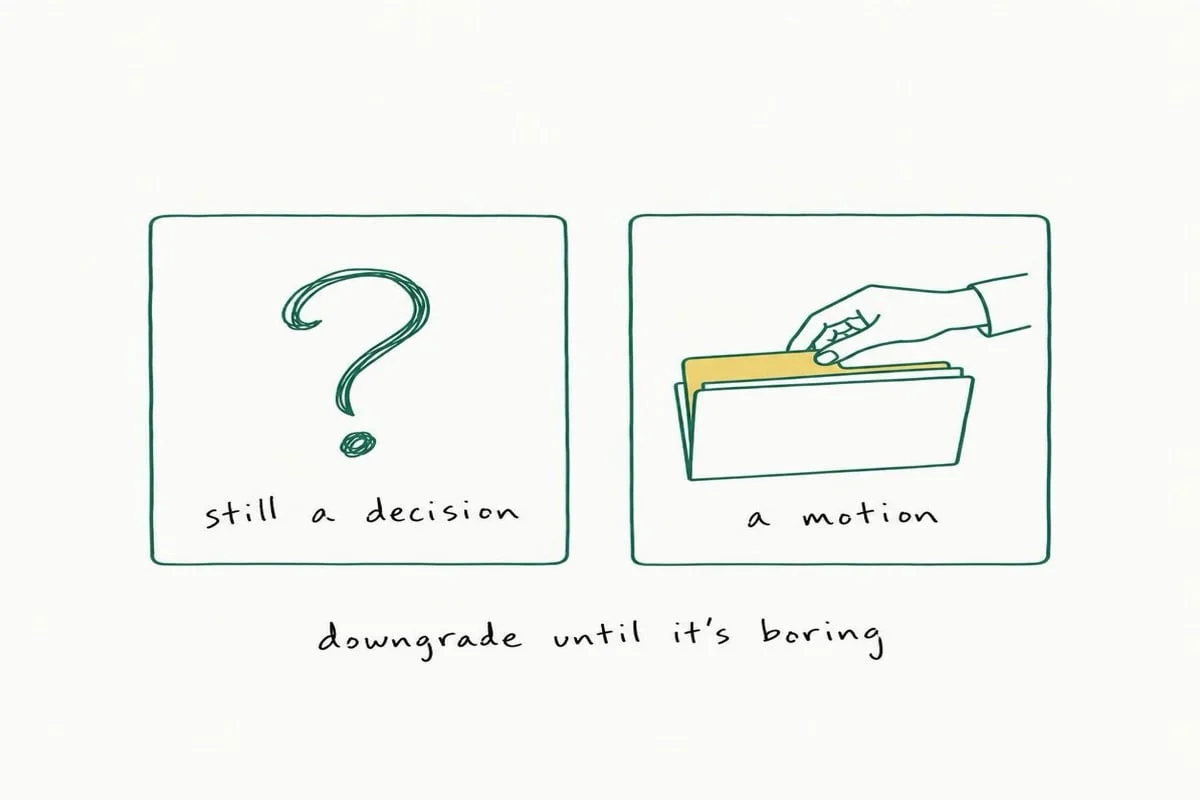

For millions of retirees, the narrative is scripted before they even reach their golden years. At Thanksgiving dinner, well-meaning children point to the driveway buried in snow or the empty upstairs bedrooms and pose the inevitable question: "Isn’t it time to move somewhere smaller?" Financial advisors echo the sentiment, neighbors who have already "made the leap" offer anecdotes of newfound freedom, and the real estate industry provides a constant stream of brochures highlighting the benefits of a "lock-and-leave" lifestyle.
Yet, despite the pressure, downsizing is frequently treated as a mandatory financial optimization—a way to unlock equity and secure a comfortable retirement. This is a dangerous misconception. For many older adults, downsizing is not a path to wealth accumulation; it is a significant, high-stakes consumer purchase. Before placing a "For Sale" sign in the yard, retirees must move beyond the emotional rhetoric and perform a rigorous, cold-blooded financial audit.
Main Facts: The Hidden Arithmetic of Moving
The core issue with most downsizing advice is that it ignores the "round trip" cost of real estate. Many retirees focus on the difference in sticker price between their current home and a new, smaller one, assuming that the difference—the "equity release"—will land directly in their bank accounts.
In reality, the transaction costs of selling a home and buying a new one are substantial. According to industry standards, sellers should anticipate losing between 2% and 4% of the sale price in taxes and administrative fees, on top of agent commissions that traditionally range from 3% to 8%. When combined with the 2% to 5% closing costs associated with buying a new property, a significant portion of that anticipated "profit" is evaporated before the moving truck even arrives.
Beyond the transaction fees, there are the "friction costs" of relocation: professional movers, utility transfers, window treatments that fit new dimensions, and the inevitable repairs required in a new space. When you subtract these one-time expenses from the difference in property values, the "gain" often shrinks to a fraction of what was expected. If that remaining sum must then cover the annual upkeep, taxes, and potential HOA fees of the new property, the financial benefit can vanish entirely.
A Chronology of the Decision-Making Process
For those contemplating a move, the process should be structured as a methodical planning exercise rather than an impulsive lifestyle pivot.
Phase 1: The Audit (Months 1–2). Instead of calling a real estate agent, start by auditing your current house. Pull your records for the last three years of property taxes, insurance, utilities, and actual maintenance costs. Do not use industry "rules of thumb" (such as the 1% rule for maintenance); use your own bank statements.
Phase 2: The Target Analysis (Months 2–3). Identify potential properties that meet your needs. Crucially, look past the listing price. Obtain the actual tax assessment for the potential home and request the specific HOA or condo fee structure. Many retirees find that while they are downsizing in square footage, they are upsizing in monthly carrying costs.
Phase 3: The Break-Even Calculation (Month 4). Calculate your "break-even point." Divide the total, one-time cost of the move (sale fees + buy fees + moving/setup costs) by the annual savings in carrying costs. The result is the number of years you must reside in the new home before you begin to see a return on your investment.
Phase 4: The Lifestyle Ledger (Ongoing). If the break-even calculation exceeds your realistic living horizon, the move is a luxury consumption choice. This is not inherently wrong, but it must be acknowledged as such. Compare this against the non-financial value of your current home: your proximity to long-term medical providers, the comfort of a known neighborhood, and the social capital built over decades.

Supporting Data: What the Trends Tell Us
The impulse to stay is far stronger than the advice industry admits. According to the AARP 2024 Home and Community Preferences survey, 75% of adults aged 50 and older explicitly state a desire to "age in place." This indicates that the constant pressure to downsize is, for a vast majority, a departure from their stated preferences.
Financial data from Harvard’s Joint Center for Housing Studies further underscores the reality of the "mortgage-free" demographic. In 2022, approximately 59% of homeowners aged 65 to 79 held no mortgage, and that figure climbs to 69% for those 80 and older. For these individuals, the "monthly cost" of their current home is already at a historic low. Moving to a new property often means incurring new, higher-interest debt or trading a low-cost, paid-off asset for one that carries monthly association fees, thereby increasing, rather than decreasing, their monthly "burn rate."
Furthermore, the shift in the real estate landscape following the August 2024 National Association of Realtors (NAR) settlement has added a layer of complexity. With buyer-agent compensation no longer displayed on listing services, buyers must negotiate their own representation fees. This adds a new, variable cost to the "buying" side of the move that was previously opaque.
Official Responses and Expert Perspectives
Financial planners often emphasize that the "emotional ROI" of a move is just as critical as the financial one. Experts note that many retirees focus on the physical house—the stairs, the lawn, the square footage—while ignoring the intangible infrastructure of their current life.
"The house does two jobs," says one industry analyst. "It provides shelter, which we can quantify in dollars, and it provides a support system of social and community ties, which we cannot."
Tax professionals also warn that while the federal capital gains exclusion (up to $250,000 for individuals or $500,000 for married couples) is a powerful tool, it should not be the sole driver of a relocation decision. Navigating the IRS Publication 523 requirements for "ownership and use" is mandatory, and failing to meet these criteria can lead to an unexpected tax bill that further erodes the financial benefits of downsizing.
Implications: Making the Move Deliberately
The most important takeaway for the modern retiree is the necessity of an honest "lifestyle audit." If your current home is simply a source of frustration, consider the cost of "patching" the problems before deciding to move. If the issue is the lawn, hire a gardener. If it is the stairs, explore a chairlift. When you compare the cost of these services to the high transaction costs of selling, you may find that staying in your current home is not only more emotionally rewarding but also significantly more cost-effective.
However, there are legitimate reasons to move that transcend financial spreadsheets. If your current home no longer meets your health needs, or if you are isolated from your family, the "cost" of the move is simply the price of admission to a better quality of life. In these instances, the break-even analysis is less relevant than the "purpose" analysis.
Summary Checklist for the Prospective Mover
- Don’t rely on equity estimates: Subtract all transaction costs (agent fees, transfer taxes, closing costs, moving expenses, and post-move repairs) from the potential sale proceeds before calculating your liquidity.
- Price the new costs accurately: Never assume a smaller home has lower carrying costs. HOA fees, increased property taxes in new jurisdictions, and potential new mortgage payments can surprise the unprepared.
- Define your horizon: If you plan to move to assisted living in five years, do not commit to a move that requires a ten-year break-even period.
- The "One Page" Rule: Keep the math simple. If it doesn’t fit on one page, you are likely overcomplicating the inputs to justify an emotional decision.
Ultimately, downsizing should be treated as a strategic life transition. By moving away from the assumption that it is a universal financial "win," you empower yourself to make a decision that aligns with your actual goals—whether those goals are to maximize your legacy or to spend your final years in a home that truly fits the rhythm of your life.