The landscape of additive manufacturing is shifting. What was once a niche pursuit for engineers and hardcore hobbyists has rapidly transformed into a consumer-grade technology, accessible to designers, artists, and educators alike. As Anycubic, one of the industry’s most recognizable names, celebrates its 11th anniversary, the company has launched a significant promotional campaign that serves as more than just a seasonal sale—it represents a broader strategy to democratize multi-color FDM printing and high-precision resin modeling for the masses.
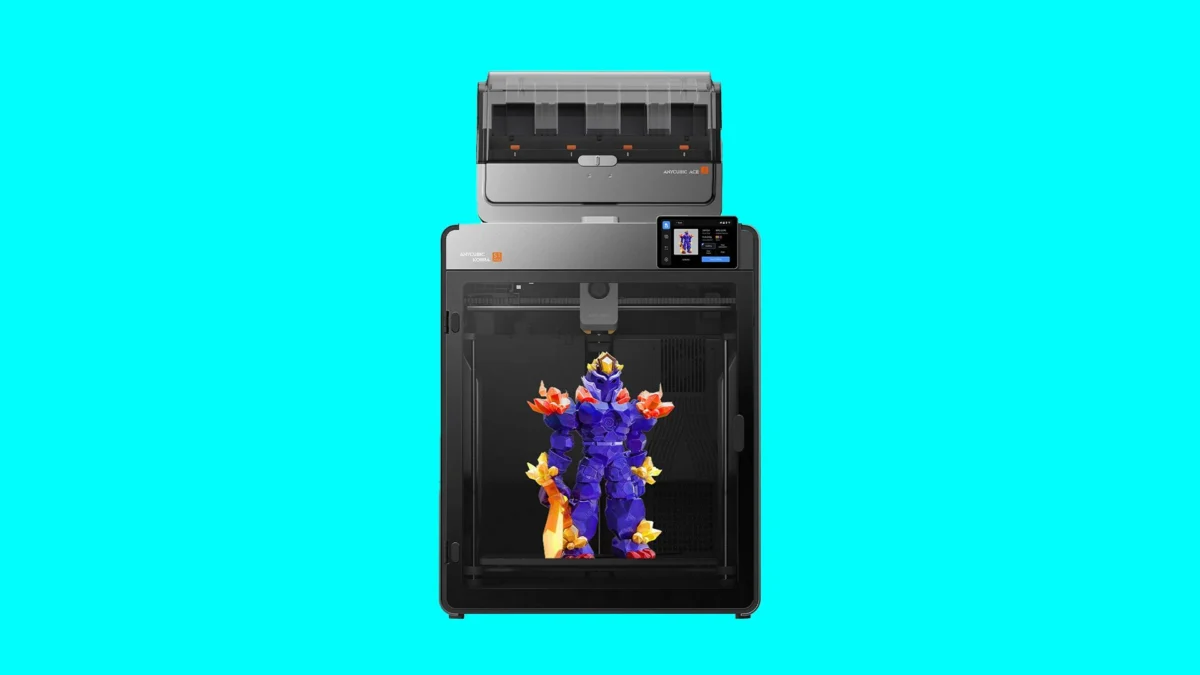
With discounts reaching up to $500 on select bundles, the anniversary event highlights the company’s commitment to lowering the barrier to entry for high-performance 3D printing. At the forefront of these offerings is the Kobra S1 ACE 2 Pro Combo, a machine that promises to bring complex, multi-color fabrication into the home workspace.
Main Facts: The Evolution of Accessible 3D Printing
Anycubic’s current promotional cycle is centered on the intersection of affordability and professional-grade capability. The flagship offering, the Kobra S1 ACE 2 Pro Combo, is being marketed at a $170 discount, signaling a push toward multi-color FDM (Fused Deposition Modeling) as the new industry standard for hobbyists.
The primary takeaway from this anniversary sale is the focus on "integrated ecosystems." Unlike the early days of 3D printing, where users were often forced to cobble together mismatched hardware and software, Anycubic is positioning its "Combo" bundles as turnkey solutions. These bundles include not only the printer but also the necessary filament systems and software interfaces to manage color-swapping technology.
Key Highlights of the Promotion:
- Significant Cost Reduction: Bundles are seeing price slashes of up to $500, targeting both individual users and small-scale professional studios.
- Technological Focus: The spotlight is firmly on the Kobra S1 ACE 2 Pro, which facilitates 16-color printing, a feat that was prohibitively expensive and technically complex just a few years ago.
- Diversification: Beyond FDM, the sale encompasses Anycubic’s high-resolution resin printer line, which remains a staple for those working in jewelry design, dental modeling, and miniature figurine production.
- Incentivized Engagement: The company is utilizing a newsletter-based voucher system to encourage direct-to-consumer engagement, bypassing third-party retailers to build a proprietary customer database.
Chronology: Eleven Years of Rapid Innovation
To understand the weight of this anniversary, one must look at the trajectory Anycubic has followed since its inception in 2015.
2015–2017: The Foundation
Anycubic entered the market during the "Gold Rush" era of desktop 3D printing. Their early machines were defined by open-source frameworks and a DIY-heavy ethos. During this period, the brand established its reputation for reliability in the budget sector, catering primarily to the maker community that was comfortable with tinkering and calibration.
2018–2020: The Resin Revolution
A pivotal moment in the company’s history was its aggressive move into LCD-based resin printing. The Photon series changed the game, providing sub-$500 SLA (Stereolithography) printers that produced results comparable to industrial machines costing ten times as much. This period marked the transition from "tinkerer" printers to "creator" printers.
2021–2023: Speed and Multi-Color Integration
The recent focus has been on throughput and color complexity. With the introduction of high-speed printing protocols (Kobra series) and automated filament changing systems, Anycubic shifted its focus toward the user experience. The 11th anniversary marks the culmination of this effort, as these technologies reach a price point that is no longer exclusive to the "prosumer" demographic.
Supporting Data: Why the Market is Responding
The additive manufacturing market is currently experiencing a period of "hyper-saturation," where hardware capabilities have far outpaced consumer price points. Data from the current promotional landscape suggests three distinct trends that Anycubic is leveraging:
- The Rise of Multi-Material Workflow: 3D printing is moving away from monochromatic output. The Kobra S1 ACE 2 Pro’s 16-color capability is a response to the demand for functional prototypes that require multi-material properties (e.g., rigid structural parts with flexible seals).
- Material Cost Stabilization: As the printer market matures, the cost of specialized resins and filaments has stabilized, allowing manufacturers to offer "Combo" bundles that include a year’s worth of materials at a lower cost-per-unit.
- Regional Price Sensitivity: Anycubic’s current strategy highlights the complexity of global pricing. By excluding taxes from their base promotional price, the company acknowledges that import duties, VAT, and local distribution costs vary wildly across regions, ensuring that their base price remains competitive in the US market while allowing for local fluctuations.
Official Responses and Strategic Positioning
In recent communications, representatives for the brand have emphasized that the 11th anniversary is not merely about clearing old inventory, but about "accelerating the adoption of 3D printing in creative industries."
The focus on "pro-creators" suggests a deliberate shift in branding. While Anycubic maintains its roots in the hobbyist market, the hardware specifications of their latest models—such as enhanced leveling automation, vibration compensation, and cloud-based print management—are aimed at design professionals who view 3D printing as a tool, not a hobby.
Furthermore, the integration of a newsletter-based voucher system indicates a shift toward a "Service-as-a-Brand" model. By capturing user data and providing ongoing support, tutorials, and community engagement via their newsletter, Anycubic is looking to transform one-time hardware buyers into long-term users within their ecosystem.
Implications: The Impact on the Creative Landscape
The implications of this sale are twofold: they reflect both the current health of the consumer hardware market and the future trajectory of desktop fabrication.
For the Individual Creator
For the hobbyist, the current price drops mean that a setup capable of high-detail production—once the domain of those with significant technical knowledge—is now available at a price point accessible to students and freelance designers. This allows for rapid iteration of ideas, lowering the financial risk associated with failing a prototype.
For the Industry
The wider availability of 16-color FDM printing and professional resin machines puts pressure on local print services. If a small business can produce high-quality, multi-color prototypes in-house for a fraction of the previous cost, the demand for third-party printing services may shift toward larger-scale, industrial-grade production rather than prototyping.
Sustainability and Waste
One of the major criticisms of the 3D printing industry has been the waste generated by failed prints and excess plastic. Anycubic’s move toward more intelligent, automated software and better material efficiency in their new machines is a tacit acknowledgment of the need for more sustainable additive manufacturing. The "Combo" kits often emphasize material optimization, which is a necessary step for the industry’s long-term environmental viability.
Conclusion: A Milestone in Accessibility
As Anycubic marks its 11th anniversary, the company is clearly signaling that the "Wild West" era of 3D printing is over. We have entered the era of the "Appliance Printer." By discounting sophisticated hardware and incentivizing the user journey through educational newsletters and integrated bundles, they are betting that the future of the industry lies in ease-of-use and aesthetic versatility.
Whether the consumer is a seasoned designer looking to upgrade their fleet or a beginner curious about the potential of additive manufacturing, the current market climate provides a unique window of opportunity. The barrier to entry has never been lower, and the technology has never been more refined. As we look toward the next decade of development, it is clear that the machines of the future will be defined not just by how fast they print, but by how easily they translate a digital concept into a tangible, multi-colored reality.
Disclaimer: As with all significant electronics purchases, consumers should note that listed prices do not include regional taxes or potential import duties. It is recommended that buyers verify their specific tax obligations before finalizing their orders during this promotional period.