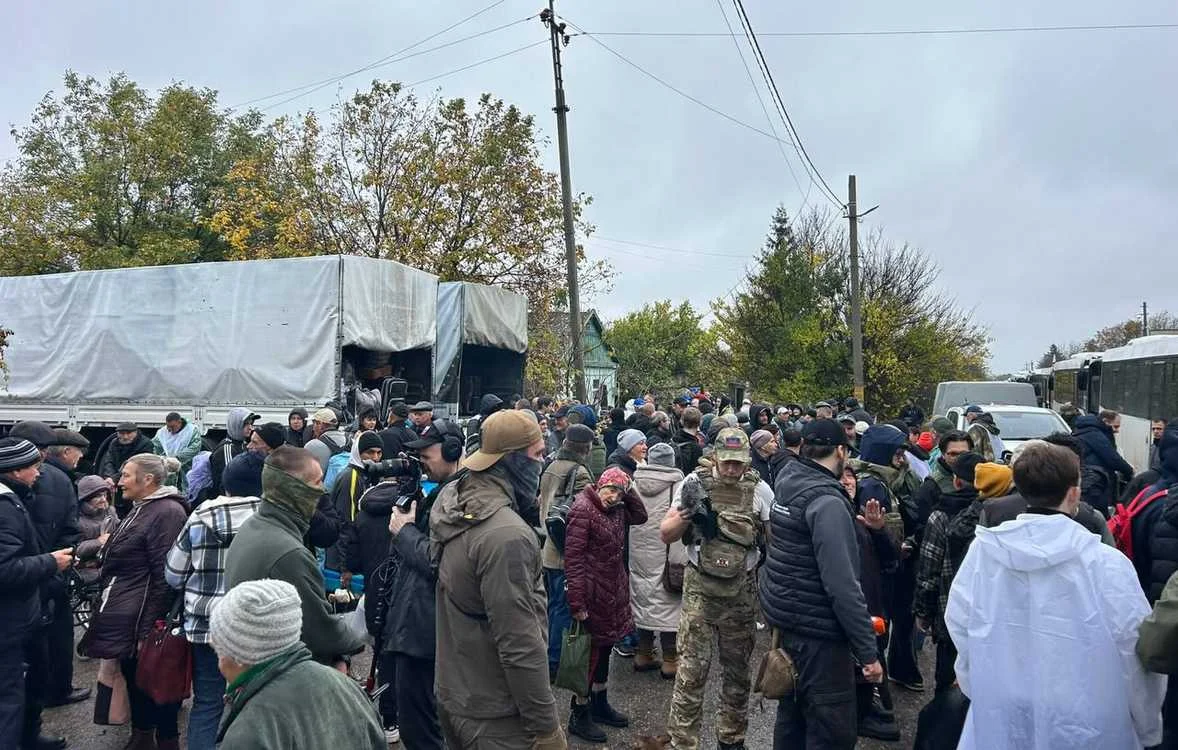
KYIV/MOSCOW/VATICAN CITY — In a rare and groundbreaking display of cross-border cooperation, thousands of Ukrainian civilians stranded in the Russian-occupied southern city of Oleshky have been successfully evacuated. The operation, executed via a specially coordinated humanitarian escort corridor, marks the most significant measure of diplomatic and logistical collaboration between the belligerent nations since the onset of the conflict.
The successful mission—which rescued approximately 750 residents alongside a menagerie of household pets, including dogs, cats, parrots, and even a rescued raccoon—has sparked global optimism. International leaders and humanitarian organizations are now looking to this unprecedented truce as a potential blueprint for future life-saving corridors across embattled frontlines.
Main Facts of the Evacuation
The operation focused on Oleshky, a heavily contested city situated within Ukraine’s southern Kherson Oblast. Before the ceasefire, the city and its remaining population were teetering on the brink of famine as severe winter conditions approached. Decisively, Russian and Ukrainian officials coordinated a temporary, localized cessation of hostilities to establish a secure evacuation route.
- Number of Evacuees: Roughly 750 civilians, accompanied by numerous pets.
- The Route: Evacuees traveled eastward through Crimea to the Russian Black Sea city of Anapa, boarded aircraft to Gomel in Belarus, and finally crossed the border into Ukraine to a hero’s welcome en route to Kyiv.
- Diplomatic Catalysts: High-level international advocacy, notably spearheaded by U.S. First Lady Melania Trump and amplified by Pope Leo XIV, played a pivotal role in bringing both sides to the negotiating table.
- Historic Milestone: Ukrainian Parliament’s Human Rights Commissioner Dmytro Lubinets personally traveled to Russian-occupied territory to meet with Russian human rights commissioner Yana Lantratova—marking the first time a sitting Ukrainian official has entered Russian-occupied portions of the country during the conflict.
Chronology of Events
The unfolding of the Oleshky evacuation was a meticulously timed operation that required days of intense diplomatic maneuvering and precise logistical execution.
October 27: The Ceasefire Takes Effect
Following weeks of quiet back-channel diplomacy involving international intermediaries, Russian military authorities instituted a localized ceasefire in and around the Oleshky region, closely coordinated with Ukrainian counterparts. The truce was designed specifically to grant safe passage to non-combatants facing extreme deprivation.
October 30: Historic Cross-Line Meeting
In a stunning diplomatic breakthrough, Ukrainian Human Rights Commissioner Dmytro Lubinets arrived in Crimea, where he met personally with his Russian counterpart, Yana Lantratova. Together, they oversaw the initial stages of the humanitarian mission on the ground, ensuring that all protocols for the safe exit of civilians were strictly enforced.
The Transit Journey
As reported by international news agencies, the evacuation was executed in distinct, multi-modal phases:
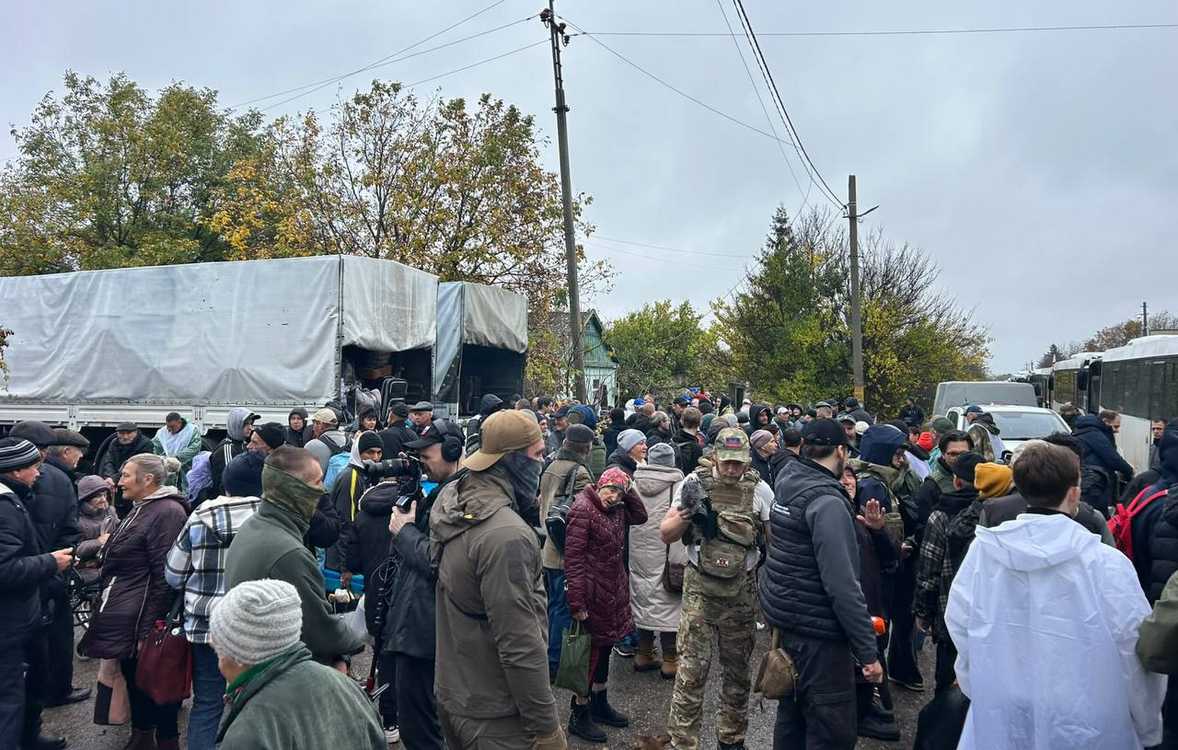
- The Overland Leg: Buses and private vehicles carrying residents and their pets were escorted eastward across the Crimean Peninsula. Those who elected to temporarily relocate within Russian-administered structures were housed in regional hotels, while those wishing to return to Ukrainian-controlled territory pressed onward.
- The Aerial Bridge: Evacuees bound for Ukraine boarded flights traversing Russian airspace to Gomel, Belarus, situated near the northern Ukrainian border.
- The Homecoming: Upon reaching the Ukrainian border, the evacuees were greeted by emotional family reunions, flag-waving villagers, and an army of humanitarian aid workers offering warm food, drinks, and medical attention.
Supporting Data and Conditions on the Ground
While the evacuation brought jubilation to hundreds of families, it also underscored the profound devastation left in the wake of urban warfare.
Oleshky is currently described by aid groups and returning observers as nearly unlivable. Sustained bombardment and intense ground fighting have crippled critical municipal infrastructure:
- Utilities: Gas lines utilized for winter heating, sewage systems, and municipal power grids have been severely damaged or completely destroyed.
- Hazards: Unexploded ordnance and landmines present a persistent, daily menace to anyone remaining in the urban center.
- The Choice to Stay: While 750 people chose to leave, an unreported number of residents opted to remain behind for personal, familial, or logistical reasons. Both Lantratova and Lubinets acknowledged that subsequent humanitarian efforts will be mandatory to supply food, medicine, and heating supplies to those who chose not to evacuate.
Meanwhile, temporary housing and immediate relief supplies were mobilized in Crimea for those who chose temporary relocation within Russian-administered sectors, while major international NGOs—including the Red Cross, Doctors Without Borders (Médecins Sans Frontières), and World Central Kitchen—mobilized at the Ukrainian border to process and care for the arriving citizens.
Official Responses and International Diplomacy
The success of the Oleshky corridor has reverberated across global capitals, drawing praise from unexpected corners and breathing new life into stalled peace dialogues.
The United States and the Vatican
U.S. First Lady Melania Trump was formally thanked by Ukrainian Commissioner Lubinets for raising the plight of Oleshky’s trapped population during high-level dialogues between U.S. and Russian officials. Kremlin spokesman Dmitry Peskov echoed these sentiments, acknowledging the constructive nature of the international appeals.
Mrs. Trump noted in a public statement that "all elements of the convoy, including the safe passageway in and out of Oleshky, were established through mutual agreement between Russian and Ukrainian leaders."
This momentum was rapidly amplified by the Holy See. Pope Leo XIV, communicating via phone with Russian President Vladimir Putin while recovering from medical treatment for lung cancer, stressed the absolute moral imperative of a humanitarian truce. In statements published by Vatican News, the Pontiff emphasized that truces are vital not only for delivering food and medical aid, but for upholding the fundamental dignity of civilian populations caught in the crossfire.
On-the-Ground Leadership
Russian human rights commissioner Yana Lantratova praised the operational efficiency of the mission, stating to the BBC that "everything unfolded without any incidents, and both sides noted the high level of organization."
Similarly, Dmytro Lubinets expressed profound relief and optimism online, emphasizing that the cooperative framework established in Oleshky must not remain a one-off event. "We are now working together with Yana Lantratova to explore opportunities for further humanitarian initiatives," Lubinets posted. "It is important to maintain this mechanism of cooperation so that we can continue helping people and saving lives."
Implications for the Future
As the localized Oleshky truce formally concluded, the ripples of its success are already reshaping the geopolitical landscape of the region. According to reports from Vatican News, the diplomatic goodwill generated by the evacuation has paved the way for fresh, high-level negotiations scheduled to take place in Abu Dhabi this coming November.
Political analysts note that while a comprehensive peace settlement remains a complex and distant horizon, the Oleshky corridor demonstrates that Moscow and Kyiv can, under intense international pressure and humanitarian duress, forge functional, life-saving agreements.
For the hundreds of innocent civilians who have reunited with their families, tasted warm coffee on the Ukrainian border, and escaped the looming shadow of famine and freezing temperatures, the Oleshky corridor stands as a powerful testament to human resilience. As Pope Leo XIV remarked on social media following the operation’s conclusion:
"I hope that the cooperation between the parties, which made this necessary humanitarian act possible, will strengthen the desire for dialogue and lead to new concrete peace initiatives."