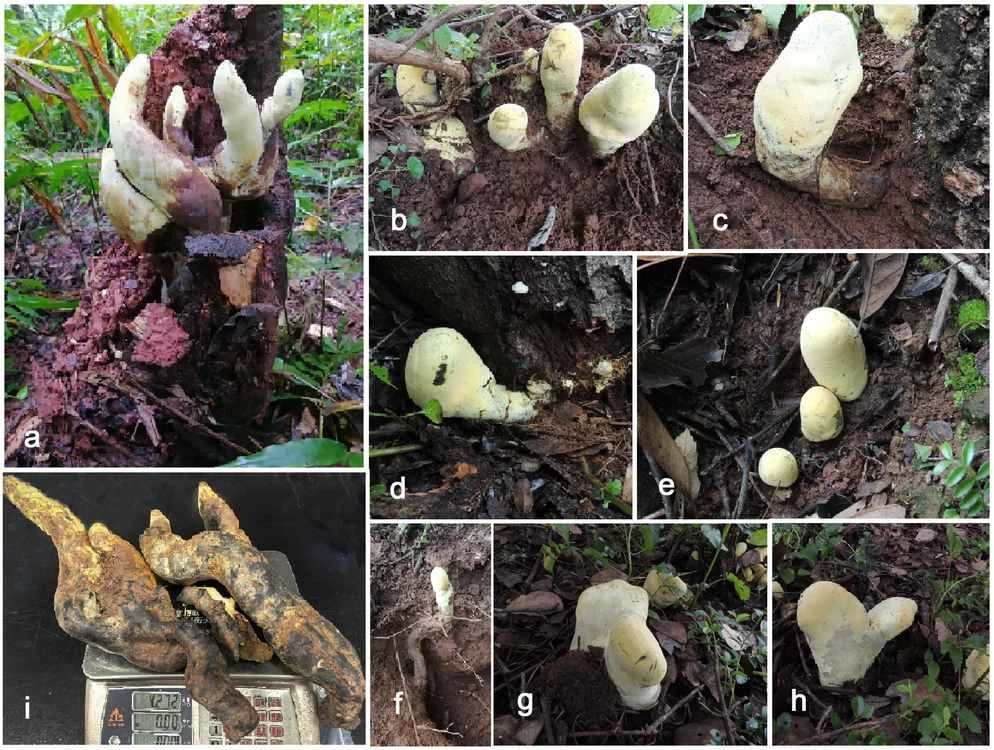
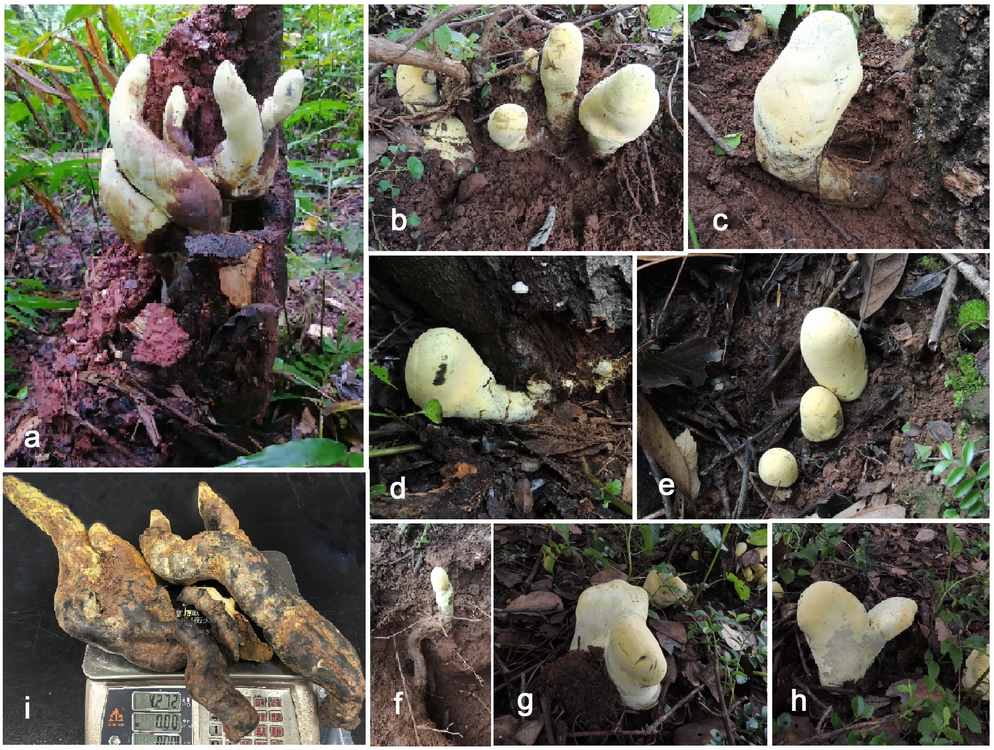
Deep within the damp, mist-shrouded forests of southwest China, an international team of scientists has unearthed a botanical anomaly that is challenging everything we thought we knew about the structural limits of fungi. Towering up to 20 inches high and tipping the scales at a staggering five pounds, a newly discovered species of wood-decaying organism has been formally introduced to the scientific community as Dianjunus rex—aptly translated as the "King of Dian," in honor of an ancient regional kingdom.
This monumental organism is far more than a local curiosity. The discovery of D. rex, detailed in the journal Frontiers in Fungal Biology, represents an entirely new genus, establishing a brand-new taxonomic family (Dianjunaceae) within Ascomycota, the largest phylum of the fungal kingdom. By combining field ecology with cutting-edge genomic sequencing, researchers from China, Thailand, and Mexico have opened a fascinating window into the prehistoric origins of extreme fungal architectures and the ecological aftermath of Earth’s most famous mass extinction.
Main Facts: Meet Dianjunus rex
The discovery began in the biodiversity hotspot of Yunnan Province, a unique transitional zone where temperate coniferous forests seamlessly bleed into tropical rainforests. It was here, among the woody roots of Chinese cork oaks (Quercus variabilis), that researchers from the Kunming Institute of Botany first encountered the enormous, whitish fruiting bodies—scientifically known as stromata—belonging to the novel species.
Unlike classic, umbrella-shaped mushrooms associated with the phylum Basidiomycota, D. rex belongs to the Ascomycota lineage. Ascomycetes do not produce traditional gilled caps; instead, they disperse their microscopic spores from sack-like structures housed either within or upon the surfaces of specialized fruiting bodies.
Prior to this discovery, the record-holders for sheer physical mass and height among similar ascomycete fruiting bodies maxed out at a modest 8 to 12 inches (20 to 30 centimeters). Dianjunus rex has effortlessly shattered those boundaries, towering at heights and weights that rival small shrubs and fundamentally redefining the maximum physical limits of ascomycete growth.
Chronology: From Prehistoric Chaos to Modern Discovery
The evolutionary journey of Dianjunus rex stretches back tens of millions of years, tracing a path forged by planetary catastrophe and ecological opportunity.
The CRETACEOUS-PALEOGENE AWAKENING (65 Million Years Ago)
By deploying "molecular clock" analyses—a technique that measures the accumulation of genetic mutations over time to estimate when lineages diverged—researchers reconstructed the evolutionary timeline of Dianjunaceae. The genomic data revealed that this unique family of fungi arose approximately 65 million years ago.
This date is strikingly significant. It places the birth of the Dianjunaceae lineage a mere one million years after the Cretaceous-Paleogene (K-Pg) mass extinction event. Best known for wiping out the non-avian dinosaurs and nearly three-quarters of all plant and animal species on Earth, the K-Pg impact injected massive amounts of debris into the atmosphere, plunging the planet into darkness and devastating global flora.
In the immediate aftermath of this global catastrophe, terrestrial ecosystems were littered with unprecedented quantities of dead and decaying plant material. For saprotrophic (wood-decomposing) fungi, this sudden explosion of resources created vast, untamed ecological niches. It was within this climate of global rebirth and decay that the ancestors of D. rex first evolved their unique morphology.
MODERN FIELDWORK AND IDENTIFICATION (Present Day)
Fast forward to the modern era, and the descendants of these prehistoric fungi continue to thrive in the complex ecosystems of East Asia. During recent botanical expeditions in Yunnan Province, researchers stumbled upon the massive, pale stromata growing tenaciously from subterranean and exposed woody root systems.
Recognizing that they were looking at something entirely foreign to contemporary mycology, the team collected specimens, cultivated spores in controlled laboratory media to study their morphology, and extracted DNA for comprehensive whole-genome sequencing. The morphological and genetic data conclusively confirmed that D. rex stood entirely alone, not just as a new species, but as the sole representative of an entirely unrecorded family tree.
Supporting Data: The Mighty Phylum of Ascomycota
To understand the sheer magnitude of the D. rex discovery, one must contextualize the phylum to which it belongs. With more than 64,000 documented species, Ascomycota is the largest and arguably most ecologically and economically impactful group of fungi on Earth.
Next to human beings, ascomycetes arguably exert more influence over the planet’s biogeochemical cycles and human civilization than any other group of organisms.
- The Benefactors of Human Culture: The ascomycete ledger is packed with organisms that define human culinary arts and modern medicine. Yeasts and molds within this phylum are responsible for baking bread, brewing beer, and fermenting wine and sake. They yield the life-saving antibiotic penicillin, provide the complex flavors of artisan cheeses like Roquefort, Brie, and Stilton, and drive the production of savory staples like soy sauce. Furthermore, they produce complex pharmaceuticals, including the organ-rejection inhibitor ciclosporin. Prized delicacies such as morels, truffles, and cordyceps also belong to this diverse family.
- The Pathogens and Pests: Conversely, the ledger lists some of the most destructive agricultural and medical scourges in history. Ascomycetes are responsible for devastating plant epidemics including Dutch elm disease, chestnut blight, apple blight, and powdery mildew. In humans, they cause conditions ranging from common vaginal yeast infections and athlete’s foot to severe respiratory afflictions such as histoplasmosis, valley fever, and opportunistic lung infections driven by Aspergillus fumigatus.
Within this massive, sprawling cast of microscopic yeasts, thread-like molds, and underground truffles, Dianjunus rex stands as a literal and figurative giant—an outlier that scales the ambitions of the phylum to dizzying new heights.
Official Responses and Expert Insights
The study, which has sent ripples through the global mycology community, sheds light on evolutionary biology and regional biodiversity.
Dr. Indunil C. Senanayake, an associate professor at the Germplasm Bank of Wild Species at the Kunming Institute of Botany in China and corresponding author of the study, emphasized the rarity of the find.
"This remarkable species represents a new fungal family, Dianjunaceae, and provides a rare window into the evolution of extreme fungal body forms," Dr. Senanayake explained. "The discovery illustrates how much fungus biodiversity remains to be discovered in East Asian forests."
Addressing the evolutionary pressures that sculpted such a colossal organism, Dr. Senanayake pointed to the advantages and severe metabolic costs of building a massive fruiting body.
"A fruiting body which towers above surrounding vegetation and debris could facilitate better dispersal of spores by wind in dense forests," Dr. Senanayake hypothesized. "However, such a large structure requires substantial energy investment, suggesting that this strategy likely evolved only where the ecological benefits outweighed the costs."
Reflecting on the geographic cradle of D. rex, the researchers noted that southwest China acts as a premier engine for biological innovation.
"This region combines exceptional habitat heterogeneity, climatic stability, and complex biotic interactions that promote fungal diversification," Dr. Senanayake noted, adding that historical biases have long obscured the true extent of regional fungal life. "Historically, however, fungal diversity in these ecosystems has been underestimated due to logistical difficulties in field sampling, the seasonal and cryptic nature of fungal fruiting, and a historical emphasis on economically important fungi."
Implications: A Living Relict and Future Discoveries
The discovery of Dianjunus rex does more than simply add a new name to scientific taxonomic registries; it forces evolutionary biologists to reevaluate how certain lineages survive across geological epochs largely unchanged, much like their botanical and zoological counterparts.
While animals like sharks, crocodilians, and sea turtles are celebrated as "living fossils" that have persisted across hundreds of millions of years, and plants like the Ginkgo biloba or Australia’s newly discovered "dinosaur evergreens" have cast shadows over both prehistoric beasts and modern humans, fungi have largely flown under the radar in discussions of ancient lineages. The ability of the Dianjunaceae lineage to persist for 65 million years—adapting through radical shifts in climate, geography, and ecology while maintaining an extreme physical architecture—demonstrates a remarkable evolutionary resilience.
Furthermore, the discovery serves as a clarion call to mycologists worldwide. Tropical and subtropical forests in East Asia remain vastly underexplored. As advanced genomic tools become more accessible, and as researchers venture deeper into difficult-to-sample terrain, experts predict that D. rex will not remain an isolated anomaly. Instead, it is likely the vanguard of many hidden fungal titans waiting to be discovered, illuminating the deeply interconnected history of life on Earth.