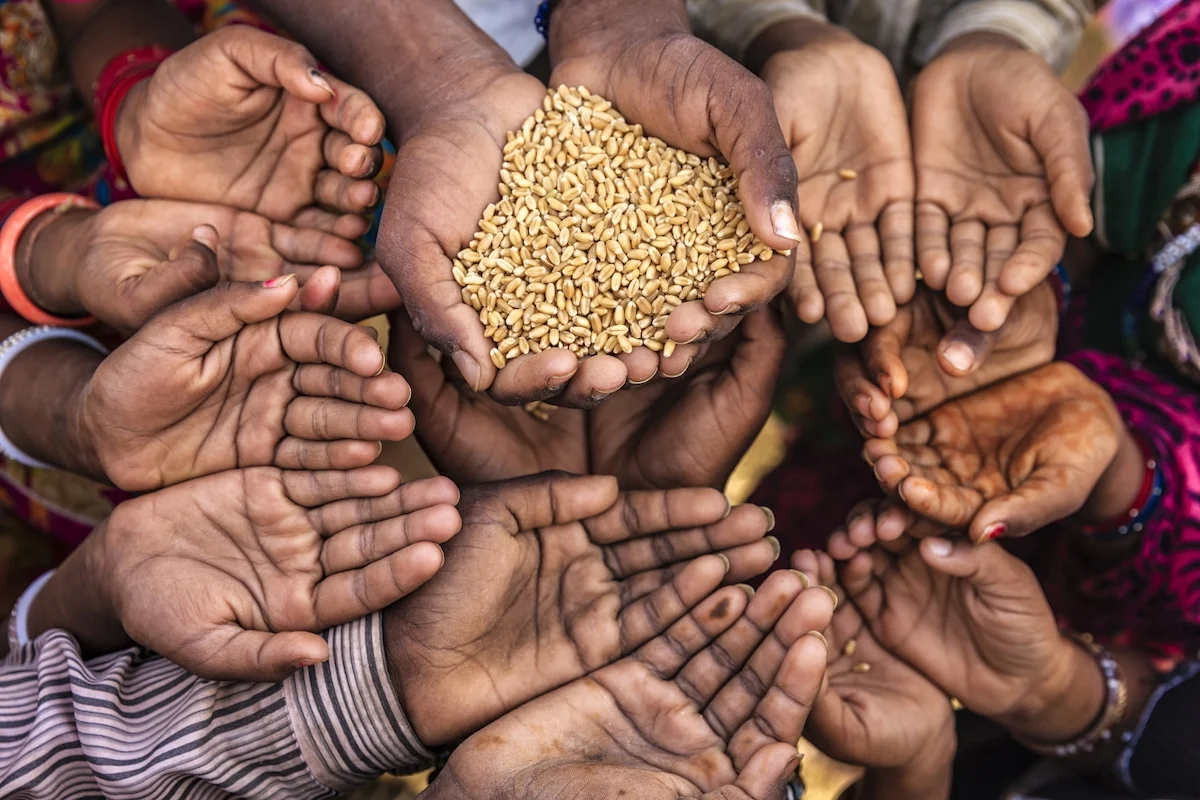
While the global community has witnessed a marginal decline in the total number of people suffering from hunger, the latest data from the United Nations paints a sobering picture of a world divided by extreme inequality. The 2025 State of Food Security and Nutrition in the World (SOFI) report, a collaborative effort by five specialized UN agencies, confirms that while global hunger rates are trending downward, the progress is fragile, uneven, and overshadowed by deepening crises in Africa and western Asia.
The State of Global Hunger: Key Findings
According to the report, approximately 673 million people—roughly 8.2 percent of the global population—faced hunger in 2024. This marks a statistical improvement from the 8.7 percent recorded in 2022 and the 8.5 percent in 2023. In absolute numbers, this equates to a reduction of approximately 15 million people compared to 2023 and 22 million since 2022.
Furthermore, the prevalence of "moderate or severe food insecurity"—defined as those who experience constraints on accessing adequate nutrition for part of the year—fell to 28 percent, or 2.3 billion people. While these figures provide a glimmer of hope, international experts caution against complacency, noting that the world remains significantly off-track to meet the UN Sustainable Development Goal (SDG) of "Zero Hunger" by 2030.
A Chronology of Crisis: The Post-2020 Landscape
The path to global food security has been severely obstructed by a confluence of systemic shocks over the last five years.
- 2020–2021: The Pandemic Shock: The onset of the COVID-19 pandemic caused unprecedented disruptions to global supply chains, labor markets, and trade, setting the stage for a period of extreme volatility.
- 2021–2023: The Inflationary Surge: The world experienced a dramatic spike in food prices. Median global food price inflation surged from a modest 2.3 percent in December 2020 to a staggering 13.6 percent by early 2023. In low-income nations, this crisis was even more acute, with inflation peaking at 30 percent in May 2023.
- The Geopolitical and Climatic Factor: The war in Ukraine, a critical "breadbasket" for the world, destabilized grain markets, while recurring extreme weather events—linked to a rapidly changing climate—decimated local harvests across Africa and Asia.
- 2024: The Recovery and Divergence: While many middle-income nations began to stabilize, the systemic damage in low-income regions solidified, creating the current divergence in global hunger outcomes.
Supporting Data: The Geography of Inequality
The most striking revelation in the 2025 report is the widening gap between regions. While hunger rates in Asia fell to 6.7 percent and Latin America and the Caribbean saw a significant decline to 5.1 percent, other regions are moving in the opposite direction.
Africa and Western Asia
In Africa, the proportion of the population facing hunger has surpassed 20 percent, affecting 307 million people. Similarly, in western Asia, an estimated 12.7 percent of the population—over 39 million people—are now struggling to secure daily sustenance.
The Affordability Gap
The report highlights a critical distinction between global trends and the experience of the poor. While the number of people unable to afford a healthy diet globally has decreased to 2.6 billion, the situation in low-income countries is deteriorating. In these nations, the number of people who cannot afford a healthy diet rose to 545 million in 2024, up from 464 million five years ago. In lower-middle-income nations (excluding India), that number climbed from 791 million to 869 million in the same period.
Official Responses from UN Leadership
The release of the SOFI report triggered immediate calls to action from the heads of the world’s leading humanitarian and development agencies.
FAO Director-General QU Dongyu emphasized the necessity of a localized approach: "While it is encouraging to see a decrease in the global hunger rate, we must recognize that progress is uneven. SOFI 2025 serves as a critical reminder that we need to intensify efforts to ensure that everyone has access to sufficient, safe, and nutritious food. We must work collaboratively and innovatively with governments, organizations, and communities to address the specific challenges faced by vulnerable populations."

WHO Director-General Dr. Tedros Adhanom Ghebreyesus shifted the focus to long-term health outcomes, noting that while strides have been made in reducing stunting and promoting breastfeeding, millions remain trapped in a cycle of malnutrition. "There is still much to be done to relieve millions of people from the burdens of food insecurity and malnutrition," he stated.
IFAD President Alvaro Lario highlighted the economic imperative: "In times of rising food prices and disrupted global value chains, we must step up our investments in rural and agricultural transformation. These investments are not only essential for ensuring food and nutrition security—they are also critical for global stability."
UNICEF Executive Director Catherine Russell underscored the moral urgency regarding the youngest victims: "Over 190 million children under the age of 5 are affected by undernutrition, which can have negative consequences for their physical and mental development. This robs them of the chance to live to their fullest potential."
Implications for the Future
The projections for 2030 are deeply troubling. Current estimates suggest that 512 million people could still be experiencing chronic undernourishment by the end of the decade, with nearly 60 percent of them residing in Africa.
Policy Recommendations
To reverse this trend, the report outlines a multi-pronged strategy:
- Monetary Policy: Governments must implement transparent and credible monetary policies designed to contain inflationary pressures that drive food prices beyond the reach of the poor.
- Targeted Fiscal Measures: Expansion of social protection programs is essential to act as a buffer for vulnerable households during times of economic volatility.
- Agrifood Research and Development: Increased investment in agricultural technology, resilient seeds, and sustainable farming practices is needed to boost productivity in regions hit hardest by climate change.
- Infrastructure Investment: Improving market information systems, as well as transportation and production infrastructure, is vital to reducing food waste and ensuring that food can move efficiently from producers to consumers.
The Human Cost
Beyond the cold statistics, the implications of food insecurity are profound. When children do not receive adequate nutrition, their cognitive and physical development is permanently stunted, affecting their educational attainment and future earning potential. For nations, this creates a cycle of poverty that is difficult to break.
The 2025 SOFI report serves as both a scorecard and a warning. While the global aggregate figures show progress, they mask the reality of hundreds of millions of people who are being left behind by an increasingly unstable global economy. Addressing the hunger crisis is not merely a matter of aid; it is a fundamental requirement for global security, economic growth, and the upholding of human rights. As the report concludes, food must be treated as a basic right—not a luxury—and the global policy response must match the scale of the challenge.
The task ahead is immense, requiring a fundamental shift in how the world manages agricultural value chains, supports vulnerable economies, and prepares for the inevitable climate-related shocks of the coming decades. Without radical collaboration and sustained investment, the promise of a world without hunger will remain an unfulfilled ambition.