In an era defined by hyper-connectivity, the human gaze has undergone a radical, often unconscious, transformation. We have become a species that lives in the "near-field"—our eyes, and by extension our attention, tethered to the glow of glass rectangles for the majority of our waking hours. For many, this transition has been seamless, yet it carries a physiological and psychological toll that is only now beginning to surface in clinical discourse.
Joey Dua, an Ayurvedic medical student, recently offered a poignant reflection on this phenomenon. His journey from an overworked student to a practitioner of conscious attention highlights a growing concern: we are mistaking "narrowing" for "focus," and in the process, we are losing our connection to the horizon.
The Chronology of Constriction: A Case Study in Modern Strain
The story begins in the sterile, high-pressure environment of medical school. During his second year, Dua found himself ensnared in a familiar cycle of academic rigor. With lecture slides, reference texts, and practice exams all digitized, his education had migrated entirely onto screens. He spent upwards of thirteen hours a day in a state of high-intensity, close-focus work.
The irony was not lost on him; as a student of Shalakya Tantra—the branch of Ayurveda dedicated to the health of the eyes and head—he was memorizing the very protocols that his lifestyle was actively violating. He knew the traditional Ayurvedic warnings against excessive close-focus, dryness, and late-night screen exposure. Yet, like many modern professionals, he viewed his eyes as mere "equipment"—durable instruments meant to transport data from screen to memory. When pain arrived, he categorized it as "friction," a necessary byproduct of progress to be pushed through.
The breaking point arrived on a winter evening during a power flicker. When the lights cut out and the screens went dark, Dua realized he could not focus on the far wall of his room. The world beyond his arm’s length remained blurred, a soft-focus haze that persisted for several uncomfortable seconds. This brief, medically non-dramatic incident triggered a deeper existential realization: he could not remember the last time he had looked at anything truly distant.
The Physiology of the "Near-Field" Trap
The implications of this narrowing extend far beyond simple eye strain. Scientific literature has long supported the link between prolonged near-work and conditions like digital eye strain (DES) or Computer Vision Syndrome. When the eyes remain locked at a distance of 40 centimeters, the ciliary muscles are in a state of constant contraction.
However, the psychological implications are equally significant. Our attentional systems are evolutionarily hardwired to toggle between the macro (the horizon, the landscape) and the micro (the task at hand). By eliminating the macro, we force the brain into a permanent state of "emergency" arousal.
The Cost of Hyper-Focus
Dua’s experience mirrors a broader cultural shift. In his analysis, he notes: "Nobody takes your attention from you. You hand it over in small amounts, without ceremony, until looking at one small bright thing feels like the only kind of looking there is."
This narrowing of the eyes leads to a narrowing of the self:
- Sensory Muting: Eating without tasting, as the brain prioritizes digital input over somatic experience.
- Relational Fragmentation: Skimming messages and half-listening to loved ones while the screen remains the primary object of focus.
- Physiological Tension: Shallow breathing, clenched jaws, and elevated shoulders—the physical markers of a body trapped in a perpetual, low-grade "fight or flight" mode.
Restoring the Horizon: Traditional Practices in a Modern Context
In seeking relief, Dua turned to the ancient, undramatic practices of his studies. These interventions, while not always supported by high-level clinical trials, offer a corrective to the hyper-stimulated modern lifestyle.
1. Palming
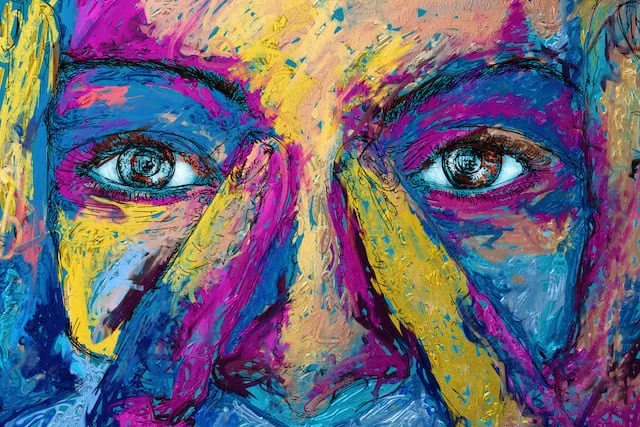
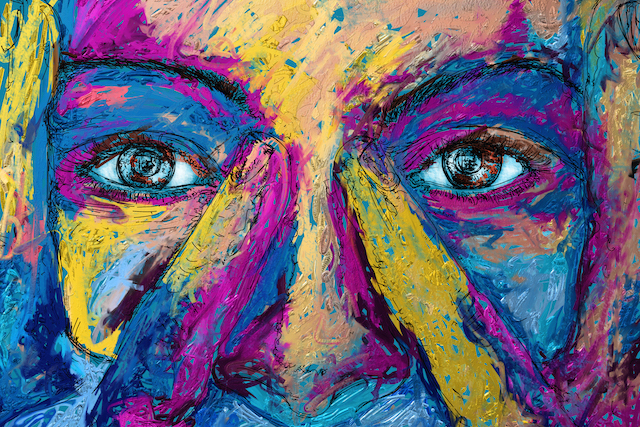
By rubbing the hands together to generate warmth and cupping them over closed eyes, one creates a void of total darkness. For the modern student or worker, this is often the first time they experience sensory deprivation during the day. It serves as an immediate, visceral check-in with the body’s underlying stress levels.
2. Distance Gazing
This involves lifting the gaze from a screen to the furthest available point. The physiological effect is profound; as the eyes relax their focal length, the mind often follows. The "grip" of the mind loosens, reflecting the transition from a cramped, urgent mental state to a more spacious, reflective one.
3. Deliberate Blinking and Hydration
Modern screen use causes the blink rate to drop by as much as 60%. Incorporating intentional blinking and using cool water to rinse the eyes can mitigate the dryness and irritation that often signal the onset of mental fatigue.
Implications for the Future of Work
The medical community is increasingly acknowledging that eye strain is not merely an ophthalmic issue, but a marker of digital burnout. The "20-20-20" rule—taking a 20-second break to look at something 20 feet away every 20 minutes—is the gold standard for advice, but as Dua points out, the intention behind the break is just as important as the mechanics of it.
If we treat rest as something that is "costly" or an interruption to productivity, we fail to recognize that rest is the essential substrate of attention. Without the ability to "un-focus," the quality of our focused work inevitably degrades.
A Re-calibration of Attention
Dua’s conclusion is both humble and transformative. He does not suggest abandoning technology; he acknowledges that screens are an inextricable part of modern life. Instead, he proposes a re-framing of the physical symptoms we experience.
When the eyes burn or the vision blurs, it should not be treated as a call to push through, but as a "message about attention." The strain is a barometer, telling us that we have been looking at one thing, too closely, for too long.
By integrating moments of "distance gazing" and "darkness," we allow the nervous system to reset. We move from a state of being "fixed" and "gripping" to one of awareness. As Dua notes, "Whatever attention actually is, it seems to need what the eyes need: distance as well as closeness, darkness as well as light, and the regular admission that a world continues past the edge of the current task."
For the modern professional, the lesson is clear: the most productive thing you can do for your work is to occasionally stop looking at it. By reclaiming the horizon, we reclaim the ability to see our lives in their proper scope, ensuring that we remain people who look at the world, rather than just objects on a screen.
In the end, rest is not the opposite of work—it is the fuel that allows our attention to endure. As the sun sets, whether it is over a neem tree or a city skyline, the ten minutes of pink light are a reminder that the world is vast, and our participation in it requires us to look up.