By Scientific Desk Reporter Published in association with paleontological findings from the American Museum of Natural History, Stony Brook University, the University of Arizona, and Arcadia University.
Introduction: A Paradigm Shift in Paleontology
For decades, introductory textbooks and peer-reviewed journals alike held a tidy, if deceptively simple, view of mammalian life during the Cretaceous period—the final epoch of the dinosaurs. Scientists relied heavily on microscopic examinations and morphological assessments of isolated teeth to piece together the lineages of early mammals. Because teeth are resilient and fossilize far more frequently than delicate skeletal structures, they became the ultimate Rosetta Stone of paleontology.
However, a groundbreaking study published today in the journal Nature proves that this tooth-centric approach, while historically invaluable, led the scientific community down a decades-long evolutionary misdirection.
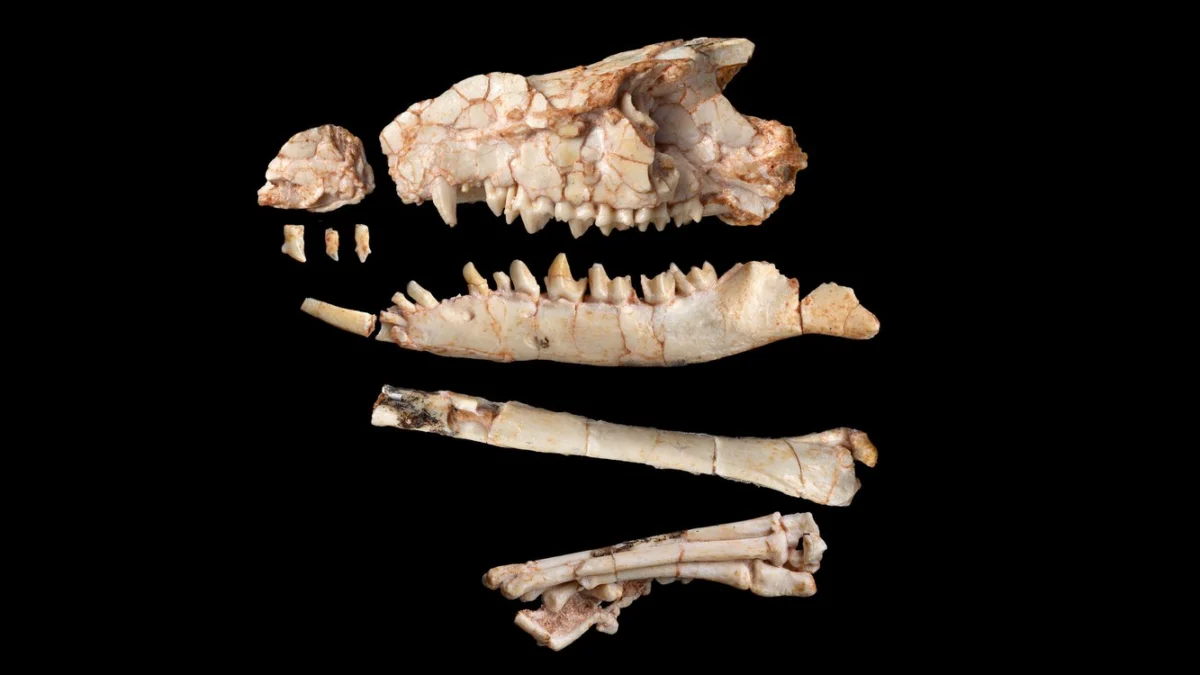
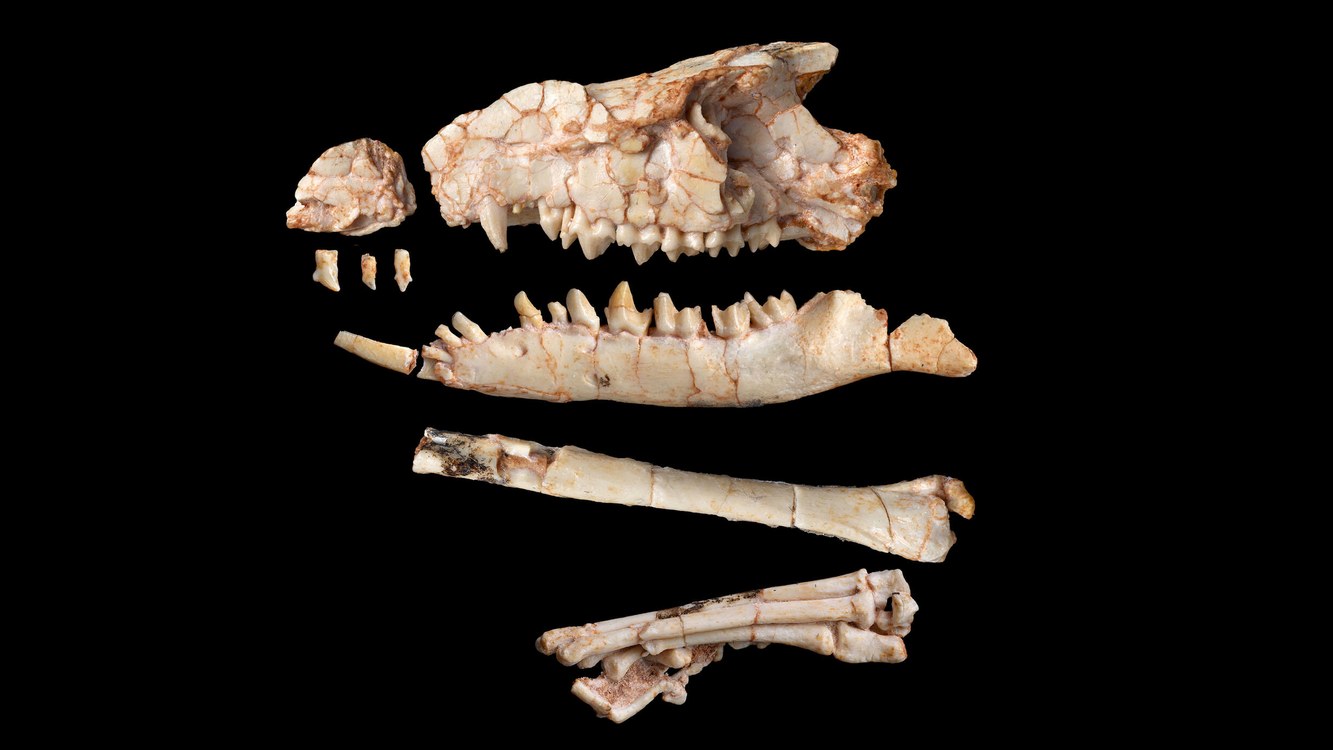
At the center of this paradigm shift is an extraordinary, remarkably well-preserved fossil unearthed in the windswept expanse of Mongolia’s eastern Gobi Desert. Named Tamirkhan balcarceli, this ancient creature—measuring a mere 6 to 7 inches from head to tail and boasting long, slender hind limbs reminiscent of a modern rabbit—has effectively shattered long-held assumptions. By providing scientists with a complete skull and partial hindlimb for an extinct group of mammals known as zhelestids, Tamirkhan has revealed that these creatures belonged to an entirely different branch of the early mammalian family tree than previously believed.
Far from being early placental mammals—the expansive lineage that today includes humans, whales, elephants, and rodents—zhelestids were part of an entirely separate group of small, shrew-like insectivore mammals known as zalambdalestoids. This revelation not only rewrites the evolutionary history of Cretaceous mammals but also serves as a humbling reminder of the limits of inferring an entire organism’s biology from a single anatomical feature.
Main Facts: What is Tamirkhan balcarceli?
The newly described species, Tamirkhan balcarceli, represents a milestone in vertebrate paleontology. To understand the gravity of the discovery, one must examine the physical traits that make the specimen so scientifically potent:
Taxonomic Realignment: Zhelestids were previously thought to be early relatives of modern placental mammals, specifically acting as an ancestral group of hoofed mammals (ungulates) due to their specialized plant-eating teeth. The discovery of Tamirkhan proves they are actually a subset of zalambdalestoids.
Morphological Paradox:Tamirkhan bridges two previously distinct worlds. It possesses the low, rounded, herbivorous-style molars characteristic of zhelestids, but pairs them with the long, ever-growing incisors and distinct skull architecture of zalambdalestoids.
Skeletal Anatomy: The fossil includes a pristine skull and partial hindlimb. Its long, slender hind legs and specialized ankle structures are unmistakably zalambdalestoid, giving the animal a morphology that paleontologists informally liken to a "Cretaceous rabbit."
Size and Ecology: Measuring roughly 6 to 7 inches long, Tamirkhan was a diminutive inhabitant of a world dominated by dinosaurs, navigating the underbrush of prehistoric ecosystems using its rabbit-like leaping capabilities.
Institutional Collaboration: The research behind this discovery was an international and cross-institutional effort, featuring leading scientists from the American Museum of Natural History (AMNH), Stony Brook University, the University of Arizona, and Arcadia University.
Chronology: A Two-Decade Journey from Desert Sand to Global Headlines
The story of Tamirkhan balcarceli is as much a testament to the endurance of field research as it is to analytical rigor. The timeline of this scientific triumph spans more than twenty years:
2004: The Expedition and Discovery
During a routine paleontological expedition to the eastern Gobi Desert sponsored by the American Museum of Natural History, a graduate student named Andres Giallombardo knelt in the arid sediment to inspect a promising outcropping. Unbeknownst to him at the moment of extraction, the fossil he bagged would become the defining find of his career. It was the most complete zhelestid specimen ever recovered, preserving critical diagnostic bones—such as the skull and hindlimbs—that had eluded researchers for nearly 40 years of prior zhelestid discoveries.
2004–2010s: The Era of Fragmentary Context
In the years immediately following the excavation, preparation and preliminary analysis revealed the specimen’s unique nature. However, placing it into a definitive phylogenetic context proved exceedingly difficult. During this period, zhelestids were known almost exclusively from isolated teeth and jaw fragments found across various Cretaceous deposits. Without a complete cranium and post-cranial skeleton, researchers lacked the anatomical framework needed to challenge the prevailing consensus that zhelestids were placental pioneers.
2013: The Launch of MorphoBank
As analytical techniques evolved, so did the digital tools required to untangle complex vertebrate phylogenies. In 2013, a comprehensive mammalian phylogenetic research platform called MorphoBank was launched. Over the subsequent decade, this database expanded exponentially, incorporating a vast matrix of key fossil species. MorphoBank provided the computational backbone and standardized comparative framework necessary for modern researchers to rigorously test the anatomical relationships of early mammals on a global scale.
Present Day: Publication in Nature
Armed with advanced imaging technologies, comprehensive comparative skeletal datasets, and the MorphoBank analytical platform, the research team finalized their phylogenetic conclusions. Today, their findings are officially published in the journal Nature, upending decades of textbook dogma and reshaping our understanding of Mesozoic mammalian diversity.
Supporting Data & Scientific Context: The Teeth That Fooled the World
To appreciate why Tamirkhan caused such a stir in the paleontological community, one must look back nearly two centuries to the foundational principles of comparative anatomy.
In the early 19th century, renowned French naturalist Georges Cuvier famously argued that a single tooth could allow scientists to predict the complete anatomy and lifestyle of an entire animal. Cuvier’s principle held sway for generations, and with good reason: teeth are enamel-coated, highly durable, and reflect an animal’s diet with great precision.
For nearly 40 years, zhelestids were known almost entirely from their teeth. Unlike many of their Cretaceous contemporaries—whose sharp, pointed teeth indicated diets dominated by insects and small prey—zhelestids possessed low, rounded molars specialized for grinding plant matter. Based on this dental specialization, paleontologists hypothesized that zhelestids were early placental mammals, perhaps representing an archaic branch of hoofed herbivores (ungulates). This hypothesis also gained theoretical backing from molecular clock studies, which suggest that modern placental lineages (Placentalia) began diversifying long before the Cretaceous-Paleogene extinction event wiped out the non-avian dinosaurs 66 million years ago.
However, Tamirkhan balcarceli shatters the absolute reliability of Cuvier’s dental rule. While its teeth pointed toward a plant-based diet and suggested a placental affinity, its skull and hindlimbs told a radically different story.
The presence of long, ever-growing incisors and distinct ankle morphology firmly roots Tamirkhan within the zalambdalestoid clade—a group of small, shrew-like mammals that evolved entirely independently of modern placentals. This realization points to a powerful phenomenon in evolutionary biology: convergent evolution. Unrelated lineages of mammals, facing similar ecological pressures and dietary opportunities in Cretaceous ecosystems, independently evolved similar rounded, grinding tooth structures. Consequently, Cretaceous mammals were not nearly as anatomically diverse in terms of broad mammalian lineages as their diverse tooth shapes had previously led scientists to believe.
Official Responses: Voices from the Field
The researchers behind the study have emphasized both the personal thrill of the discovery and its broader philosophical implications for the science of paleontology.
"This discovery illustrates why fieldwork remains indispensable to understanding life’s history," said Andres Giallombardo, the study’s lead author, who discovered the specimen as a graduate student on the 2004 museum-sponsored expedition.
"It was the thrill of a career to find a new species so completely preserved that also solves a longstanding scientific problem, and a reminder that the Gobi Desert, which is well known for fossils, continues to change science."
The Gobi Desert has long been celebrated as one of the world’s premier graveyards for dinosaurs, yielding iconic finds like Velociraptor and Protoceratops. However, Tamirkhan highlights the desert’s equally vital role in illuminating the shadows of the Mesozoic, where mammals lived under the feet of titanic reptiles.
Shawn Zack, a paleontologist at the University of Arizona and co-author of the study, elaborated on the anatomical specifics that clinched the classification:
“Tamirkhan’s hind legs are long and slender with distinctive ankles, traits that are unmistakably zalambdalestoid.”
Meanwhile, Maureen O’Leary, a paleontologist at Stony Brook University and research associate at the American Museum of Natural History, reflected on the historical weight of the discovery regarding anatomical methodology:
"More than 200 years ago, French naturalist Georges Cuvier famously argued that a single tooth could allow scientists to predict the anatomy of an entire animal. While teeth remain among the most informative fossils available, this work demonstrates that teeth cannot always tell us how the whole animal looked."
Implications: Rewriting the Textbooks of the Mesozoic
The implications of the Tamirkhan discovery extend far beyond the taxonomy of a single 7-inch creature.
Re-Evaluating the Fossil Record: Paleontologists must now re-examine other fragmentary Cretaceous mammal species whose classifications were erected primarily on dental evidence. If zhelestids were misidentified for forty years based on their teeth, how many other lineages occupy misplaced branches on the mammalian family tree?
The Power of Open-Access Databases: The study underscores the critical importance of collaborative digital infrastructure. Without platforms like MorphoBank—which allow researchers to aggregate and analyze massive matrices of skeletal traits across global institutions—resolving complex evolutionary puzzles like the placement of Tamirkhan would take decades longer.
Understanding Cretaceous Ecosystems: The realization that zhelestids were convergent "Cretaceous rabbits" rather than incipient ungulates paints a clearer picture of how early mammals partitioned ecological niches. These small animals were experimenting with herbivory and specialized locomotion long before the asteroid impact cleared the ecological stage for the Age of Mammals.
As researchers continue to clean, scan, and analyze specimens stored in museum vaults and unearth new treasures from remote expanses like the Gobi Desert, Tamirkhan balcarceli stands as a monumental reminder: in the vast theater of evolutionary history, a single well-preserved skeleton can overturn decades of assumptions and bring the ancient world sharply into focus.