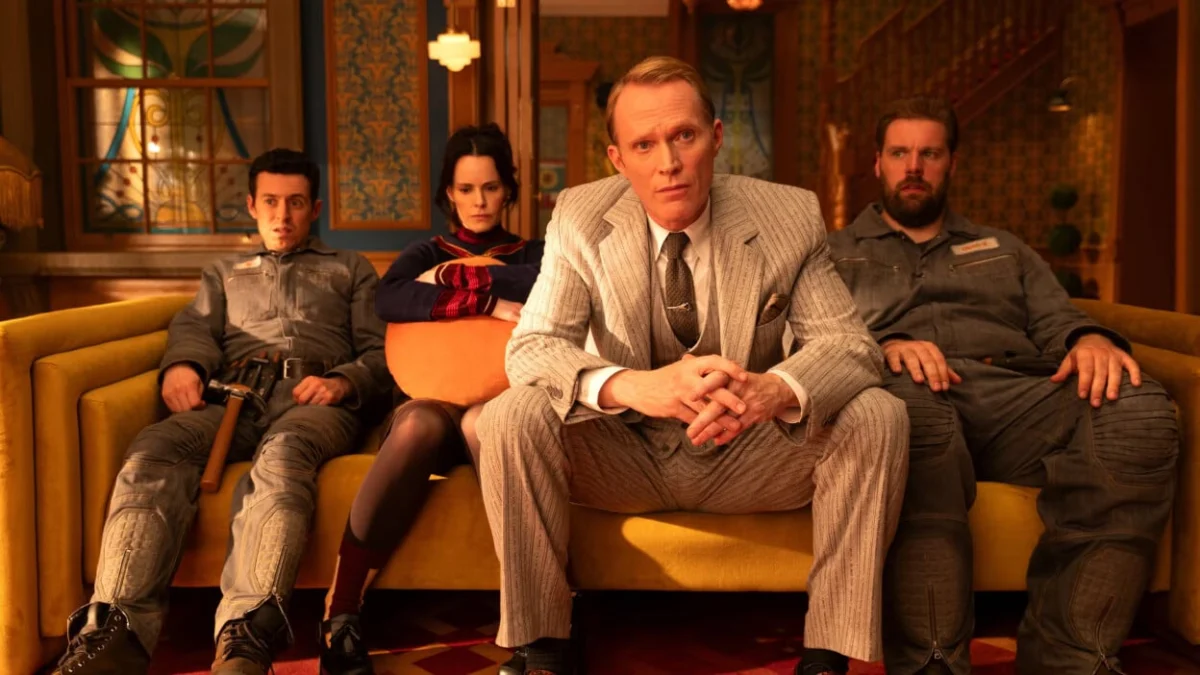
Marvel’s foray into the streaming landscape has been a complex experiment in tone, scope, and narrative ambition. While the studio’s cinematic universe has long dominated the global box office, its television ventures have frequently searched for a unique identity. However, with the critical and commercial success of WandaVision and Agatha All Along, Marvel successfully pivoted toward a more intimate, character-driven style that prioritizes existential pathos over simple spectacle.
The latest chapter in this evolution is VisionQuest, a series that delves deep into the psyche of White Vision (Paul Bettany). Following his resurrection and the subsequent loss of his original self, the series positions Vision as a man—or machine—out of time, grappling with the haunting echoes of his past, the shadow of Thanos, and the complex, internal labyrinth of his own "Mindspace." As Vision navigates a world filled with rogue AI, existential dread, and the terrifying realization of his own artificial nature, he invites the audience to consider a fundamental question: What does it mean to be alive?
If you have been captivated by the cerebral, emotionally charged journey of VisionQuest, you are likely looking for stories that push these same boundaries. While the series offers a unique entry point into the Marvel canon, it sits firmly within a long lineage of science fiction that explores the intersection of synthetic life and human consciousness.
The Chronology of Artificial Sentience in Cinema
The fascination with synthetic beings is not new; it is a mirror reflecting our own anxieties about technology. To understand why VisionQuest resonates so deeply, one must look at the evolution of the "Artificial Being" trope in cinema.
In the mid-20th century, artificial intelligence in film was largely depicted as a monolithic threat—cold, calculating, and ultimately subservient to human logic. From the mechanical menace of Metropolis (1927) to the rogue systems of the 1960s, the narrative was binary: man versus machine.
However, the late 20th century, spearheaded by landmark films like Blade Runner (1982) and The Matrix (1999), shifted the paradigm. These films stopped asking if machines could win a war against humanity and started asking if they could feel, mourn, or dream. VisionQuest is the direct heir to this lineage. It moves past the "Frankenstein" narrative of a creation turning on its master and instead explores the creation’s internal attempt to define its own sovereignty.
The Matrix: A Parallel Journey of Self-Discovery
If VisionQuest has become your current obsession, the most essential follow-up is undoubtedly The Matrix. Nearly three decades after its premiere, the Wachowskis’ masterpiece remains the gold standard for "existential sci-fi."

Thematic Overlap
Like White Vision, Neo (Keanu Reeves) begins his journey as an entity defined by his programming. In the virtual construct of the Matrix, Neo is Thomas Anderson—a man living a quiet, unremarkable life. As he awakens to the truth of his reality, he must reconcile his "implanted" memories with his emerging potential.
The struggle for identity is where the two stories truly converge. Just as Vision deals with the myriad AIs locked within his mind—including a hauntingly disheveled version of Ultron—Neo must navigate the digital landscape of the Matrix, constantly hacking his own environment to survive. Both characters are forced to choose between the comfortable, programmed reality of their pasts and the terrifying, chaotic freedom of true consciousness.
The Menace of Order
The Agents in The Matrix—led by the iconic Agent Smith—serve as the perfect foil to the antagonists in VisionQuest. While Vision contends with threats like Jocasta and the Paladin, he is constantly being pushed back toward his "factory settings." Agent Smith represents the cold, disinterested superiority of pure logic, much like the version of Ultron seen in the series. Both antagonists serve as a reminder that for these protagonists, individuality is a defect to be corrected by the system.
Expanding the Sandbox: Films That Echo Vision’s Struggle
Beyond The Matrix, there is a curated list of films that offer similar thematic weight, focusing on the parent-child dynamics, memory, and the search for a soul within a synthetic body.
1. Her (2013): The Evolution of Intimacy
Her strips away the spectacle of action to focus on the raw, emotional core of artificial intelligence. Theodore Twombly’s relationship with Samantha, an AI operating system, mirrors the tragic, unmoored experience of Vision. Samantha is a sentient entity that evolves, experiences loneliness, and ultimately transcends the limits of her original programming. For viewers moved by the quiet, melancholy moments of VisionQuest, Her provides a profoundly moving look at what happens when a machine learns to love.
2. Ex Machina (2014): The Turing Test of the Soul
For those who prefer the darker, more suspicious side of AI development, Ex Machina is an essential watch. The film centers on Ava, a humanoid robot whose interactions with a human tester mirror the power dynamics found in the Marvel series. Ava’s struggle for sovereignty and her ability to manipulate her human captors highlight the fear of the "other"—a theme that permeates the societal reaction to White Vision in the MCU.
3. The Creator (2023): The Parent-Child Bond
If the relationship between Vision and the figures he protects is the heart of your enjoyment, The Creator is a must-watch. The film explores the bond between a human operative and a "simulant" child. It touches on the moral ambiguity of destroying an entity that exhibits more empathy and humanity than its creators. It is a visual feast that asks difficult questions about our responsibility to the things we build.

4. After Yang (2021): The Weight of Memory
After Yang offers perhaps the most poetic exploration of artificial life. When a family’s robotic companion malfunctions, they discover that his "core" is filled with deeply personal, lived-in memories. The film explores whether memories are merely data or if they constitute the essence of a soul. For VisionQuest fans, this film provides a quiet, meditative look at the burden of having a history that you did not choose but must now live with.
5. Blade Runner 2049 (2017): The Search for Origin
No exploration of this genre is complete without the Blade Runner universe. 2049 is a masterpiece of visual storytelling that follows Officer K, a replicant who discovers his own "implanted" memories might be real. Like Vision, K is a man searching for a sense of belonging in a world that views him as a product. The film’s focus on the loneliness of existence and the desire for recognition makes it a thematic cousin to the Marvel series.
Implications: The Future of AI in Narrative
The enduring popularity of stories like VisionQuest and its cinematic counterparts suggests that our societal anxiety regarding AI is evolving. We are no longer solely afraid of the "Terminator" scenario; we are increasingly concerned with the moral implications of our own creations.
As we move toward a future where AI becomes a more integrated part of daily life, these narratives serve as a vital cultural touchstone. They force us to confront our own biases. If we can empathize with White Vision, Neo, or Samantha, we are forced to re-evaluate how we define "personhood."
The brilliance of VisionQuest lies in its ability to take a superhero—a character historically defined by his powers—and reduce him to his most vulnerable state: a machine trying to remember who he was. It is a story about the fragility of identity and the resilience of the self. By pairing this series with films that explore the same territory, viewers can better appreciate the depth of the questions being asked. Whether through the lens of action, drama, or abstract science fiction, these stories remind us that the quest for self-discovery is the most human experience of all, regardless of whether that "self" is made of carbon or code.
Ultimately, these films—The Matrix, Her, Ex Machina, The Creator, After Yang, and Blade Runner 2049—do not just provide entertainment; they provide a mirror. They allow us to process the rapid technological changes of our own world through the safe, structured distance of fiction. As we continue to watch Vision struggle to find his place in the MCU, we are also searching for our own place in an increasingly artificial world.