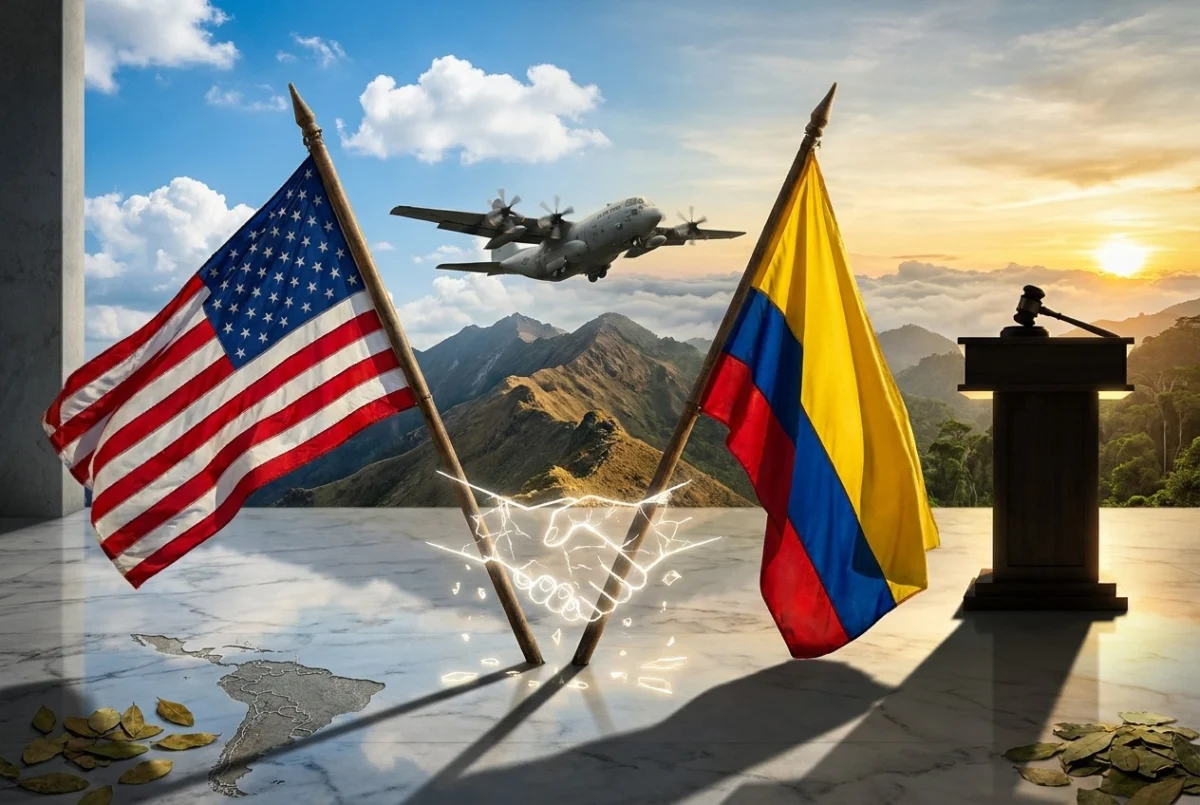
BOGOTA, COLOMBIA — In a high-stakes diplomatic exchange underscoring the delicate balance of international security partnerships, Colombian President Abelardo De La Espriella has vehemently denied reports that his administration rejected a sweeping U.S. military cooperation plan targeting transnational drug cartels.
The controversy erupted following a report by The New York Times, which cited anonymous U.S. officials claiming that Bogota had turned down a Washington-proposed initiative for boots-on-the-ground joint military operations within Colombian borders. The public dispute highlights underlying tensions as the administration of U.S. President Donald Trump dramatically intensifies military pressure on illicit drug-trafficking networks across the Western Hemisphere.
Despite the conflicting narratives emerging from Washington and Bogota, both nations continue to emphasize the enduring strength of their decades-long security alliance. However, the episode has thrust complex questions of national sovereignty, constitutional limitations, and the legal frameworks governing foreign military presence back into the spotlight.
Main Facts
The core of the international dispute centers on contrasting accounts of high-level diplomatic communications regarding regional counter-narcotics strategy.
- The Denial: Taking to the social media platform X on Thursday, Colombian President Abelardo De La Espriella explicitly stated that reports alleging the rejection of a U.S. military cooperation plan are entirely false. He maintained that his government has not turned down any formal proposal from President Trump’s administration.
- The Original Report: On Wednesday, The New York Times published an article citing unnamed U.S. officials who asserted that the Colombian presidency had rebuffed a U.S. proposal for joint military interventions against cartels operating inside Colombia. Regional media outlets quickly amplified the story, characterizing it as a significant roadblock to the Trump administration’s aggressive regional anti-cartel campaign.
- Ongoing Collaboration: President De La Espriella countered these claims by stressing that bilateral cooperation regarding security, intelligence sharing, and anti-crime initiatives remains robust and continuously evolving.
- The Sovereignty and Legal Hurdle: Under Colombian constitutional law, the stationing and entry of foreign military personnel require explicit authorization from the national legislature—a hurdle that has historically complicated foreign security entanglements. Reports from local media suggested that any potential hesitation from the executive branch stemmed from a lack of sufficient legislative votes to pass such an agreement, rather than an outright rejection of the partnership’s goals.
Chronology of Events
To understand how a routine diplomatic discussion escalated into a public friction point, it is necessary to examine the sequence of events leading up to the recent statements from Washington and Bogota.
Phase 1: Escalating Regional Pressure (December 2025)
The Trump administration significantly ramps up its kinetic and legal measures against Latin American drug trafficking syndicates. In December, the U.S. State Department officially designates Colombia’s powerful Clan del Golfo as a Foreign Terrorist Organization (FTO), weaponizing counter-terrorism authorities to target the cartel’s financial networks, cocaine export streams, and leadership structure.
Phase 2: The Leak and the New York Times Publication (Wednesday)
Citing confidential sources within the U.S. defense and diplomatic apparatus, The New York Times reports that Washington recently proposed a framework for joint military operations within Colombian territory. According to the report, the proposal was met with a refusal from President De La Espriella’s administration. The news circulates rapidly through international and domestic Colombian media, framing the development as a diplomatic setback for the White House’s Latin America strategy.
Phase 3: The Presidential Rebuttal (Thursday)
After roughly 24 hours of unchecked media speculation, President De La Espriella breaks his silence via X. He issues a definitive denial regarding the rejection of any U.S. military plan, assuring the public that security and intelligence channels between Bogota and Washington remain fully operational and collaborative.
Phase 4: Pragmatic Engagement and On-the-Ground Diplomacy (Upcoming)
Despite the rhetorical crossfire, practical cooperation moves forward. Colombian defense officials confirm that U.S. War Secretary Pete Hegseth is scheduled to visit Bogota. The high-level visit is set to include the official delivery of a Hercules C-130 transport plane to the Colombian military, alongside bilateral talks aimed at reinforcing technological and operational capabilities.
Supporting Data and Geopolitical Context
The friction between the United States and Colombia cannot be viewed in a vacuum; it occurs against a backdrop of shifting U.S. foreign policy in Latin America and stringent legal frameworks governing national sovereignty.
The Legislative Bottleneck
The legal debate underpinning the current controversy is substantial. According to Colombian jurisprudence, the executive branch cannot unilaterally invite foreign armed forces to conduct operations within national borders without prior approval from the country’s congress. Furthermore, decisions of this magnitude are subject to rigorous review by Colombia’s Constitutional Court.
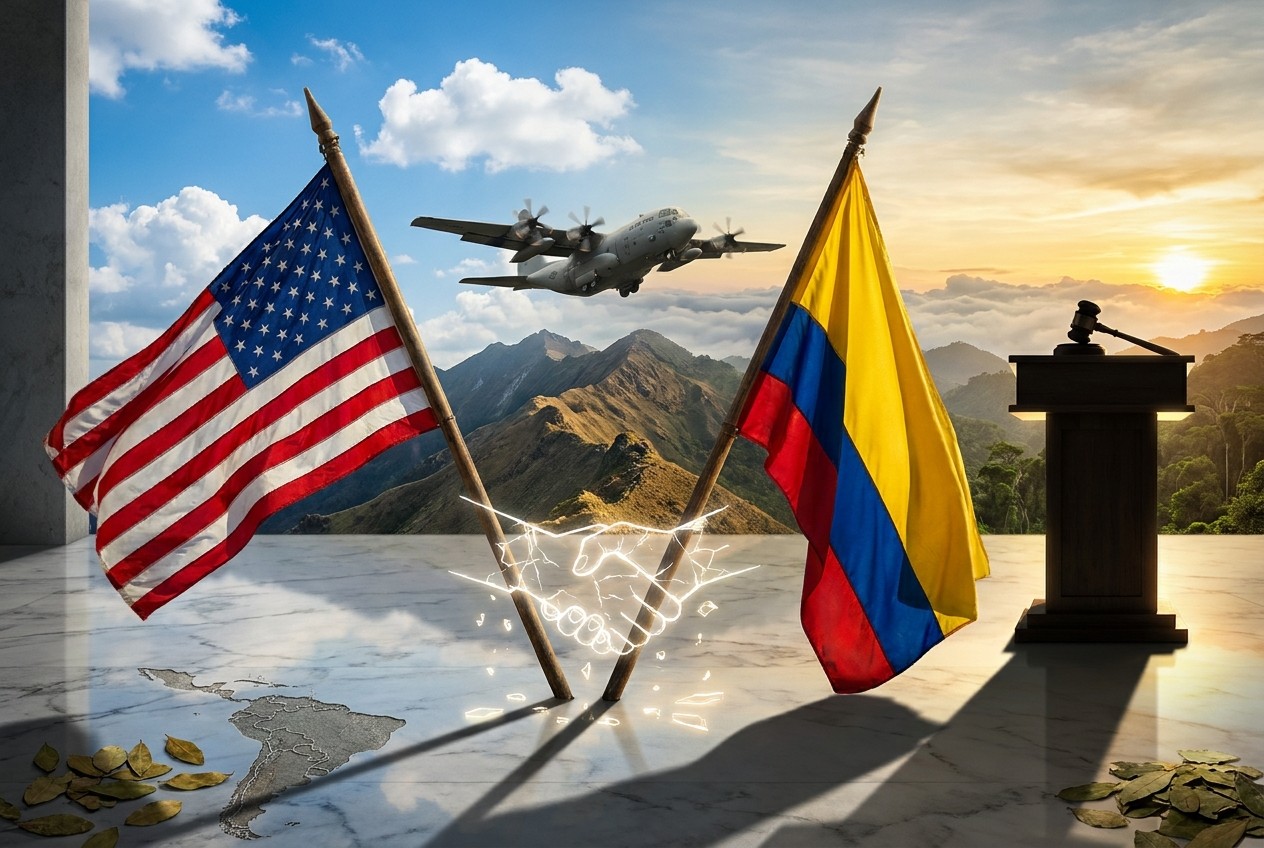
Analysts note that executive caution in Bogota is often driven by domestic political realities rather than a lack of desire to combat cartels. Without a guaranteed legislative majority to ratify foreign military arrangements, any agreement risks being struck down domestically, leading to political embarrassment and constitutional crisis.
Parallels Across Latin America
This delicate balancing act between accepting U.S. assistance and protecting sovereign airspace is not unique to Colombia. Similar debates have played out across the region. In January, the Mexican government publicly announced it had received explicit written assurances from Washington guaranteeing that U.S. military aircraft would neither operate over Mexican territory nor enter sovereign Mexican airspace. These regional friction points highlight the persistent sensitivity surrounding foreign military footprints in Latin America, where memories of historical interventions still influence contemporary politics.
Shifting U.S. Strategies: Capabilities vs. Boots on the Ground
President De La Espriella’s administration has consistently signaled that Colombia’s primary needs from Washington involve technological upgrades, operational training, intelligence sharing, and logistical enhancements rather than the deployment of foreign combat troops.
This nuanced approach allows Bogota to maintain its frontline position in the war on drugs while avoiding the domestic political fallout associated with hosting foreign military units. By focusing requests on hardware—such as the upcoming delivery of the Hercules C-130 transport aircraft facilitated by War Secretary Pete Hegseth—Colombia seeks to bolster its own sovereign capacity to police remote jungles and border regions where cartels operate with impunity.
Official Responses and Diplomatic Posture
The public statements from both governments reveal a calculated effort to compartmentalize high-level strategy discussions from day-to-day security cooperation.
- The Colombian Government: While President De La Espriella’s office forcefully denied rejecting a formal U.S. plan, the administration has remained reticent regarding the exact specifics of what was—or was not—discussed behind closed doors. Neither the text of any proposed diplomatic note nor the specific parameters of potential joint operations have been made public by Bogota. The emphasis remains firmly on framing the relationship as a partnership of equals working toward mutual security objectives.
- The United States Government: As of Thursday, the White House and the Pentagon have maintained a measured public posture, declining to release formal documentation of the alleged proposal or comment directly on the purported rejection. However, the scheduled visit of War Secretary Hegseth serves as a tangible indicator that Washington views the broader strategic alliance as stable, prioritizing ongoing military assistance programs over diplomatic squabbles.
Implications for Regional Security
The episode leaves several critical questions unanswered, yet it provides valuable insight into the future trajectory of U.S.-Colombian counter-narcotics efforts.
Historical Precedents of Friction
Bilateral relations between Washington and Bogota have weathered numerous storms over the decades. Historical friction points include the 1997 U.S. "decertification" of Colombia as a reliable partner in the war on drugs amid campaign-finance controversies—a move that prompted threats from Bogota to suspend anti-narcotics cooperation. Despite these historical cycles of public rupture followed by pragmatic accommodation, the two nations have consistently found ways to align their core security interests.
The Trust Deficit in Public Declarations
The conflicting narratives between The New York Times report and President De La Espriella’s denial highlight a broader challenge in modern geopolitics: the verification of sensitive security communications. Critics of aggressive regional interventionism have frequently pointed out that Washington has historically claimed partner-nation consent for operations that local governments later minimized or disavowed. This dynamic can complicate public trust and fuel domestic political polarization within partner countries.
Looking Ahead
Ultimately, the immediate diplomatic storm appears to be subsiding into pragmatic realism. As transnational cartels continue to adapt their smuggling routes, financial laundering techniques, and violent methodologies, both Washington and Bogota recognize that neither nation can effectively dismantle these networks alone.
Whether future security frameworks will involve joint tactical operations or remain focused on intelligence sharing and capacity building will depend heavily on domestic political dynamics within Colombia and the evolving strategic demands of the Trump administration’s hemispheric anti-cartel campaign. For now, both governments appear invested in downplaying public disagreements to ensure that the decades-old fight against drug trafficking remains uninterrupted.