In an era where our lives are increasingly fragmented across dozens of digital silos, the challenge of maintaining a coherent personal narrative has never been greater. We track our finances in banking apps, our professional tasks in project management software, and our physical exertion in fitness trackers. For years, the digital athlete has been forced to keep their performance data—the "what" and the "how far"—entirely separate from their lived experience—the "why" and the "how it felt."
Today, Day One, the premier digital journaling platform, is bridging that divide. With the launch of its native Strava integration, the company is fundamentally altering how users interact with their physical history. By automatically importing workouts directly into the journal, Day One is transforming cold, hard metrics into living, breathing chapters of a personal memoir.
The Core Integration: Bridging Metrics and Memories
At its heart, the new feature—available for Day One Silver subscribers—is a bridge between the quantified self and the reflective self. Version 2025.22 of the Day One application for iOS, iPadOS, and the web now serves as a central repository for Strava activities.
"Our mission has always been to help you document life as you live it," the company stated in a recent press release. "By bringing Strava into the mix, we are ensuring that every ride, run, hike, or walk becomes a permanent part of your personal story."

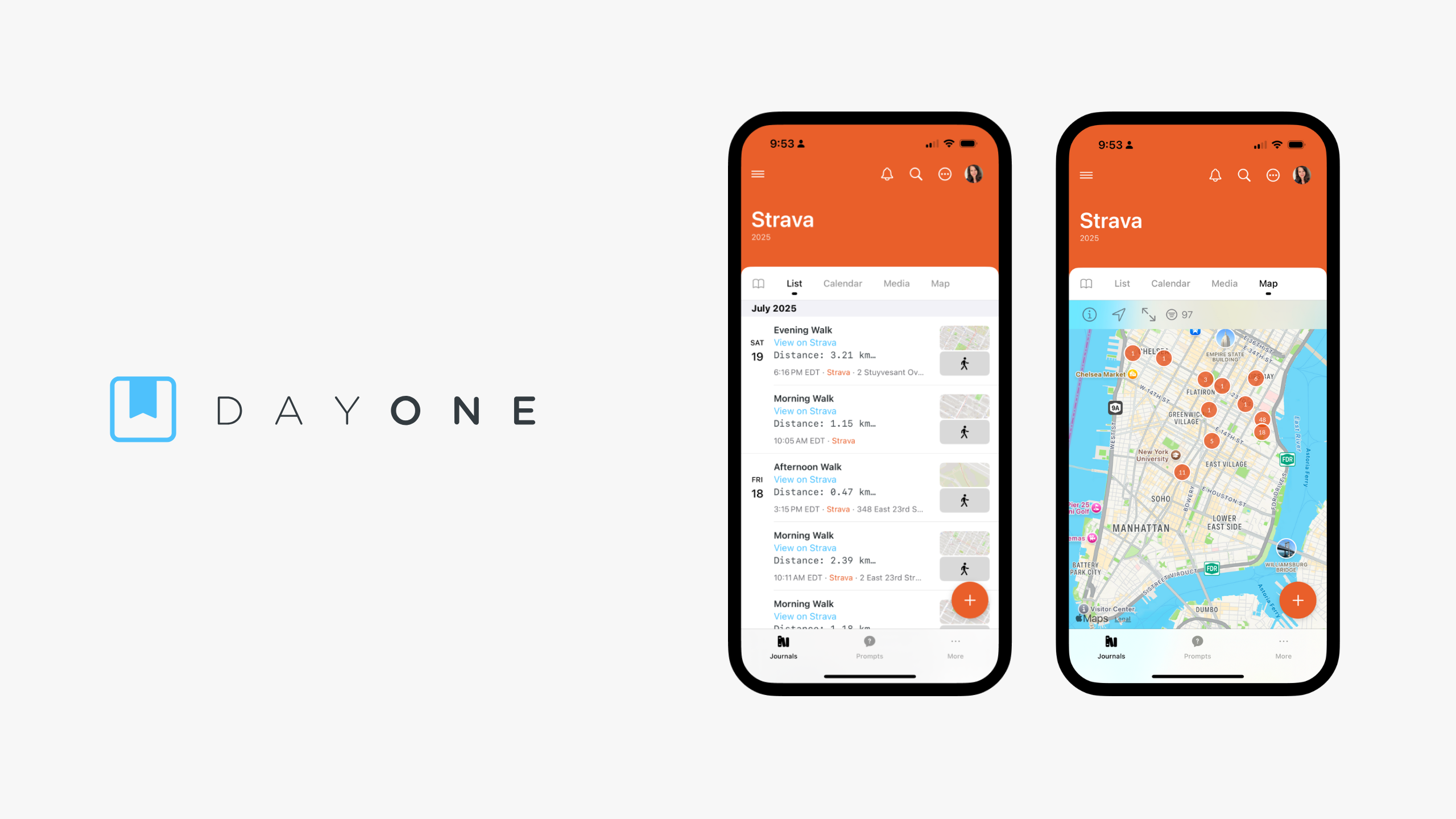
When a user completes a workout on Strava, the data—ranging from GPS routes and elevation gain to pace and duration—is automatically pulled into Day One. However, the true value of this integration lies not in the data itself, but in the environment it creates. Once imported, the activity becomes a standard journal entry. This allows the user to append personal commentary, upload post-run photos, link videos, or record audio reflections.
A Chronology of the User Journey
The integration functions as a seamless background process. For the casual jogger, this means that a morning run is no longer just a line item on a fitness app; it becomes a dated, searchable, and printable entry in a journal that catalogs their life.

The Setup Process
Getting started with the integration is designed to be frictionless, emphasizing user autonomy:
- Navigation: Users access the integration settings within the Day One menu.
- Authorization: By selecting the Strava integration, users are prompted to securely link their Strava account via OAuth.
- Data Syncing: Upon initial connection, the system immediately pulls recent activity. A background service then begins the process of backfilling historical data, ensuring that years of athletic achievement are not left behind.
- Customization: Once synced, users can categorize these entries, add tags, or move them into specific journals, allowing for a highly organized retrospective of their fitness journey.
The Lifecycle of an Activity
The process is iterative. If a user discovers a data error in their Strava log or decides to adjust their privacy settings after the fact, Day One offers a "resync" function. This ensures that the digital journal remains a living document, capable of reflecting updates made in the source application.

Supporting Data and Technical Nuance
The technical architecture of this integration is robust, prioritizing both data fidelity and user experience.
- Mapping Capabilities: While the integration does not merely copy the static image files from Strava, it reconstructs the activity map using the raw GPS data provided. This allows for a clean, cohesive look that matches the aesthetic of the Day One interface while maintaining geographic accuracy.
- Media Integration: Users often capture photos of their surroundings during a long hike or ride. Because Day One pulls media alongside the metadata, the journal entry acts as a rich multimedia scrapbook.
- Step Count Discrepancies: A common point of confusion for users is the discrepancy between internal pedometer data and Strava-imported activity. Because Strava does not provide raw step counts, Day One calculates these based on distance and pace. While highly accurate, users should expect minor variations from native health-app data.
The "Silver" Philosophy: Why Subscription Matters
The requirement for a "Day One Silver" subscription highlights the company’s focus on privacy and data integrity. By keeping this feature within a paid tier, Day One maintains a business model that relies on user subscriptions rather than data monetization or advertising. This is a critical distinction in the modern fitness-tech landscape, where user health data is often harvested for third-party insights. For the user, the cost of the subscription is effectively an investment in the longevity and security of their personal archive.

Implications: The Psychological Shift in Exercise
Perhaps the most profound implication of this integration is the shift it encourages in the user’s relationship with exercise. Historically, fitness apps have gamified movement through leaderboards, segments, and personal bests. While effective for motivation, this approach can sometimes turn exercise into a chore or a source of anxiety.
By placing these achievements in a journal, Day One encourages a more holistic view. A runner looking back at their entry from three months ago might see a "slow" run, but reading their own journal note from that day—perhaps describing a difficult day at work or the beauty of the autumn foliage—adds necessary context. It transforms a "poor performance" into a moment of resilience or mindfulness.

Printing the Legacy
For those who prefer the tactile, the integration extends to Day One’s book-printing service. Users can curate their activities, along with their associated journal notes and photos, into high-quality, physical volumes. This turns years of training into a tangible legacy, suitable for coffee tables or keepsakes. It is an acknowledgment that the most important "personal bests" are the ones we carry in our memories, not just the ones tracked by a satellite.
Looking Forward: The Roadmap
While the integration is currently available for iOS, iPadOS, and Web, the company has officially confirmed that an Android version is in active development. This expansion is essential for the platform’s goal of being a universal home for digital documentation.

As we look toward the future of the "quantified self," it is clear that simple data tracking is no longer enough. Users want context. They want to see how their physical health intersects with their mental well-being and their daily experiences. By successfully integrating the granular data of Strava with the reflective nature of journaling, Day One has positioned itself as the definitive platform for those who view their health not as a series of numbers, but as a long-term, unfolding story.
For the dedicated athlete and the casual walker alike, the message is clear: your journey is worth documenting, and now, it is easier than ever to ensure that no mile, no summit, and no sunrise run goes forgotten. Whether you are training for your first marathon or simply tracking your daily steps, the new Day One-Strava integration provides the tools to turn every movement into a lasting memory.