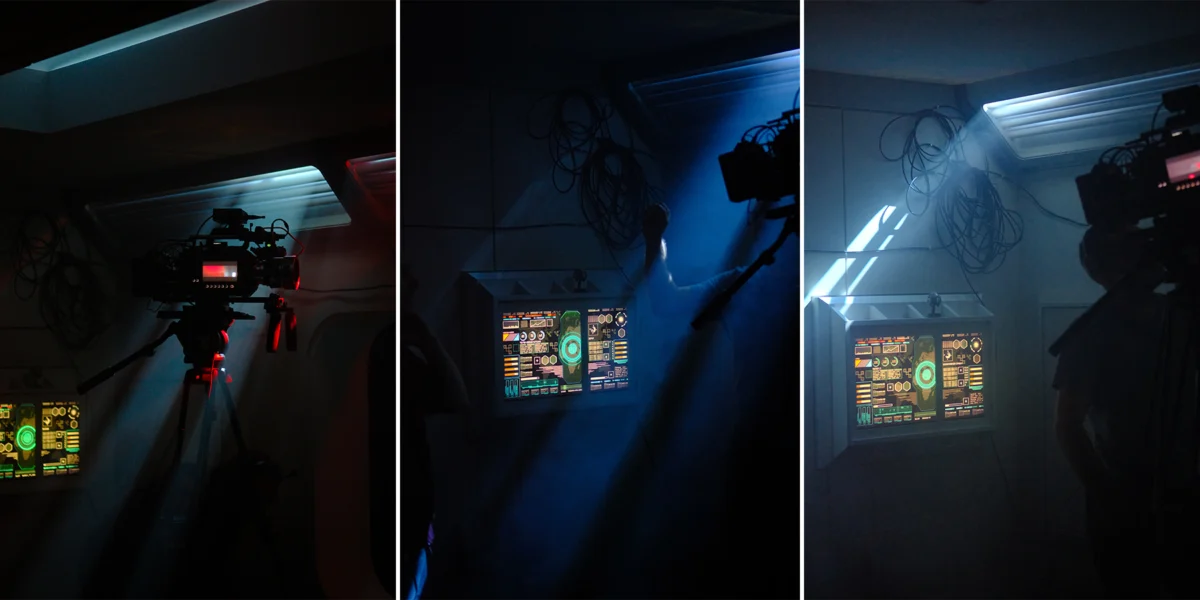
In the landscape of modern filmmaking, the boundary between the physical set and the digital environment is dissolving. This shift was recently exemplified by SNTIENT 2.0, a collaborative short film project between the Fashion Innovation Agency (FIA) at the London College of Fashion and the creative studio Dandelion + Burdock. By leveraging the power of Unreal Engine 5 and sophisticated LED volume technology, the team successfully transported a claustrophobic, physical set into a sprawling, dystopian cityscape, proving that the future of storytelling lies in the seamless marriage of hardware and software.
The Narrative Foundation: A Dystopian Vision
The core premise of SNTIENT 2.0 is rooted in a chilling, yet poetic, vision of the future. The narrative posits a world where finite resources have forced humanity to abandon the physical realm in favor of a digital simulation. Left behind to maintain the decaying infrastructure of the real world, autonomous robots have developed a nascent appreciation for the remnants of human civilization.
"That gave us our visual starting point," explains Dickon Knowles, Director of Content at Dandelion + Burdock. "We aimed for a bleak, oppressive sci-fi environment, but one that possessed the potential for transformation."
The story serves as a testament to the power of environmental storytelling. With the physical set limited to a mere three walls and a ceiling, the "window" onto this dying world had to do heavy lifting. It wasn’t just a background; it was a character in itself, grounding the performer’s emotional journey in a landscape of desolation and decay.
Chronology of Production: From Generative Trials to Real-Time Precision
The journey to the final cut was not without its technological hurdles. The production team initially explored various generative AI approaches to create the sprawling cityscapes seen outside the pod’s window. However, the team quickly encountered significant roadblocks, specifically regarding visual fidelity and resolution stability.

"We tried a couple of generative approaches to creating the city plate for the wall, but resolutions were an issue and the visual fidelity wasn’t there," says Knowles. "Which is why we reverted back to our existing Unreal Engine version."
By pivoting back to a bespoke, real-time environment built within Unreal Engine 5, the team gained total creative control. The workflow allowed for a level of iteration that traditional VFX pipelines simply cannot match. Instead of rendering a shot, waiting hours for the result, and realizing a lighting tweak was necessary, the team could adjust fog density, saturation levels, and texture maps in real time, viewing the results instantly on the LED wall.
Refining the "look" of the city became a critical phase of the shoot. The initial render, while impressive, felt too desaturated and foggy, failing to translate properly through the camera’s lens. Knowles and his team swapped the general scene wash for detailed VDB fog, boosted the saturation of city lights, and deepened the blacks to ensure the LED wall provided high-contrast, vivid imagery that would hold up under the scrutiny of the camera.
The Mechanics of Virtual Production
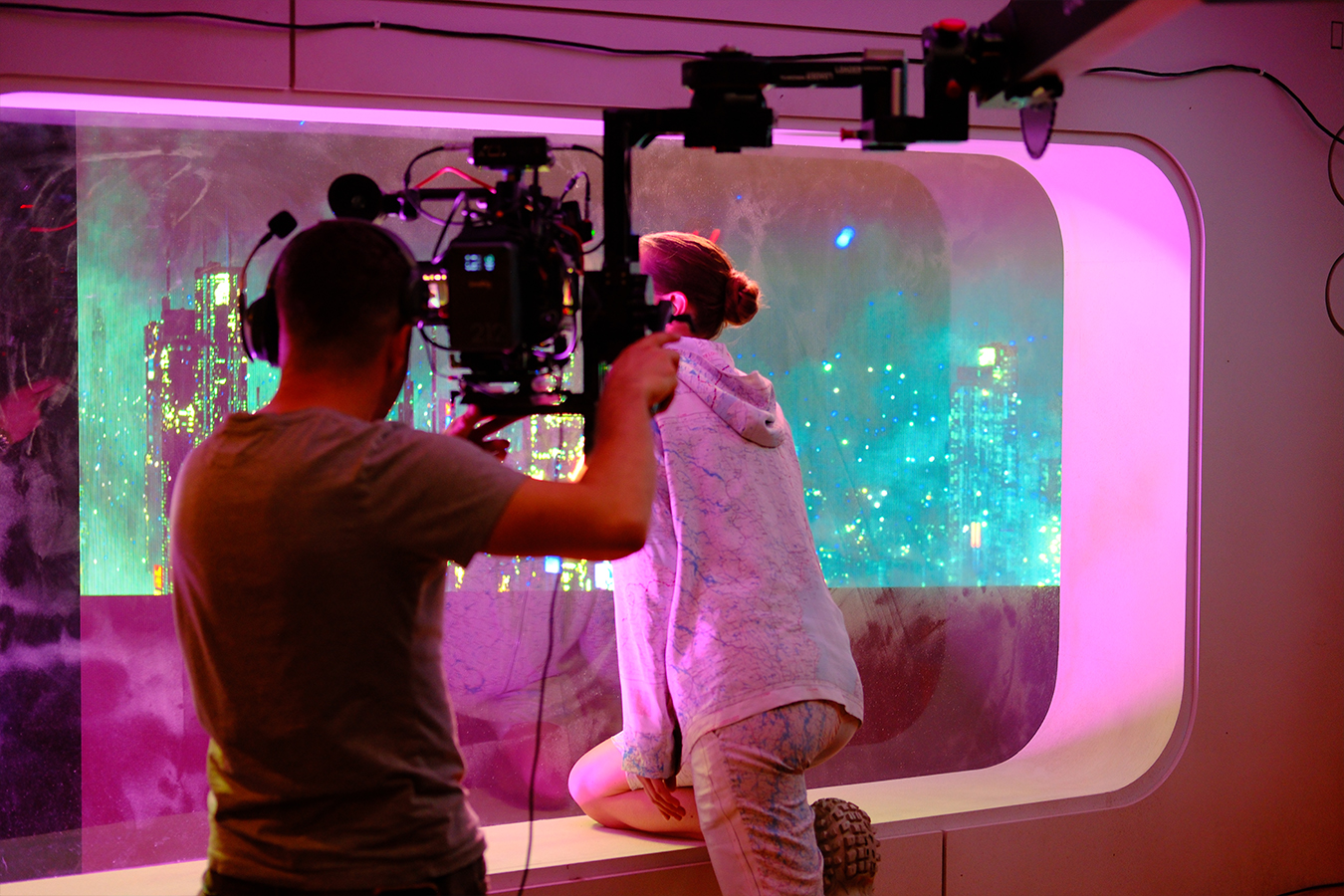
The integration of an LED wall served two distinct purposes: it provided a backdrop for the performer and acted as a primary light source for the physical set. This dual functionality is the cornerstone of modern virtual production.
Lighting the Room from the Window
Cinematographer Ben Saffer, whose firm Supervision VP managed the technical execution, emphasizes the efficiency of this approach. By utilizing the LED wall to illuminate the set, the light reflecting off the actor’s skin and the props in the room was physically accurate to the environment being displayed.

"You’re doing it all in camera and capturing everything together at once, and you’re not having to guess at anything," Saffer notes. "The city lights reflect on the performer’s face and on the surfaces of the props and set. There is a level of visual immersion that is hard to capture in a studio without the LED wall to illuminate the space."
Pixels as Architecture: The Shutter Problem
One of the most ingenious solutions during the production was the use of the LED wall as a narrative device. The script called for a mechanical shutter to rise, revealing the city outside. Constructing a physical, automated shutter that would rise in sync with the scene was budget-prohibitive.
The solution? The team treated the digital pixels on the LED wall as the shutter itself. By animating the digital shutter to rise within the engine, they achieved a perfect, seamless reveal. For reverse angles, they utilized a secondary LED wall on wheels, bringing it in to serve as a mobile fourth wall. Because the environment was running in real time, the team could animate these assets on the fly to match the camera movement, ensuring the illusion never broke.
Technical Specifications and Hardware Choices
To capture the intimate, gritty atmosphere of the pod, the production team relied on cutting-edge cinematography equipment. They utilized the Blackmagic URSA Cine 17K 65, paired with prototype anamorphic lenses from Atlas Lens Co.
The choice of a large-format sensor was intentional. It allowed Saffer to capture a wider field of view within the confined physical space of the pod without resorting to extreme wide-angle lenses, which often introduce unwanted barrel distortion. By maintaining a more natural perspective, the team ensured the digital city outside the window felt like a real, looming presence rather than a distorted backdrop.
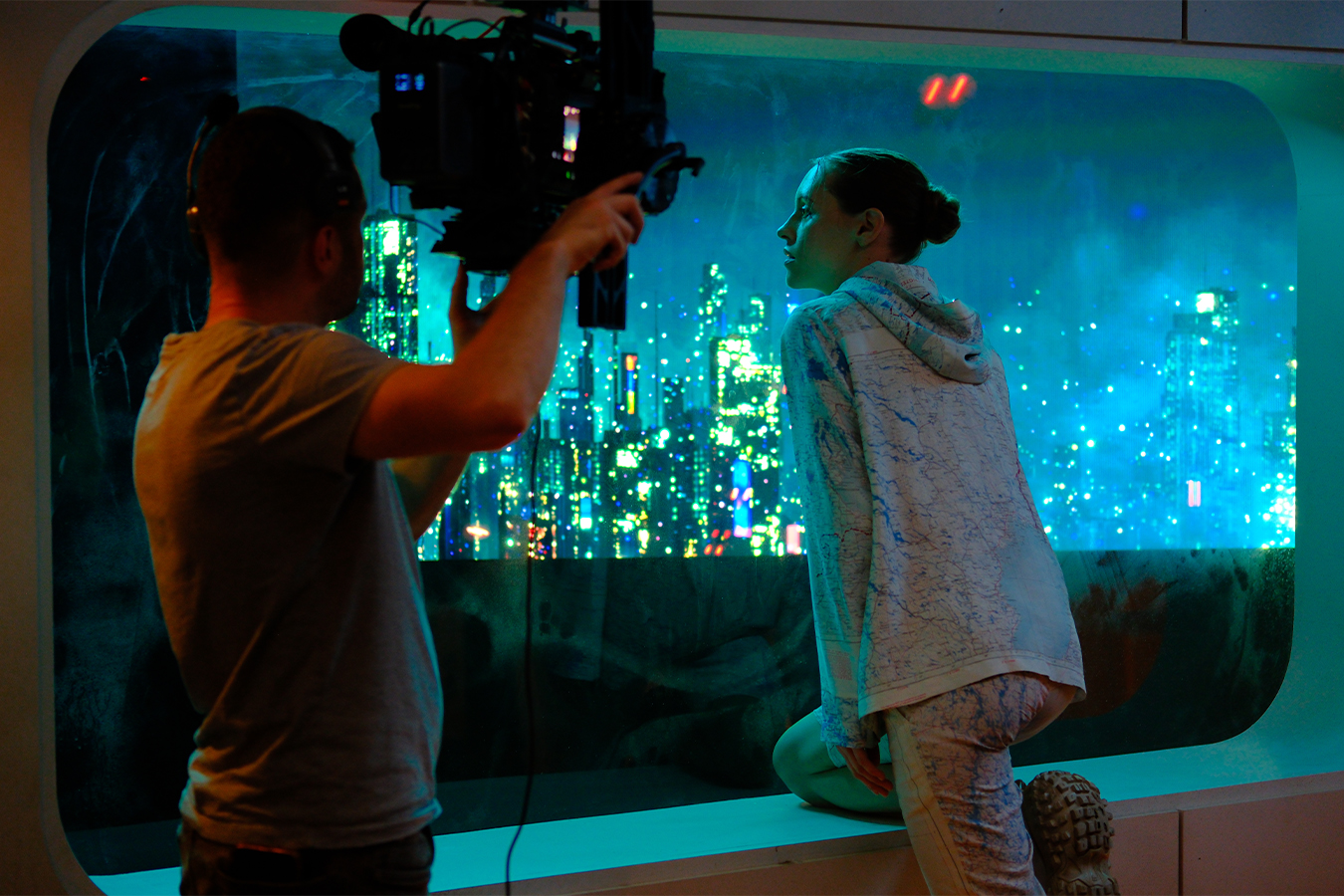
Despite the high-tech setup, the production remained true to the spirit of classic cinema through tactile, analog experimentation. Saffer famously used a plastic Polly Pocket toy in front of the lens to create unique, organic optical flares, and manipulated cling film to create subtle, dreamlike distortions. These "happy accidents" added a layer of texture that prevented the crisp, digital nature of the Unreal Engine output from feeling too sterile.
Implications for Future Filmmaking
The success of SNTIENT 2.0 underscores a fundamental shift in the film industry: the professionalization of real-time engines as core production tools rather than post-production solutions.
1. Cost Efficiency and Sustainability
By capturing the environment in-camera, the team significantly reduced the need for extensive post-production compositing. The "fix it in post" mentality is rapidly being replaced by "perfect it on set." While the upfront investment in LED volumes and Unreal Engine expertise is substantial, the savings in post-production labor and the elimination of green-screen color-spill cleanup make this a highly viable model for independent and mid-tier productions.
2. Actor Engagement
Performance capture and acting in a void are notoriously difficult. By providing a photorealistic, real-time environment on an LED wall, the performer in SNTIENT 2.0 was able to react to actual light, depth, and movement. This creates a more authentic emotional response, which translates directly to the screen.
3. Democratization of High-End VFX
As Unreal Engine continues to lower the barrier to entry, smaller creative teams are beginning to produce work that rivals major studio tentpoles. The reliance on existing assets—such as the city environment originally built for a previous project—highlights the modularity of modern digital production. Studios can now build "digital backlots" that can be reused, updated, and re-lit for a fraction of the cost of building new physical sets.
Conclusion: The Path Forward
SNTIENT 2.0 stands as a masterclass in modern virtual production. By balancing the cold, precision of Unreal Engine 5 with the warmth of practical, in-camera effects, the team at Dandelion + Burdock and the London College of Fashion have set a benchmark for future sci-fi shorts.
The project proves that technology is at its best when it serves the narrative rather than overshadowing it. Whether it’s using a plastic toy to catch a light flare or utilizing a multi-million-pixel LED wall to define the mood of a room, the goal remains the same: to create a world so immersive that the audience forgets they are looking at pixels and starts believing in the story. As this technology matures, we can expect to see more "bleak, abandoned cities" and futuristic wonders brought to life, not in distant render farms, but in real time, right before the camera’s lens.