ULAANBAATAR, MONGOLIA — In the wind-swept steppes of northeastern Mongolia, archaeologists have brought to light a glittering window into the ancient world, proving once again that the legendary Silk Road was a web of connectivity far more expansive than previously imagined.
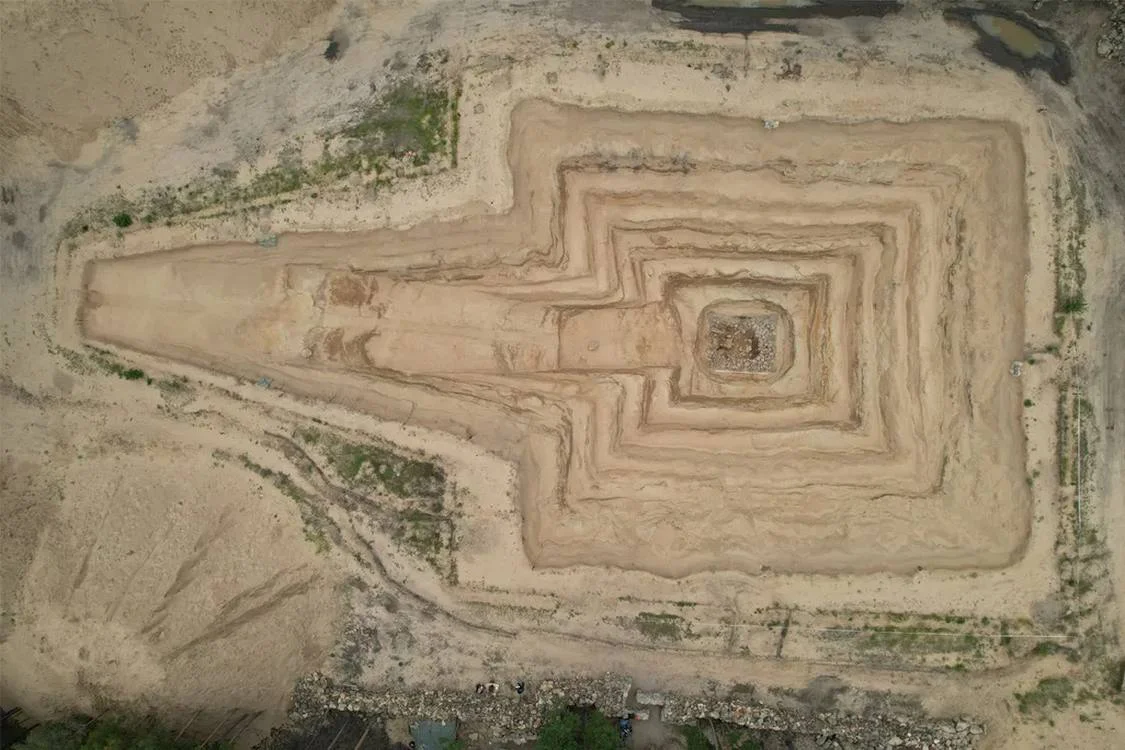
Following a meticulous, four-year collaborative excavation, an international team of researchers has unveiled the contents of Tomb 160—the largest Xiongnu nomadic elite burial site ever discovered in Mongolia. Tucked away within the Duurlig Nars burial ground, this monumental final resting place has yielded over 400 extraordinary artifacts. Among them are fragile shards of a Roman glass cup manufactured thousands of miles away, intricate jade pieces echoing Han Dynasty craftsmanship, and even an entire lacquered chariot.
The find not only underscores the staggering wealth and social stratification of the ancient Xiongnu confederation, but it also paints a vivid picture of a deeply interconnected Eurasia—a world where nomadic horse archers bridged the gap between Classical Rome, imperial China, and the Korean Peninsula.
Main Facts: Inside Tomb 160
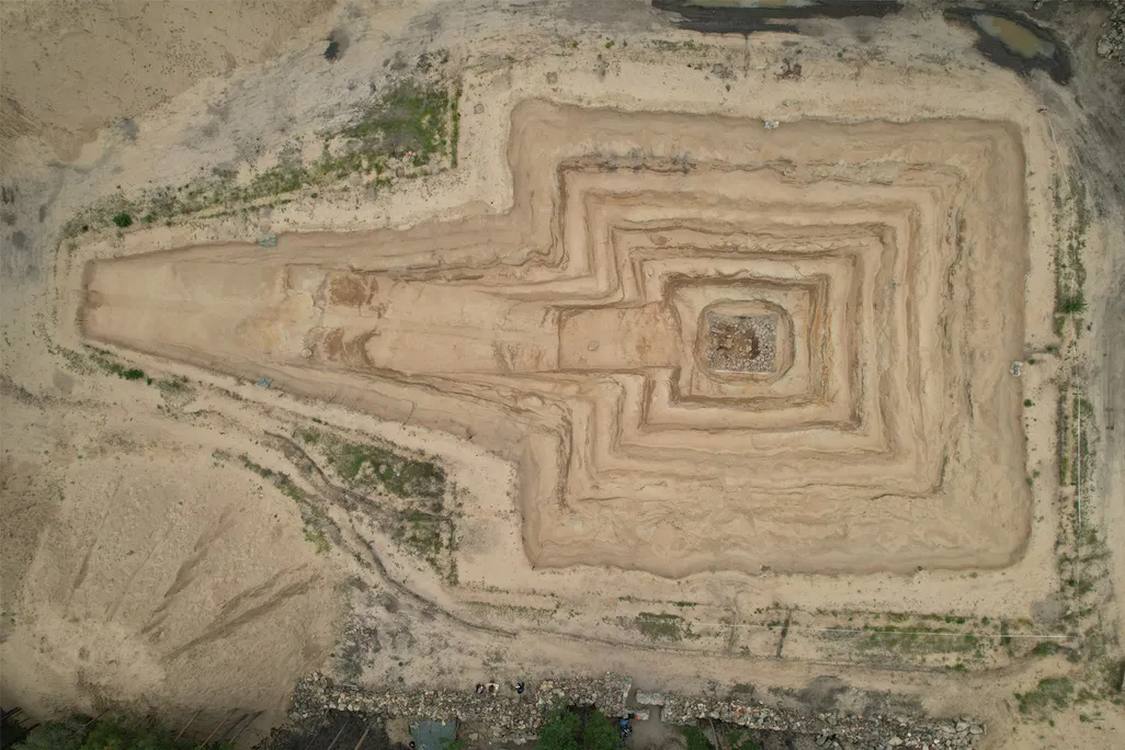
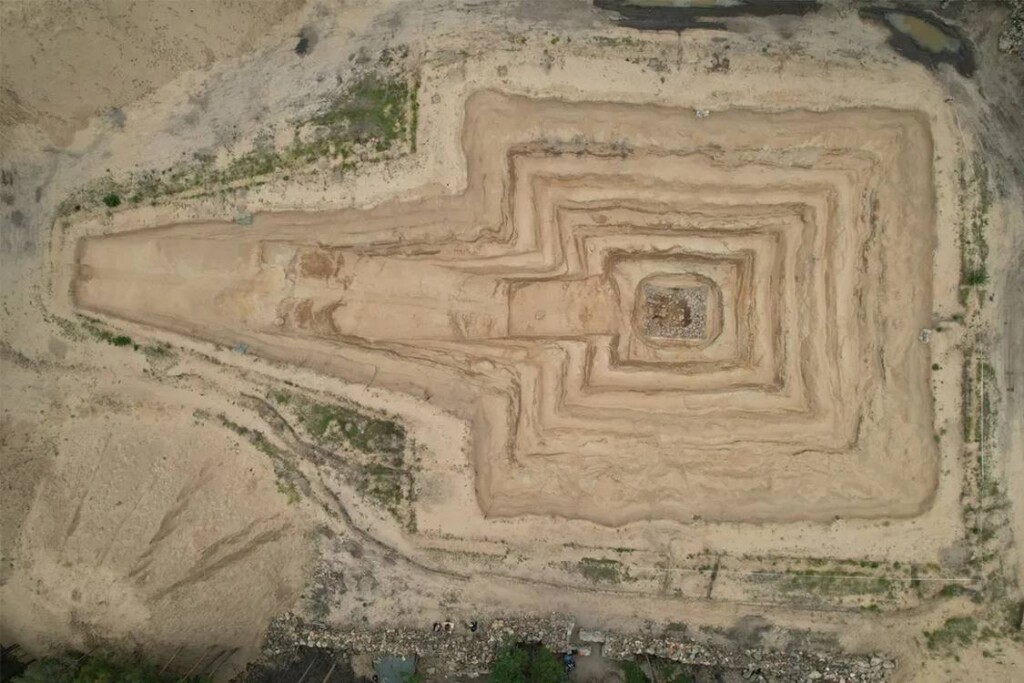
Tomb 160 is an archaeological titan on the exterior, featuring a monumental layout measuring nearly 240 feet in length at the Duurlig Nars burial ground—a sprawling cemetery complex containing roughly 300 individual graves. Yet, despite its imposing surface footprint, the interior chamber tells a different story. Extending only about 50 feet deep, the tomb’s architecture is surprisingly compact compared to deeper Xiongnu burials found further south in central Mongolia.
When researchers from the National Museum of Korea, the Institute of Archaeology at the Mongolian Academy of Sciences, and the National Museum of Mongolia finally breached the inner sanctum, they uncovered a treasure trove of 413 cataloged artifacts.
The standout discoveries include:
- Roman Glass: Fragments of a delicate glass vessel manufactured in the workshops of the Roman Empire, demonstrating transcontinental trade routes that spanned half the globe.
- The Lacquered Chariot: The remarkably preserved remains of an entire lacquered chariot, a luxury item that speaks volumes about the high administrative or political status of the tomb’s occupant.
- Eurasian Adornments: A gourd-shaped silver and crystal pendant—likely used as a decorative flourish for a horse’s harness—which bears a striking resemblance to equestrian accessories discovered in contemporary tombs on the Korean Peninsula.
- Han-Inspired Jade: Fifteen distinct pieces of carved jade, modeled after Han Dynasty funerary goods but subtly altered to reflect unique Xiongnu aesthetic traditions and design motifs.
While the biological identity of the elite individual interred within Tomb 160 remains a mystery, scientists are poised to extract DNA from teeth and hair recovered directly from the coffin. This upcoming genetic analysis is expected to reveal the occupant’s sex, age, and potential familial lineage, offering unprecedented biometric data on Xiongnu leadership.
Chronology: The Rise, Reach, and Fall of the Xiongnu
To fully grasp the significance of Tomb 160, historians must look back across millennia to understand the geopolitical heavyweights of ancient East Asia. The Xiongnu were a powerful confederation of nomadic tribes that dominated the steppes of Central Asia, Mongolia, and Manchuria for roughly five centuries, stretching from the 3rd century BCE to the late 1st century CE.
The Nomadic Superpower
Long before the rise of Genghis Khan, the Xiongnu established the first great nomadic empire of the Eurasian steppe. Operating as fiercely mobile horse archers, they posed an existential and military threat to the agrarian dynasties of China. Their dominance was so absolute that it fundamentally reshaped the architectural and political landscape of East Asia.
Catalyzing the Great Wall and the Silk Road
The pressure exerted by Xiongnu raids forced the fledgling Chinese states to take drastic defensive measures. To face down these formidable warriors, Chinese emperors famously ordered the construction of the earliest iterations of the Great Wall of China.
Furthermore, the Chinese military realized that defeating the mobile Xiongnu cavalry required an equally mobile force, which in turn demanded a steady supply of robust warhorses. Securing these mounts necessitated a secure trade route into Central Asia. This strategic imperative led directly to Chinese control over the Gansu Corridor—the geographic bottleneck that unlocked the deserts and steppes of the Tarim Basin. Thus, the geopolitical friction between the Han Dynasty and the Xiongnu inadvertently birthed the first iteration of the Silk Road, linking East Asia to modern-day Uzbekistan and, ultimately, the doorstep of Europe.
Late-Era Architectural Shifts
The architectural anomalies of Tomb 160—specifically its shallower depth compared to older tombs in central Mongolia—fit neatly into the broader timeline of Xiongnu decline. Dating to the late 1st and early 2nd centuries CE, the tomb was constructed during a period when the Xiongnu Empire was fracturing. Beset by crippling internal civil conflicts and relentless military pressure from the expanding Han Dynasty, the once-unassailable confederation was beginning to lose its grip on the steppe.
Supporting Data: The Logistics of an Ancient Global Economy
The artifacts unearthed in Tomb 160 are not mere trinkets; they are tangible data points mapping out the complex trade logistics of the ancient world.
| Artifact Category | Origin / Influence | Significance |
|---|---|---|
| Roman Glass Shards | Classical Rome / Mediterranean | Proves luxury goods traveled thousands of miles across the Silk Road via intermediary merchants. |
| Lacquered Chariot | Han China / Indigenous Xiongnu | Highlights the blending of diplomatic tribute, war spoils, and elite status symbols. |
| Silver & Crystal Pendant | Korean Peninsula Parallels | Indicates robust regional exchange networks stretching across Northeast Asia. |
| 15 Jade Pieces | Han Dynasty Style (Modified) | Demonstrates cultural borrowing and localized artisanal adaptation of Chinese funerary traditions. |
The presence of Roman glass alongside Han-style jade and Korean-adjacent equestrian gear confirms that the Xiongnu were not isolated barbarians, as contemporary imperial chroniclers often portrayed them. Instead, they operated as master middlemen, controlling critical nodes of exchange that funneled goods from the Mediterranean basin all the way to the Pacific Ocean.
Official Responses and Expert Insights
The international collaborative nature of the excavation has brought together leading voices in Asian archaeology, who have been swift to emphasize the global importance of the Duurlig Nars discoveries.
In a formal statement released following the conclusion of the four-year dig, representatives from the National Museum of Korea highlighted the sheer breadth of the findings:
"This excavation demonstrates beyond a doubt that the Xiongnu were active participants in a broad, highly sophisticated exchange network stretching seamlessly from Rome to the Korean Peninsula. The artifacts recovered from Tomb 160 redefine our understanding of how distant civilizations interacted through nomadic intermediaries."
Archaeologists working on-site noted that the combination of precious metals, high-status stones, and foreign luxuries points to a well-organized ruling class capable of securing, trading for, and displaying exotic wealth.
Dr. Enkhbayar, a lead researcher from the Institute of Archaeology at the Mongolian Academy of Sciences, emphasized the importance of the upcoming laboratory work:
"While the grave goods tell us a great deal about the economy and trade routes of the Xiongnu elite, the human remains inside the coffin will provide the personal narrative. Through DNA extraction from preserved teeth and hair, we hope to learn not just who this person was in terms of status, but their genetic makeup, shedding light on the migration and kinship patterns of the steppe empires."
Implications: Rewriting the History of Eurasian Interconnectivity
The unearthing of Tomb 160 carries profound implications for how historians, anthropologists, and the public conceptualize the ancient world.
For generations, historical narratives tended to compartmentalize ancient civilizations: the Roman Empire was studied through a Mediterranean lens; the Han Dynasty was viewed through an East Asian focus; and nomadic groups were frequently dismissed as destructive anomalies that disrupted, rather than contributed to, global civilization.
Discoveries like those at Duurlig Nars shatter these rigid academic boundaries. They prove that the Eurasian steppe was not a cultural wasteland or a barrier to human interaction, but rather a bustling, dynamic highway of ideas, technologies, and luxury goods. The Xiongnu elite sitting in their monumental Mongolian tombs were sipping from Roman glassware, riding horses adorned with Korean-style tack, and burying their dead with modified Han jades.
As researchers prepare to publish their exhaustive findings and complete the DNA profiling of the tomb’s occupant, Tomb 160 stands as a monument to a globalized ancient world—reminding us that human curiosity, commerce, and desire for luxury have transcended borders for over two millennia.