By [Your Name]
Special to the Global News Desk
Main Facts
In the quiet, reflective space where family history intersects with unspoken trauma, filmmaker Ora DeKornfeld found herself facing an ultimatum of time. When her grandfather reached his 99th year, she realized the window to capture his elusive story was rapidly closing. For decades, the man had maintained a formidable fortress of privacy—formal, reserved, and staunchly resistant to any attempts to document the life he had left behind in Hungary.
Rejecting standard interview approaches, DeKornfeld devised an imaginative, deeply personal workaround that resulted in The Grandfather Puzzle, an acclaimed documentary short. The film is part of the JoyDrops series—a collaborative initiative by the Good News Network and Switchboard Magazine dedicated to spotlighting awards-eligible documentary shorts that focus on joy, resilience, and hope as a counterweight to a cinematic landscape frequently saturated with tragedy.
Central to the film is a poignant narrative of migration, identity, and jigsaw puzzles. DeKornfeld’s grandfather had abandoned a baronial title, a historic castle, and a sweeping estate in Hungary—details he steadfastly refused to discuss. Recognizing his lifelong passion for jigsaw puzzles, DeKornfeld undertook a pilgrimage to the very Hungarian castle where he grew up. She photographed the ancestral home, transformed the image into a custom jigsaw puzzle, and brought it back to her home in Baltimore. Her goal was deceptively simple yet profoundly ambitious: to use the puzzle as a tactile key to unlock the long-standing silence that defined their relationship.
While the physical puzzle ultimately failed to draw out the spoken memories she hoped for—her grandfather passed away at age 99 in August, just months after the film’s premiere, without ever agreeing to watch it—the creative endeavor achieved something far more transformative. It granted DeKornfeld a profound sense of closure, eliminating lingering regrets and reframing how we understand the complex architecture of familial love, unspoken history, and the pursuit of connection across generational divides.
Chronology of a Creative Pilgrimage
To fully understand the emotional landscape of The Grandfather Puzzle, one must trace the timeline of DeKornfeld’s unconventional artistic journey—a process that transitioned from decades of quiet avoidance to an intensive, international pursuit of reconciliation.
Phase One: Years of Silence and the 99th Milestone
For most of DeKornfeld’s life, her grandfather’s past in Hungary remained a closed book. As a formal, intensely private individual, he rebuffed every polite inquiry, documentary pitch, or casual question regarding his early life, his departure from Europe, and the aristocratic title associated with his family. The silence was heavy, respected, but ultimately a barrier to true intimacy.
When the calendar turned to mark his 99th birthday, the urgency of mortality pressed in. "When he turned 99, I was like, okay, it’s really now or never," DeKornfeld revealed in an interview with the Good News Network. Realizing that conventional sit-down interviews were destined to fail against his impenetrable reserve, she knew she had to approach the project from an entirely different angle.
Phase Two: The Journey to Hungary
Knowing of her grandfather’s deep-seated affection for jigsaw puzzles, DeKornfeld formulated a creative blueprint. She traveled across the Atlantic to the ancestral Hungarian village and the physical castle that had framed his youth.
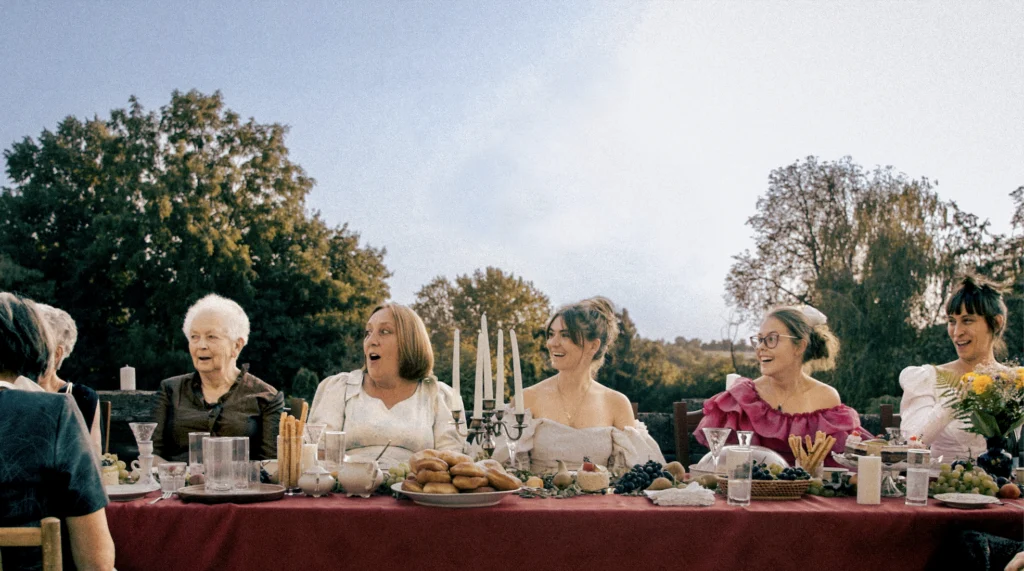
The expedition brought unexpected moments of levity and surrealism. Upon her arrival in the small European town, local residents—aware of the history and the lineage of the returning family—turned out en masse to welcome her. Embraced as a returning baroness, she was showered with local gifts, formal speeches, and bewildered hospitality.
"It was so absurd and overwhelming, and also humorous," DeKornfeld recalled. Yet, beneath the whimsical community pageantry lay the heavy ghost of history. The townspeople celebrated her arrival, but nobody spoke of the dark historical currents that had forced her family to flee in the first place.
Phase Three: The Baltimore Experiment and the Final Months
Returning to Baltimore, DeKornfeld manufactured the bespoke jigsaw puzzle featuring the high-resolution photograph of the castle. She presented it to her grandfather, hoping the tactile, methodical act of piecing together his childhood home would bypass his verbal defenses and stimulate dialogue.
Though the puzzle did not magically dissolve his lifetime of guarded privacy, the project set in motion a profound internal shift for the director. The film was completed and premiered to critical appreciation. However, time finally ran out in August, when her grandfather passed away at the age of 99, having never viewed the completed short. Despite this, the journey yielded an unexpected emotional harvest: total peace of mind for the filmmaker.
Supporting Data and Context: The JoyDrops Initiative
The Grandfather Puzzle is not an isolated creative experiment; it serves as a flagship entry in the JoyDrops streaming series. Curated to challenge the pervasive cinematic trope that equate "important" or "awards-eligible" documentaries exclusively with suffering and tragedy, JoyDrops champions works that find buoyancy in the human spirit.
| Feature Element | Detail |
|—————-|——–|| Project Name | The Grandfather Puzzle |
| Director | Ora DeKornfeld |
| Co-Director Credit | Stalin’s Boys (previous documentary short) |
| Platform Partners | Good News Network (GNN) & Switchboard Magazine |
| Series Format | Five documentary shorts focusing on hope, featuring weekly releases and filmmaker interviews |
| Core Theme | Intergenerational silence, jigsaw puzzles, European history, and unyielding familial affection |
The series partnership reflects a growing movement within independent filmmaking to elevate short-form documentaries that balance heavy thematic weight with observational wit, irony, and joy. By committing to weekly releases of these inspiring shorts, GNN and Switchboard Magazine aim to provide a national and international platform for creators whose artistic vision steps outside traditional trauma-porn paradigms.
Official Perspectives and Filmmaker Insights
Transitioning from hard-hitting, conventional video journalism to deeply personal narrative filmmaking brought unique artistic hurdles for DeKornfeld. Having previously investigated heavy, systemic issues in her career—including co-directing the documentary short Stalin’s Boys—she discovered that shifting the lens inward required a vulnerable leap of faith.
The Risk of Humor in Documentaries
One of the most striking aspects of The Grandfather Puzzle is its embrace of the absurd and the humorous amidst generational trauma. DeKornfeld intentionally avoided reducing her grandfather’s background entirely to a monolithic narrative of victimhood tied strictly to the Holocaust. Instead, she sought to balance historical gravity with the quirky realities of life.
"Humor is one of the scariest sort of public acts of art, and so it makes sense that people avoid it," DeKornfeld noted. "I wish documentaries held more space for surprise."
This artistic philosophy aligns seamlessly with her enthusiasm for the JoyDrops initiative. She champions films that tackle complex societal and personal realities "with a realistic dose of how absurd and funny life is in general."
Redefining Relationship Success
When asked about the emotional aftermath of her grandfather passing away without ever watching the film or breaking his lifelong silence, DeKornfeld’s perspective is remarkably sanguine and devoid of bitterness. She believes the true victory lay in the effort expended rather than the conversational outcome achieved.
"Everyone can relate to having a loved one who they want to be closer to but can’t for some reason," she explained. "All we can do is try our hardest and put in the effort to be close. And then it’s up to them."
By taking that leap—traveling to foreign lands, building a custom puzzle, and making yourself vulnerable to an emotionally distant patriarch—DeKornfeld found she could achieve internal closure. "I had to go very far away to feel close to him, which is kind of ironic," she observed. "But when he passed away, I realized I had no regrets about our relationship."
Implications for Documentarians and Family Legacies
The Grandfather Puzzle extends far beyond a touching family anecdote; it offers profound implications for documentary filmmaking, the preservation of familial history, and the psychological processing of ancestral trauma.
1. Re-Evaluating Trauma and Agency in Film
For decades, documentary storytelling regarding twentieth-century European history—particularly the Holocaust and its diaspora—has frequently relied on a rigid framework of victimhood and unbroken sorrow. DeKornfeld’s work signals a necessary evolution in how contemporary filmmakers approach ancestral trauma. By refusing to let the tragedy completely eclipse her grandfather’s multifaceted humanity, she demonstrates that descendants of survivors can honor history without flattening their ancestors into mere symbols of suffering.
2. The Power of Creative Interventions in Aging and Memory
As global populations age, families increasingly face the challenge of preserving memories before they are lost to time or dementia. DeKornfeld’s strategy—using tactile, sensory, and place-based objects (such as a custom puzzle of an abandoned childhood castle)—provides an innovative blueprint for family historians, therapists, and artists. When direct conversation fails, indirect, creative engagement can catalyze internal reflection, even if the subject chooses not to verbalize their thoughts.
3. Redefining Artistic Success
In an awards-obsessed media landscape, success is often measured by compliance, external milestones, or the subject’s enthusiastic approval. The Grandfather Puzzle subverts this metric. The film succeeded not because it unlocked a locked vault of historical confessions, but because it liberated the filmmaker from the paralysis of inaction. For audiences watching via the JoyDrops platform, the takeaway is clear: the pursuit of connection is valuable in its own right, measured not by whether the other person opens the door, but by whether we had the courage to knock.
To watch The Grandfather Puzzle and explore more inspiring stories from the JoyDrops series, visit the Good News Network or Switchboard Magazine platforms, where new films and exclusive director interviews premiere every Wednesday.