By Jake Peterson, Senior Technology Editor
November 14, 2026
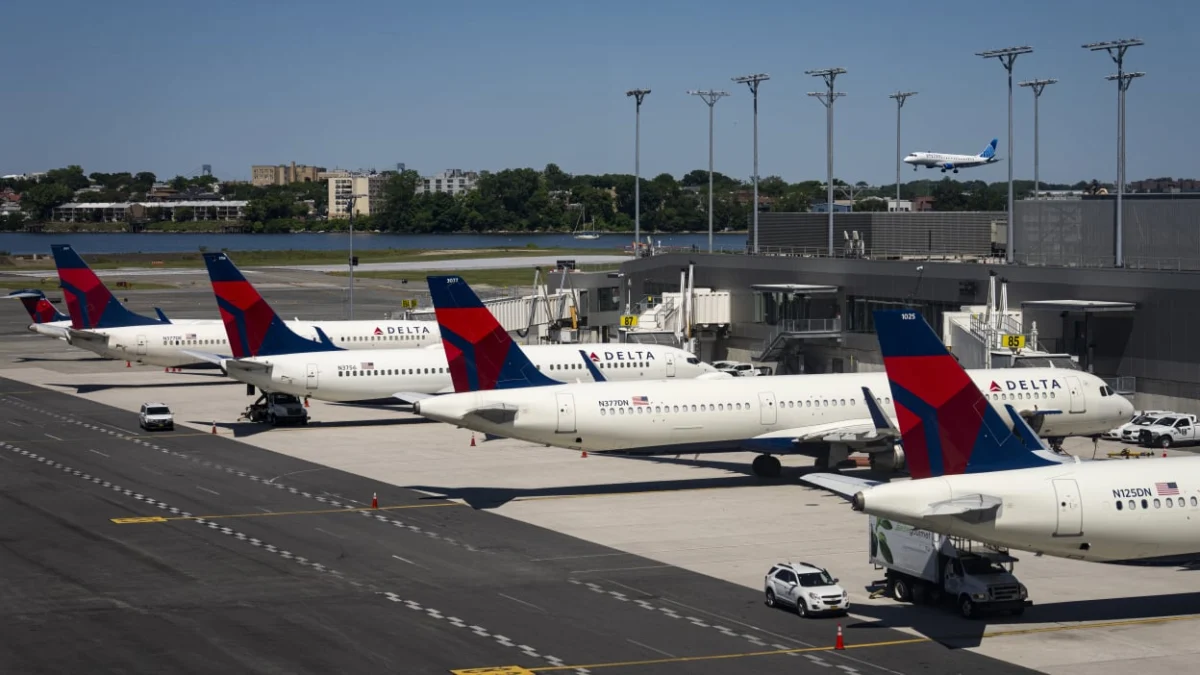
In a rare and disruptive event that rippled across the United States aviation infrastructure, the Federal Aviation Administration (FAA) issued a nationwide ground stop for all departing flights on Friday. The order, which effectively paralyzed domestic air travel for several hours, left tens of thousands of passengers stranded at airports from coast to coast. While the FAA has since lifted the order, the incident has sparked intense scrutiny regarding the resiliency of American air traffic control systems and the integration of new technologies in critical infrastructure.
The Main Facts: What Happened?
On Friday afternoon, the aviation landscape shifted from routine operations to total standstill when the FAA mandated a nationwide ground stop. The directive was absolute, halting all departing commercial and private flights across all U.S. airports.
The cause, according to initial agency reports, was a systemic "communication issue" that impacted multiple Air Route Traffic Control Centers. These centers are the backbone of American flight safety, responsible for maintaining separation between aircraft and managing flow through crowded airspace. When these facilities lose the ability to communicate effectively with each other or with aircraft, safety protocols dictate an immediate cessation of movement to prevent mid-air conflicts or dangerous landing scenarios.
For travelers, the impact was immediate. Departure boards turned into seas of "delayed" and "canceled" notices. The ground stop serves as an emergency "pause button" for the entire National Airspace System, a measure so extreme it is historically reserved for only the most dire of circumstances.
Chronology of the Crisis
The timeline of the event highlights the rapid escalation and subsequent resolution of the disruption:
- Friday Afternoon: The FAA abruptly issued the order for a nationwide ground stop. Initial reports from major airport hubs indicated confusion as flight crews and ground personnel scrambled to interpret the scope of the outage.
- Late Afternoon: As the news broke, social media and news outlets began reporting a total lack of movement for departing aircraft. Domestic carriers, including United, American, and Delta, acknowledged the directive, advising passengers to prepare for significant, indefinite delays.
- Evening Hours: Technical teams worked under extreme pressure to isolate the communication failures within the Air Route Traffic Control Centers.
- 8:41 p.m. ET: The FAA officially lifted the ground stop. The agency confirmed that the communication systems had been stabilized and that the process of resuming normal operations had begun. However, officials warned that the "cascading effect" of the outage would result in lingering delays and cancellations well into the weekend.
Technical Context: Systems Under Pressure
The timing of this incident is particularly noteworthy due to the backdrop of recent technological developments in the sector. Only one day prior to the outage, the aviation industry was abuzz with reports that the FAA was beginning the implementation of an AI-powered tool designed to manage air traffic congestion across the entire U.S. airspace.
Furthermore, the ground stop occurred just 24 hours after a massive global Microsoft outage that disrupted critical services like Outlook and Teams. While there has been no official confirmation from the FAA linking the two, the proximity of these events has led to widespread speculation regarding the fragility of modern, interconnected digital infrastructure.
Critics and aviation analysts are now questioning whether the push for rapid digital modernization—specifically the integration of AI and centralized cloud-based communication—is outpacing the safety-critical stability required for national air travel.
Official Responses and Public Communication
In the immediate aftermath, the FAA remained relatively tight-lipped regarding the specific technical failure, citing "communication issues" as the primary catalyst. This ambiguity fueled frustration among passengers and lawmakers alike.

Aviation experts note that such silence is standard for the early stages of a federal investigation, as the agency must ensure that the root cause is thoroughly vetted before making public disclosures. However, the lack of transparency has highlighted the need for better crisis communication protocols. Passengers were left largely to their own devices, relying on third-party flight trackers rather than direct, real-time updates from federal authorities.
How to Track Flights During Disruptions
In the vacuum of information, passengers turned to digital tools to navigate the chaos. If you find yourself in a similar situation in the future, the following methods are the most reliable ways to monitor your flight status:
- Google Flight Tracking: Typing your flight number directly into a Google search remains the fastest way to get a live, high-level view of your flight’s status.
- Airlines’ Official Portals: Carriers like United, Delta, and American maintain dedicated flight status pages. These are often the most accurate sources for specific information regarding rebooking and gate changes.
- Specialized Trackers: Services like FlightAware provide comprehensive data, allowing users to search by route, destination, or flight number. This is particularly useful for tracking incoming aircraft that have not yet departed.
- Integrated Smartphone Features: On an iPhone, entering a flight number into the Spotlight search or texting it to a contact will trigger a "data detector" that provides a live link to flight details and maps.
Historical Significance: A Rare Precedent
The magnitude of this ground stop cannot be overstated. In the history of U.S. aviation, this represents only the third time such a broad, nationwide order has been issued.
- September 11, 2001: Following the terrorist attacks, the FAA ordered an unprecedented shutdown of all U.S. airspace. This was the first instance of a nationwide ground stop.
- January 2023: A failure in the Notice to Air Missions (NOTAM) system—which provides pilots with essential safety information—forced a nationwide halt. That outage lasted approximately 90 minutes and served as a wake-up call regarding the aging state of FAA computer systems.
- November 2026: The current event marks the third instance, highlighting a growing trend of systemic vulnerability in the digital age.
Implications for the Future of Air Travel
The implications of the Friday ground stop are profound. As the aviation industry moves toward more sophisticated AI-driven traffic management, the "blast radius" of any single technical failure appears to be increasing.
Infrastructure Resilience: The incident underscores the critical need for robust, redundant systems that can operate independently of a central hub. If a communication failure at a single type of center can cascade into a nationwide shutdown, the architecture of the system may require a decentralized overhaul.
Cybersecurity Concerns: Given the recent global Microsoft outages, the security community is rightfully concerned about the potential for cyber-interference. While the FAA has not characterized this as an attack, the reality of modern infrastructure is that any digital system is a potential target. Strengthening the "air-gap" between critical flight control systems and the broader internet is likely to be a top priority for federal regulators in the coming months.
Passenger Rights and Recovery: The economic cost of this shutdown, while not yet fully calculated, will be in the millions. Beyond the financial impact, the erosion of public trust in the reliability of air travel poses a long-term challenge for the industry. Airlines will likely face increased pressure from the Department of Transportation to improve their compensation policies for passengers caught in such systemic failures.
Conclusion
As the dust settles, the aviation community is left to reckon with a sobering reality: the very systems that make modern travel efficient and "smart" also create single points of failure that can bring the entire country to a standstill. The FAA’s swift action to ground flights was, by all accounts, the correct safety decision, but it was a decision that exposed the fragility of our skies.
Moving forward, the industry must balance the promise of technological advancement with a renewed commitment to iron-clad reliability. For the tens of thousands of travelers who spent their Friday night in airport terminals, the priority is clear: they need to know that when they book a flight, the system is designed not just for efficiency, but for absolute, unwavering stability.