You packed the running shoes. They came home clean, nestled against your folded shirts, untouched.
This is the quintessential tragedy of the modern business traveler. You leave home with the best of intentions, a finely tuned fitness routine, and the internal promise that "this time will be different." Yet, four nights later, you return with the same pristine sneakers, a sense of mounting frustration, and the realization that your two-month fitness streak has quietly evaporated.
The failure rarely lies in a lack of willpower. It lies in the logistics of the environment. At 6:40 a.m. in an unfamiliar city, battling the cognitive fog of a misaligned body clock, with a high-stakes client breakfast looming at eight, the human brain is not designed to design a workout. It is designed to minimize friction. When you leave the "what, where, and how" of your exercise up to the moment you wake up, you have already lost the battle.
To survive a trip, you must move beyond "willpower" and into the realm of pre-determined architecture. You need a system that survives the chaos of travel by requiring zero real-time decision-making.
The Myth of the "I’ll Find a Gym" Strategy
The most common point of failure for travelers is the reliance on external facilities. The "I’ll find a gym there" mentality is a logistical trap. You arrive at the hotel fitness center, only to find a room the size of a walk-in closet housing two mismatched dumbbells, a treadmill with a dead display, and a stationary bench already occupied by another guest.
The "real" gym down the street? It requires a 15-minute walk you didn’t budget for, a day pass fee, and the uncertainty of a new environment. By the time you navigate these variables, your window of opportunity has slammed shut. Your first meeting has started, and your workout has been sacrificed at the altar of efficiency.
What you actually have—regardless of whether you are in Cleveland, Frankfurt, or Tokyo—is a floor, a wall, a chair, a door, and your suitcase. This is the only reliable infrastructure. If you want to expand your range, a simple resistance band weighs nothing and folds into the toe of a shoe. Everything else is a distraction.
Chronology: The Anatomy of a Successful Trip
A realistic four-night work trip is rarely a symphony of perfection; it is a series of trade-offs. To keep your progress, you must distinguish between the "Full Session" and the "Floor Session."
The Four-Night Blueprint
- Monday: Arrival. The primary goal is sleep hygiene. Do not attempt a workout.
- Tuesday: The "Floor Session." You are tired, your body clock is shifted, and time is tight. This is an 8-minute, one-round sequence. It is the default.
- Wednesday: The "Full Session." The morning is cooperative. You execute the 20-minute, three-round version.
- Thursday: The "Floor Session." A long conference day. You perform the 8-minute version before the day begins, relying on the 11,000 steps you’ll naturally accumulate moving between venues.
- Friday: Departure. The 5:40 a.m. airport car wins. You accept the "write-off" without guilt.
By designating the 8-minute session as your default, you remove the "all or nothing" mentality that causes most people to quit.
Supporting Data: The Science of Maintenance
There is a pervasive fear among fitness enthusiasts that a week away will undo months of labor. Data suggests this is a cognitive distortion.
In a study of 20 resistance-trained men who ceased training for two weeks, researchers observed that leg-press strength remained stable. While this is not a universal law, it serves as a powerful antidote to the anxiety of missing a few days. The real damage is not the four days you spent in a hotel room; it is the "Restart Monday" that follows your return.
The purpose of travel workouts is not to hit a personal best—it is to maintain the psychological thread of your routine. A review of maintenance training indicates that younger adults can preserve strength and muscle size for up to 32 weeks with just one session per week, provided the intensity remains high.
The takeaway? You don’t need volume on the road; you need intensity. When you prioritize how hard the final set is over how many total minutes you spend sweating, you effectively signal to your body that your strength is still required.
Official Guidelines: The Five-Movement Standard
To eliminate the need for equipment, we utilize five movements that rely on your room’s inherent furniture.
| Movement | Hotel-Room Version | Full Session (20 min) | Floor Session (8 min) |
|---|---|---|---|
| Split Squat | Back foot on floor, hand on desk chair | 3 sets of 8-10 per leg | 1 set of 8 per leg |
| Hip Hinge | Single-leg deadlift (unweighted) | 3 sets of 8 per leg | 1 set of 8 per leg |
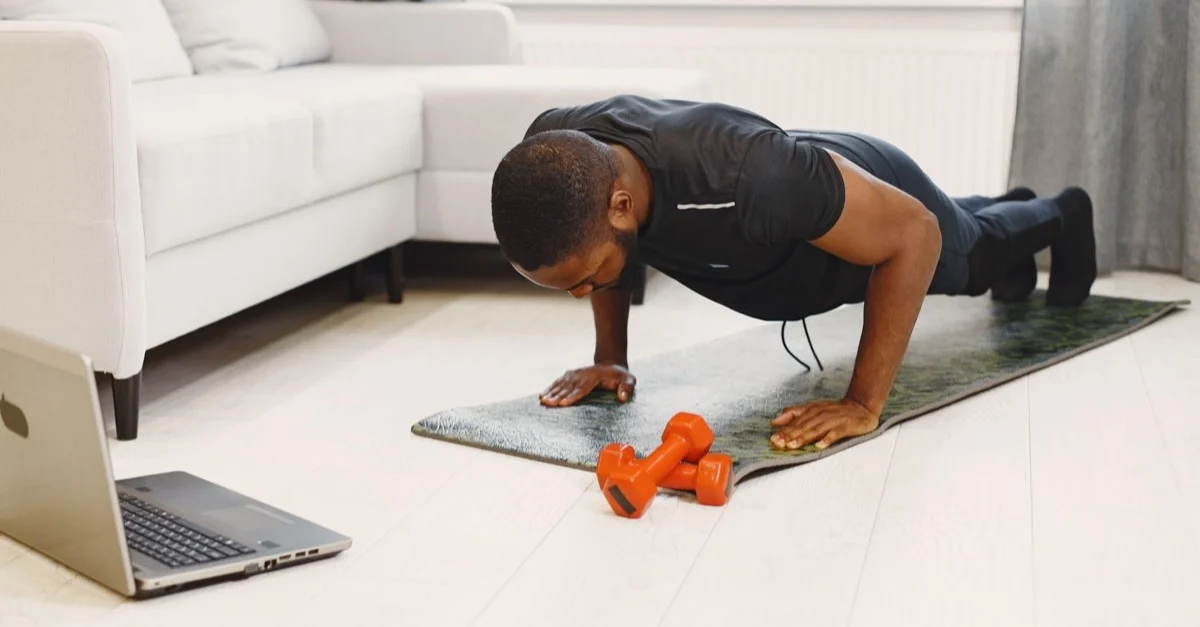
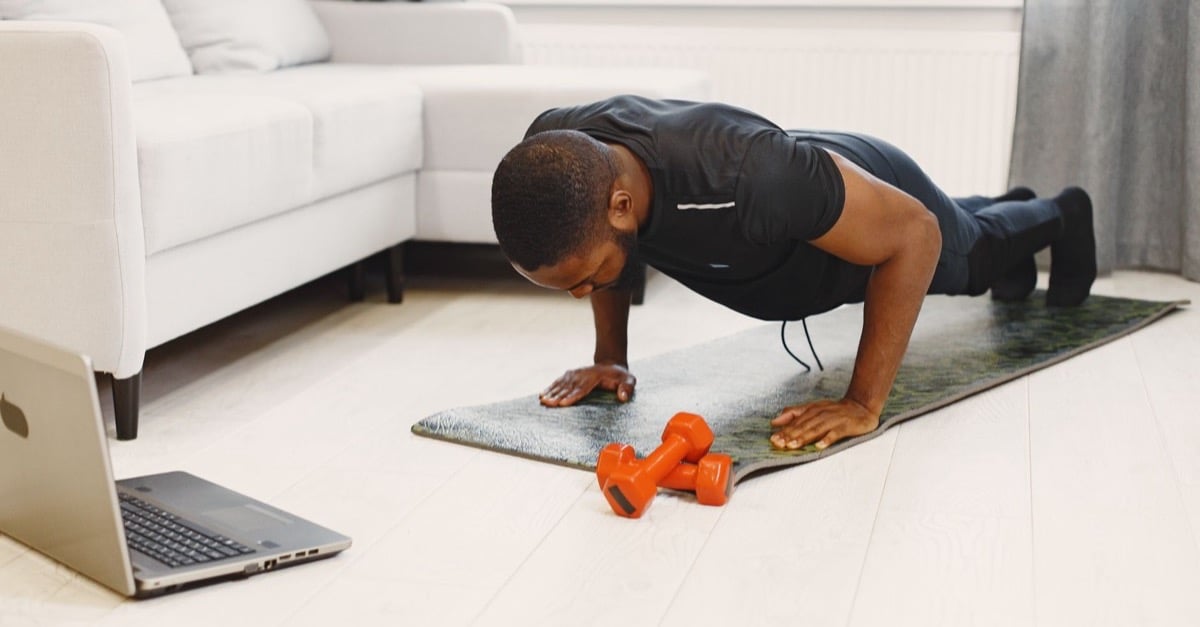
| Push-up | Hands on desk, bed, or floor | 3 sets of 8-12 | 1 set of 8-12 |
| Row | Towel on door handle or suitcase row | 3 sets of 10 | 1 set of 10 |
| Carry | Suitcase carry (corridor) | 3 sets of 30 steps | 1 set of 30 steps |
A Note on Safety
When using a door for towel rows, ensure the door opens away from you. This ensures that your body weight pulls the door into the frame rather than pulling it open. If the door doesn’t latch securely, abandon the towel and perform a bent-over row using your packed suitcase.
Implications: The Psychology of the "No-Decision" Rule
The most significant implication of this system is that it removes the decision-making process.
Before you leave home, you must write a note in your phone, located directly under your flight confirmation. This note should contain:
- The Rule: "If I have 25 minutes, I do the Full Session. If I have less, I do the Floor Session."
- The Rung: Identify exactly which version of the push-up and split squat you are currently performing.
By deciding your "rung" at home, you prevent the morning negotiation. You don’t ask yourself, "Should I do a hard push-up today?" You simply look at the note, see your pre-assigned level, and execute.
Avoiding the "Restart" Trap
Most people return from a trip and feel a vague sense of being "behind." They tell themselves they will start their program "properly" next Monday. This creates a gap. The trip wasn’t the problem; the two weeks of "getting back into it" are.
If you treat the travel week as a maintenance phase rather than a training void, you arrive home on Sunday night and perform your standard Monday workout. You never stopped. You never had to restart.
Conclusion: The Suitcase is the Gym
Travel fitness is not about finding the perfect facility; it is about building a portable standard. If you treat your suitcase as your rack, your door as your cable machine, and your phone note as your coach, you eliminate the friction that stops most people.
The shoes are optional. The consistency is mandatory. By packing your decision before you pack your clothes, you ensure that you return from your trip not just with your luggage, but with your progress intact.