
By Global Financial Education Desk
Published: May 2026
Main Facts
In an era where personal finance rarely forms a core pillar of traditional school curricula, parents are increasingly taking financial education into their own hands. A growing movement among household budgeters highlights family vacations not merely as a break from routine, but as practical, real-world workshops for teaching children essential money-management skills.

Rather than shielding children from the family’s financial realities, innovative parents are putting kids directly in charge of tracking travel expenses using collaborative digital tools like cloud-based spreadsheets. By engaging children in pre-trip planning—often driven by dedicated savings strategies known as "sinking funds"—families are demystifying the mechanics of budgeting. The core message is simple: handling money does not have to be an intimidating chore; instead, it can be approached as a collaborative, interactive, and even entertaining game of stewardship.
Chronology
The methodology behind experiential family financial training typically follows a structured, multi-phase timeline that spans the entire year:

- Phase 1: The Year-Round Foundation (Sinking Funds): Months before departure, families establish specific sinking funds. By setting aside small amounts weekly, they ensure that the vacation is fully funded well in advance, avoiding post-vacation debt and establishing a clear spending ceiling.
- Phase 2: Pre-Trip Architecture: Prior to leaving home, parents establish overarching spending categories (such as lodging, transportation, dining, excursions, and souvenirs) and assign specific financial limits to each sector.
- Phase 3: Real-Time Execution on the Road: Once the trip begins, children take full operational control of the shared digital transaction log. Every time a purchase is made—whether a gas station snack or a museum ticket—youths log the amount into a mobile-friendly spreadsheet application.
- Phase 4: Mid-Trip Course Corrections: As the vacation progresses, children actively monitor remaining funds, calculating daily allowances to ensure the family stays comfortably under budget.
- Phase 5: Post-Trip Reflection: Upon returning home, families review the final numbers, evaluating how well they met their financial goals and identifying trade-offs that can inform future saving habits.
Supporting Data
While traditional classrooms spend thousands of hours on theoretical subjects, practical data on financial literacy among youth highlights a striking deficiency. Studies consistently show that young adults entering the workforce struggle with basic cash-flow management, debt avoidance, and emergency savings.
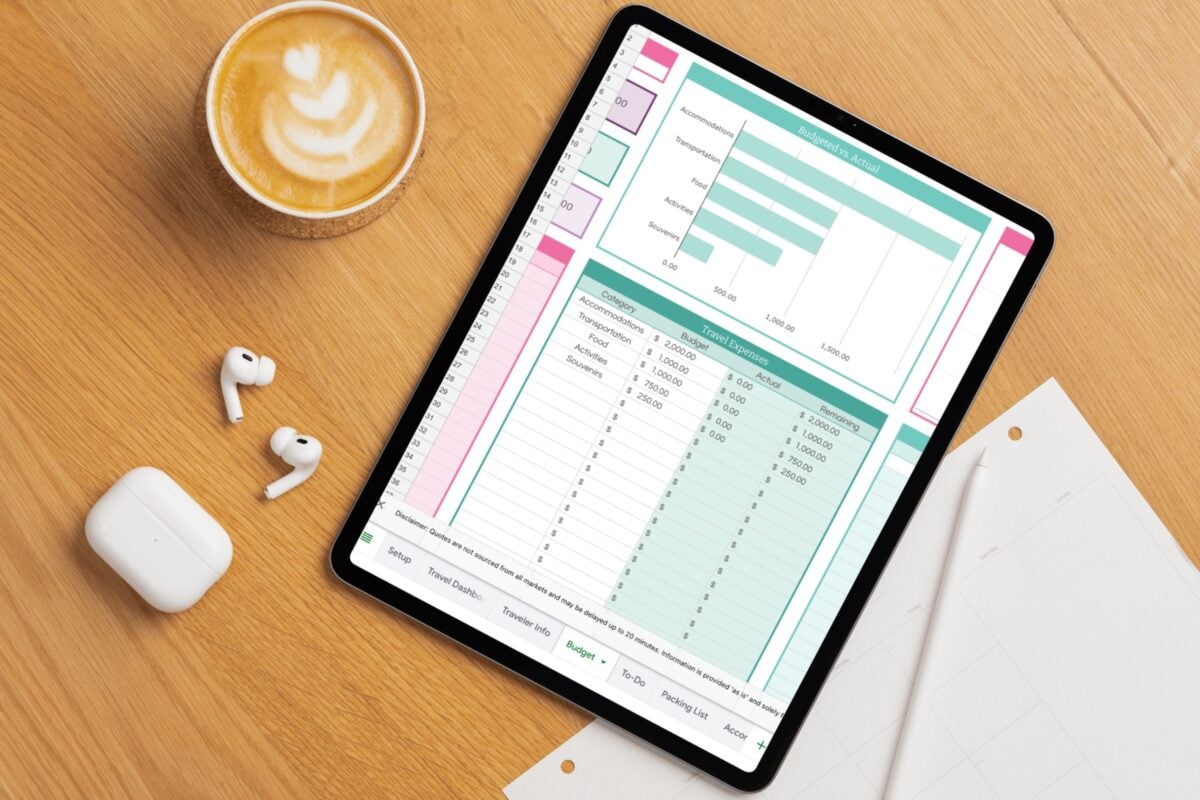
By contrast, households utilizing digital tracking models—such as integrated Travel and Vacation Planning Spreadsheets paired with cloud-enabled mobile software—report high engagement levels. According to family budget organizers:

- 100% cloud accessibility: Modern tools allow children using smartphones, tablets, or laptops to instantly update transaction logs from any location worldwide.
- Immediate behavioral shifts: Children who actively monitor shrinking daily balances naturally pivot toward critical evaluation, learning to weigh the cost of incidental purchases (such as an expensive gas station snack) against major experiential goals.
- Reduction of impulse spending: Families practicing collaborative expense-tracking report a significant drop in unplanned out-of-pocket expenses, as children take pride in calling out remaining daily allowances to keep the group on track.
Official Responses and Expert Perspectives
Financial planners, educators, and parent-advocates have increasingly voiced support for experiential, home-led economic education.
"Schools teach children academic fundamentals, but they rarely bridge the gap into everyday financial competence," notes one leading family organization strategist. "When parents involve children in real-world monetary decisions—like managing a vacation budget—they demystify finite resources. It transforms budgeting from a punitive punishment into an empowering tool for life."

Parents who have successfully implemented the strategy emphasize the psychological reframing of money. Donnie and Abby Lawson, well-known family finance advocates, share that their objective is to ensure their children are fully prepared to navigate independent finances from the moment they leave home.
"We want our boys to feel completely confident in their ability to steward money wisely," the Lawsons explain. "By framing budgeting not as a tedious chore, but as a positive, proactive action, kids learn that financial health is achievable at any income level. When they realize that managing money can be treated like a fun, cooperative game, the anxiety surrounding finances disappears."
Implications
The long-term implications of embedding financial literacy into everyday family travel extend far beyond a single holiday. As children master the art of tracking expenses, saying "no" to non-essential items, and reallocating funds between categories when unexpected costs arise, they internalize critical executive functioning skills.
1. Mastering Budgeting Basics for Adulthood
The habits formed over a summer road trip or a family flight lay the groundwork for adult financial independence. Whether children eventually earn modest or high incomes, the habit of establishing a plan, executing it, and measuring performance against established goals provides lifelong protection against debt and financial distress.

2. Cultivating a Healthy Psychological Relationship with Money
A major barrier to financial wellness in adulthood is the deep-seated anxiety associated with scarcity. By introducing children to finite budgets in a low-stress, supportive environment, families normalize conversations about money. Children learn that running low on funds in one category is not a crisis, but rather an invitation to problem-solve collectively—such as shifting funds from souvenirs to dining.
3. Fostering Critical Decision-Making Skills
Vacations naturally present a microcosm of life’s choices: families cannot purchase every souvenir, attend every excursion, and dine at every restaurant simultaneously. By giving children a voice in evaluating trade-offs, parents cultivate critical thinking. Young people learn early on that prioritizing long-term goals requires making conscious sacrifices in the present moment, a principle that translates directly into saving for higher education, housing, and retirement.

Frequently Asked Questions
Q: At what age can children start helping with a vacation budget?
A: Children as young as elementary school can assist with basic counting and categorization, while middle and high school students can comfortably manage cloud-based spreadsheets and calculate daily spending limits.
Q: What tools are required to set up a vacation budget with kids?
A: Many families utilize simple, mobile-accessible tools such as Google Sheets, integrated travel planning templates, or dedicated digital monthly budget trackers that can be downloaded and viewed across multiple devices.

Q: How do you handle unexpected expenses that blow past the budget?
A: Unexpected costs offer prime learning opportunities. Instead of panicking, parents can sit down with their children to analyze the shortfall and decide which category can absorb the cost or where spending can be scaled back for the remainder of the trip.