By Beth Skwarecki, Senior Health Editor
October 13, 2026
For over a decade, the Fitbit brand has served as the gold standard for accessible, reliable, and user-friendly health tracking. While the company has experimented with various form factors—ranging from the ultra-minimalist trackers of the early 2010s to the more sophisticated, smartwatch-adjacent Pixel Watch line—the middle-ground fitness tracker has remained a staple for millions. However, the release cycle has been notably quiet. It has been three years since the tech world saw a significant new entry in the dedicated tracker category.
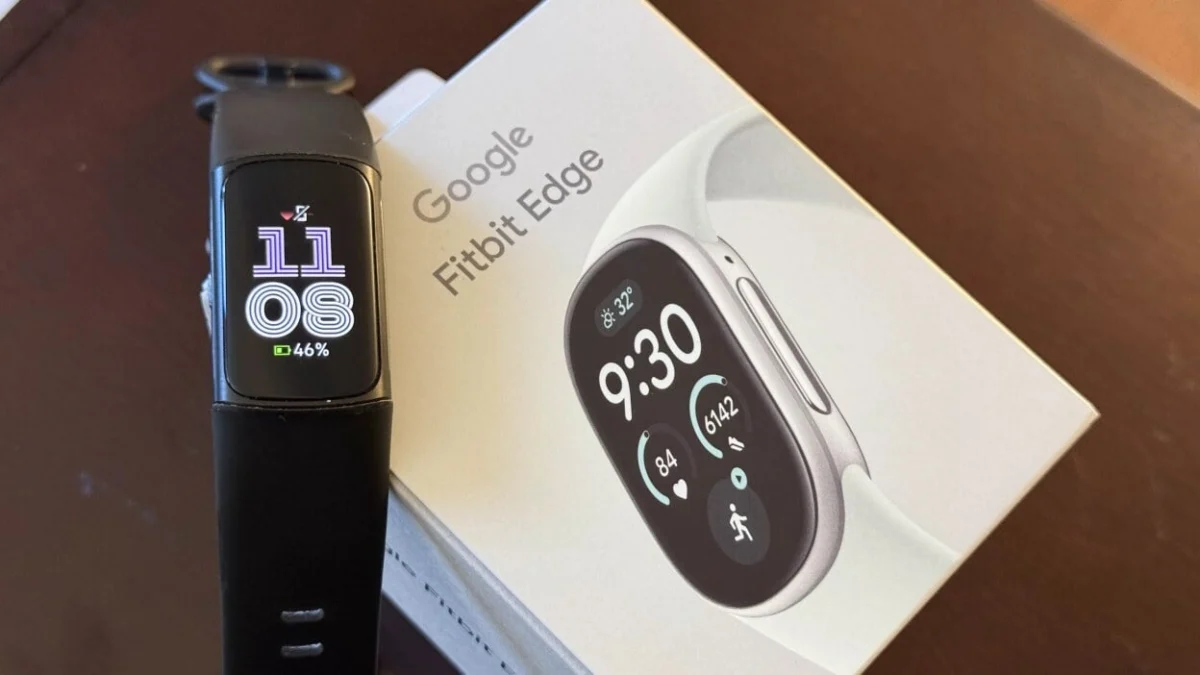
That silence has finally broken with the official announcement and launch of pre-orders for the Fitbit Edge. As users of the aging Fitbit Charge 6 begin to eye the new hardware, the inevitable question arises: Is the Edge a true successor, or merely a lateral shift in an evolving product ecosystem?
Main Facts: What You Need to Know
The Fitbit Edge enters the market as a bridge between the screenless Fitbit Air and the premium, curved-glass aesthetic of the Pixel Watch. It represents a pivot for Google, which now owns and operates the Fitbit brand, aiming to streamline the operating system (OS) while addressing some of the most persistent hardware complaints leveled against previous models.
The device maintains the essential core of the Fitbit identity: cross-platform compatibility with both iOS and Android. However, beneath the chassis, Google has made significant architectural changes. We see the return of a physical, tactile navigation button—a marked improvement over the often-finicky haptic sensors of the past—and the reintroduction of an altimeter, a sensor that has been conspicuously absent from the flagship trackers since the Charge 4.
Perhaps most importantly for the fitness enthusiast, the Edge features a refined GPS chipset, which Google claims will solve the signal distortion issues that plagued the Charge 6. Yet, these upgrades come with trade-offs, most notably the total removal of NFC capabilities, effectively killing Google Wallet support on the new device.
A Chronological Perspective: The Evolution of the Tracker
To understand the significance of the Fitbit Edge, we must look at the timeline of the company’s recent hardware history:
- 2023 (The Charge 6 Era): Released as the definitive fitness tracker, the Charge 6 featured integrated Google services, including Maps and Wallet. While praised for its health sensors, it suffered from a frustrating haptic "button" and a restrictive music ecosystem that only supported YouTube Music.
- 2024–2025 (The Gap Years): During this period, Fitbit focused heavily on the expansion of the Pixel Watch line and the release of the ultra-minimalist Fitbit Air, leaving the "tracker with a screen" segment of the market stagnant.
- Late 2026 (The Edge Launch): The Fitbit Edge is announced, marking a departure from the "all-in-one" smartwatch philosophy, instead focusing on high-precision tracking and ergonomic improvements for athletes.
This trajectory shows a clear attempt by Google to segment its market: the Pixel Watch for the lifestyle-tech user, the Air for the casual health-monitor, and the Edge for the dedicated runner or hiker who values performance over lifestyle-app integration.
Supporting Data: Feature Comparison
The decision to upgrade depends largely on which features you prioritize in your daily training. Below is a breakdown of the technical differences between the Charge 6 and the new Edge.
The Physical Interface
The tactile experience of the Charge 6 was a point of significant friction for many users. The "haptic nub" often failed to register input, especially when the user was sweaty or wearing gloves. The Edge corrects this with a robust physical button on the right side of the casing. During my initial testing, the audible "click" provided immediate feedback, ensuring that start/stop commands for workouts are executed reliably every time.
Sensor Accuracy and the Altimeter
The reintroduction of the altimeter is the "killer feature" for outdoor enthusiasts. By measuring barometric pressure changes, the Edge can accurately track elevation gain—a metric essential for trail runners and hikers. The Charge 6, which relied on software estimation, often struggled to capture the intensity of hill workouts.

Furthermore, the GPS performance in the Charge 6 was notoriously sensitive to wrist positioning. If a user tightened the band too much, it would strain the internal antenna, leading to erratic map data. Google has redesigned the internal housing of the Edge to isolate the GPS chipset from strap tension, a change that promises a significantly higher degree of spatial accuracy.
The Ecosystem Trade-off
The most controversial aspect of the Edge is the removal of NFC/Google Pay. For the user who enjoys going for a run and stopping at a cafe for a post-workout drink, the Charge 6 was an ideal companion. The Edge, however, forces you to carry your phone or a traditional wallet. While this is a step backward in convenience, it likely allowed engineers to optimize space for the new GPS and altimeter hardware.
Official Responses and Future-Proofing
In communication regarding the launch, Google emphasized that the Edge is a "performance-first" device. Regarding the absence of Google Maps, the company noted that while the feature is currently unsupported, it is slated for a firmware update in the coming quarter.
This raises an interesting point about the "software-as-a-service" nature of modern wearables. The Edge is launching as a "work in progress." Unlike the Charge 6, which arrived with a mature (if limited) suite of features, the Edge is designed to evolve via over-the-air updates. While this allows for growth, it also means that potential buyers are, in part, betting on Google’s roadmap to fill in the functional gaps, such as the promised return of navigation capabilities.
Implications for the User
What does this mean for the average Fitbit user?
If you are a casual user who relies on your tracker for step counting, sleep tracking, and occasional contactless payments at the grocery store, the Fitbit Edge may actually be a downgrade. The removal of NFC and the current lack of Maps support suggest that the Edge is not designed for the "lifestyle" user.
However, if you are a dedicated athlete—someone who cares about elevation gain, accurate GPS mapping on long runs, and a responsive interface that doesn’t require fumbling with a haptic button mid-sprint—the Edge is a substantial, meaningful upgrade. The transition to a more universal music control system, which allows the device to interface with any app playing on your phone rather than locking you into the YouTube Music ecosystem, is a massive quality-of-life improvement that should not be overlooked.
Ultimately, the Fitbit Edge is a signal that Google is recalibrating its wearable strategy. By stripping away some of the "smartwatch" features that were arguably poorly implemented in the tracker format, they have reclaimed the core identity of the Fitbit: a tool for measuring human movement with precision.
As I continue to test the Edge over the coming weeks, the focus will remain on battery longevity under heavy GPS load and the stability of the new OS. For now, the takeaway is clear: the Fitbit Edge is a specialized instrument for the committed athlete, provided they are willing to trade the convenience of the digital wallet for the reliability of high-end performance hardware.
The question remains: will the market respond to a "smarter" tracker that does fewer "smart" things? Given the demand for dedicated, distraction-free fitness tools, it seems highly likely that this pivot will be a welcome one for the core Fitbit community.