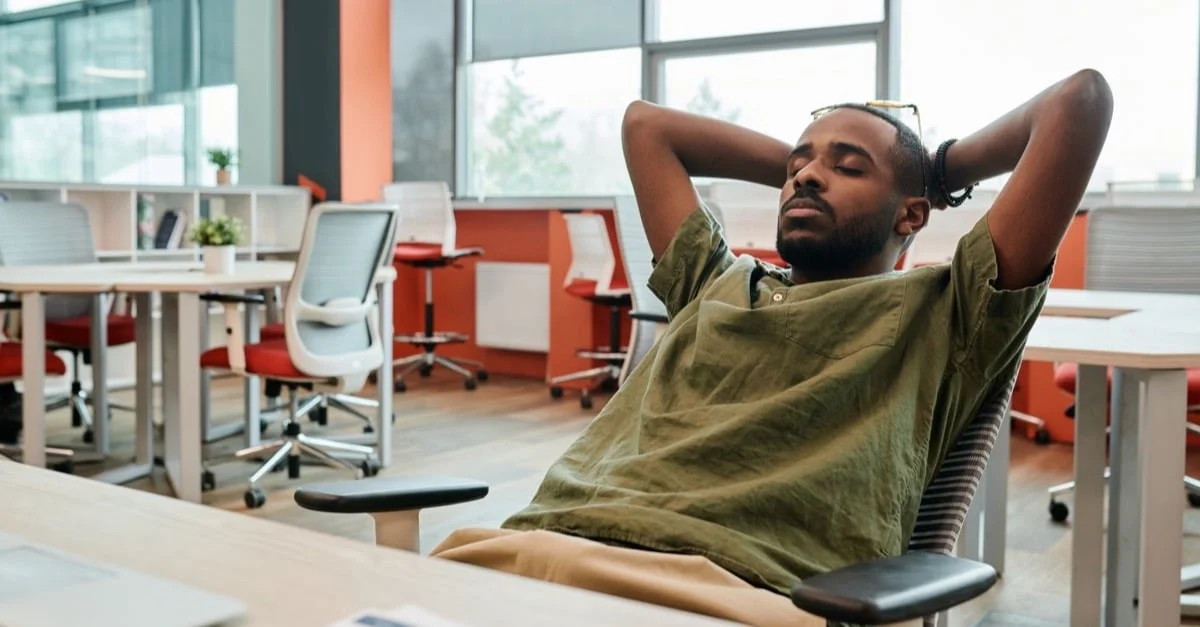
In the modern professional landscape, the "nervous system reset" has become a ubiquitous productivity hack. Whether it is a viral TikTok breathwork sequence, a guided meditation app notification, or a quick, rhythmic breathing exercise suggested by a wellness coach, the promise is always the same: do this for two minutes, and return to a state of calm.
However, millions of professionals find that while their heart rate may dip momentarily, the familiar fog of stress, irritability, and overwhelm returns by the time they have opened their next browser tab. This is not because the breathing techniques are faulty; it is because our expectations of them are fundamentally misplaced. We have been conditioned to view our nervous systems as electronics that can be "rebooted" with a keystroke, ignoring the biological reality that stress is a wave—and a wave cannot be erased, only ridden.
Main Facts: The Physiology of the "Dimmer Switch"
To understand why your stress returns, one must distinguish between two biological concepts: the current state of arousal and the physiological baseline.
A two-minute breathing exercise acts as a dimmer switch. It can temporarily lower your physical arousal, slowing your heart rate and easing the tension in your jaw. It works, but only for a specific window of time. It does not, however, touch your thermostat—the internal baseline that dictates where your body settles once you stop focusing on your breath.
When you finish your "reset" and return to a high-demand, high-density environment, your body simply drifts back to its preset temperature. Most workplace wellness advice sells you a dimmer switch and then implicitly blames you for "failing" when the room warms up again. This creates a cycle of frustration where individuals hoard breathing techniques, believing that if they just find the "right" one, their stress will disappear forever.
A Chronology of the Stress Wave
Understanding the timeline of stress is critical to managing it. When you encounter a trigger—a hostile email, a failing project, or a surprise meeting—your body’s endocrine system kicks into gear.
- The Immediate Spike: The initial physical sensation (tight chest, rapid heartbeat) is the body’s acute response to perceived threat.
- The Rising Tide: Laboratory studies on cortisol—the body’s primary stress hormone—reveal that the hormone typically peaks 10 to 30 minutes after the stressor has ended.
- The 90-Minute Curve: Research published in journals like PLOS ONE suggests that it takes roughly 90 minutes for the body to move toward a baseline following a significant stress event.
When you perform a two-minute breathing exercise at the 2:40 PM mark, you are often catching the wave while it is still rising. You are not "canceling" the stress; you are navigating it with a slightly lower heart rate. If you check your stress levels at 3:00 PM and find yourself agitated, it is not because the exercise failed. It is because you are still within the 90-minute window of the body’s natural physiological processing.
Supporting Data and Evidence-Based Practice
The confusion surrounding these techniques often stems from a lack of scientific nuance in mainstream advice. Clinical research, such as the 2023 study published in Cell Reports Medicine (Balban et al.), compared various practices and found that "cyclic sighing"—inhaling through the nose, adding a second shorter inhale to fully inflate the lungs, and then exhaling slowly through the mouth—was superior to standard mindfulness meditation in improving mood and lowering respiratory rates over a 28-day period.
However, the efficacy of these practices is consistently misinterpreted. A study review in Frontiers in Human Neuroscience (Zaccaro et al., 2018) confirmed that breathing at a rate of fewer than ten breaths per minute influences the autonomic nervous system, specifically increasing heart rate variability (HRV).
The critical caveat: An increase in HRV is a biological data point, not a universal "stress score." Relying on a smartwatch to tell you if you are "calm" is a form of self-monitoring that often adds to the burden of a stressful week. The data confirms that these tools are effective, but they are tools of modulation, not eradication.

Official Perspectives: The Problem with "Dysregulation"
In the wellness industry, the term "dysregulated nervous system" is frequently used as a catch-all diagnosis. However, in psychiatric research, such as the 2021 study in Frontiers in Psychiatry (Paulus et al.), "dysregulation" is a descriptive term for a broad range of symptoms rather than a clinical entity.
When you label your own nervous system as "dysregulated," you may be accidentally pathologizing a natural response to a dysfunctional work environment. Experts warn against handing yourself a clinical diagnosis. If you feel like you are on the edge of burnout, the solution is rarely a better breathing pattern; it is an examination of your environment.
Implications: Changing the Inputs, Not Just the Breath
If you have tried the breathing and the calm still won’t hold, you must move from "resetting" to "reconfiguring." This involves addressing the three primary inputs that set your physiological baseline:
1. Sleep Hygiene
Sleep deprivation is the ultimate stress multiplier. Research from the Journal of Neuroscience (Goldstein-Piekarski et al., 2015) indicates that when humans are sleep-deprived, the amygdala—the brain’s threat-detection center—becomes hyper-reactive. On short sleep, standard workplace friction is processed by your brain as an existential threat. No breathing exercise can outrun the physiological impact of chronic sleep debt.
2. The Architecture of the Day
Workplace density is a property of your calendar, not a reflection of your professional capability. If your day is so packed that you never have a moment to recover, you are effectively running a marathon without water stations. The evidence consistently supports the necessity of micro-breaks. If your calendar is immovable, the "input" change might involve setting firm boundaries on communication or negotiating the order of your deliverables.
3. Sustained Load
A meta-review of 72 studies (Niedhammer et al., 2021) links sustained psychosocial work demands to negative health outcomes. The implication is clear: if the demand is constant, the stress is a logical response to a condition. If you are in a high-load environment, you are not failing to relax; you are reacting to an environment that is designed to keep you in a state of high arousal.
Conclusion: How to Conduct Your Own "Five-Day Count"
To stop the cycle of searching for the "perfect" technique, perform a simple, five-day audit of your own stress:
- The Practice: Use a proven pattern (such as the cyclic sigh) for two to five minutes when you feel a spike in tension.
- The Check: Do not monitor yourself every 20 minutes. Wait 90 minutes.
- The Log: Ask yourself two questions: Is the stress still here? Did something new trigger it? Record only one word: "Passed" or "Still here."
If the stress has passed most days, you are experiencing spikes, and your current tools are sufficient. If the stress remains, you are dealing with a standing condition.
By tracking this over five days, you transform an abstract sense of "failure" into actionable data. You stop looking for a better "reset" and start identifying the specific inputs—the sleep, the calendar density, or the workload—that are setting your baseline.
Remember, the goal of these exercises is not to achieve a life without stress; it is to achieve a life where you have the agency to manage your response to it. When you stop asking a dimmer switch to do the job of a thermostat, you stop the self-blame that keeps so many professionals trapped in a cycle of perceived failure. Your techniques are not failing; they are simply doing exactly what they were designed to do. The rest of the work belongs to you.