For over a decade, the evolution of the e-reader has been defined by the slow, steady march toward the "glass slab" aesthetic. Since the transition from the physical keyboard-equipped Kindles of the late 2000s to the touch-centric interfaces that dominate the market today, the tactile experience of reading has been largely relegated to the realm of software taps and swipes. However, for a dedicated subset of bibliophiles, something was lost in that transition: the physical page-turn button.
On October 28, 2026, Amazon addressed this long-standing niche demand with the launch of the Kindle Page-Turn Cover. While it is not a new e-reader device in the traditional sense, this accessory marks a significant strategic shift for the company, effectively retrofitting its flagship devices with the ergonomic benefits of the retired Kindle Oasis.
Main Facts: A Hybrid Solution for a Premium Experience
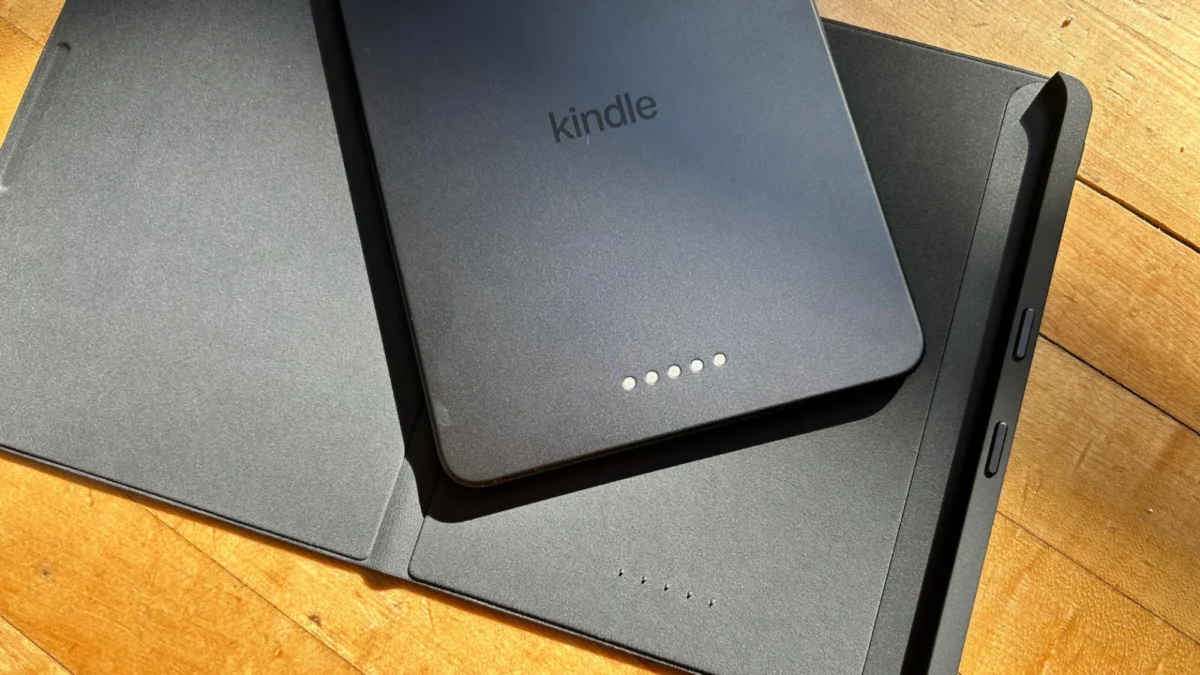
The Kindle Page-Turn Cover is an $80 accessory designed exclusively for the latest high-end iterations of Amazon’s e-readers: the Kindle Paperwhite Signature Edition and the Kindle Colorsoft Signature Edition. Constructed from plant-based leather, the cover features a magnetic front flap and an integrated right-hand bezel housing two physical, elongated buttons.
Unlike traditional smart covers that serve only as protection or sleep-wake triggers, this case utilizes pogo-pin connectivity to interface directly with the device’s hardware. When attached, the case enables physical page turning, allowing users to move forward or backward through their books without touching the screen. The device is currently available in three colorways—Graphite, Fig, and Seaglass Green—designed to match the aesthetic of the new Kindle lineup.
A Chronological Perspective: From Oasis to Accessory
To understand the significance of this release, one must look at the trajectory of Kindle hardware design over the last 15 years.
- 2012: Amazon begins the mass transition to touchscreen-only interfaces, effectively phasing out the physical "page turn" bars that were a staple of the Kindle Keyboard and early Paperwhite generations.
- 2016–2019: The Kindle Oasis is introduced as the premium "enthusiast" model, featuring a dedicated ergonomic grip with physical page-turn buttons. It remains the gold standard for those who find touch-only navigation cumbersome.
- 2024: Amazon officially discontinues the Kindle Oasis, signaling an end to the era of built-in, dedicated physical navigation buttons across its primary product line.
- Late 2026: Following a major hardware overhaul of the Kindle Paperwhite and Colorsoft series, Amazon recognizes that a small but vocal segment of their user base—estimated by leadership to be roughly 5%—still deeply desires physical tactile feedback.
- October 2026: The Kindle Page-Turn Cover is released, serving as an "add-on" solution that bridges the gap between the modern, sleek hardware of the Paperwhite/Colorsoft and the ergonomic legacy of the Oasis.
Supporting Data and Technical Nuances
The integration of the Page-Turn Cover is more than a simple mechanical gesture; it relies on the internal hardware capabilities of the new Kindle models. The Page-Turn Cover leverages the pogo-pin connector on the rear of the device, which also handles power and data syncing.

Performance Metrics
In real-world usage, the physical buttons offer a distinct advantage in responsiveness. While modern e-ink displays have become incredibly fast, the "touch-to-turn" latency remains a byproduct of digitizer processing. Because the Page-Turn Cover sends a direct signal via the pogo pins, the page refresh is noticeably more immediate. After the initial "handshake" between the cover and the device, page turns feel instantaneous.
Ergonomic Customization
The system is built with inclusivity and handedness in mind. Through the Kindle’s software settings, users can:
- Re-map Buttons: Users can toggle which button advances the page and which one moves backward.
- Orientation Rotation: By disabling "Lock Rotation," the device automatically reorients the text when flipped, allowing the buttons to function perfectly whether the reader is holding the device in their left or right hand.
However, there are current limitations. Unlike some competing e-readers from brands like Boox or Barnes & Noble, the current software iteration does not support custom mapping for long-presses or double-taps (such as jumping chapters or quick-scrubbing through a library). The functionality is strictly limited to page progression.
Official Responses and Market Strategy
Kevin Keith, Amazon’s Vice President of Kindle, has acknowledged that the decision to introduce this accessory was driven by a specific, dedicated segment of the user base. While 95% of Kindle users are perfectly satisfied with touchscreen navigation, the remaining 5%—often power users or those with accessibility needs—have been vocal about the tactile void left by the discontinuation of the Oasis.
By offloading the physical buttons to an $80 accessory, Amazon has achieved two strategic goals:
- Design Purity: They maintain the "flush-front" design of their new e-readers, which is easier to clean and more aesthetically streamlined.
- Premium Upsell: They have created a high-margin accessory that effectively segments the market. Users who want the "Oasis experience" must now pay a premium price for both the base device and the specific cover.
The Implications: Is It Worth the Cost?
The introduction of the Page-Turn Cover invites a critical conversation about the "cost of comfort." To obtain a modern, button-equipped Kindle experience today, a consumer must purchase the Kindle Paperwhite Signature Edition (roughly $250) and the Page-Turn Cover ($80), totaling $330.

This is a significant increase over the price of the third-generation Kindle Oasis, which launched at $250 in 2019. When viewed through the lens of pure utility, this is a premium investment. For the average reader, this expenditure is likely unnecessary. However, for the "tactile reader"—those who read for hours at a time, or those who find the act of swiping to be a disruption to the immersion of the text—the value proposition changes.
The Competitive Landscape
The market for dedicated e-readers is more competitive than it has been in years. Devices like the Boox Go 7 offer built-in buttons for a lower entry price point (around $270), providing a compelling alternative for users who refuse to be locked into the Amazon ecosystem. By keeping the buttons as an $80 add-on, Amazon is betting that the convenience of their bookstore integration and the reliability of their software will outweigh the higher barrier to entry for the button-loving demographic.
Conclusion: The Future of Tactile Reading
The Kindle Page-Turn Cover is an admission that, in the world of technology, "newer" does not always mean "better" for every user. By separating the navigation hardware from the primary device, Amazon has provided a pathway for legacy fans to maintain their preferred reading style while keeping the mainstream product line clean and modern.
Whether this represents the start of a trend—where niche features are moved to modular accessories—remains to be seen. For now, it stands as a sophisticated, albeit expensive, solution to a problem that many thought had been solved years ago. For those who still crave the satisfying "click" of a physical page turn, the wait is finally over—provided they are willing to pay the price for that bit of nostalgia.