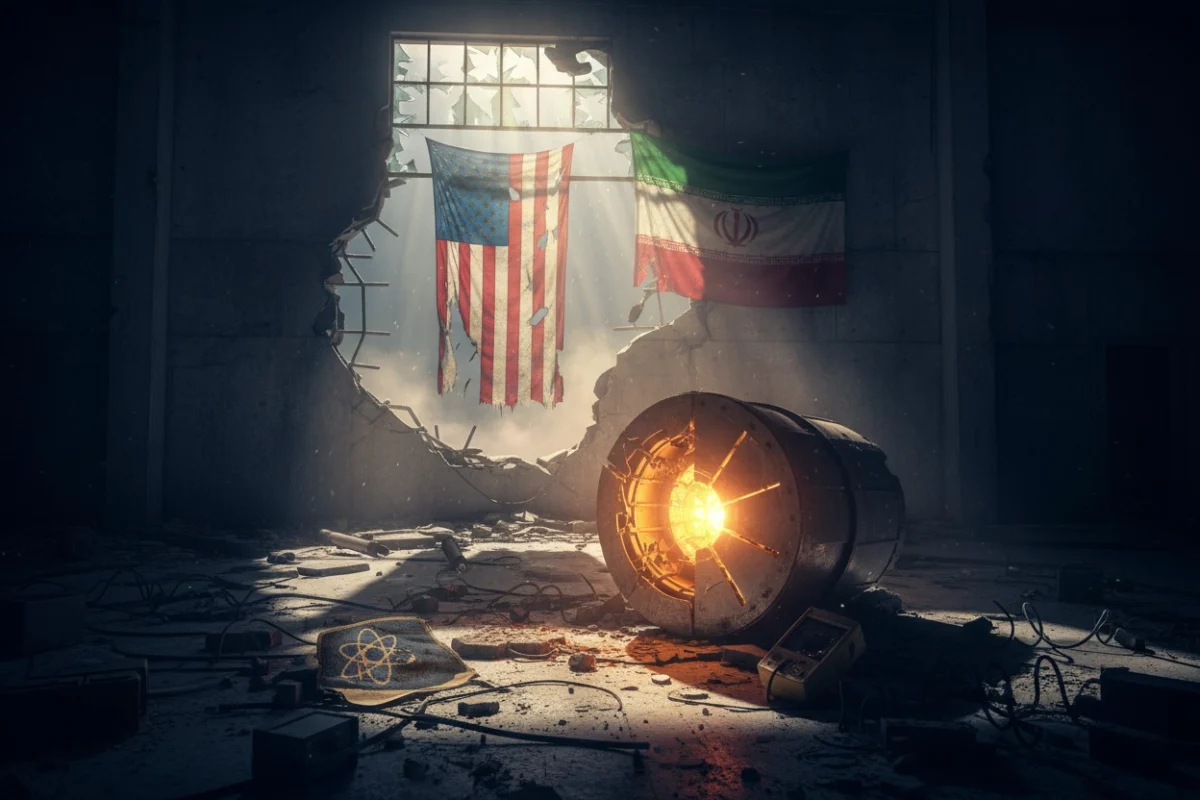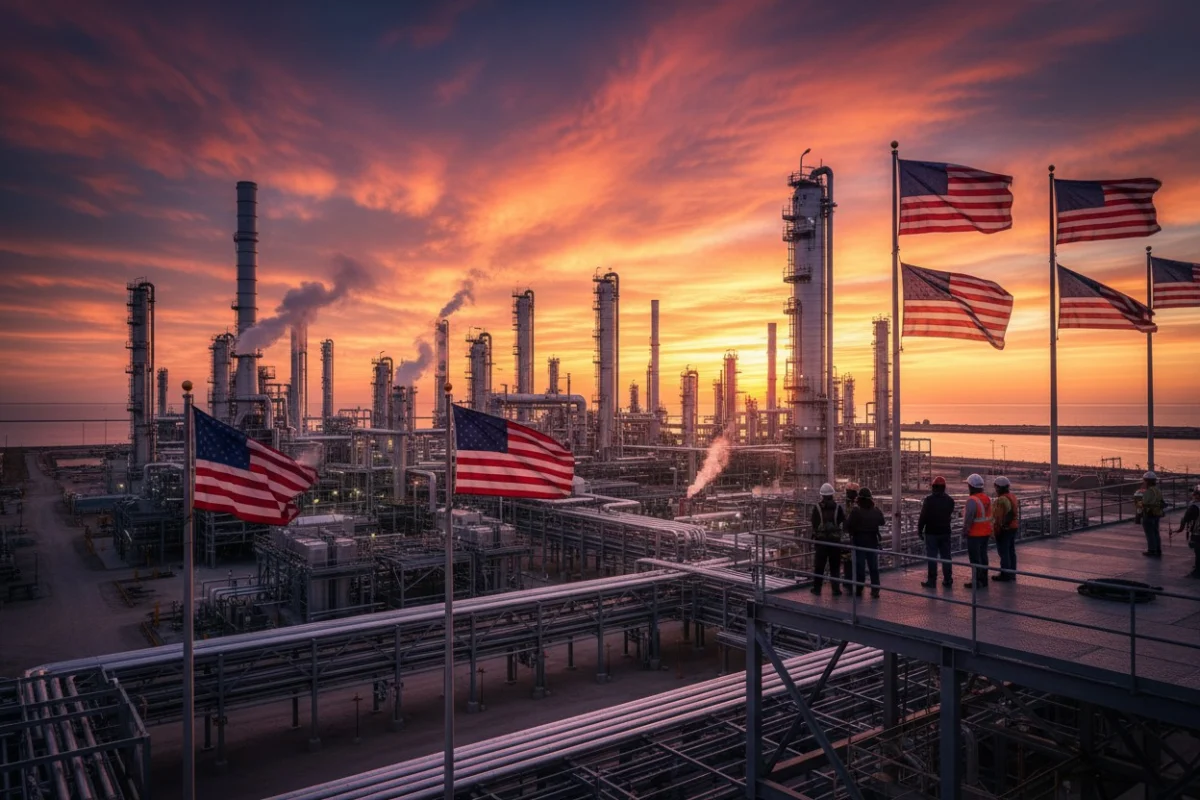
WASHINGTON — In a political climate where leaders routinely sanitize the harsh economic realities of military conflict, President Donald Trump stripped away the rhetorical varnish during a weekend rally in Georgia. Addressing a roaring crowd, the president delivered a blunt assessment of the ongoing U.S. conflict with Iran: American energy corporations are raking in a historic fortune, even as ordinary motorists watch their weekly paychecks evaporate at local gas stations.
The remarks offered a rare, unvarnished look at the intersection of foreign war and domestic corporate enrichment. While the geopolitical chokepoints of the Middle East squeeze global crude supplies and send pump prices soaring past psychological thresholds, U.S. oil and gas giants are recording unprecedented profit margins. The stark divergence between surging corporate balance sheets and household budget strains has reignited fierce debates over wartime economics, market fairness, and the distribution of national wealth.
Main Facts: The Anatomy of a Wartime Windfall
At the heart of the current economic crunch is a classic, albeit brutal, economic equation: military conflict in a vital energy corridor restricts global supply, driving up the market value of crude, while domestic producers capitalize on elevated prices without a corresponding increase in extraction costs.
When hostilities between the United States and Iran escalated, the geopolitical shockwaves immediately targeted the Strait of Hormuz. This narrow maritime artery—situated between Iran and Oman—serves as the energy jugular of the global economy, carrying a massive percentage of the world’s seaborne petroleum. As naval skirmishes and threats of renewed blockades paralyzed tanker traffic, global supply chains froze. Brent crude surged past $100 per barrel, creating an immediate sellers’ market.
Rather than dampening production or absorbing the shocks, domestic energy producers in the Permian Basin of Texas, Oklahoma, and Louisiana opened their spigots to supply foreign buyers desperate to replace shuttered Middle Eastern crude.
Yet, this export boom has done nothing to alleviate pain at domestic pumps. Instead, American drivers are experiencing the painful mechanics of what economists call the "rockets and feathers" phenomenon: retail gasoline prices shoot upward like rockets the moment crude futures tick higher, but drift downward like feathers when wholesale costs finally recede.
Key Takeaways of the Crisis
- Surging Crude Prices: Brent crude has sustained a level above $100 per barrel following the closure and militarization of the Strait of Hormuz.
- Corporate Windfalls: Major U.S. energy firms have reported multi-billion-dollar quarterly earnings, with year-over-year profit surges exceeding 100% to 400% for select majors.
- The Export Drain: Foreign nations are aggressively purchasing U.S. crude from Texas, Oklahoma, and Louisiana hubs, keeping domestic supplies tight and retail prices high.
- Political Fallout: The economic strain threatens to reshape the upcoming midterm elections, pitting public frustration against executive indifference toward household budgets.
Chronology: From Middle East Tensions to the Georgia Rally
The trajectory of the current energy crisis is tied directly to a steady escalation of military engagements and subsequent market reactions over recent years.
Pre-2026: The Blueprint of Wartime Profiteering
The modern playbook for energy windfalls was established long before the current conflict. Following Russia’s invasion of Ukraine in 2022, global oil markets experienced a comparable shock. Major energy firms reported record-shattering annual profits—with ExxonMobil posting roughly $56 billion that year—prompting bipartisan congressional scrutiny over whether consumers were being exploited. Despite political posturing, no permanent legislative mechanisms were enacted to curb wartime gouging, leaving the structural vulnerabilities of the energy market firmly intact.
Early 2026: The Strait of Hormuz Chokepoint
As tensions between Washington and Tehran deteriorated into open military conflict, Iranian military assets and U.S. naval patrols clashed regularly around the Strait of Hormuz. Maritime insurance rates skyrocketed, and major shipping lines suspended tanker transits through the Gulf. Global crude supplies tightened instantaneously, setting off a chain reaction across international commodities exchanges.
Mid-2026: Corporate Earnings Explode
As the war dragged on through the second quarter, the financial reports of major U.S. energy producers confirmed public suspicions.
- ExxonMobil reported a staggering $14.7 billion in second-quarter profits, marking a 105% jump compared to the same period a year prior.
- Chevron posted $12 billion in profit, representing an eye-watering 400% surge.
- Combined data for the first half of the year revealed that five leading U.S. producers pulled in a collective $65.5 billion—a 65% increase over the previous year.
October 2026: The Georgia Rally and the "Quiet Part" Spoken Aloud
Speaking at a campaign-style rally in Georgia, President Trump bypassed traditional talking points about energy independence bringing immediate consumer relief. Instead, he leaned into the industry’s profitability.
Recounting advice from his own inner circle, Trump revealed: "My people said, ‘Please don’t mention that, sir, because people are paying a little higher.’"
His response to his advisors was characteristically unfiltered: "I don’t give a damn, I’m gonna say it: we’re making a freakin’ fortune. Our country is getting stronger and stronger all the time." He detailed how foreign buyers were flocking to domestic extraction hubs in Texas, Oklahoma, and Louisiana, pulling resources from American soil while consumers absorbed the domestic price shocks.
Supporting Data: The Numbers Behind the Public Burden
To understand the public frustration, one must examine the profound disparity between corporate balance sheets and household expenditures.
| Energy Corporation | Q2 Profit (Current) | Percentage Increase Year-Over-Year |
|---|---|---|
| ExxonMobil | $14.7 Billion | +105% |
| Chevron | $12.0 Billion | +400% |
| Industry Aggregate (Top 5) | $65.5 Billion (H1) | +65% |
The data illustrates a structural imbalance: while taxpayers fund the military apparatus, naval carrier groups, and missile defense systems that maintain global shipping lanes and project power in the Middle East, the direct financial dividends of the resulting scarcity flow overwhelmingly to private shareholders.
Critics argue that this dynamic violates basic tenets of market fairness. Taxpayers shoulder the national security risks, the human toll of military deployment, and the inflated cost of refined fuel at home, while energy executives celebrate record yields. Proponents of the industry, however, maintain that energy companies operate within a global commodities framework where prices are dictated by international supply and demand, not domestic political fiat. Furthermore, industry defenders emphasize that millions of American retirees depend on these very corporate profits through their pension funds and 401(k) portfolios.
Official Responses and Political Repercussions
The president’s candid boast has triggered a firestorm in Washington, drawing sharp divides across the political aisle and drawing defensive postures from industry representatives.
The Administration’s Stance
While the president acknowledged that oil prices are "temporarily high," he insisted they would "fall dramatically in a short period of time." However, this optimistic forecast is undermined by ongoing military contingencies. Administration officials have openly weighed the possibility of resuming heavy bombing campaigns against Iranian infrastructure, and Iranian military leadership has vowed severe retaliation targeting regional stability. Each cycle of escalation threatens to send fresh tremors through energy markets, ensuring that high profit margins remain sticky.
Congressional Reactions and Windfall Tax Proposals
The political stakes ahead of the upcoming midterm elections are acute. Lawmakers representing suburban and working-class districts report intense voter anger over sustained high fuel costs. In response, progressive and populist lawmakers have revived proposals for a modern windfall profits tax.
Drawing inspiration from historic precedent—such as the U.S. windfall profit tax of 1980 or European levies enacted during the 2022 energy crisis—legislators are evaluating frameworks that would:
- Tax Excess Profits: Levy targeted taxes on earnings exceeding a pre-war baseline.
- Fund Direct Consumer Rebates: Channel collected revenue directly back to households via fuel stimulus checks or targeted tax credits.
- Condition Tax Breaks: Require energy firms to reinvest windfalls strictly into domestic refining capacity and renewable transition projects rather than stock buybacks.
Industry Retaliation and Lobbying
Energy lobbyists have pushed back fiercely against punitive tax proposals, arguing that artificial levies will discourage exploration, throttle future production capacity, and ultimately lead to even higher, more permanent price spikes for consumers. Industry advocates maintain that the best cure for high prices is high prices themselves, as they incentivize capital investment and spark technological innovation in domestic extraction.
Implications: Whose Interests Are Being Served?
As the conflict with Iran continues to reverberate through global supply chains, the broader implications of the administration’s rhetoric extend far beyond a single political gaffe.
When a head of state publicly celebrates a corporate windfall born of a foreign war while citizens struggle to fill their tanks, it forces a reckoning over the social contract. It raises fundamental questions about the obligations of multinational corporations during times of national crisis.
If American blood and treasure are being expended to secure geopolitical stability and resource access, the public expectation is that the dividends of that stability should benefit the commonwealth, not merely corporate ledgers. Whether through legislative intervention, tax reform, or shifting consumer demands, the pressure on policymakers to bridge the gap between national sacrifice and corporate reward has never been more urgent.
Until a mechanism is found to shield domestic consumers from the collateral economic damage of foreign conflicts, the disconnect between the boardroom and the gas pump will remain a defining flashpoint in American politics.