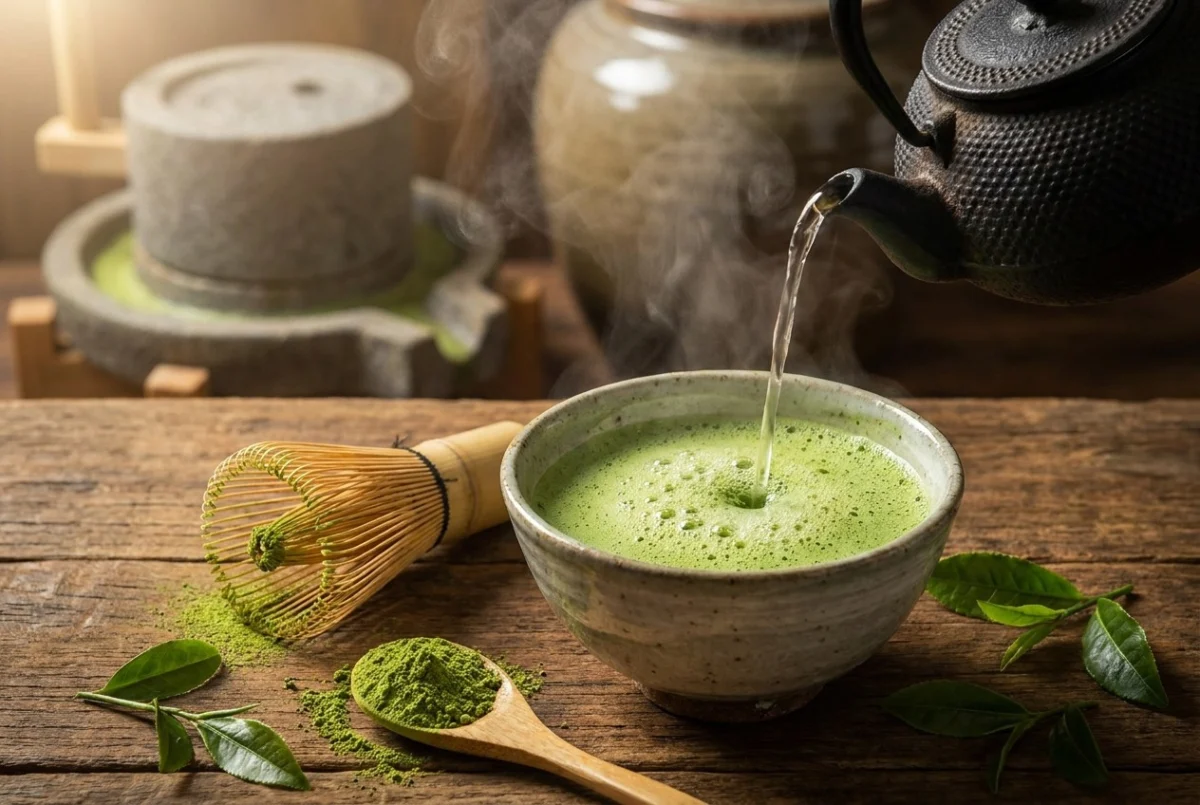
NEW YORK — In the fast-paced landscape of modern productivity, a vibrant green powder is quietly staging a revolution on kitchen counters and café menus alike. Matcha—finely milled shade-grown green tea leaves whisked into water—is increasingly being embraced as a sophisticated, health-conscious alternative to coffee.
Yet, as consumer demand surges, health experts and cultural authorities emphasize that the matcha experience is far from uniform. Navigating the vibrant world of ceremonial green tea requires a nuanced understanding of sourcing, quality, chemistry, and preparation.
Main Facts: The Anatomy of a Superfood
At its core, matcha distinguishes itself from traditional steeped teas through its whole-leaf consumption. While a standard cup of green tea involves steeping leaves and discarding them, matcha powder is ingested in its entirety. This fundamental difference drastically alters both nutrient exposure and the delivery of active compounds.
According to nutritional experts, consuming the whole leaf allows drinkers to absorb significantly higher concentrations of key phytochemicals, most notably epigallocatechin gallate (EGCG), a potent polyphenol renowned for its antioxidant properties. Furthermore, matcha contains a unique trifecta of elements: caffeine, the amino acid L-theanine, and rich chlorophyll profiles.
Unlike the sharp spike and subsequent crash often associated with coffee, the combination of caffeine and L-theanine in matcha is widely reported to produce a smoother, more sustained alertness. L-theanine crosses the blood-brain barrier, influencing brain signaling and promoting alpha brain waves—a state associated with relaxed, calm focus.
Despite its ancient roots, matcha’s contemporary rise is powered by modern nutritional science validating what practitioners have claimed for centuries: that intentional consumption can yield measurable cognitive and physiological benefits.
Chronology: From Zen Monasteries to Modern Mainstream
The journey of matcha spans over eight centuries, transitioning from a monastic meditative aid to a global wellness staple.
- 1191 AD: The Japanese Buddhist monk Eisai returns from China bearing tea seeds and the revolutionary custom of preparing powdered green tea. He introduces the practice to Japan, where it quickly becomes intertwined with Zen Buddhism.
- 15th to 16th Century: Tea masters like Sen no Rikyū codify the Japanese tea ceremony (Chanoyu or Sadō), elevating the preparation of matcha into a rigorous spiritual art form emphasizing harmony, respect, purity, and tranquility.
- Late 20th to Early 21st Century: Matcha breaks out of traditional Asian markets, finding a footing in Western specialty coffee shops primarily as a flavored latte ingredient.
- October 26, 2026: A comprehensive analysis published in The Epoch Times brings renewed scientific and consumer focus to matcha, highlighting the critical distinctions in quality, preparation, and physiological impact.
- Present Day: Matcha firmly establishes itself as a premier daily coffee alternative, driven by consumer demand for functional beverages that support both physical vitality and mental clarity.
Supporting Data: Chemistry, Caffeine, and Cognitive Science
Understanding matcha requires looking closely at the numbers—from the labor-intensive production methods to the exact biochemical breakdown in a standard bowl.
Production and Processing
The journey of matcha begins weeks before harvest, when tea bushes (Camellia sinensis) are shaded from direct sunlight. This process increases chlorophyll and amino acid production, deepening the green hue and sweetening the flavor profile. After harvesting, leaves are steamed to halt oxidation, dried, and painstakingly stripped of stems and veins.
The final stage involves grinding the dried leaves (known as tencha) into an ultra-fine powder using traditional granite-stone mills. This method yields a mere 40 grams of matcha per hour—a painstaking, labor-intensive process that justifies its premium price tag and preserves its delicate chemical structure.
Caffeine Profiles and Dosages
Data cited from a 2020 systematic review indicates that matcha contains approximately 19 to 44 milligrams of caffeine per gram of powder. Consequently, a standard 2-gram serving whisked into a beverage yields roughly 38 to 89 milligrams of caffeine, placing it comfortably below or comparable to a standard cup of drip coffee, which typically ranges from 96 to 150 milligrams.
For healthy adults, regulatory bodies and health guidelines generally peg safe daily caffeine limits at up to 400 milligrams from all sources. However, individual tolerances vary wildly. Pregnant individuals are advised to cap daily caffeine intake below 200 milligrams.
Cognitive Enhancements
Recent 2025 research suggests modest, measurable benefits for specific attention tasks and mood regulation when L-theanine and caffeine are combined. While much of the foundational evidence originates from studies on isolated compounds rather than whole matcha specifically, physiological markers confirm that caffeine blocks adenosine—the neurotransmitter responsible for inducing sleepiness—while L-theanine smooths out the stimulant edges.
Official Responses and Expert Insights: Navigating Quality
As the market floods with countless brands claiming supreme health benefits, registered dietitians and cultural experts are urging consumers to look past clever marketing and examine the product itself.
The Pitfalls of Online Shopping and Grading Labels
Registered dietitian Asako Miyashita points out a major hurdle for modern consumers: buying high-quality matcha online is notoriously difficult, as promotional photos rarely match the physical product inside the tin.
Furthermore, industry insiders caution that terms like "ceremonial grade" are entirely unregulated. The label does not legally guarantee purity, flavor freshness, superior nutrition, or authenticity.
"Consumers should treat sourcing information as a primary quality signal rather than relying on unverified grade labels alone," experts note.
Instead of trusting a buzzword, buyers should evaluate matcha based on sensory and geographical markers:
- Color: Fresh, high-grade matcha exhibits a vibrant, electric neon-green hue. A dull, yellowish-green color often indicates oxidation and declining freshness.
- Aroma: True fresh matcha should smell distinctly grassy, sweet, or subtly marine and seaweed-like, rather than stale or dusty.
- Transparency: Reputable vendors readily disclose where the tea was grown (e.g., Uji, Nishio, or Shizuoka in Japan), the harvest season (first harvest shincha is prized), processing methods, and third-party laboratory test results confirming the absence of heavy metals and pesticide residues.
Proper Storage
Because matcha’s delicate catechins, chlorophyll, and aromatic compounds degrade rapidly when exposed to environmental stressors, proper storage is paramount. Powders must be kept in airtight, opaque containers sealed away from heat, moisture, light, and strong household odors.
Implications: Preparation, Culture, and Individual Health
Translating raw powder into a transcendent beverage is both a science and an art. Minor missteps in preparation can completely ruin the experience, transforming a naturally sweet, umami-rich elixir into an unpalatably bitter brew.
Mastering the Craft
According to Asako Miyashita, water temperature is the single most critical variable. Water should be heated to approximately 160°F to 170°F (71°C to 77°C). Utilizing boiling water scorches the delicate leaves, dramatically intensifying bitterness.
Traditional preparations fall into two main categories:
- Usucha ("Thin Tea"): Approximately 2 grams of matcha whisked vigorously with roughly 2 ounces of hot water until a fine, uniform foam develops on the surface.
- Koicha ("Thick Tea"): Approximately 4 grams of matcha blended with just 1 ounce of hot water, creating a paint-like consistency rich in concentrated flavor and umami.
For those transitioning from sugary coffee drinks to a matcha latte, technique matters. Experts advise sifting the powder to eliminate clumps, then whisking the powder with a small splash of warm water first to create a smooth paste before introducing any dairy or plant-based milks. Unsweetened milks allow the authentic earthy profile of the tea to shine through without masking its complexity.
Cultural Respect and Mindfulness
Beyond the nutritional and physiological implications, matcha carries a profound cultural heritage rooted in Zen philosophy.
Japanese tea ritual master Yoshitsugu Nagano explains that traditional preparation involves deliberate, repetitive movements and courtesies designed to foster deep attention and gratitude. Far from being an exclusive, intimidating performance, Nagano describes the practice as a "training ground for real social interaction."
One does not need to master complex tea ceremony etiquette to enjoy matcha. The true essence of the ritual lies simply in slowing down, being present, and feeling a sense of gratitude for the cup in one’s hands.
Health Precautions
While matcha offers a stellar array of antioxidants and a gentler energetic lift than coffee, it is not universally appropriate without moderation. Individuals sensitive to caffeine should begin with conservative doses—such as a quarter or a half teaspoon of powder. Furthermore, those managing chronic anxiety, sleep disorders, cardiac rhythm abnormalities, or individuals taking specific medications should consult a healthcare provider to tailor their daily caffeine intake safely.
Conclusion
Matcha’s ascendance from Buddhist monasteries to the modern global wellness zeitgeist is more than a passing dietary trend. It represents a deliberate cultural and physiological shift: away from frantic, jittery stimulants and toward mindful, nutrient-dense energy.
Yet, as dietitians and cultural masters remind us, reaping the true rewards of matcha requires discernment. By looking past unregulated labels, demanding rigorous quality sourcing, and mastering the subtle art of preparation, consumers can transform a simple morning cup into a sustainable, health-promoting ritual for the mind and body.