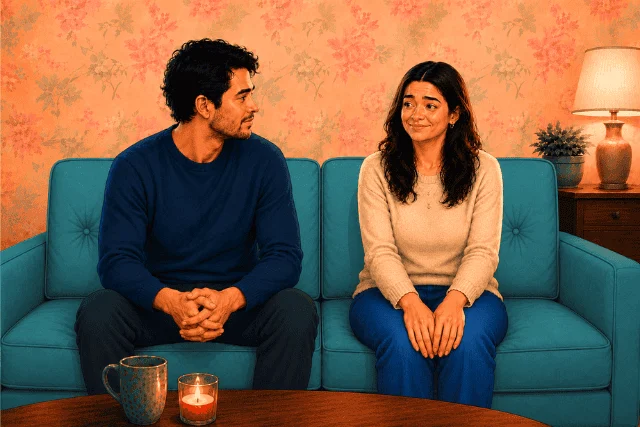

In an era dominated by digital connectivity and sedentary lifestyles, a growing movement of psychologists, mentors, and wellness experts is highlighting a simple yet profound truth: some emotional burdens cannot be resolved through thinking alone. When psychological distress, parental anxiety, or existential helplessness reaches a critical threshold, the human body often demands physical action to process what the mind cannot resolve.
This phenomenon—often referred to as "somatic processing" or "pedestrian pilgrimage"—is gaining traction as a vital coping mechanism for modern stress. At the forefront of this conversation is Dr. Daniel H. Shapiro, a keynote speaker, mentor, and author of The 5 Practices of the Caring Mentor. Through both his professional framework and personal practice, Dr. Shapiro advocates for the role of extreme physical exertion, specifically long-distance walking, as a conduit for emotional release and interpersonal presence.
Main Facts: The Intersection of Emotion and Motion
At its core, somatic walking is the practice of using long-distance, self-propelled movement to transition emotional energy from the internal landscape to the external world. Unlike casual exercise, these journeys are often spontaneous, deeply symbolic, and undertaken during times of acute emotional transition or helplessness.
According to Dr. Shapiro, the practice rests on the premise that "tenderness often needs to move through the body before it can reach another person." This perspective aligns with a growing body of somatic psychology which asserts that emotions are not merely cognitive states but physiological events. When individuals encounter situations where they are powerless to help a loved one or alter a painful reality, the resulting stagnant energy can manifest as anxiety, depression, or physical tension.
Key Dimensions of Somatic Walking:
- Intentional Displacement: Choosing to travel on foot despite having mechanical transportation, transforming a routine journey into a symbolic pilgrimage.
- Physical Exhaustion as Catharsis: Utilizing bodily fatigue to quiet the brain’s "default mode network," which is responsible for rumination and anxiety.
- Environmental Integration: Moving past the boundaries of urban landscapes into wilder, unpredictable environments (such as coastlines or wilderness edges) to gain existential perspective.
Chronology: A Lifetime of Pedestrian Pilgrimages
The development of Dr. Shapiro’s philosophy on physical movement did not occur overnight; rather, it was forged through decades of personal milestones, domestic challenges, and moments of acute helplessness.
[Early 20s] ------------------> [Mid-Adulthood] --------------> [Parental Milestones] ---------> [The Everglades Crisis]
Walked 8 miles to future        Regular 5-mile walks            Walked miles to secure          Hiked to the Everglades
wife's home; realized physical  to parents' home to             symbolic gift for son;          and undertook cold plunge
exertion builds presence.       cultivate appreciation.         14-mile walk for work stress.   to process daughter's pain.
1. The Walk of Devotion (Early Twenties)
Living in South Florida, a young Shapiro sought to visit his future wife, who resided in an apartment off the Sawgrass Expressway—approximately eight miles away. Despite owning a functional vehicle, an internal impulse compelled him to walk. Trekking up University Drive, past strip malls and highway shoulders in the intense Florida heat, he arrived exhausted and sweat-soaked. This initial journey established a lifelong realization: pushing the physical body can act as a tangible demonstration of care and preparation for deep connection.
2. The Walk of Presence (Mid-Adulthood)
As his parents aged, living five miles away, Shapiro eschewed driving in favor of walking the route. Moving step-by-step past the yards and street corners of his childhood allowed him to transition from the hectic pace of daily life into a state of absolute presence. By the time he arrived at their doorstep, the mental clutter of the workday had evaporated, replaced by genuine appreciation for his family.
3. The Walk of Mentorship and Stress Relief
When his young son took an interest in sports, wearing the number five, Shapiro researched historical figures who shared the number. Discovering that Hall of Fame third baseman Brooks Robinson—renowned for both athletic excellence and humility—wore the number, Shapiro walked several miles to a baseball card shop to purchase a card for his son. The journey transformed a simple gift into a mindful transmission of values. Years later, facing overwhelming professional stress, he undertook a spontaneous 14-mile hike to the ocean, walking until the land ended and the cognitive tension dissipated into the surf.
4. The Everglades Pilgrimage (Recent Years)
The ultimate test of this somatic philosophy occurred when Shapiro’s daughter faced a severe, unspecified life crisis. Confronted with the agonizing, universal parental experience of helplessness—wherein a parent would gladly trade places with a suffering child but cannot—Shapiro took to the road.
He walked westward, leaving the suburban sprawl of South Florida behind, past the final bus stops and gas stations, until he reached the boundary fence of the Florida Everglades. Walking in uncharacteristically cold 40-degree Fahrenheit weather, he stood at the edge of the wild sawgrass basin, allowing his worry to exist in its rawest form. Upon returning home, he immediately submerged himself in his unheated backyard pool, using the shock of the cold water to ground his nervous system and solidify his mental dedication to his daughter’s recovery.
Supporting Data: The Neurobiology of Somatic Coping
Dr. Shapiro’s intuitive practice of walking through emotional distress is strongly supported by contemporary neuroscience, clinical psychology, and physiology.
Bilateral Stimulation and the Brain
Walking requires continuous, alternating left-right movement. In clinical therapy, this is known as bilateral stimulation, the foundational mechanism behind Eye Movement Desensitization and Reprocessing (EMDR).
Research published in the Journal of EMDR Practice and Research indicates that bilateral stimulation helps the brain integrate traumatic or highly stressful memories. When an individual walks, the rhythmic left-right sensory input facilitates communication between the left (analytical) and right (emotional) hemispheres of the brain, allowing for accelerated emotional processing and a reduction in the vividness of distressing thoughts.

The Default Mode Network (DMN) and Rumination
Neuroscientists have identified the Default Mode Network (DMN) as the brain network that becomes highly active when a person is ruminating, worrying about the future, or over-analyzing the past.
| Brain State | DMN Activity | Primary Cognitive Function |
|---|---|---|
| Sedentary Worrying | Hyperactive | Repetitive loops of anxiety, helplessness, and catastrophizing. |
| Somatic Walking (Extended) | Suppressed | Sensory engagement, focus on forward movement, reduced self-referential thought. |
A study from Stanford University found that a 90-minute walk in a natural setting significantly decreased activity in the subgenual prefrontal cortex—a key region of the DMN associated with mental illness and rumination—compared to those who walked in urban environments.
The Physiology of the Cold Plunge
Shapiro’s subsequent immersion in a cold pool is a validated method of somatic resetting. Cold water immersion (typically below 59°F or 15°C) triggers a massive release of norepinephrine and activates the parasympathetic nervous system via the vagus nerve once the initial shock subsides. This "cold shock response" lowers heart rate, reduces systemic inflammation, and interrupts cognitive anxiety loops, forcing the mind into the absolute present.
Expert Perspectives: The Limits of Cognitive Therapy
While traditional talk therapy and Cognitive Behavioral Therapy (CBT) are highly effective for many cognitive issues, prominent mental health professionals increasingly recognize their limitations when dealing with primal emotions like parental helplessness.
In his seminal book The Body Keeps the Score, trauma expert Dr. Bessel van der Kolk argues that deep-seated emotional distress resides in the somatic, non-verbal areas of the brain (such as the amygdala). "Talking about trauma or intense stress doesn’t necessarily change the physical sensations of helplessness," Van der Kolk writes. "We must access the body to change the mind."
Commenting on Dr. Shapiro’s methodology, clinical psychologists note that "bottom-up" processing—moving the body to calm the mind—is often far more effective than "top-down" processing (trying to think your way out of anxiety) when faced with uncontrollable life events.
"When we run out of cognitive solutions, the body becomes our primary tool for emotional digestion," says Dr. Elena Rostova, a somatic psychotherapist specializing in familial grief. "What Dr. Shapiro describes as ‘pouring himself out in the direction of the ones he loves’ is a highly functional way of discharging cortisol and adrenaline, preventing those stress hormones from turning inward and causing physiological harm."
Implications: A New Framework for Modern Mentorship and Parenting
The insights derived from Dr. Shapiro’s journeys carry profound implications for how modern society approaches parenting, mentorship, and mental wellness.
1. Embracing the "Real Journey" of Helplessness
Shapiro frames his practice around a poignant quote by essayist and poet Wendell Berry: “It may be that when we no longer know what to do, we have come to our real work, and when we no longer know which way to go, we have begun our real journey.”
For parents and mentors, acknowledging helplessness is often the hardest step. The urge to fix, control, or intervene can sometimes smother a struggling loved one. Somatic walking offers an alternative: instead of projecting anxiety onto the struggling individual, the caregiver redirects that energy into physical self-exhaustion, returning to the relationship grounded, empty of panic, and ready to offer stable support.
2. The Transition from Digital Isolation to Analog Connection
As digital devices increasingly mediate human relationships, the physical distance between individuals grows wider even as virtual communication increases. Somatic walking serves as a radical rejection of digital convenience. It asserts that true presence requires physical effort, time, and discomfort.
3. A Practical Guide for Somatic Integration
For individuals looking to incorporate somatic walking into their own lives, experts suggest the following guidelines:
- Identify the Unresolvable: Choose a challenge, worry, or dynamic that you cannot actively fix or control.
- Set a Destination of Significance: Walk toward a place that holds meaning—whether it is the home of a loved one, a natural boundary, or a place of personal memory.
- Forgo Distractions: Leave headphones, podcasts, and digital trackers behind. Allow the mind to fully engage with the physical rhythm of the body and the environment.
- Acknowledge the Fatigue: Accept the physical discomfort and fatigue as the literal processing of your emotional burden.
Ultimately, Dr. Shapiro’s experiences suggest that when love has nowhere to go, it must move. By walking to the edge of our personal wildernesses, we do not solve the problems of the world, but we prepare ourselves to face them with quiet, enduring strength.