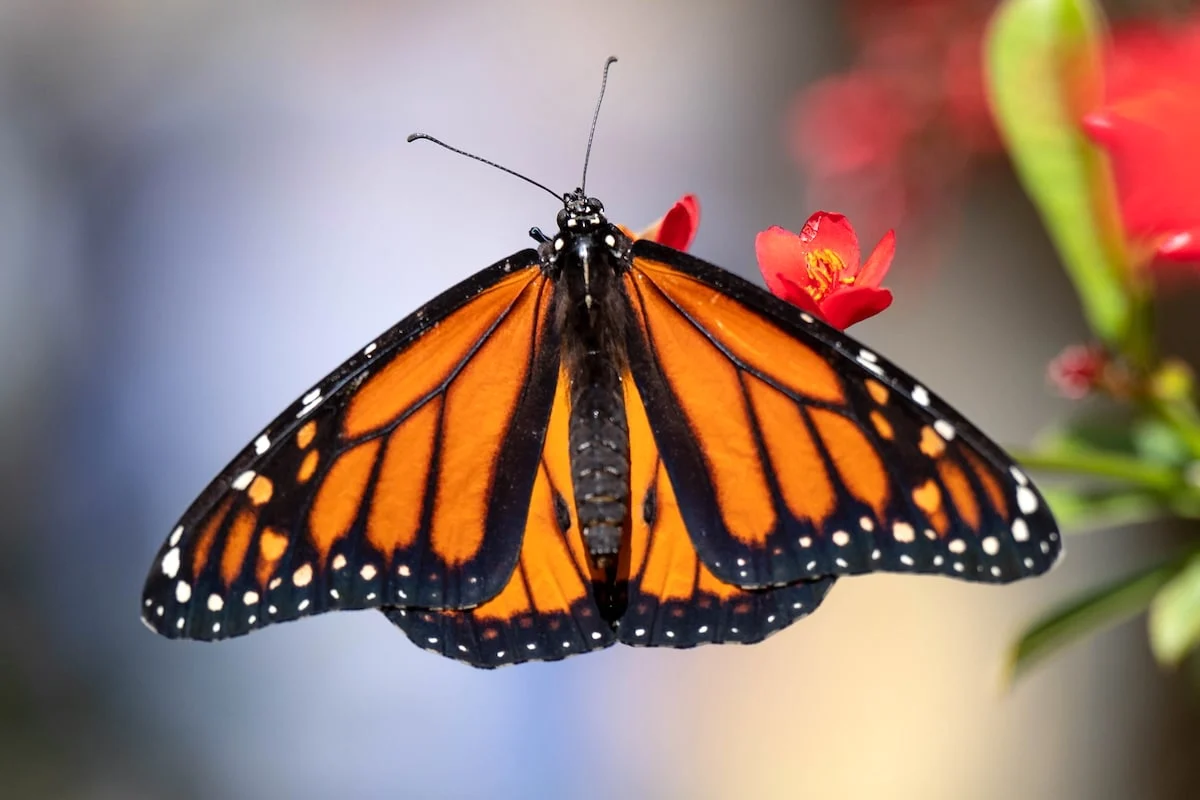
In the quiet groves of the Pacific Grove Monarch Sanctuary, a place historically synonymous with the breathtaking winter migration of the Western monarch butterfly (Danaus plexippus), a grim discovery in early 2024 sparked a scientific investigation that has now confirmed a devastating reality. A new peer-reviewed study, published in the journal Environmental Toxicology and Chemistry, has officially linked a lethal cocktail of pesticides to the mass mortality event that claimed hundreds of the iconic orange-and-black insects.
The findings represent a significant escalation in the struggle to save the Western monarch, a population that has plummeted by nearly 95% since the 1980s. As researchers peel back the layers of this environmental catastrophe, they warn that the survival of the species—already teetering on the edge of extinction—may depend on our ability to fundamentally rethink how we manage chemicals in both agricultural and urban landscapes.
The Anatomy of a Tragedy: Main Facts
In January 2024, conservationists and researchers arrived at the Pacific Grove sanctuary to find a scene of quiet carnage. Hundreds of monarch butterflies, which had gathered in the coastal California trees to endure the winter, were found dead or in the throes of death on the forest floor.
The subsequent forensic analysis was rigorous. Using advanced liquid and gas chromatography combined with mass spectrometry, the research team identified a chemical fingerprint of 15 different insecticides, herbicides, and fungicides present within the tissue of the deceased butterflies. On average, each butterfly carried seven different pesticides.
"We found an average of seven different pesticides per butterfly, including multiple insecticides that are highly toxic to insects," stated Staci Cibotti, lead author of the study and a pesticide risk prevention specialist at the Xerces Society for Invertebrate Conservation. The presence of these chemicals at near-lethal concentrations confirms that the butterflies were not merely suffering from natural environmental stressors, but were victims of acute chemical exposure.
Chronology of a Disappearing Icon
The road to this discovery was paved with decades of decline. To understand the gravity of the 2024 incident, one must look at the timeline of the Western monarch’s struggle:
- 1980s–Present: The Western monarch population enters a long-term, precipitous decline, dropping from millions to just a fraction of its former self.
- September 2020: A similar, though less publicized, mass die-off occurs in North Dakota, where hundreds of monarchs perished following an aerial mosquito control spraying event during their migration.
- January 2024: The mass mortality event occurs at the Pacific Grove Monarch Sanctuary in California. Researchers initiate immediate testing.
- July 2025: The Xerces Society releases its formal findings in Environmental Toxicology and Chemistry, providing the first definitive link between the specific chemical cocktail and the mortality event.
- 2025 Status: The U.S. Fish and Wildlife Service estimates that Western monarchs have a 99% probability of extinction by 2080 if current trends continue, with overwintering numbers in 2025 recorded at a dire 9,119 individuals.
Supporting Data: The Chemical Load
The study’s data paints a chilling picture of chemical saturation. The researchers focused specifically on pyrethroid insecticides—a class of human-made chemicals frequently used for pest control. The three identified pyrethroids—bifenthrin, cypermethrin, and permethrin—were found at or near doses known to be lethal to the species.
The consistency of the contamination was perhaps the most alarming aspect of the research:
- Bifenthrin and Cypermethrin: These were present in every single sample tested.
- Permethrin: This was found in all but two of the sampled butterflies.
While the specific source of the drift—whether from local agricultural fields, urban landscaping, or residential pest control—could not be definitively traced by Monterey County officials, the ubiquity of these chemicals in the butterflies’ tissues suggests that the sanctuary, intended to be a protected refuge, is increasingly vulnerable to external chemical intrusion.
The Vulnerability of Migration
The tragedy at Pacific Grove highlights a fundamental flaw in current conservation strategies: the "migratory trap." As butterflies congregate in massive numbers to overwinter or fuel up during migration, they become "sitting ducks" for environmental toxins.

"These are times when butterflies gather in large numbers, meaning even a single pesticide application has the potential to kill hundreds of individuals at once," noted lead researcher Staci Cibotti.
Unlike other stages of their life cycle where they are dispersed across a landscape, overwintering monarchs occupy concentrated "hotspots." This density is an evolutionary strategy for warmth and protection from predators, but in the Anthropocene, it has become a liability. A single spraying event in a nearby park or farm can wipe out a significant percentage of a local overwintering sub-population in one afternoon.
Official Responses and Policy Implications
The Xerces Society has responded to the study with a call for urgent, systemic change. Recognizing that education alone will not suffice, the organization is pushing for a multifaceted policy approach:
- Pesticide-Free Zones: Establishing buffer zones around critical overwintering sites where chemical use is strictly prohibited.
- Regulatory Oversight: Increased coordination between local government agencies and wildlife experts to track and mitigate pesticide risks in real-time.
- Landscape Management: Moving away from broad-spectrum insecticides in urban and agricultural settings that intersect with migratory corridors.
- Public Education: Informing homeowners and landscapers that common garden treatments, often perceived as benign, can be fatal to pollinators.
Emily May, co-author of the study and agricultural conservation lead at the Xerces Society, emphasized the scale of the challenge: "Protecting monarchs from pesticides will require both public education and policy change. We are committed to working with communities and decision-makers to ensure that overwintering sites are healthy refuges for these butterflies."
The Broader Environmental Context
The crisis facing the monarch is symptomatic of a larger global decline in insect populations—often described by scientists as the "insect apocalypse." Because insects form the bedrock of terrestrial food webs, their loss has cascading effects on birds, small mammals, and plant reproduction.
The fact that these chemicals are used for structural pest control, home gardening, and mosquito abatement means that the threat to the monarch is not isolated to industrial farming. It is a societal issue. Every time a homeowner applies a pyrethroid-based spray to their lawn to kill mosquitoes, there is a statistical possibility that the chemical will drift into the air, settle on vegetation, and contribute to the chemical load of a passing pollinator.
Conclusion: A Turning Point?
The 2024 die-off serves as a scientific wake-up call. For decades, the decline of the monarch has been attributed to the loss of milkweed and climate change. While those factors remain critical, this study proves that toxic exposure is a direct and immediate killer that cannot be ignored.
With a 99% extinction risk by 2080, the window for intervention is closing. The data provided by the Xerces Society offers a clear roadmap: we must treat migratory and overwintering sites as "sacred spaces" free from the chemical inputs of modern life. If we cannot manage to keep our protected sanctuaries free of lethal toxins, the future for the Western monarch—and perhaps for the wider ecosystem that depends on them—is bleak.
The story of the 2024 mass death is not just a tragedy of biology; it is a test of our collective will to coexist with the natural world. The question remains whether society is prepared to trade the convenience of pervasive chemical pest control for the survival of one of the world’s most beloved species.