
History is rarely a linear progression; rather, it is a collection of moments that, when viewed together, define the evolution of culture, infrastructure, and the human spirit. Today marks a confluence of anniversaries that range from the birth of transformative media and literature to the engineering marvels that bind nations together. As we look back on these dates, we gain insight into how figures like Jon Stewart, S.E. Hinton, and Alex Trebek—alongside monumental feats like the Blue Water Bridge—have shaped our contemporary landscape.
1. The Satirical Revolution: 30 Years of The Daily Show
Thirty years ago, the media landscape shifted irrevocably with the debut of The Daily Show on Comedy Central. What began as a bold experiment in political satire evolved into a cultural institution that fundamentally changed how Americans consume and interpret the news.
The Watchdogs of the Watchdog
At the heart of the show’s inception were creators Lizz Winstead and Madeleine Smithberg, who recognized a void in the television landscape. "Nobody had done it before," Winstead remarked, reflecting on the show’s early mission to act as "the watchdogs of the watchdog." By framing the program as a "fake news" broadcast—a spiritual successor to the Saturday Night Live "Weekend Update" segment—the production was able to bypass the traditional constraints of journalistic objectivity.

Under the long-term stewardship of Jon Stewart, the show assembled a "who’s who" of comedic talent. Correspondents like Stephen Colbert, Steve Carell, Ed Helms, Rob Corddry, Mo Rocca, Aasif Mandvi, John Oliver, and Lewis Black used the platform not just for humor, but to expose hypocrisy in the halls of power.
Cultural Implications and Legacy
The show’s impact was so profound that it frequently transcended its comedic roots to become a primary news source for millions of viewers. By maintaining a strictly bipartisan approach—pummeling both Democratic and Republican administrations and criticizing cable news giants like Fox News and MSNBC with equal fervor—The Daily Show earned dozens of Emmy Awards and two Peabody Awards. It proved that biting, irreverent comedy could be a potent vessel for truth-telling, forever altering the expectations of political discourse in the United States.
2. Engineering Connectivity: The Blue Water Bridge
Twenty-nine years ago, the completion of the second span of the Blue Water Bridge marked a critical milestone in North American infrastructure. Connecting Point Edward, Ontario, to Port Huron, Michigan, this structure serves as the second-busiest commercial crossing along the U.S.-Canada border.

A Legacy of Innovation
The history of this crossing is tied to the legendary Polish-American engineer Ralph Modjeski, often hailed as the "greatest bridge builder" of his time. Modjeski’s original 1938 design was a testament to early 20th-century ingenuity, but as traffic volume skyrocketed by the 1990s, the bridge authority realized the need for expansion.
The selection process for the second span was highly scrutinized. Rejecting the popular public choice of a cable-stayed suspension bridge, the Blue Water Bridge Authority opted for a continuous-tied arch design. While controversial at the time of its 1997 opening, the design was chosen for its aesthetic harmony with the original structure and its superior long-term maintenance profile. Today, the twin-span bridge remains a vital artery for international trade and travel.
3. Icons of Culture and Sport: Birthdays and Milestones
History is defined as much by its people as its infrastructure. This day has served as the birthday for several individuals who have left an indelible mark on their respective fields.

S.E. Hinton and the Birth of YA Fiction
Seventy-seven years ago, S.E. Hinton was born. Her contribution to literature cannot be overstated; she is widely credited with birthing the Young Adult (YA) genre. Writing The Outsiders at the age of sixteen while a student at Will Rogers High School in Tulsa, Oklahoma, Hinton channeled her frustration with the social stratification she witnessed between the "greasers" and the "socs."
Despite receiving a "D" in creative writing for the manuscript, the book became a global phenomenon, selling 15 million copies. The 1983 film adaptation, directed by Francis Ford Coppola, became a launchpad for a generation of Hollywood stars, including Tom Cruise, Patrick Swayze, and Matt Dillon. Hinton’s work remains essential reading, teaching empathy to millions of teenagers annually.
The Complexity of Sonny Liston
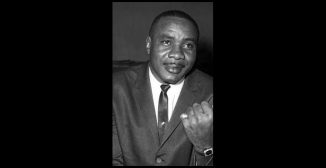
Sixty-three years ago, heavyweight champion Sonny Liston solidified his legacy by knocking out Floyd Patterson in a rematch. Despite his prowess in the ring—boasting an incredible 50-4 record—Liston’s career was marred by his difficult upbringing and a complicated relationship with the public. Critics often overlook the nuance of his life: while he struggled with literacy and legal issues, those closest to him described a man of profound gentleness. His story remains a poignant reminder of the often-unseen human struggles behind the public figures who dominate our sporting arenas.
Tom Robbins and the Power of Play
Novelist Tom Robbins, who turns 94 today, has long championed the idea that "humanity has advanced… because it has been playful, rebellious, and immature." Through works like Jitterbug Perfume and Still Life with Woodpecker, Robbins has blended philosophy with bizarre, meticulously researched facts, challenging readers to think outside the conventional boundaries of storytelling.
4. Remembering Alex Trebek: A Life of Knowledge
Born 86 years ago in Sudbury, Ontario, Alex Trebek became synonymous with intellectual curiosity and integrity. As the host of Jeopardy! for 36 years, he was a nightly constant in millions of households.
Beyond the Podium
Trebek’s career began in broadcasting in Canada before he moved to Los Angeles to become the face of the game show industry. Beyond the podium, he was deeply committed to public service, including extensive work with the USO to support troops overseas.

His final act—a public battle with stage 4 pancreatic cancer—was characterized by the same grace and stoicism he showed on television. By continuing to tape episodes during his treatment and publishing his memoir, The Answer Is…, he turned his personal struggle into a teaching moment, offering reflections on life that resonated deeply with his audience.
5. The Founding of a City: Cleveland, 1796
Finally, we look back to July 22, 1796, when General Moses Cleaveland founded the city that bears his name on the southern shore of Lake Erie. Strategically situated at the mouth of the Cuyahoga River, the city grew into a manufacturing powerhouse that defined the industrial identity of the American Midwest.
A Modern Cultural Hub
While the city’s roots are industrial, its modern identity is defined by its commitment to the arts and community. Home to a world-class symphony orchestra and the Rock and Roll Hall of Fame, Cleveland has successfully transitioned from an industrial center to a cultural destination. The city’s resilience was perhaps best captured in 2016, when the Cleveland Cavaliers secured a championship title, ending a half-century drought and unifying the city in a moment of historic celebration.

Conclusion: The Interconnectedness of Time
Whether it is the birth of a satirical show that holds the powerful accountable, the construction of a bridge that joins two nations, or the life of a novelist who teaches teens how to empathize, today’s milestones illustrate a broader truth. History is a dialogue between the past and the present. By celebrating these individuals and achievements, we recognize that the progress of our society is built upon the curiosity, courage, and ingenuity of those who came before us. As we mark these anniversaries, we are reminded that every day is an opportunity to contribute to the ongoing story of human achievement.