By Global Science Correspondent
Published: September 2026
Main Facts: A Historic Antarctic Anomaly
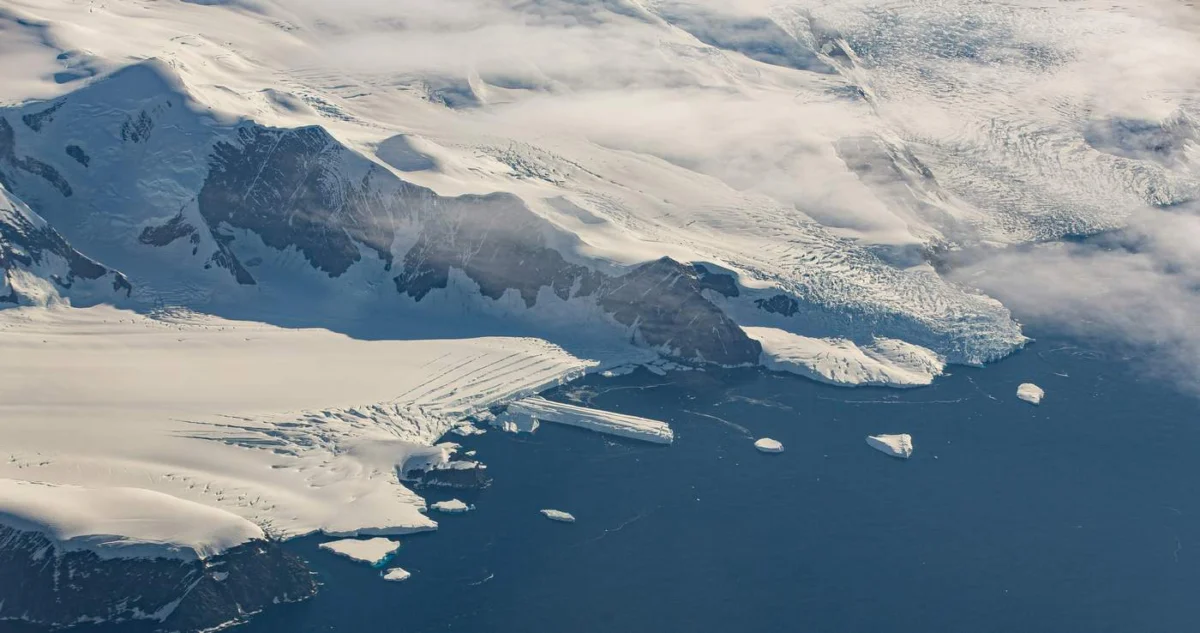
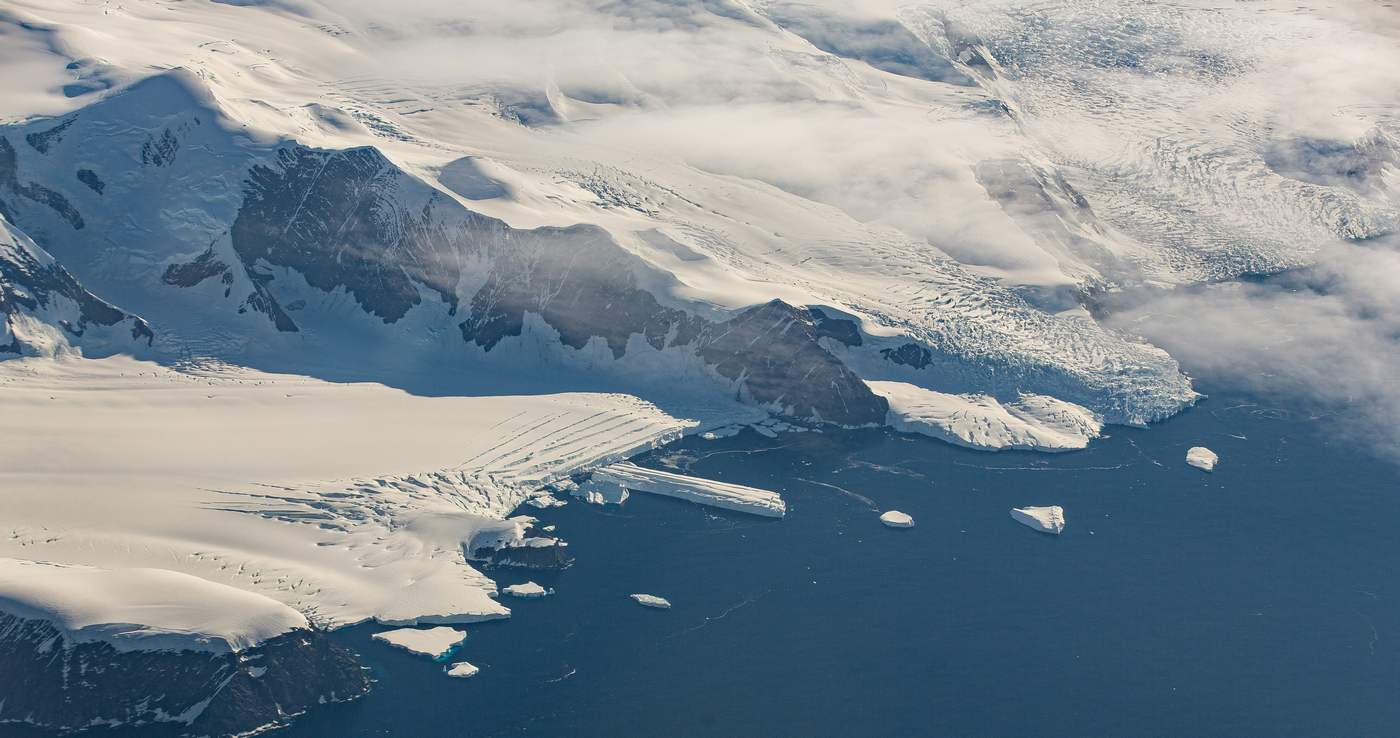
In an unexpected twist of planetary dynamics, East Antarctica experienced a staggering surge in ice mass between 2021 and 2023, accumulating a net gain of 695 billion tons of ice. Data captured by NASA’s GRACE (Gravity Recovery and Climate Experiment) satellites reveal this to be the largest single ice-mass gain event ever recorded in the region.
To contextualize this colossal volume of water and frozen precipitation, 695 billion tons of ice equates to roughly four full years of typical annual ice loss, calculated against a two-decade average. This unexpected windfall temporarily slowed down the broader, long-term trajectory of Antarctic ice-sheet mass loss.
However, the real surprise for researchers is not just the volume of the accumulation, but its origin. A landmark study published in Nature points to an unlikely culprit thousands of miles away: a warming pool of tropical ocean water. Rather than being driven primarily by human-induced climate change, this unprecedented meteorological event was triggered by a complex atmospheric teleconnection linking the tropics directly to the polar ice caps.
Chronology: How the Phenomenon Unfolded
The chain of events leading to the massive East Antarctic snowstorms began far to the north, at the intersection of the tropical Pacific and Indian Oceans.
Phase 1: Sustained Warming in the Tropics (2021)
Between 2021 and 2023, scientists observed sustained, multiyear warming in a critical maritime region known as the tropical warm pool (TWP). This area, characterized by naturally high sea-surface temperatures, experienced anomalies that set the stage for large-scale atmospheric disruptions.
Phase 2: The Rossby Wave Train and Dipole Circulation
The abnormally warm waters of the TWP acted as an atmospheric engine. They triggered a meteorological phenomenon known as a Rossby wave train—a vast, meandering pattern of high and low pressure that propagates across the globe. This wave train effectively bridged the tropics and the high latitudes of the Southern Hemisphere, establishing a dipole circulation pattern that altered regional wind fields and reorganized moisture transport across the Indian Ocean.
Phase 3: Atmospheric Rivers and Persistent Blizzards (2021–2023)
Driven by this newly established circulation pattern, water-vapor tracking simulations showed that moist air from the midlatitude Indian Ocean was channeled efficiently toward East Antarctica. This atmospheric highway facilitated a surge in "atmospheric rivers"—massive, concentrated corridors of moisture moving through the sky.
When these atmospheric rivers reached the freezing expanses of East Antarctica’s Queen Mary Land and Wilkes Land, they released their cargo as relentless, heavy snowfall. The resulting blizzards were so persistent and widespread that they overwhelmed normal ablation (ice loss) processes, culminating in the record-breaking 695-billion-ton ice accumulation.
Supporting Data and Scientific Mechanisms
The mechanisms behind this extraordinary event were unraveled using a combination of satellite observations, water-vapor tracking simulations, and advanced atmospheric circulation models.
Decoupling from Anthropogenic Forcing
One of the most profound takeaways from the study is the relative insignificance of anthropogenic greenhouse gases in driving this specific event. While standard climate models often attribute increased precipitation in polar regions to long-term global warming—where warmer air holds more moisture and shifts storm tracks poleward—this event broke the mold.
Researchers calculated that the increase in regional snowfall directly attributable to human-caused climate change accounted for a mere 9% of the observed snowfall anomaly. The remaining 91% was driven entirely by the natural, multiyear oscillation of the tropical warm pool.
Historical Precedent and Cyclical Patterns
Associate Professor Qinghua Ding, a co-author of the study, shed light on the cyclical nature of the phenomenon. According to historical records, multiyear tropical warm pool warming events tend to oscillate naturally over time.
"We found that this type of multiyear-TWP warming usually oscillates in the historical record," Dr. Ding noted in correspondence with researchers. "I believe it is not a CO2-favored pattern because global warming does not normally favor such fluctuations. However, we also cannot rule out the possibility [of a minor underlying influence]."
Data and atmospheric model experiments confirm that similar sustained TWP-warming events occur approximately once every decade. When they manifest, they reliably trigger the "tropical warm pool–East Antarctic Ice Sheet teleconnection pathway," resulting in episodic spikes in regional snowfall.
Official Responses and Expert Perspectives
The glaciology and climatology communities have received the study with a mixture of fascination and cautious re-evaluation. For years, climate models have struggled to precisely simulate the delicate balance of precipitation and melting in East Antarctica—a region historically considered more stable than its western counterpart.
Lead researchers emphasize that while this event offers a temporary reprieve for the Antarctic Ice Sheet, it does not reverse the overarching global climate crisis. Instead, it highlights how interconnected Earth’s systems truly are. Weather anomalies in the heart of the tropics can have immediate, profound repercussions at the bottom of the world.
Furthermore, this discovery forces modeling teams to refine how they account for natural climatic variability versus anthropogenic forcing. By separating the natural oscillations of the tropical warm pool from baseline global warming trends, scientists can build more accurate predictive tools.
Implications for Future Climate Research and Sea-Level Rise
The Antarctic Ice Sheet remains one of the largest sources of uncertainty in projections of future global sea-level rise. As policymakers and coastal communities plan for rising oceans over the coming century, understanding the exact volume of ice being lost—and gained—is paramount.
What to Watch For: The 2031–2033 Window
Because historical data indicates that these tropical warm pool warming events recur roughly once every ten years, scientists are already looking ahead. Researchers suggest keeping a close eye on ocean temperatures and atmospheric patterns between 2031 and 2033.
If a similar tropical-to-polar teleconnection pathway reactivates during that window, it could trigger another massive pulse of snowfall, temporarily stabilizing East Antarctica’s ice mass once again.
A Call for Continued Satellite Monitoring
The success of this study heavily relied on the continuous, high-precision data provided by NASA’s GRACE and GRACE-Follow-On satellites. These missions underscore the necessity of maintaining robust Earth-observation infrastructure. Without satellite gravimetry, massive subsurface and sub-ice shifts would go undetected, leaving scientists blind to how polar ice sheets respond to complex, long-distance weather drivers.
Ultimately, while the 695-billion-ton ice gain is a remarkable good news story for the stability of East Antarctica in the short term, it serves as a powerful reminder of the planet’s intricate, dynamic complexity. As science continues to map the invisible rivers in the sky and the warm currents in the deep ocean, humanity gains a clearer picture of the delicate balance governing our global climate.