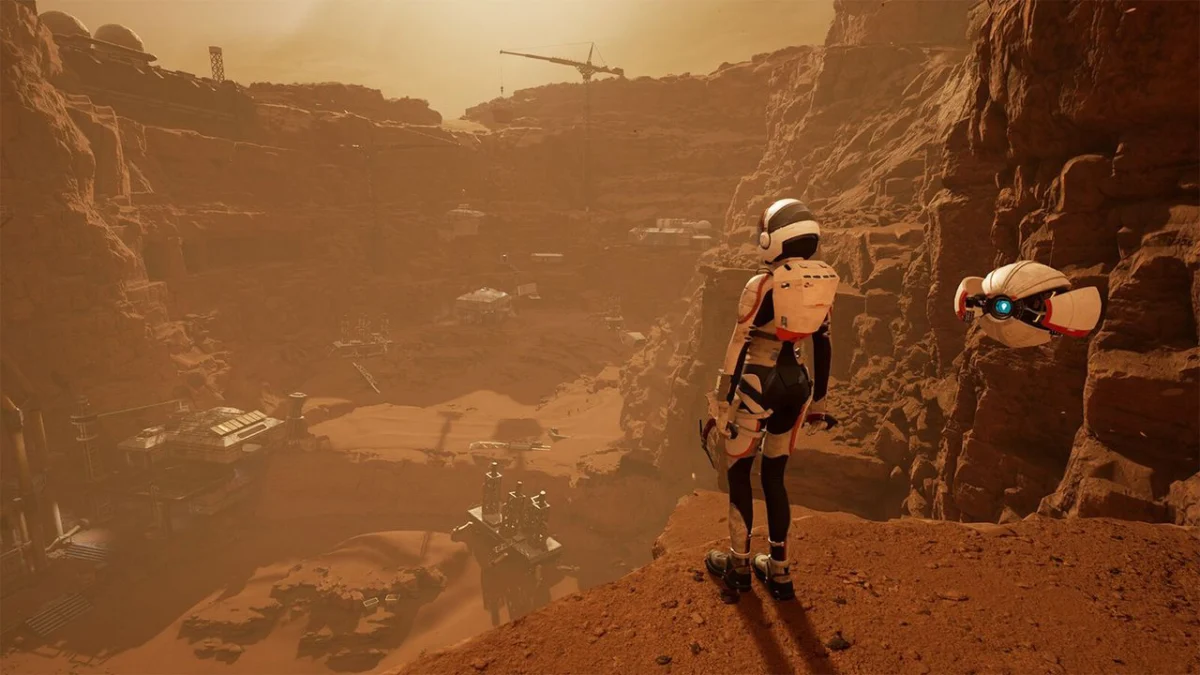
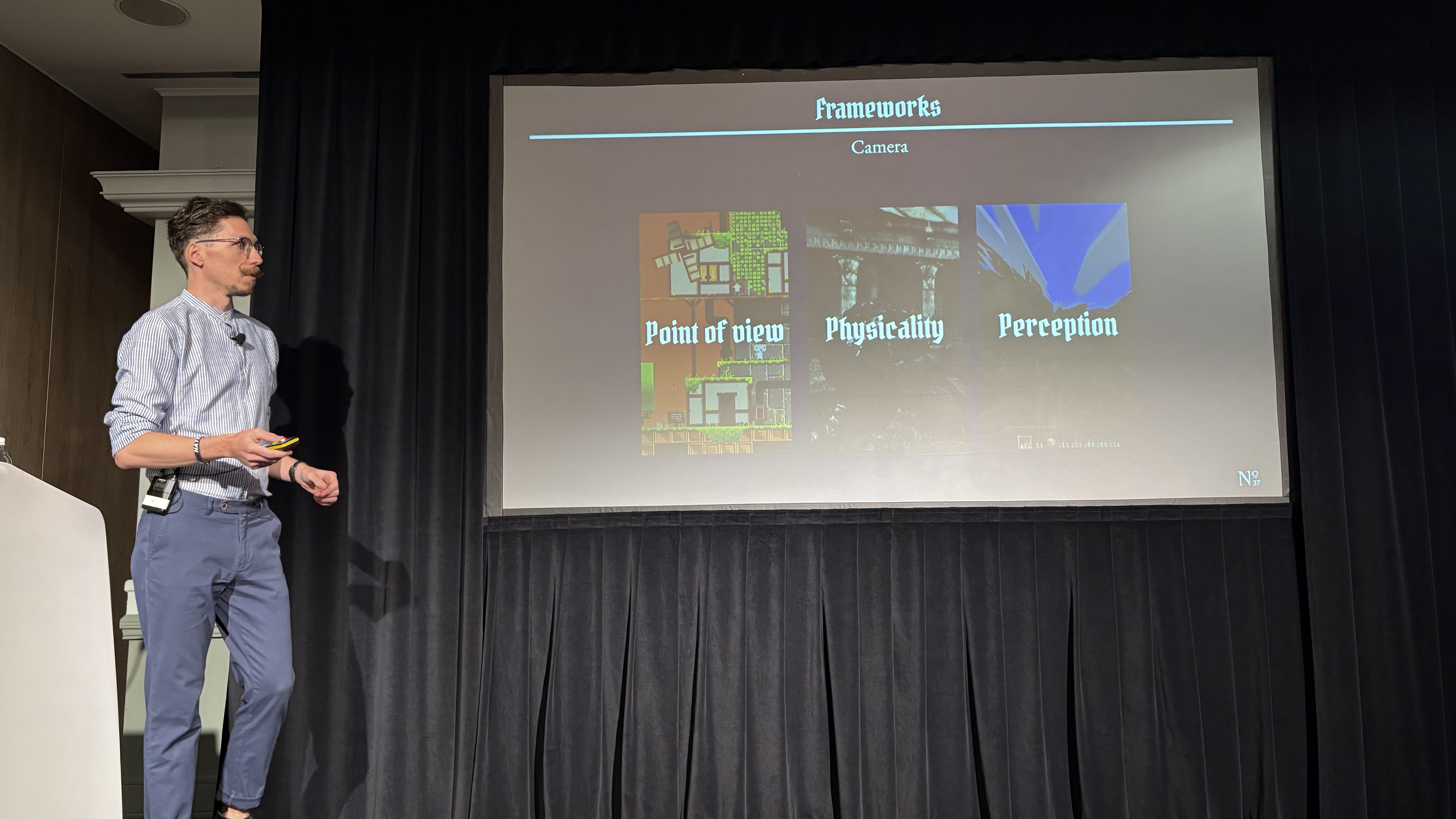
At the 2026 edition of Develop: Brighton, the industry gathered to discuss the future of game design. Amidst technical deep-dives into shaders and AI-driven animation, one session stood out for its refusal to offer a "how-to" manual. Gerben Pasjes, a veteran art director renowned for his work on the Deliver Us series, delivered a presentation that was less about software tools and more about the existential framework of creation. By applying a first-principles approach—a philosophical method famously championed by René Descartes—Pasjes challenged developers to strip away industry trends and uncover the fundamental truths of their projects.
For many attendees, the talk was a jarring, necessary reset. In an era where "best practices" often lead to homogenization, Pasjes’ invitation to return to the drawing board to ask, "What is a game, really?" provided a blueprint for creating experiences that are uniquely resonant rather than merely polished.
The Core Philosophy: Thinking from First Principles
The term "first principles" originates from ancient philosophy, but it gained modern prominence through scientific and entrepreneurial circles. The concept is simple yet brutal: boil a problem down to its most basic, undeniable truths, and build up from there. For an art director, this means ignoring the "industry standard" for how a third-person shooter or a sci-fi platformer should look and instead asking what the player needs to feel, see, and interact with to satisfy the game’s core identity.
"Sometimes you go into a talk and expect a step-by-step guide to success, only to stumble out even more confounded," Pasjes remarked. His goal was not to provide a checklist for success, but to provoke a shift in mindset. When you strip away the influence of current hits, you are left with the raw materials of your vision. That, he argues, is where true originality is forged.
1. The North Star: Anchoring Creative Vision
Every project begins with a chaotic explosion of ideas. However, without a central anchor, that vision can easily fracture during the years of production. Pasjes refers to this as the "North Star."
During his tenure as the art director for Deliver Us Mars, the team faced the perennial struggle of scope creep and conflicting artistic opinions. To resolve this, they established a singular pillar: "Make the player feel like a real astronaut."
This wasn’t just a marketing slogan; it was a litmus test for every creative decision. Whether the team was designing a UI element, a lighting sequence, or the haptic feedback for a control stick, the question was always: "Does this enhance the feeling of being an astronaut?" If the answer was no, the idea was discarded. By centering the art direction around a single emotional truth, the team ensured that every discipline—from sound design to environmental modeling—was pulling in the same direction.
2. Temporal Loops: The Art of Player Perception
Pasjes introduced a framework for viewing game art through the lens of time: the micro, macro, and meta loops. From an art director’s perspective, this is translated into the "second-to-second, minute-to-minute, and hour-to-hour" experience.
He presented a fascinating comparison between Skyrim and Arc Raiders. While they occupy different genres, they share a critical commonality: human movement speed. Because the player traverses the world at a standard walking pace, the "local density" of assets must be tuned to that speed to maintain immersion.
The distinction lies in the macro-management of resources. Skyrim’s vast, sprawling map requires a different artistic strategy than Arc Raiders, which focuses on the tension of transitioning between distinct zones. Art directors must understand these temporal demands; if you design a world for a fast-paced shooter, you cannot simply port those same asset density philosophies into a slow-burn exploration game without creating a visual mismatch that confuses the player’s subconscious.
3. The 3C Principle: Character, Camera, and Control
Game art is often treated as a visual layer placed on top of gameplay, but Pasjes insists that art direction must be inextricably linked to the "3Cs": Character, Camera, and Control.
- Camera: The camera is the player’s eyes. Pasjes noted that changing the Field of View (FOV) by even a few degrees fundamentally alters the art requirements. A 60 FOV creates an intimate, claustrophobic experience, whereas 90 FOV offers expansive peripheral vision, requiring artists to populate more space to maintain visual interest.
- Character: The third-person perspective is a prime example of how art serves function. In Gears of War, the heavy, "weighted" camera makes the character feel like a hulking soldier. In Marvel Rivals, the same perspective is tuned for snappy, high-octane agility. The art must support this: if the movement is snappy, the environmental assets need to be readable at high speeds.
- Control: This is the most overlooked area. Developers often focus on the responsiveness of inputs, but Pasjes argues that art effort should be concentrated where the player spends the most time. In Diablo, 90% of the game is left-mouse clicking. The developers didn’t treat this as a simple UI task; they poured immense resources into making that click feel crunchy, reactive, and visually satisfying.
4. The Perils of Production: Validating Art with Design
One of the most dangerous phases in development is the transition from concept to production. Pasjes shared a cautionary tale involving a game where a "vaulting" mechanic was introduced late in the cycle.
Because the environment wasn’t built with this mechanic in mind, the art team had to go back and re-evaluate every desk, fence, and railing. The player’s intuition—their assumption that they should be able to jump over a low wall—created a clash with the reality of the game world.
"We want to avoid building the rails while the train is moving," Pasjes noted. His solution is aggressive prototyping. Art choices must be validated by design in the pre-production phase. If the art team understands the mechanics—what the player can and cannot do—they can build an environment that intuitively communicates its boundaries without needing invisible walls or immersion-breaking barriers.
5. Constraints as a Creative Catalyst
Finally, Pasjes addressed the reality of indie development: limited budgets and small teams. He cautioned against the temptation to build custom technology when standard engines like Unreal or Unity offer robust toolsets. Instead, he argued for leaning into constraints.
While working on Deliver Us Mars, his team consisted of only two environmental artists. They didn’t have the manpower to create bespoke assets for every corner of the game. Instead, they built a versatile, modular kit. By applying different lighting scenarios, they transformed the same set of assets into wildly different biomes.
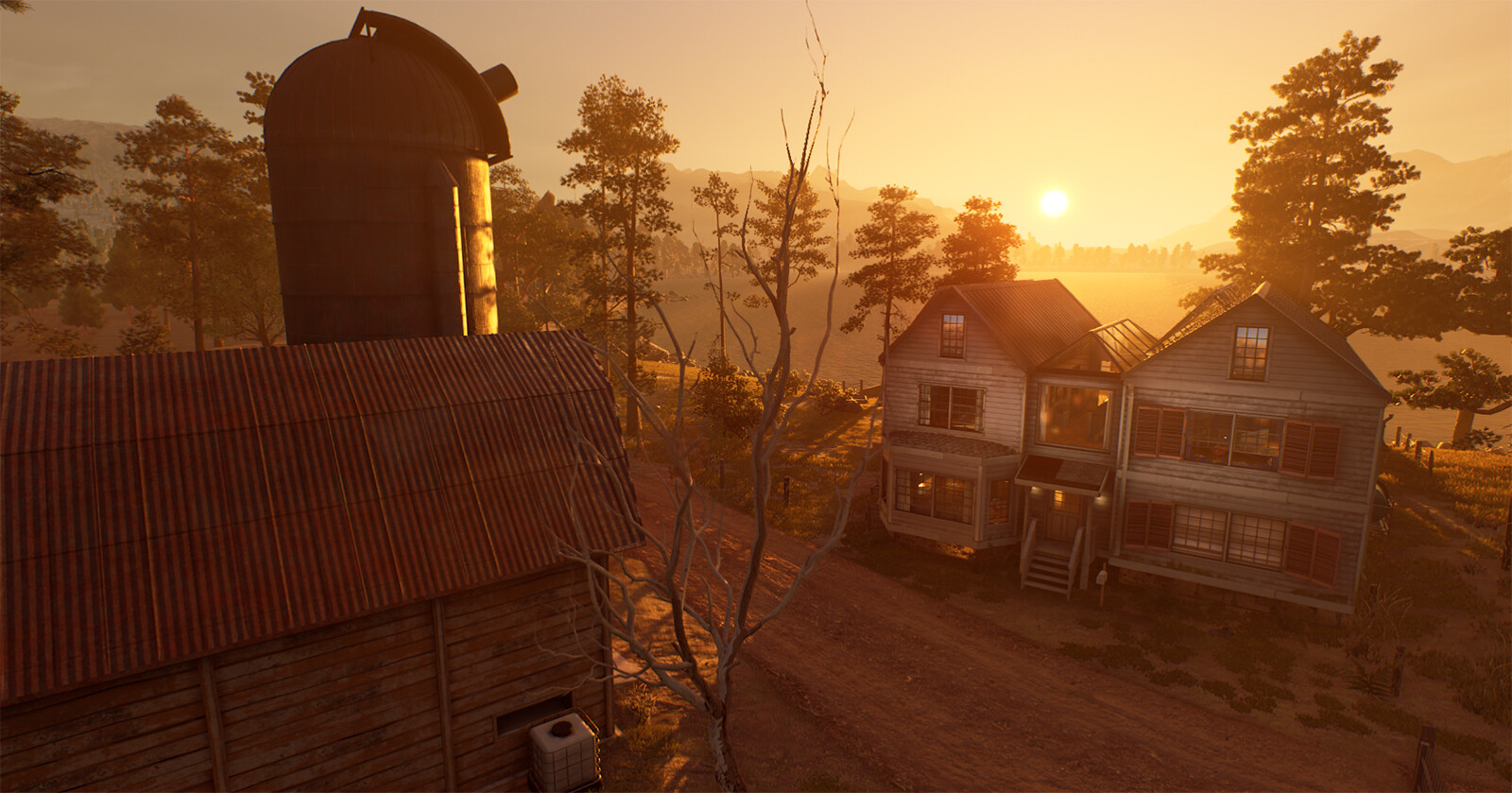
They even used technical shortcuts to save time, such as exporting a 3D building into Blender, running a physics-based destruction simulation, and "freezing" the result to create a destroyed version of the same structure. These constraints forced them to be more creative with their workflow, resulting in a game that felt distinct and curated rather than generic.
Implications: The Future of Art Direction
The implications of Pasjes’ talk are clear: the role of the Art Director is evolving. It is no longer enough to be a master of color theory, composition, or 3D modeling. A modern Art Director must be a systems thinker, a philosopher, and a designer.
By applying first principles, studios—regardless of size—can avoid the trap of chasing trends. They can create games that are cohesive, where every pixel serves the "North Star" of the project. As the industry continues to grapple with increasing development costs and the pressure to produce "AAA" quality on indie budgets, this return to fundamental, logical reasoning may be the most important trend of all.
Ultimately, as Pasjes reminded his audience, the goal is to build a game that is truly "yours." When you stop following the industry’s default settings and start defining your own, you aren’t just making a game; you are creating an experience that stands the test of time.