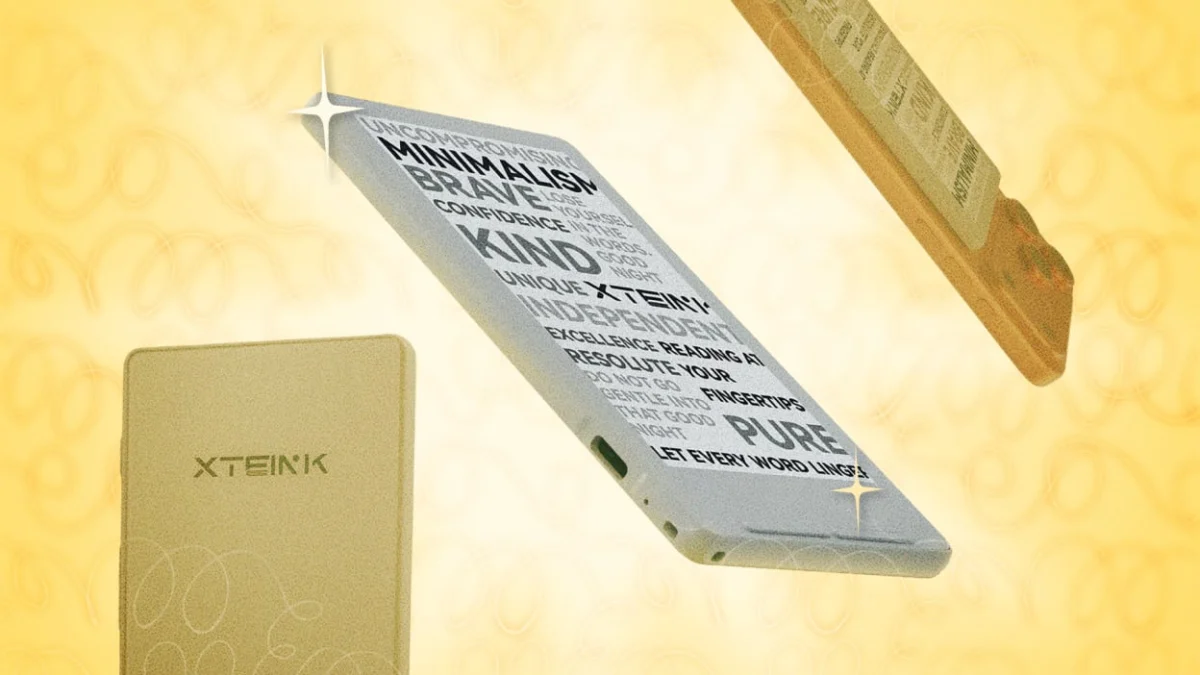
While the mainstream e-reading market is dominated by the monolithic ecosystems of Amazon’s Kindle and Kobo, a quiet revolution is taking place among digital bibliophiles. For those willing to venture off the beaten path, Xteink—a Chinese technology manufacturer—has emerged as the premier choice for enthusiasts seeking hardware that prioritizes portability, open-source flexibility, and a truly distraction-free reading environment.
Despite their unconventional branding and sometimes intimidating interface, Xteink’s flagship devices, including the X3, X4, and the high-performance X4 Pro, represent a shift in how we interact with digital literature. By moving away from proprietary, locked-down ecosystems, users are discovering that these "impossibly wee" devices offer a canvas for a highly personalized, optimized reading experience.
The Evolution of the Xteink Ecosystem: A Chronology
To understand the current fervor surrounding Xteink, one must look at the rapid progression of their hardware line.
- The Early Days (X3): The X3 introduced the form factor that would define the brand: small, lightweight, and purpose-built. While early reviews noted a steep learning curve and clunky native software, the hardware’s reliability created an immediate cult following.
- The X4 Expansion: Released to address feedback regarding the X3, the X4 refined the internal architecture, utilizing more robust ESP32 processors that proved to be a goldmine for the hobbyist community.
- The Pro Leap (X4 Pro): With the launch of the X4 Pro, Xteink moved into the "enthusiast" tier, offering faster refresh rates and improved build quality, signaling the company’s intent to compete with premium portable readers.
- The Firmware Renaissance: Within a year of the X4’s release, the open-source community mobilized to create "CrossPoint Reader," a custom firmware suite that fundamentally changed the device’s utility, transforming it from a budget reader into a power-user tool.
Supporting Data: Why Xteink Outperforms Proprietary Systems
The primary advantage of the Xteink architecture lies in its lack of Digital Rights Management (DRM) enforcement and its hardware-level accessibility. Unlike Kindle devices, which are designed to tether users to the Amazon storefront, Xteink devices act as blank slates.
Technical Specifications and Performance Metrics:
- Processor: Xteink devices utilize ESP32 architecture, which is significantly more energy-efficient and easier to modify than the custom, proprietary chips found in competing readers.
- File Format Flexibility: While standard readers struggle with complex formatting, Xteink users can bypass poor rendering by converting EPUBs to the XTC format—a bitmap-based format that preserves original typography, charts, and images exactly as they appeared in print.
- Customization Latency: Standard readers often require "jailbreaking" to achieve advanced functionality. Xteink devices, by design, accept custom firmware, reducing the risk of "bricking" the device while allowing users to flash new operating systems with a single click.
Implications of Open-Source Firmware: The "CrossPoint" Effect
The introduction of CrossPoint Reader has effectively democratized the reading experience for Xteink owners. By replacing the stock interface, users gain access to a wider selection of fonts, granular control over margins and line spacing, and a more intuitive navigation system.
For the user, the implications are profound. An Xteink reader is no longer just a device that plays books; it is a computing platform for text. By leveraging the Calibre plugin ecosystem, users can automate the "EPUB Workflow," which strips extraneous code from e-books, repairs formatting errors, and optimizes images before they ever reach the screen. This level of optimization was previously reserved for those with advanced technical knowledge, but is now accessible to the average reader through straightforward, one-click interface tools.
Expanding the Horizon: Syncing Across Platforms
One of the most common criticisms of smaller, niche e-readers is the inability to sync progress with mobile devices or larger tablets. However, the Xteink community has bridged this gap by integrating with the KOReader ecosystem.
By creating a KOsync account, users can maintain a single reading progress marker across their Xteink device, Android tablets (such as the Boox Palma), and even iOS devices via third-party apps like Readest. This cross-platform interoperability ensures that whether you are using the tiny Xteink for a subway commute or a larger screen for evening reading, your place in the book is always saved.

Official Responses and Industry Outlook
While Xteink has maintained a relatively quiet profile regarding the community-led development of CrossPoint Reader, the company’s decision to keep their hardware architecture open suggests a tacit endorsement of this ecosystem. In industry circles, this is viewed as a "community-first" marketing strategy. By allowing tech-heads and tinkerers to improve the device, Xteink effectively crowdsources their software development, resulting in a superior product that costs the company nothing in R&D.
However, challenges remain. As of mid-2026, the CrossPoint firmware is still in active development for the newest X4 Pro model, leaving some early adopters waiting for the latest optimizations. Furthermore, the reliance on public domain sources for DRM-free books remains a point of friction for users accustomed to the "one-click buy" convenience of major retailers.
Practical Hacks for the Power User
To maximize the utility of your Xteink device, consider these advanced strategies:
1. Mastering the XTC Conversion
If your reading material contains complex charts, equations, or specific aesthetic formatting, move away from EPUB. Use web-based conversion tools to generate XTC files. While these files are larger (averaging 50MB per book), the visual fidelity is unmatched, providing an experience akin to reading a physical page.
2. The Calibre Workflow
Do not rely on the device’s native file management. Use the "EPUB Workflow" plugin in Calibre to:
- Shrink oversized images to match the device’s screen resolution.
- Remove meta-tags and CSS code that confuses the Xteink processor.
- Use the "Send to Device" function over local Wi-Fi to eliminate the need for USB cables.
3. Curating Your Public Domain Library
Avoid the generic files found on major repositories like Project Gutenberg if you prioritize formatting. Look for curated collections that specialize in "high-fidelity" public domain files. These providers manually re-typeset classics, ensuring that the margins, font weights, and character encoding are optimized for e-ink displays.
Conclusion: The Future of Niche E-Reading
The success of Xteink serves as a compelling case study for the value of open hardware. By providing a low-cost, high-flexibility device, Xteink has invited its users to participate in the evolution of their own reading tools. For the reader who feels constrained by the walled gardens of major tech corporations, the Xteink ecosystem offers a refreshing alternative—a device that respects the user’s intelligence and rewards their curiosity with an unparalleled, distraction-free experience.
As the CrossPoint project continues to mature, we can expect the divide between "niche hardware" and "mainstream convenience" to shrink, potentially setting a new standard for how e-readers should function in the coming decade.