CHICAGO — For decades, paleontology has wrestled with a paradox that defies simple intuition: when a catastrophic asteroid impact struck Earth 66 million years ago, wiping out the non-avian dinosaurs, pterosaurs, and marine reptiles that dominated the planet, a single lineage of feathered creatures miraculously endured. While the reigning titans of the Mesozoic vanished into geological history, a fragile, bipedal group of dinosaurs—birds—took flight into the Cenozoic era. Every living bird today, from the hummingbird hovering outside a window to the ostrich striding across the savanna, is a direct descendant of these singular survivors.
Now, an unlikely piece of evidence recovered from the badlands of Montana is shedding new light on this enduring evolutionary mystery. Scientists at the Field Museum of Chicago, working alongside international researchers, have announced the discovery of the best-preserved fossilized feathers from the age of dinosaurs ever found.
Remarkably, these pristine biological artifacts were not discovered trapped in traditional amber or delicate sedimentary rock. Instead, they were safely interred inside a fossilized piece of dinosaur dung, preserved through a bizarre chain of prehistoric predation that ended in a predator’s digestive tract roughly 66 million years ago.
Published in the journal Current Biology, the findings offer unprecedented insight into the structural evolution of avian plumage. More importantly, they provide a compelling physiological explanation for why certain prehistoric bird lineages perished during the mass extinction, while the ancestors of modern birds—known scientifically as Neornithes—lived to inherit the Earth.
The Main Facts: A Remarkable Prehistoric Relic
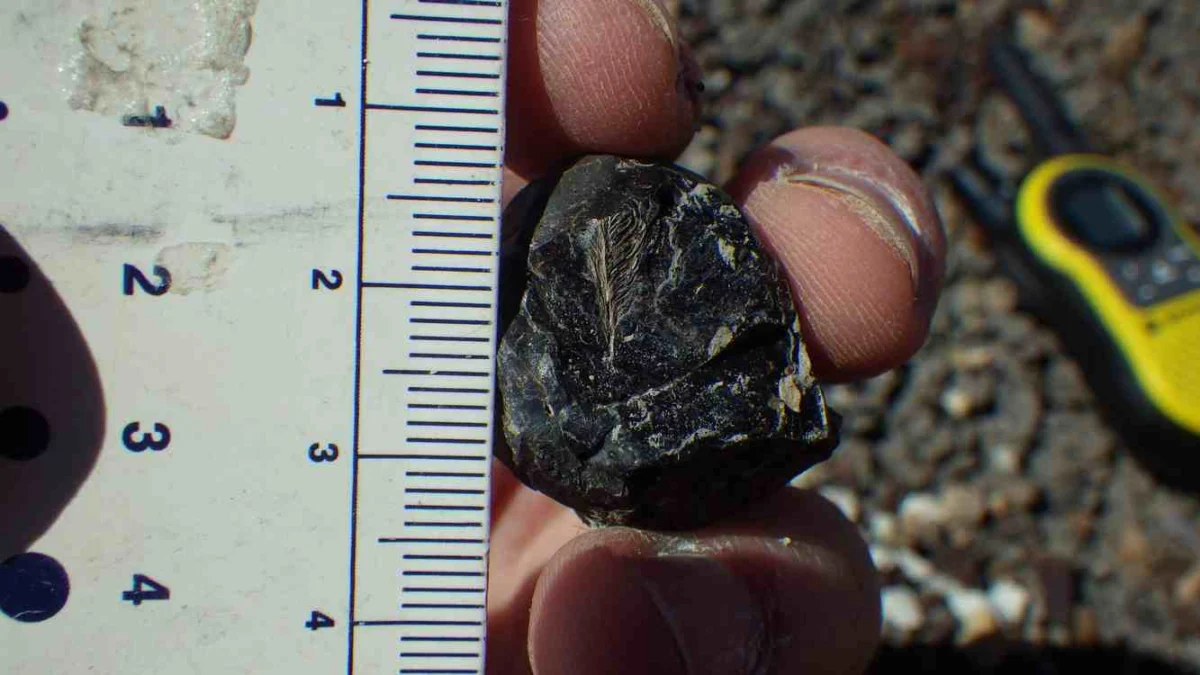
The discovery centers on a golf-ball-sized, reddish-brown coprolite (fossilized feces) unearthed in Montana. Through advanced analytical techniques, including high-resolution computed tomography (CT) scanning and mineralogical analysis, researchers were able to look inside the hardened specimen without destroying it.
The contents read like a forensic timeline of a Cretaceous meal. The coprolite contained:
- Multiple exquisitely preserved fossil feathers.
- Tiny, microscopic fish scales belonging to a prehistoric gar.
- Diagnostic leg bones belonging to a hesperornithiform, a specialized group of archaic, flightless aquatic birds.
"It’s such a beautiful, well-preserved feather, from such an unexpected source, and it’s exciting that it could help us answer this huge question in paleontology," said Professor Jingmai O’Connor, associate curator of fossil reptiles at the Field Museum and lead author of the study.
Hesperornithiforms were fascinating evolutionary experiments. Ecologically analogous to modern loons or grebes, these aquatic birds had largely abandoned flight in favor of a specialized, foot-propelled diving lifestyle. They possessed powerful, specialized legs that allowed them to hunt fish in ancient inland seaways. However, unlike Neornithes—the lineage that gave rise to modern birds—hesperornithiforms did not survive the Cretaceous-Paleogene (K-Pg) extinction event.
Because fossilized bird bones are exceptionally rare due to their hollow, fragile nature, and fossilized feathers are rarer still, finding soft tissue preserved inside coprolites represents a monumental stroke of paleontological luck. The digestive acids and mineral-rich environment of the predator’s gut, followed by rapid fossilization in the surrounding sediment, essentially locked the feathers away in a protective natural time capsule.
Chronology: From a Montana Badland to the Laboratory
The story of this extraordinary discovery began during routine, grueling fieldwork in the summer of 2016.
July 2016: The Discovery in Montana
Study co-author David DeMar, Jr., then a researcher conducting fieldwork in the Hell Creek Formation of Montana, was navigating a rugged rocky outcrop. His primary objective was collecting microscopic fish fossils to reconstruct ancient freshwater ecosystems.
"I was crawling up a rocky outcrop collecting fish fossils when I came across a dark, reddish-brown nodule about half the size of a golf bag," DeMar recalled. "I picked it up and scanned its surface through my hand lens, and that’s when I couldn’t believe what I was seeing—a tiny fossil feather."
Recognizing that the object was a coprolite containing delicate inclusions, the research team handled the fragile specimen with extreme care, transporting it back to the laboratory for non-destructive analysis.
2021–2025: High-Tech Investigation
For years, the specimen underwent rigorous examination. Paleontologists deployed advanced imaging technologies to peer inside the opaque, mineralized matrix. CT scans generated three-dimensional renderings of the internal structures, allowing scientists to map the arrangement of the feathers, analyze individual barbs and barbules, and identify the accompanying skeletal fragments of the consumed hesperornithiform.
Simultaneously, comparative anatomists analyzed the microscopic morphology of the feathers against known samples from various Cretaceous bird groups, including enantiornithines and primitive avian precursors.
Late 2025 / Early 2026: Peer Review and Publication
Following exhaustive mineralogical checks and anatomical peer review, the research team finalized their conclusions. The discovery was accepted for publication in Current Biology, signaling a major shift in how paleontologists view the preservation potential of coprolites.
Supporting Data: Decoding Avian Insulation
To understand the significance of the Montana coprolite, scientists must look closely at the evolutionary timeline of feathers. Feathers did not evolve solely for flight; their earliest evolutionary iterations in non-avian dinosaurs served primarily for insulation, display, and behavioral signaling.
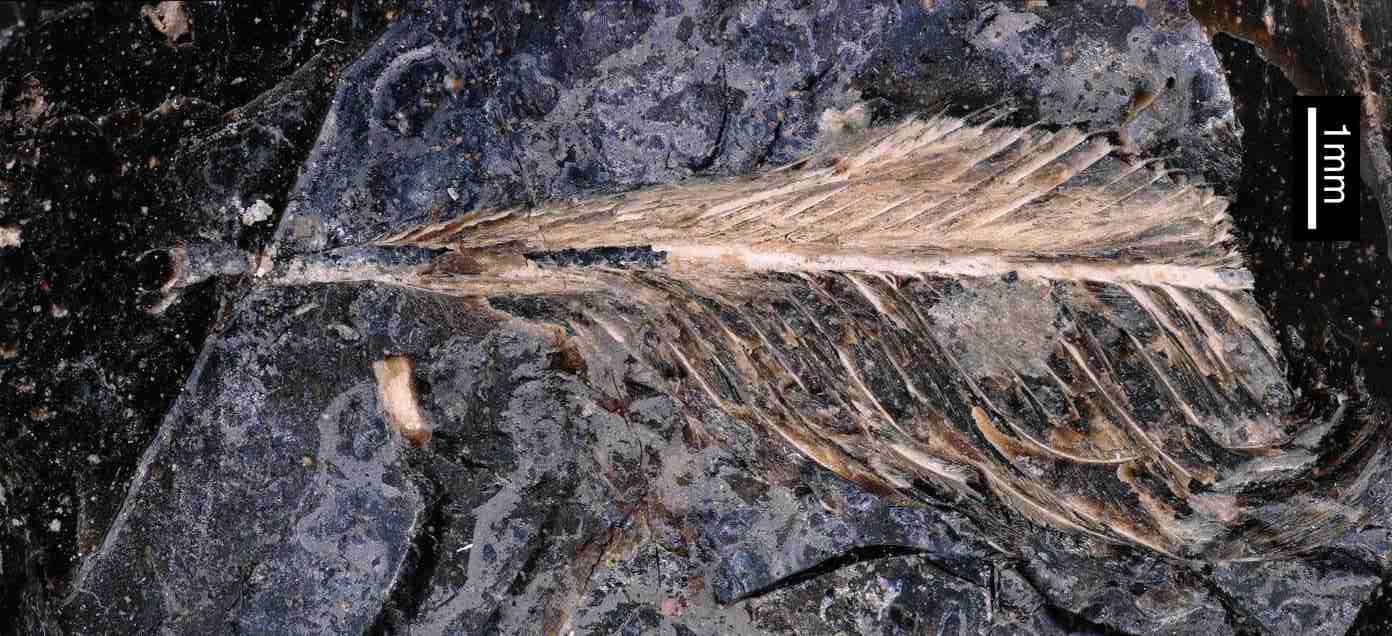
The feathers extracted from the dung sample belong directly to a hesperornithiform, marking the first time scientists have ever recovered feathers from this specific extinct lineage. Under magnification, the structural characteristics of these feathers revealed a striking evolutionary "middle ground."
According to Professor O’Connor, the hesperornithiform feathers displayed a dual nature:
- Modern Traits: Portions of the feathers exhibited a structured, water-repellent geometry suited for an aquatic, diving lifestyle.
- Primitive Traits: At the same time, the plumage retained smaller, fuzzy, primitive body feathers (down-like filaments) heavily associated with non-avian theropod dinosaurs.
This anatomical compromise sits at the heart of the researchers’ hypothesis regarding the mass extinction.
Official Responses and Expert Analysis
The scientific community has responded to the study with immense enthusiasm, noting that the methodology could open entirely new avenues of research.
"We rarely find fossils of birds and even more rarely their feathers, giving us such important insight into the evolution of this key aspect of their biology," said study co-author Professor Greg Wilson Mantilla from the University of Washington. "Coprolites are essentially nature’s time capsules. Predators act as sampling agents, often collecting small, delicate organisms that would otherwise never make it into the fossil record."
Professor O’Connor, who has dedicated a significant portion of her career to studying why Neornithes emerged triumphant while other avian groups vanished, emphasizes that the quality of thermal insulation may have dictated survival during the catastrophic climate collapse following the asteroid impact.
"Some of these diving birds’ feathers seem to have been modern-looking and waterproof, but they also had some smaller, fuzzy, primitive body feathers that we associate with dinosaurs," O’Connor noted. "The hesperornithiforms retain primitive feather types that may not have been as efficient for insulation as modern plumaceous feathers, and that could explain why they went extinct along with the enantiornithines."
Implications: Surviving the Impact Winter
When a six-mile-wide asteroid struck the Yucatán Peninsula 66 million years ago, it unleashed an immediate cascade of cataclysms: global firestorms, mega-tsunamis, and massive earthquakes. However, the true global executioner of life was what followed: the Impact Winter.
The blast ejected immense quantities of pulverized rock, soot, and sulfur into the stratosphere, blocking out the sun for years. Global temperatures plummeted precipitously, photosynthesis collapsed, and marine and terrestrial food webs disintegrated.
In this dark, freezing world, endotherms (warm-blooded animals) faced an unprecedented crisis. Maintaining internal body temperature required immense caloric intake at a time when food was virtually nonexistent.
The survival of the Neornithes lineage suggests they possessed superior physiological and morphological adaptations. The researchers argue that modern-style contour and down feathers provided vastly superior thermal regulation compared to the primitive, semi-filamentous feathers retained by hesperornithiforms and other archaic birds.
If a bird could not effectively trap heat against its body during the protracted, freezing darkness of the impact winter, it would have succumbed to hypothermia, regardless of its ability to forage or dive for fish.
Furthermore, the study highlights a practical strategy for future paleontological research. Museums and university collections worldwide house thousands of cataloged fossilized dung samples collected over the past century. Traditionally viewed merely as indicators of ancient diets and predator-prey dynamics, these coprolites are now recognized as potential storehouses for exceptionally preserved soft tissues—including feathers, skin impressions, and microscopic parasites.
The authors of the study are actively advocating for museums to systematically CT-scan existing fossilized dung inventories. If other coprolites harbor similarly pristine biological remnants, paleontology may soon unlock even more secrets regarding the fragile transition zone between the Mesozoic era and the modern world we inhabit today.