IRON RANGE, Minnesota — After more than three decades of meticulous planning, grueling construction, and persistent community fundraising, a paved ribbon of asphalt stretching across 165 miles of northern Minnesota wilderness has officially been completed. The newly finalized Mesabi Trail now stands proudly as one of the longest continuous paved cycling and multi-use trails in the United States.
Winding its way from the headwaters of the Mississippi River to the pristine, rugged wilderness of the Boundary Waters, the trail cuts a scenic path through the historic Iron Range. This is a landscape deeply intertwined with the industrial history of the United States—a region whose rich iron ore mines famously fueled American manufacturing, powered the Allied effort during World War II, and built the backbone of the nation’s steel industry. Named after the legendary Mesabi Range itself, the trail transforms an industrial titan into an ecological and recreational sanctuary.
The completed route bridges 28 distinct communities, linking Grand Rapids to Ely via a dynamic topography that seamlessly blends challenging hills with peaceful, flat stretches. Long celebrated by regional outdoor enthusiasts as a "well-mapped and well-maintained trail," the project represents a monumental achievement in regional revitalization, eco-tourism, and American infrastructure.
Main Facts: The Anatomy of a Mega-Trail
The Mesabi Trail is not merely a path for bicycles; it is an extensive, multi-season corridor designed to accommodate a vast array of outdoor pursuits while driving economic vitality into rural northern Minnesota.
- Total Length: 165 miles of continuous, high-quality asphalt paving.
- Geographic Reach: Spans from Grand Rapids in the west to Ely in the east, connecting 28 communities across St. Louis and Itasca counties.
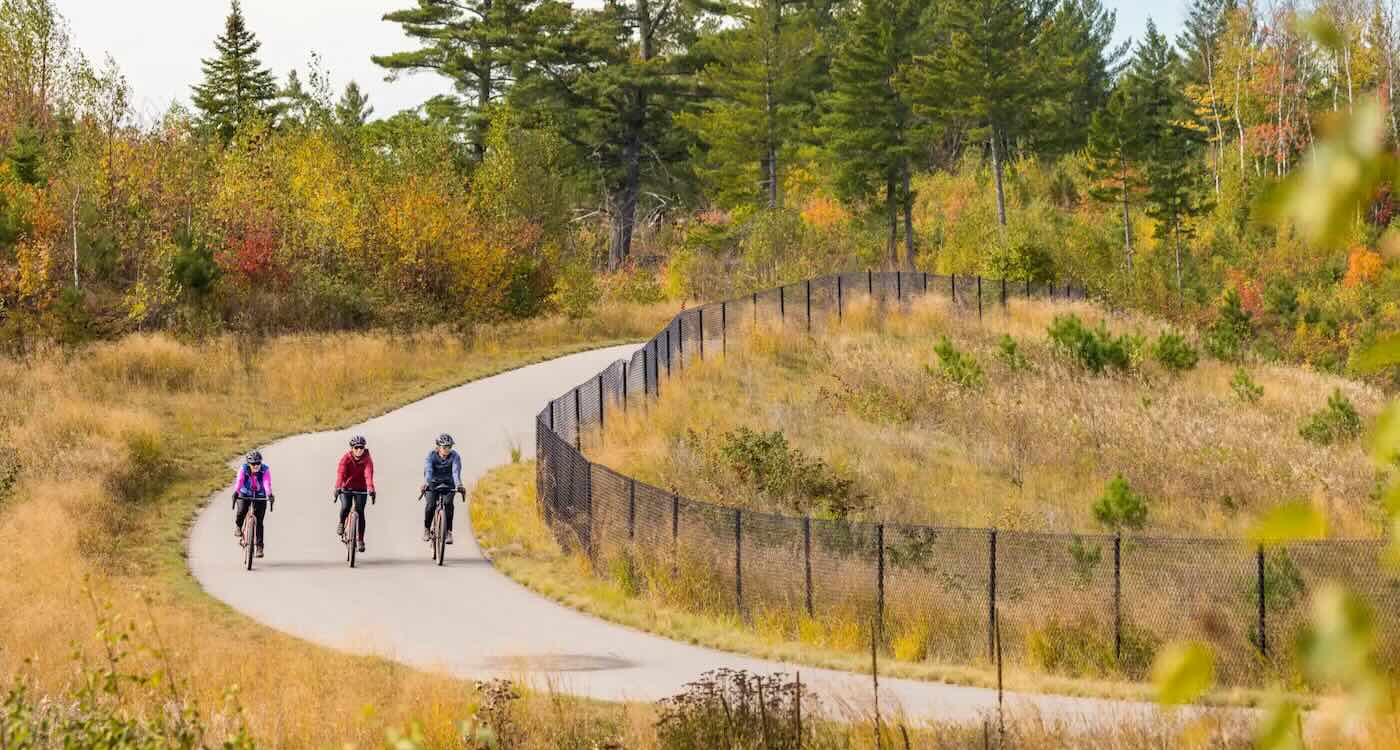
- Multi-Use Capabilities: While universally lauded for road and mountain biking, the trail is also heavily utilized for inline skating and hiking during the warmer months. When winter blankets the Iron Range, the route transitions into a haven for cross-country skiers and snowshoers, with designated sections accommodating snowmobile traffic.
- Accessibility and Amenities: Campgrounds, local parks, swimming beaches, golf courses, and canoe launches are situated mere minutes from the trail. Every entry point provides convenient access to local towns offering lodging, dining, shopping, and essential traveler services.
Despite its vast wilderness feel, the trail is engineered to be exceptionally user-friendly. Tens of thousands of visitors traverse its segments annually, routinely awarding the route five-star reviews for its smooth surfaces, clear signage, and breathtaking scenery.
Chronology: Three Decades of Persistence
The realization of the Mesabi Trail was never a foregone conclusion; it was an exercise in generational patience. The project’s timeline reflects the immense logistical hurdles of converting defunct industrial lands and railway corridors into a premier public recreation asset.
The 1990s: Conception and Foundation
In the early 1990s, local civic leaders, regional planners, and outdoor advocates envisioned a grand project: to unite the isolated mining towns of the Iron Range through a shared recreational pathway. The concept gained formal momentum with the creation of the St. Louis and Lake Counties Regional Railroad Authority, which began acquiring abandoned railway right-of-ways. Early planning committees mapped out the ambitious 165-mile trajectory, recognizing the potential to honor the region’s industrial heritage while creating a new economic engine centered on eco-tourism.
The 2000s to 2010s: Piecemeal Construction
Building a trail through the complex terrain of the Iron Range required immense engineering feats. Construction proceeded in phases as funding became available through state grants, federal allocations, and regional partnerships. During this era, crews paved initial segments connecting central Iron Range communities like Hibbing, Virginia, and Eveleth. Each completed segment demonstrated the viability of the project, sparking local pride and bolstering political and financial support for subsequent phases.
The 2020s: Closing the Gaps
Entering the final decade of the project, planners focused on closing the remaining geographic gaps between the western terminus in Grand Rapids and the eastern gateway in Ely. Environmental reviews, bridge constructions over major waterways, and paving through dense northern forests culminated in final completion late this summer, culminating in a ribbon-cutting ceremony that marked the end of a 30-year journey.
Supporting Data and Landscape: Reclaiming the Industrial Wild
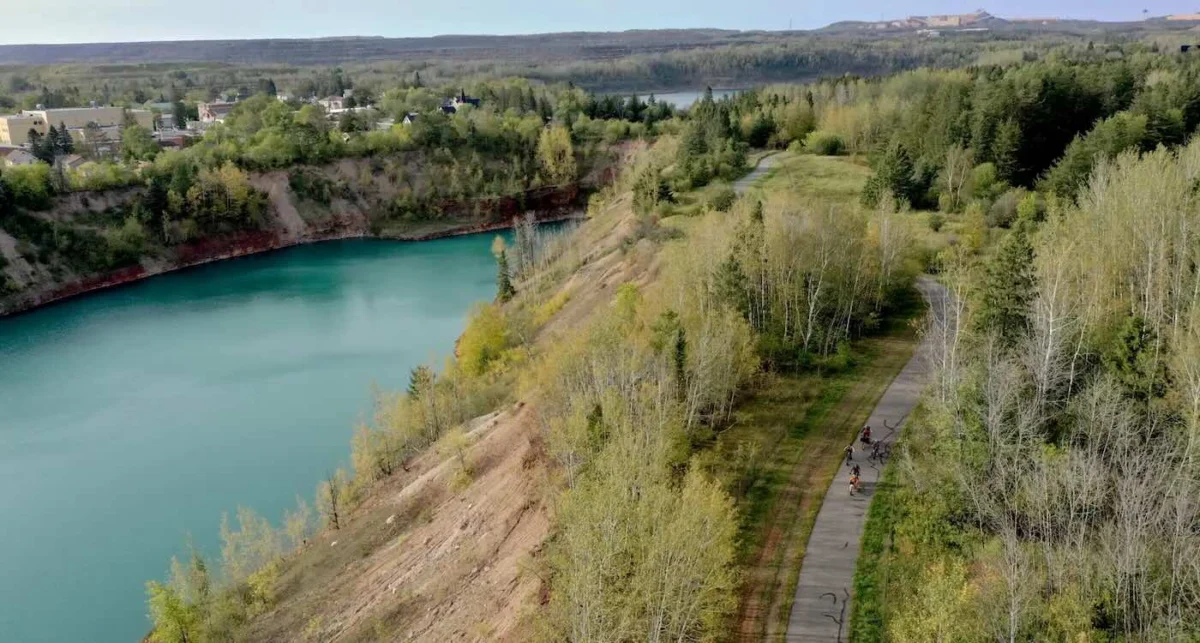
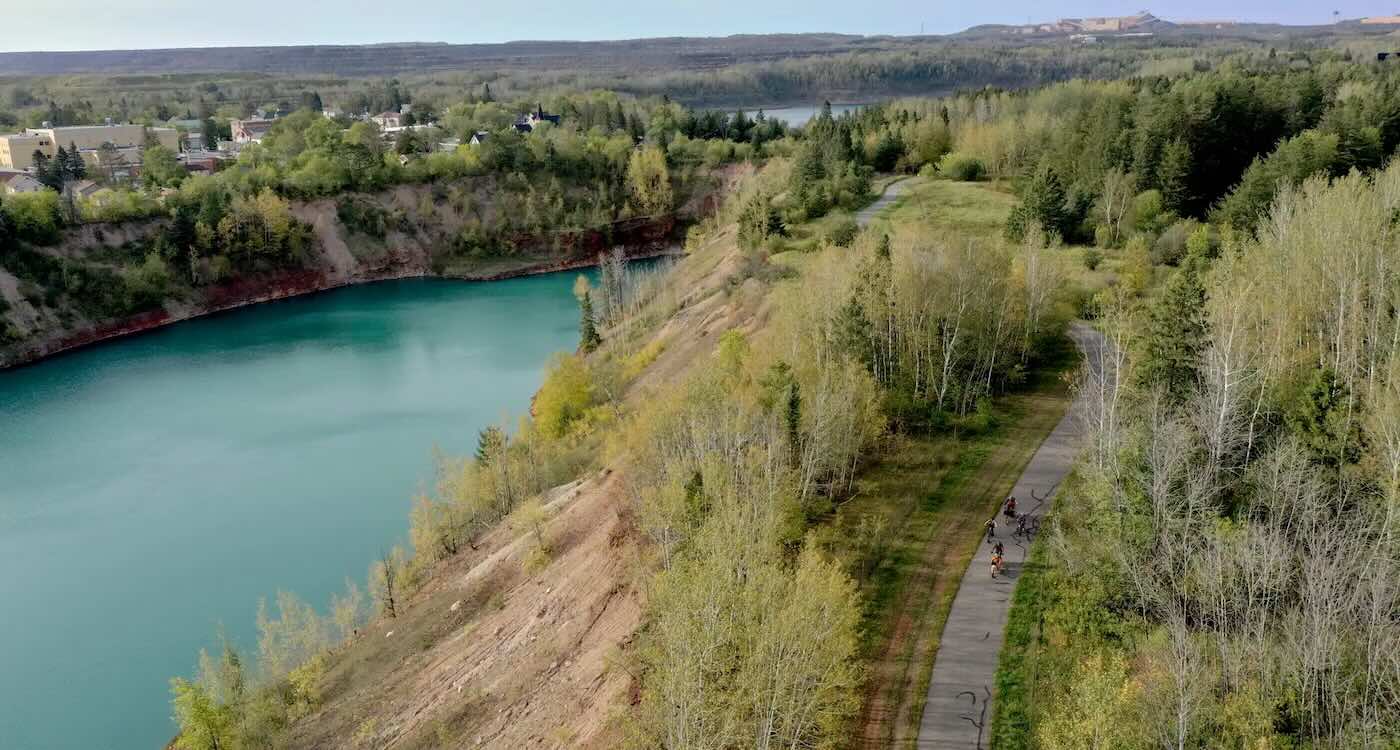
One of the most remarkable aspects of the Mesabi Trail is its unique environment. Much of the shaded woodlands, rolling hills, and crystal-clear lakes flanking the trail are the unexpected byproducts of historical mining operations.
Decades ago, immense earth-moving operations piled up overburden—heaps of soil and rock extracted to reach the iron ore beneath. Over time, nature reclaimed these man-made mountains. Today, dense, mature forests of pine, birch, and aspen line the trail edges, creating a lush, immersive canopy for travelers.
Furthermore, the landscape serves as an open-air museum. Along the route, cyclists and hikers encounter preserved historic mining artifacts, early industrial machinery, and cultural landmarks that tell the story of the diverse immigrant populations who flocked to the Iron Range in the 19th and 20th centuries to work the mines.
Official Responses: A Triumph of Collaboration
Last Tuesday, a dozen state and regional officials gathered for an official ribbon-cutting ceremony to celebrate the final completion of the 165-mile route. Speakers emphasized that the trail’s success is a testament to what can be achieved through unwavering, cross-sector cooperation.
A pivotal financial engine behind the project has been the Department of Iron Range Resources & Rehabilitation (IRRR), a unique state agency dedicated to reinvesting mining tax revenues back into the communities that built the region’s wealth.
"No single organization, funding source, or individual could have built what we see here today," said IRRR Commissioner Ida Rukavina during the celebratory event. "This trail is the product of three decades of partnership and persistence."
Local authorities, regional railroad officials, county commissioners, and grassroots volunteer groups worked in tandem over the decades to secure land rights, maintain surfaces, and market the trail to national and international audiences. Programs allowing citizens to sign on as "volunteer caretakers" have further embedded the trail into the fabric of the local communities, ensuring it remains pristine for future generations.
Implications: Economic and Cultural Renaissance for Northern Minnesota
The completion of the Mesabi Trail arrives at a critical juncture for northern Minnesota. As traditional industries evolve, regional economies have increasingly looked toward outdoor recreation and tourism as sustainable vectors for growth.
Economic Boost for Local Communities
By connecting 28 communities—ranging from bustling regional hubs to quiet rural hamlets—the trail acts as a commercial artery. Cyclists and hikers stopping for a meal, renting gear, or booking a weekend stay at a local bed-and-breakfast inject direct revenue into small businesses that might otherwise struggle in a post-industrial economy. The seamless integration of trailheads with municipal amenities ensures that the economic benefits are distributed evenly across the entire corridor rather than concentrated in a single tourist trap.
National Tourism and Eco-Rec Recognition
With its grand scale, the Mesabi Trail joins an elite tier of American long-distance multi-use paths, drawing comparisons to legendary routes like the Great Allegheny Passage or the Katy Trail. In an era where adventure tourism and non-motorized travel are experiencing exponential growth, the trail positions Minnesota as a top-tier destination for domestic and international cyclists.
This milestone mirrors similar large-scale trail initiatives nationwide—such as the burgeoning xTx Trail crossing Texas—highlighting a broader national movement toward repurposing vast American landscapes for human-powered exploration.
Looking Ahead
With construction officially complete, the focus of the St. Louis and Lake Counties Regional Railroad Authority and local communities shifts from creation to stewardship. Future efforts will center on ongoing maintenance, expanding digital resources via the official Mesabi Trail website for trip-planning visitors, and cultivating the army of volunteers necessary to keep the 165-mile masterpiece in pristine condition.
For the miners who once dug the foundations of America’s industrial might, and for the modern travelers rolling along the smooth asphalt beneath the pine canopy, the Mesabi Trail stands as a monument to endurance—proving that paths built for industry can be beautifully reimagined as pathways to community, health, and adventure.