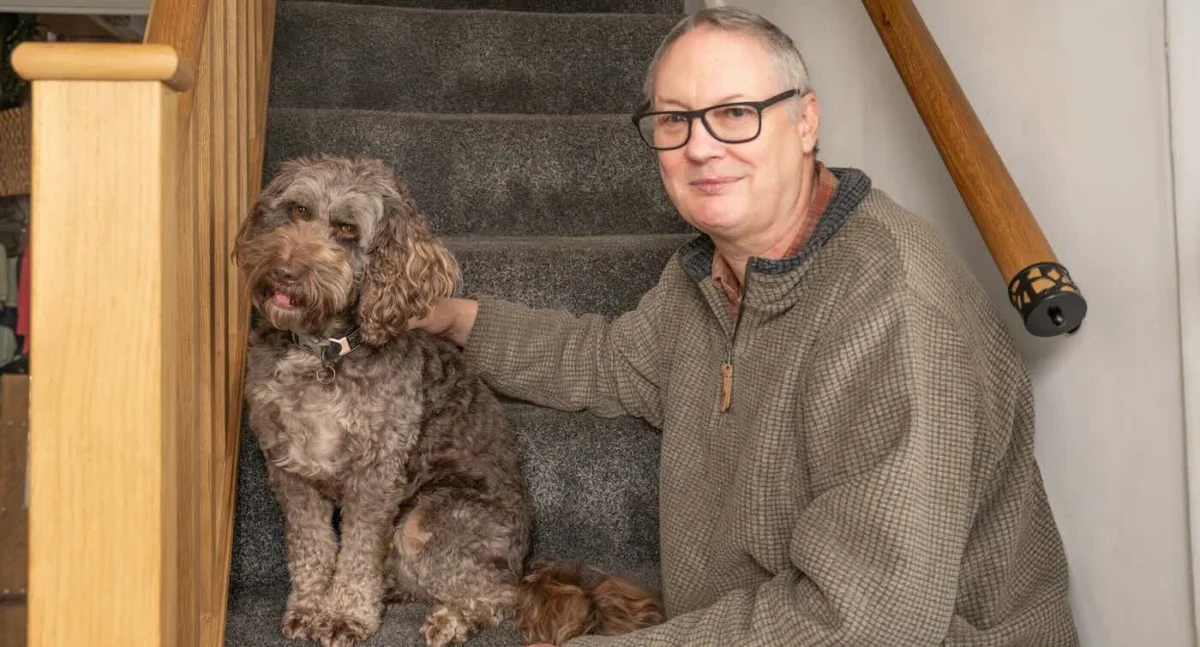
TOKYO — In the winter of a turbulent decade, a Japanese high school student named Norihisa Koyama did something remarkably simple yet profoundly defining: he handed his brand-new winter coat to a weeping stranger.
Thirty years later, that single act of spontaneous empathy has woven its way back to him. The garment, carefully preserved for three decades by a woman who was once a terrified schoolgirl targeted by hate, has finally been returned to its original owner. The reunion has not only closed a deeply personal loop of gratitude but has also ignited a powerful new cultural and artistic movement centered on reconciliation, historical memory, and cross-cultural solidarity.
Main Facts: The Reunion of the Black Coat
The remarkable homecoming took place earlier this year, bridging a gap of three decades since a wave of xenophobic violence shook ethnic Korean communities in Japan.
In the 1990s, a young ethnic Korean schoolgirl was targeted in one of the infamous Chima Chogori (traditional Korean dress) slashing incidents. Walking in public, her traditional uniform jacket was intentionally sliced open with a knife or scissors by an unknown assailant—part of a distressing surge of hate crimes and harassment against students attending pro-Pyongyang or general Korean schools in Japan amid geopolitical tensions involving North Korea.
Distraught, humiliated, and exposed to the biting winter cold, the girl crouched down and cried. That was when a young Norihisa Koyama, then a Japanese high school student, happened to pass by.
"A female student was crouching down and crying," Koyama recalled. "I knew something was seriously wrong."
Without hesitation, Koyama removed his own brand-new winter coat—a prized possession freshly purchased for him by his parents—and placed it over her shoulders. The gesture allowed her to cover the slash in her uniform and travel home safely.
Koyama thought little of the incident in the years that followed, moving on with his life. The girl, however, never forgot. She kept the black wool coat tucked away, preserving it meticulously for thirty years. The garment bore Koyama’s full name written on the label, a permanent marker of his identity.
Earlier this year, the woman—now an adult—came across a newspaper article detailing Koyama’s modern-day charity work. Recognizing his name and face, she realized that the good Samaritan who had rescued her decades ago was still out there, dedicating his life to helping others. She successfully tracked him down to return the cherished garment, setting off a chain reaction of artistic and cultural commemoration.
Chronology: From Dark Streets to a Tokyo Studio
To understand the emotional weight of the coat’s return, one must trace the timeline of the historical context, the initial act of kindness, and the recent artistic convergence that brought the story to light.
Phase 1: The Shadow of the 1980s and 1990s
During the 1980s and 1990s, ethnic Korean residents in Japan—particularly Zainichi Koreans—frequently bore the brunt of political tensions between Tokyo and Pyongyang. For female students attending ethnic Korean schools, the mandated school uniform was the chima jeogori, a striking and visible marker of their heritage.
This visibility made them targets. Across Japan, dozens of documented incidents occurred where assailants verbally abused, spat upon, or physically slashed the traditional dresses of young girls with blades and scissors. The attacks were designed to intimidate, humiliate, and erase cultural pride.
Phase 2: The Winter Encounter
It was during this climate of hostility that Koyama encountered the crying student. His instinctive offering of his own winter coat provided not only physical warmth but psychological shelter against a hostile societal climate. Once the girl returned home safely, the coat became a physical archive of an otherwise traumatic day, transformed into an artifact of radical human decency.
Phase 3: Decades of Quiet Dedication
In the decades that followed, both individuals grew into their respective lives, shaped in different ways by that afternoon. Koyama’s early instinct to protect a vulnerable stranger proved to be a harbinger of his life’s path. Today, at age 50, Koyama works tirelessly with a Japanese nonprofit organization dedicated to supporting single mothers and disadvantaged families. Over the years, he has also cultivated deep, meaningful relationships with the Korean resident community in Japan.
Phase 4: The Reunion and Artistic Immortality
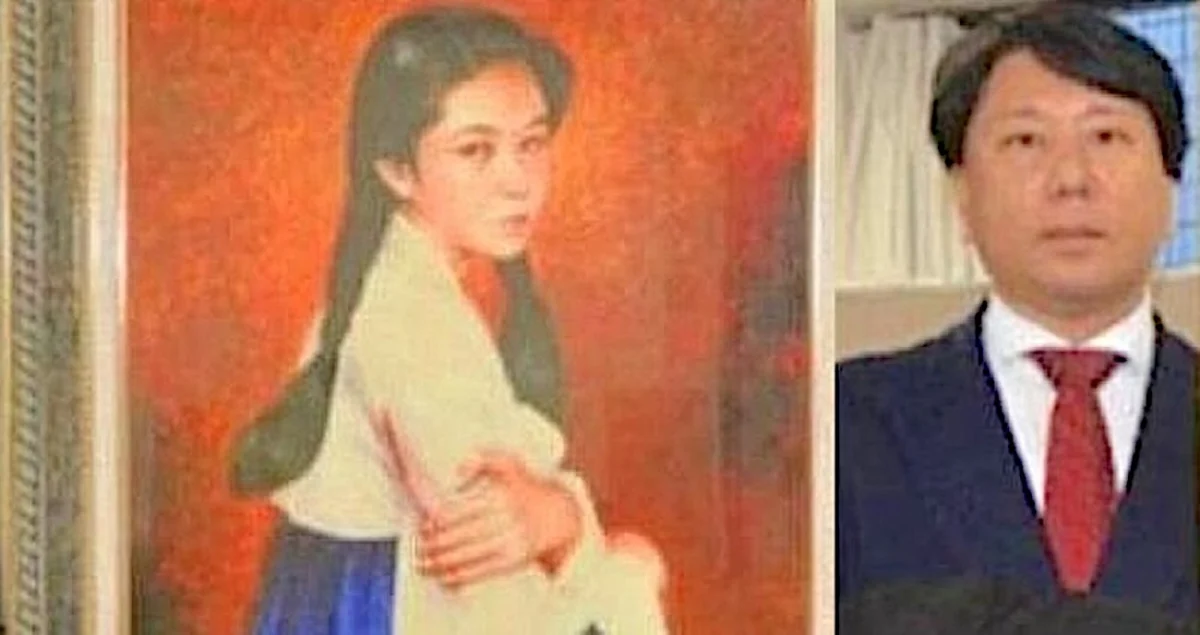
In June, the story reached a new milestone when renowned 80-year-old Zainichi Korean artist Park Chung-moon—who had captured the era’s trauma on canvas—learned of the coat’s return. Park invited Koyama to his Tokyo studio. There, surrounded by history and paint, the two men examined the preserved wool garment, celebrated its return, and laid the groundwork for a collaborative art project designed to pass the memory down to younger generations.
Supporting Data and Historical Context: The Chogori Art Legacy
The narrative of the returned coat is inextricably linked to the visual history of the era, most notably captured by artist Park Chung-moon.
In the wake of the Chima Chogori slashing incidents, Park felt a profound compulsion to respond not with anger, but with creative reinterpretation. He sought to transform the torn garments from symbols of victimization into testaments of resilience.
His most celebrated work, titled Chogori, hangs in the Korean Art Museum. The painting depicts a young girl wearing her traditional national attire. While the sleeve of her dress is visibly torn, her gaze is steady, forward-looking, and unbroken. It is a visual manifesto of endurance.
When Park learned of Koyama and the returned coat, he was deeply moved. Speaking to the Japan-based newspaper Choson Sinbo, Park expressed his profound admiration for Koyama’s youthful courage:
"He is like a treasure to us Koreans, a representative of the Japanese people," Park said. "I am so grateful that he warmly extended a helping hand to the students of the Korean school."
The convergence of Koyama’s returned coat and Park’s canvas has birthed a new artistic endeavor. Park’s studio has launched a collaborative project aimed at documenting the story, ensuring that the memory of the chima jeogori—and the bridge built across ethnic divides by a single winter coat—is handed down to a generation born long after the incidents occurred.
Official Responses and Cultural Reflections
The story has resonated deeply across community boards, cultural outlets, and social media platforms in both Japan and Korea, serving as a case study in how grassroots empathy can outlast systemic prejudice.
Sociologists and cultural commentators point out that the incident highlights the complex history of Zainichi Koreans—permanent residents of Korean descent living in Japan, many of whom are descendants of those who arrived during Japan’s 1910–1945 colonial rule of the Korean Peninsula. While geopolitical tensions have historically strained relations at the state level, individual human interactions at the street level have often told a vastly different story of quiet solidarity.
Norihisa Koyama’s reaction to the sudden resurgence of his childhood coat has been notably humble. Rather than viewing himself as a hero, Koyama has continually emphasized that helping someone in distress should be an automatic human reflex, regardless of national borders or ethnic backgrounds. His ongoing career in social welfare—counseling and uplifting single-parent and struggling households—underscores a lifelong commitment to shielding the vulnerable from societal hardships.
For the anonymous woman who kept the coat for thirty years, the return was a vital closing chapter. It allowed her to look back at a moment of targeted hatred not with lingering bitterness, but with enduring gratitude for the light she found in the dark.
Implications: A Blueprint for Modern Solidarity
As the world continues to grapple with rising tides of xenophobia, polarization, and geopolitical friction, the story of the black coat offers timely lessons and profound implications.
1. The Long-Term Impact of Micro-Kindness
Koyama’s story proves that acts of teenage kindness carry an infinite shelf life. A simple gesture made in a moment of crisis can echo across decades, altering how a victim remembers a trauma. For the schoolgirl, the coat was tangible proof that humanity existed on the other side of the hostility she faced.
2. Art as an Instrument of Historical Healing
Through the collaborative efforts of artist Park Chung-moon, private trauma has been successfully converted into public heritage. By framing the coat and the painting as twin pillars of a new artistic project, the community is utilizing culture to educate youth about the dangers of discrimination while celebrating the bridges built by ordinary citizens.
3. Grassroots Resilience Over State Rhetoric
While governments often exacerbate national divides through political posturing, individual citizens possess the agency to transcend state-sponsored animosity. Koyama’s lifelong dedication to marginalized families, inspired in part by his formative years, demonstrates that empathy is a muscle that, once flexed, can reshape an entire life’s vocation.
In the end, a single piece of outerwear—once soaked in the tears of a frightened teenager and marked by the name of an ordinary Japanese schoolboy—has transcended its textile origins. It stands today as a monument to human decency, proving that even the sharpest blades of hatred cannot permanently sever the threads of compassion that bind us together.