By Jake Peterson, Senior Technology Editor
November 2, 2026
The technology landscape is shifting beneath our feet, and under the stewardship of CEO Jon Ternus, Apple is accelerating its innovation cycle at a pace that is leaving competitors scrambling. Following a fall season already saturated with the release of the foldable "iPhone Duo," the flagship iPhone 18 Pro, the HomePod mini 2, and the Apple Watch Series 12, Apple has signaled that its internal roadmap is far from exhausted.
This week, the Cupertino giant is set to launch five distinct products, marking one of the most aggressive quarterly expansions in the company’s recent history. While four of these entries are rooted in the Mac ecosystem, the inclusion of a redesigned, high-performance iPad mini suggests a unified strategy to push premium hardware across every product category.
Main Facts: The New Lineup
As of Friday, November 6, 2026, Apple’s retail and online storefronts will undergo a significant transformation. The headline act is the introduction of the first-ever Touchscreen MacBook Pro, a long-awaited realization of user demands for a more tactile computing experience. Complementing this flagship are the M6-powered iMac and 14-inch MacBook Pro, alongside a stunning, long-overdue OLED iPad mini.
Chronology of the 2026 Expansion
- Early September: Apple announces the iPhone 18 Pro and the foldable iPhone Duo.
- Late October: HomePod mini 2 and Apple Watch Series 12 arrive in retail channels.
- November 2, 2026: Official announcement of the M6 silicon rollout and the Touchscreen MacBook Pro series.
- November 6, 2026: Launch date for the M6 iMac, M6 14-inch MacBook Pro, Touchscreen 14/16-inch MacBook Pro, and the OLED iPad mini.
The OLED iPad mini: A Display Revolution
For years, the iPad mini has occupied a peculiar niche: a beloved form factor that was consistently denied the premium display technology found in its larger siblings. That changes this week.
The new iPad mini finally integrates an OLED panel, eliminating the need for a backlight. By allowing each pixel to self-illuminate, Apple has achieved infinite contrast ratios, making this the most vibrant small-screen device the company has ever produced. Beyond the panel, the industrial design has been slimmed down, resulting in a lighter chassis that feels more ergonomic for long-form reading and media consumption.
Internally, the device is no longer an "entry-level" proposition. By incorporating the A20 Pro chip—the same silicon driving the iPhone 18 Pro—Apple has effectively turned the iPad mini into a pocket-sized powerhouse capable of handling console-grade gaming and intensive creative workflows. With a starting price of $699, the device targets users who prioritize portability without compromising on performance.
The M6 iMac: Evolutionary, Not Revolutionary
Apple’s desktop strategy remains anchored by the iMac, which receives a performance-focused update this week. The transition to the M6 chip brings significant architectural improvements, with Apple claiming up to five times the speed of the previous M4 models and a staggering 12x performance boost over the original M1 silicon.
While the design remains consistent with the previous iteration—retaining the 24-inch LED display and 12MP webcam—the inclusion of Wi-Fi 7 and Bluetooth 6 support ensures the device is future-proofed for the next decade of wireless standards. At a starting price of $1,499, it remains a compelling option for general consumers. However, for those already utilizing M-series iMacs, the incremental nature of this update may suggest waiting for a more significant chassis redesign.
The 14-inch MacBook Pro: Precision and Power
The 14-inch MacBook Pro receives a similar "under the hood" update, moving to the M6 architecture. This machine is explicitly designed to bridge the gap between casual professional work and high-end AI processing.
Apple has structured the product line into three distinct tiers:

- M6: Entry-level professional tasks.
- M5 Pro: Mid-tier workflows, balancing battery life and thermal headroom.
- M5 Max: Extreme performance for developers, video editors, and AI researchers.
The company’s focus on AI is evident in their marketing, highlighting that the M6 chip offers 13 times the AI processing efficiency compared to the M1. It is a clear message to the "holdouts" who have stuck with their 2020-era machines: the hardware gap has finally become too wide to ignore.
The Flagship: Touchscreen MacBook Pro (14- and 16-inch)
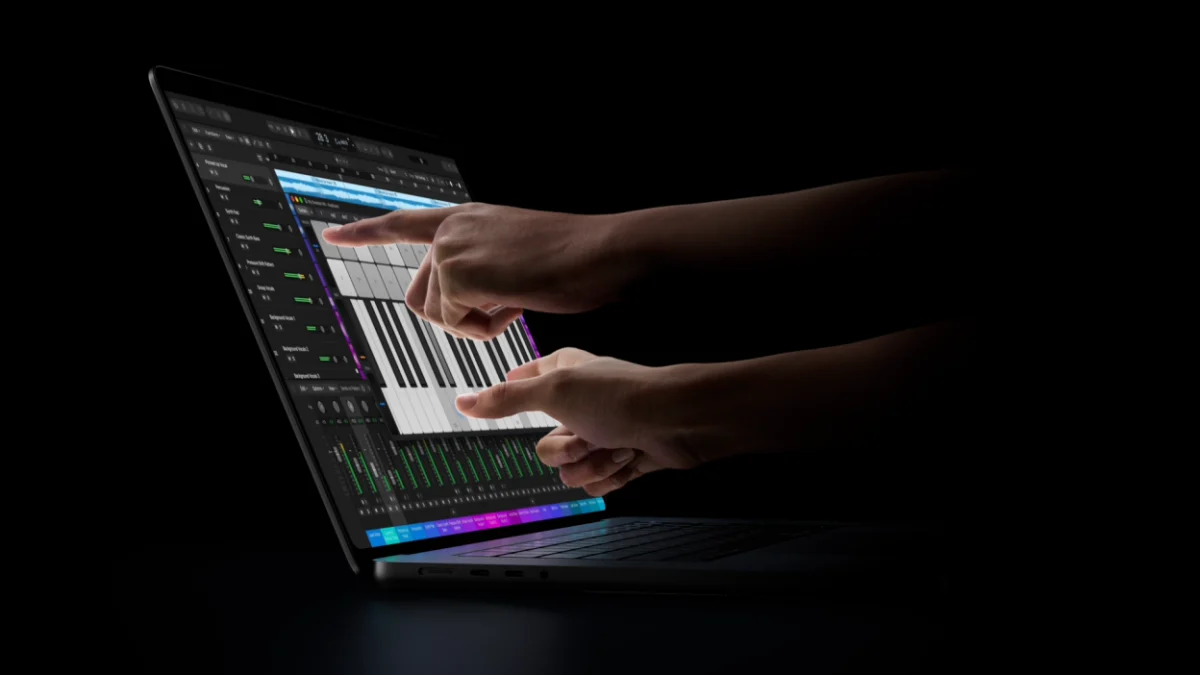
The most significant departure from Apple’s traditional philosophy is the introduction of the Touchscreen MacBook Pro. Available in both 14- and 16-inch sizes, this device features "PROLED XDR" technology—an OLED-based display offering 1,000 nits of typical brightness and 2,000 nits for HDR content.
The Dynamic Island and Tactile Input
For the first time, the laptop display features the Dynamic Island, replacing the traditional notch. This serves as a dedicated hub for Live Activities, Siri AI interactions, and Spotlight, bridging the UI language of the iPhone with the macOS desktop experience.
The touchscreen capability is not merely a gimmick; it is integrated into specific professional workflows. Users can manipulate virtual instruments in Logic Pro or rotate 3D models with direct tactile input, a feature that was previously only possible via external peripherals or the iPad’s Sidecar feature.
Financial Implications
This is Apple’s most ambitious—and expensive—laptop release to date. Starting at $2,899 for the 14-inch model and $3,399 for the 16-inch, the ceiling for these machines is stratospheric. A fully maxed-out 16-inch configuration with 16TB of RAM hits a staggering $14,549. This pricing tier positions the machine firmly in the workstation category, likely aimed at enterprise clients and high-end production studios who require maximum memory capacity.
Supporting Data: Efficiency and Longevity
Apple’s move to modernize its silicon across the board is backed by internal metrics that emphasize efficiency.
| Model | Chipset | Key Performance Metric |
|---|---|---|
| iMac | M6 | 5x faster than M4; 12x faster than M1 |
| MacBook Pro (14") | M6/M5 Pro/Max | 13x faster AI processing than M1 |
| Touchscreen MBP | M5 Pro/Max | 13 hours additional battery vs. Intel-era |
The leap in battery life, particularly for the Touchscreen MacBook Pro models, is noteworthy. By leveraging the efficiency of the M5 series and the power-sipping nature of the PROLED XDR displays, Apple is claiming that these laptops can outlast their Intel-based predecessors by over half a day of standard usage. Additionally, the fast-charging capabilities—reaching 50% capacity in just 30 minutes—address the primary pain point of high-performance mobile computing.
Official Responses and Strategic Shifts
Under CEO Jon Ternus, Apple’s messaging has shifted from "refinement" to "radical accessibility." In recent briefings, Apple executives have emphasized that the inclusion of touchscreens on the MacBook Pro was a response to the "blurring lines between tablet-based creativity and desktop-based production."
The company maintains that the iPad remains a separate category for touch-first experiences, but the new MacBook Pro serves as the bridge for those who need a keyboard-centric environment with the occasional tactile input. By maintaining the M5 series for the touchscreen models and moving to M6 for the standard laptops, Apple is segmenting the market by "use case" rather than just "price point."
Implications: The Road Ahead
The decision to release five major products simultaneously in November suggests that Apple is looking to capture the holiday market with an iron grip. However, there are broader implications:
- The End of the Notch: With the integration of the Dynamic Island into the MacBook Pro, it is only a matter of time before the design language of the MacBook Air and lower-end models follows suit.
- AI as a Hardware Driver: The constant references to AI-processing speed indicate that Apple’s software roadmap for 2027 will be heavily reliant on local NPU (Neural Processing Unit) capabilities.
- The "Pro" Barrier: With the top-end MacBook Pro reaching nearly $15,000, Apple is redefining what a "consumer" device is. The gap between the entry-level M6 iMac ($1,499) and the top-tier workstation is now vast, effectively splitting the brand into two distinct camps: the general user and the high-end professional.
As we look toward the close of 2026, one thing is certain: Apple is no longer content to wait for the market to demand change. They are dictating the pace, forcing a new standard for what a portable computer can be. Whether the market is ready for a $14,000 laptop or the shift to touch-based macOS interaction remains to be seen, but the sheer volume of this rollout confirms that Apple is entering 2027 with significant momentum.