In a significant strategic pivot, the popular journaling platform Day One has announced a restructuring of its subscription model, effectively rebranding its long-standing Premium offering as "Day One Silver" while launching a new, top-tier subscription level titled "Day One Gold." This move signals a broader industry trend where personal productivity and reflection tools are increasingly integrating advanced artificial intelligence to provide deeper analytical value to users.
For a platform that has long served as the digital vault for millions of personal memories, this transition represents more than just a name change; it is an evolution in how the company balances its core identity—a private, secure space for reflection—with the rapid technological advancements defining the current digital landscape.
The Core Tiers: A Breakdown of the New Ecosystem
The restructuring organizes Day One into three distinct tiers, catering to a spectrum of users ranging from casual diary keepers to those seeking a highly analytical journaling experience.
Day One Basic: The Entry Point
Day One continues to maintain its "Basic" tier, which remains free. Designed as a frictionless starting point, this tier provides the fundamental architecture for users to begin their journaling habit without immediate financial commitment.
Day One Silver: The Standard for Consistent Journaling
Formerly known as "Day One Premium," the Silver tier remains the backbone of the application. The company has been careful to emphasize that no features have been removed during this transition. Silver subscribers retain full access to:
- Unlimited photo and video uploads.
- Audio recording with automatic transcription capabilities.
- Cross-device synchronization across mobile and desktop.
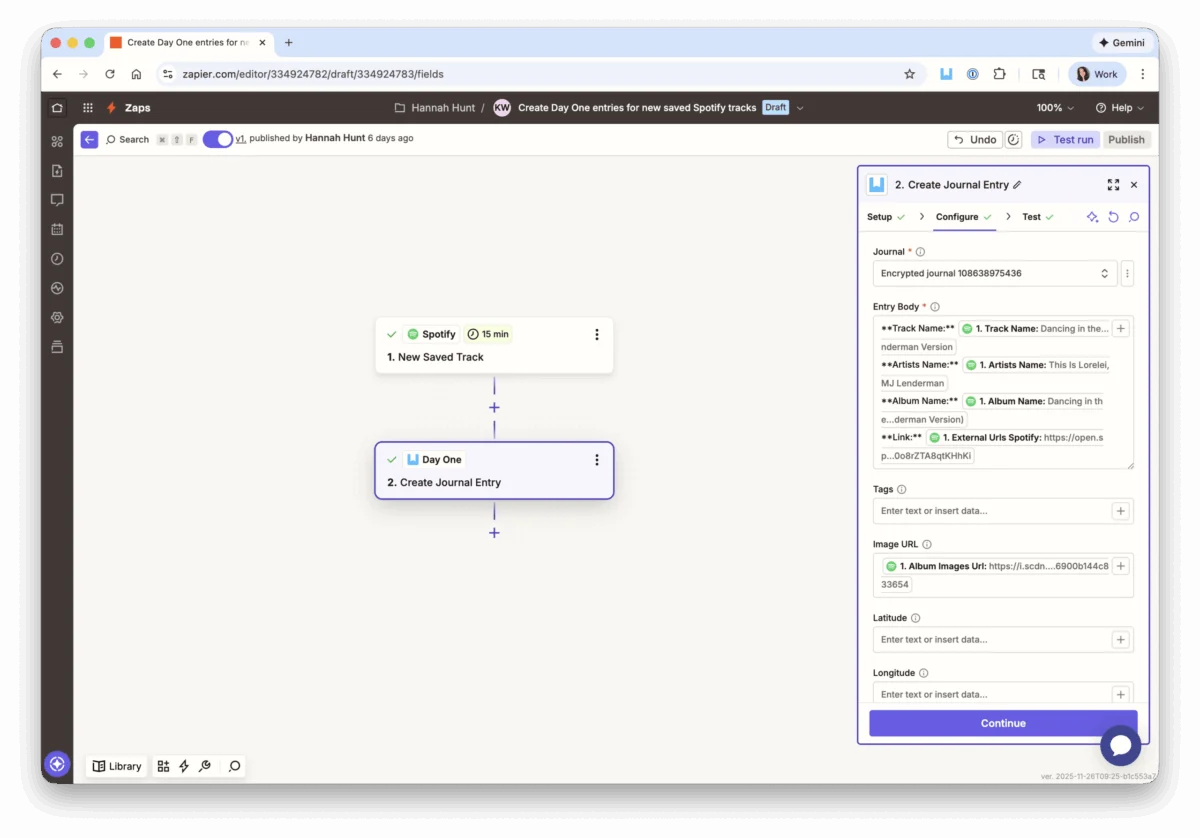
- Integration with third-party automation tools like Strava, Zapier, and IFTTT.
- A 25% discount on physical printed journals.
This tier is clearly positioned for the "habitual journaler"—the user who values consistency, media-rich entries, and the ability to access their thoughts anywhere, anytime, without the overhead of AI-driven tools.
Day One Gold: The AI-Enhanced Frontier
The introduction of Day One Gold marks the company’s first significant foray into integrated, optional AI-assisted reflection. The Gold tier encompasses all Silver features, with the addition of:
- Daily Chat: An AI-powered, guided conversational tool that prompts users to reflect on their day, helping to overcome the "blank page" syndrome.
- Reflective Summaries and Prompts: Automated tools that scan past entries to surface patterns, recurring themes, and personal insights.
- Image Generation: A creative suite for visual expression within the journal.
- Day One Labs: Early access to experimental features and innovative tools currently in development.
- Increased Loyalty Rewards: An enhanced 35% discount on physical printed journals.
Chronology: The Evolution of a Digital Vault
Day One’s history is defined by a slow, steady progression from a simple text-based diary app to a comprehensive lifestyle platform.
- The Early Years: Founded on the principles of minimalism, Day One initially gained traction by offering a clean, distraction-free interface for users who found traditional blogging platforms too public and paper journals too cumbersome.
- The Subscription Pivot: Several years ago, the platform transitioned to a subscription model to sustain server costs and multi-platform development. This shift was met with initial skepticism but was ultimately accepted as the industry standard for high-quality, privacy-focused software.
- The AI Integration Phase: The last 18 months have seen the company experimenting with machine learning and natural language processing. The launch of "Gold" serves as the formal culmination of these experiments, moving from internal testing to a consumer-facing product suite.
Supporting Data: The Case for Deep Reflection
The rationale behind the Gold tier is rooted in the philosophy that a journal should be an active participant in one’s mental growth rather than a passive repository of information. Internal usage data and industry-wide trends in the "Quantified Self" movement suggest that users are increasingly looking for tools that provide feedback loops.

By offering "Reflective Summaries," Day One is tapping into a growing demand for longitudinal data analysis. Users want to know not just what they wrote three years ago, but how their sentiment, priorities, and daily habits have shifted over time. The Gold tier attempts to bridge this gap, using AI to turn disparate daily entries into a cohesive narrative of personal history.
Official Responses and Privacy Safeguards
The introduction of AI in a platform defined by extreme privacy—often used to document the most intimate moments of a user’s life—inevitably invites questions regarding data security. In response to these concerns, Day One has issued a clear, non-negotiable set of privacy principles that govern the Gold tier:
- AI is Optional: No user is forced to engage with AI features. The core "Silver" experience remains entirely free of automated, AI-driven content generation.
- Zero Training Policy: Perhaps most importantly, Day One has explicitly stated that user content is never used to train the AI models. This "walled garden" approach ensures that personal reflections remain the sole property of the user.
- Transient Processing: The company clarifies that when a user does choose to engage with an AI tool, the processing is ephemeral. Data is handled only for the immediate purpose of fulfilling the user’s request, after which the connection to the processing engine is severed.
"These features—particularly the AI-powered ones—cost meaningful resources to build and run," the company stated in its official launch announcement. "Gold is how we fund continued development while keeping Silver complete and unchanged for the subscribers who’ve trusted us for years."
Implications: The Future of the Journaling Industry
The restructuring of Day One’s tiers carries broader implications for the productivity and wellness app market.
The Financial Sustainability of Privacy-First Apps
By creating a "Gold" tier, Day One is acknowledging the high operational costs associated with running sophisticated AI models. Unlike traditional software, which requires a one-time development cost, AI features require ongoing compute power and specialized server infrastructure. The Gold tier acts as a financial bridge, allowing the company to innovate at the cutting edge of technology without cannibalizing the core product or compromising on user privacy to subsidize costs through advertising or data mining.
Redefining the "Digital Journal"
The shift signals a transition from "passive logging" to "active insight." The standard for a high-quality journal is no longer just "secure storage," but "analytical capability." Users are increasingly expecting their digital tools to function like a partner. Whether it is summarizing a year of entries or helping a user identify stress triggers through conversation, the role of the journal is shifting toward that of a personal mentor.
The Trust Economy
Ultimately, the success of this move will depend on trust. Day One has built its brand on the premise that it is a safe, private space. By introducing AI—even optional, privacy-protected AI—the company is walking a tightrope. If they successfully maintain their strict privacy standards, the Gold tier could set the new industry benchmark for how personal, AI-integrated software should behave. If, however, they struggle with transparency or technical glitches, they risk alienating the core user base that has kept the platform afloat for over a decade.
For now, the message from the company is one of continuity. "Many of you have trusted Day One with years of memories, reflections, and everyday moments," the company noted in a closing statement. "We don’t take that lightly. These changes are about making sure we can keep building something worthy of that trust."
As the digital landscape becomes increasingly saturated with AI-driven content, Day One’s decision to bifurcate its services offers a glimpse into a potential future for all personal-use software: a model where the core utility is preserved as a utility, and advanced, resource-intensive enhancements are made available to those who find the most value in them.