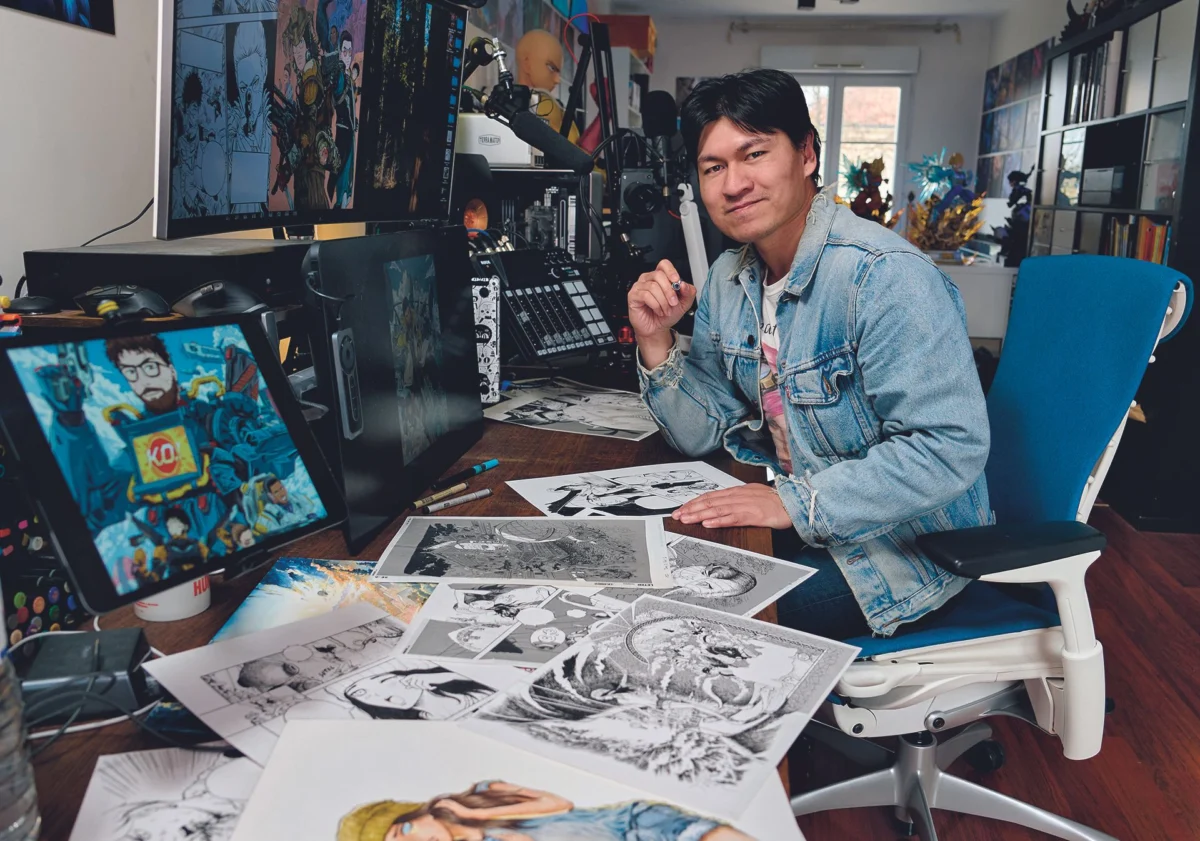
In the quiet suburbs just outside of Paris, a transformative space exists that serves as the crucible for modern manga creation. For Yé Wei—the French mangaka known to his vast online community as "Esquissewei"—this 30-square-metre studio is more than just an office; it is a meticulously engineered environment where digital innovation and traditional craftsmanship collide.
As the founder of the Manga Dojo online drawing school and the visionary behind the manga series Astral, Wei has cultivated a workspace that reflects his disciplined, high-octane approach to professional artistry. Through his "Artist in Residence" tour, we gain exclusive insight into how this space—forged from two childhood bedrooms—has become a global hub for art education and creative production.
The Architecture of Creativity: From Bedrooms to Studio
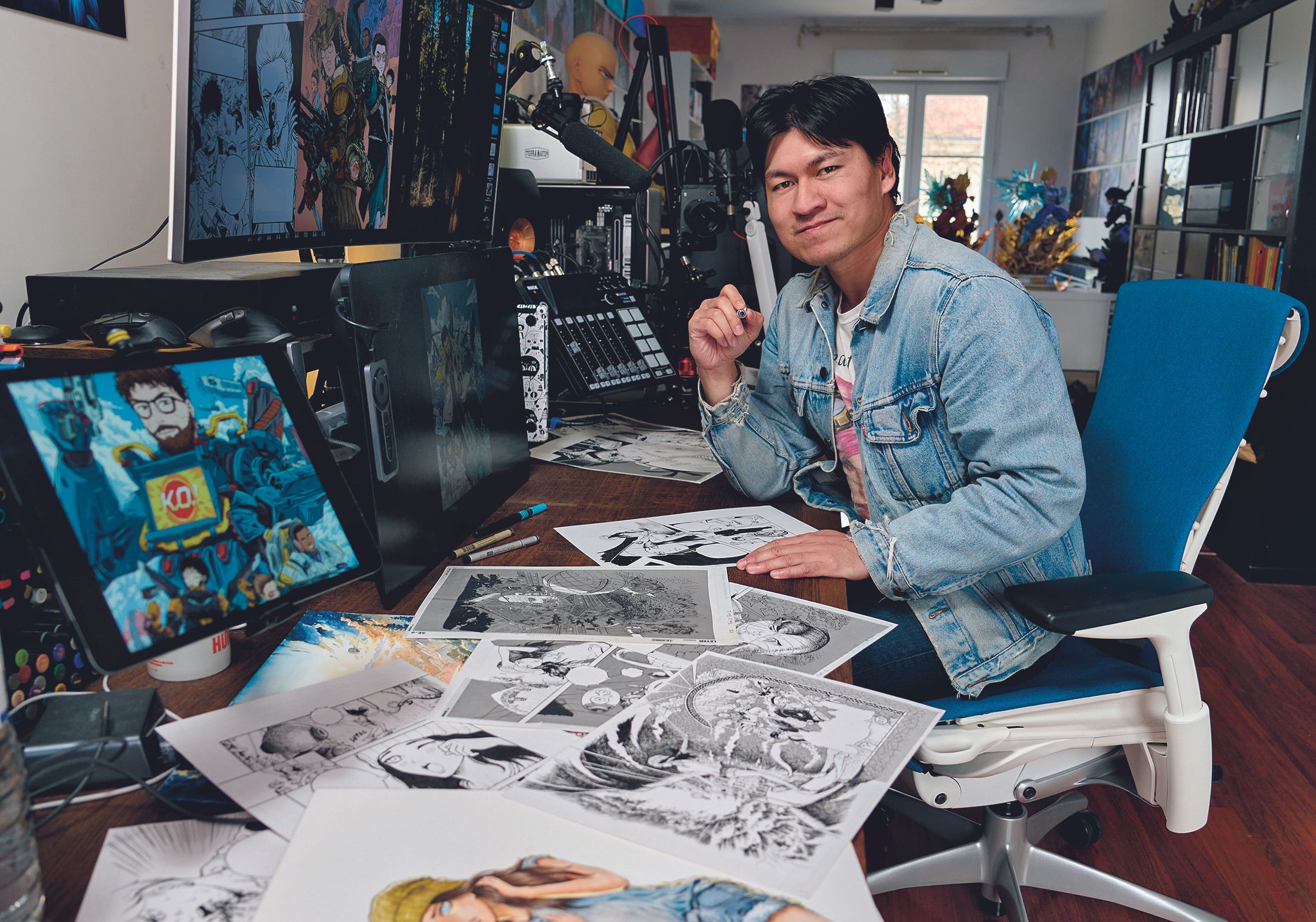
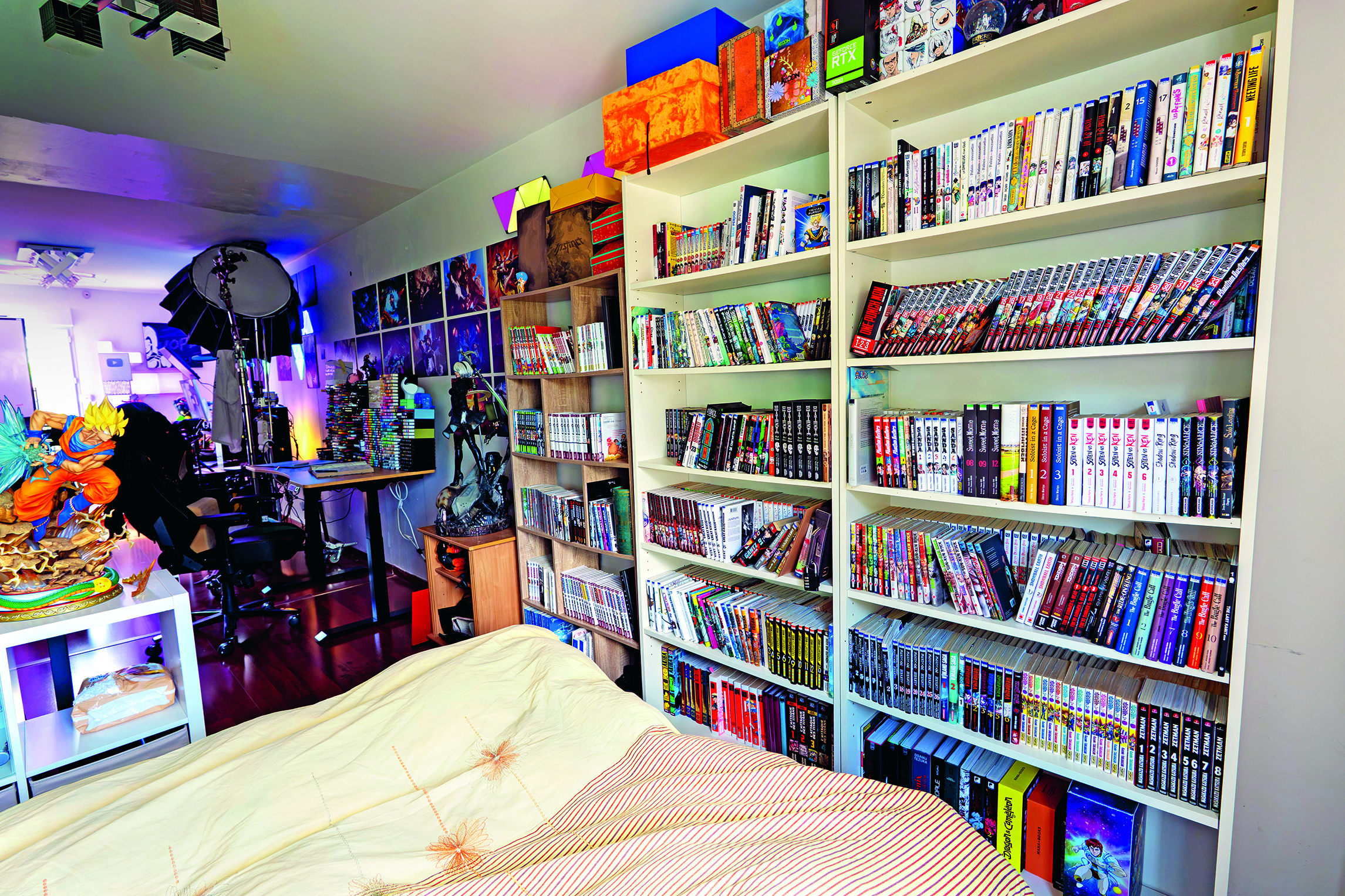
The physical layout of Yé Wei’s studio is a testament to the evolution of his career. Originally two separate bedrooms belonging to Wei and his older brother, the space was unified by removing the dividing wall, creating a spacious, 30-square-metre sanctuary.
The room is bifurcated into two distinct hemispheres: a high-end digital command center and a sprawling, tactile traditional workspace. The centerpiece of the studio is a custom-built, 2.5-metre-long solid wood desk. Weighing in at a formidable 100kg and rated to support 300kg of load, the desk was specifically engineered to house Wei’s entire hardware ecosystem—including his PC, MacBook, and complex streaming rig—without a hint of vibration or instability.
Chronology of a Disciplined Artist
For Yé Wei, artistic mastery is not left to chance; it is a byproduct of rigid, almost monastic scheduling. His daily rhythm is designed to optimize cognitive output and mitigate burnout.
- 05:30 AM: The day begins with a prompt start, emphasizing the need for early momentum.
- 06:00 AM: Physical exercise, serving as both a wake-up call and a mental reset.
- 07:00 AM: Wei is seated at his desk. He notes that starting even an hour later at 8:00 AM creates a psychological deficit, making him feel as though the "day is lost."
- 07:00 AM – 12:00 PM: Focused production hours. During this block, he utilizes a triple-screen setup, keeping his previous manga pages permanently visible to ensure consistency in style and narrative flow without the inefficiency of file searching.
- 02:00 PM – 03:30 PM: A scheduled nap. Wei acknowledges that his creative energy naturally dips by noon, and this rest period is the "most important piece of furniture in the room," allowing him to bridge the gap into the evening session.
- 03:30 PM – 07:00 PM: The afternoon production block, followed by evening wind-down.
- 10:00 PM: Lights out, ensuring the cycle repeats the following morning.
Technical Ecosystem: Hardware and Software
Wei’s studio is a masterclass in professional-grade gear integration. The digital workflow is anchored by a Wacom Cintiq Pro 24, which is tethered to an M2 Max MacBook Pro. He relies exclusively on Clip Studio Paint, citing its specialized manga-centric tools—such as advanced pen stabilization, intuitive panel creation, and a vast library of screentones—as the industry gold standard for his specific needs.
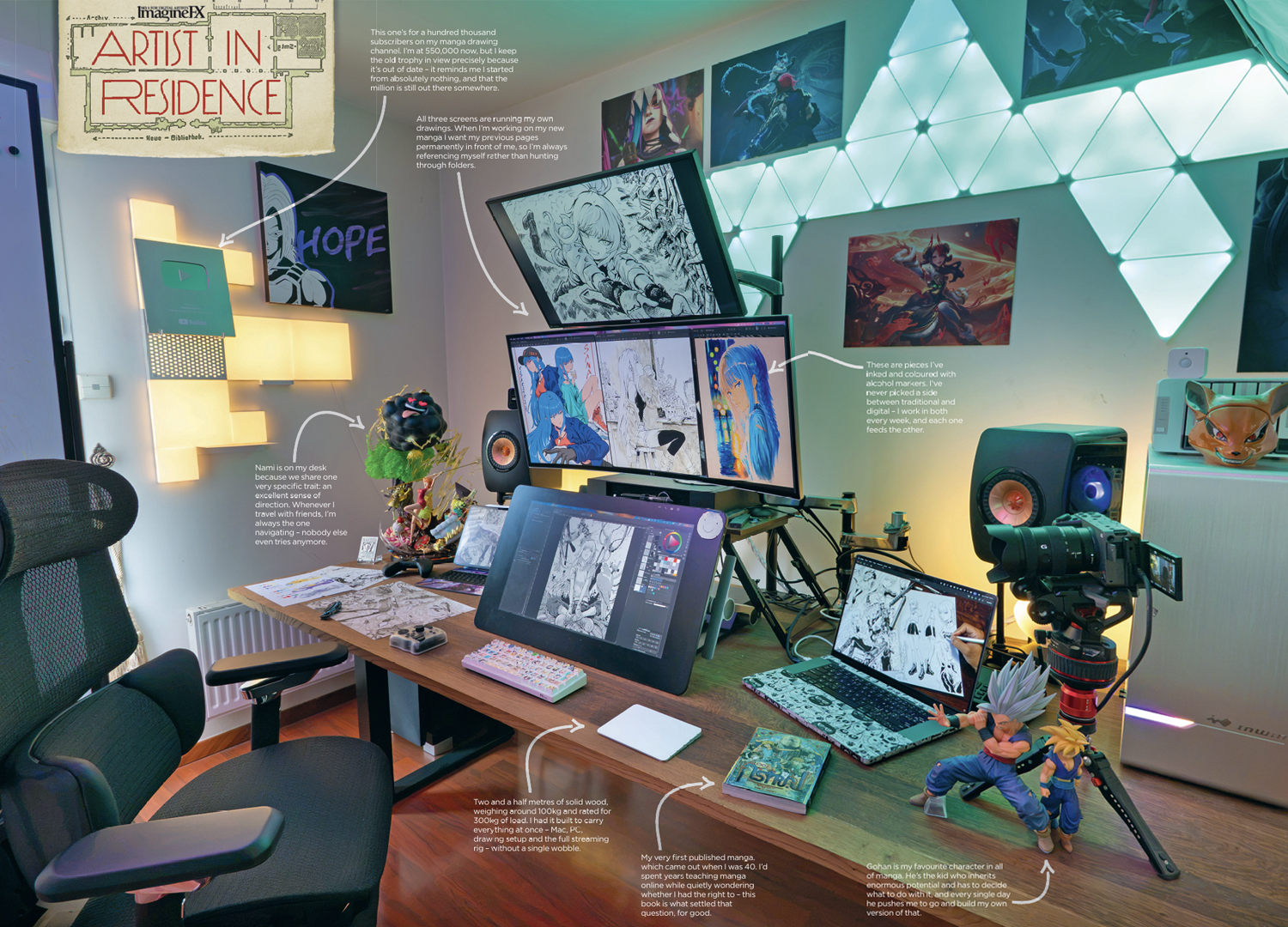
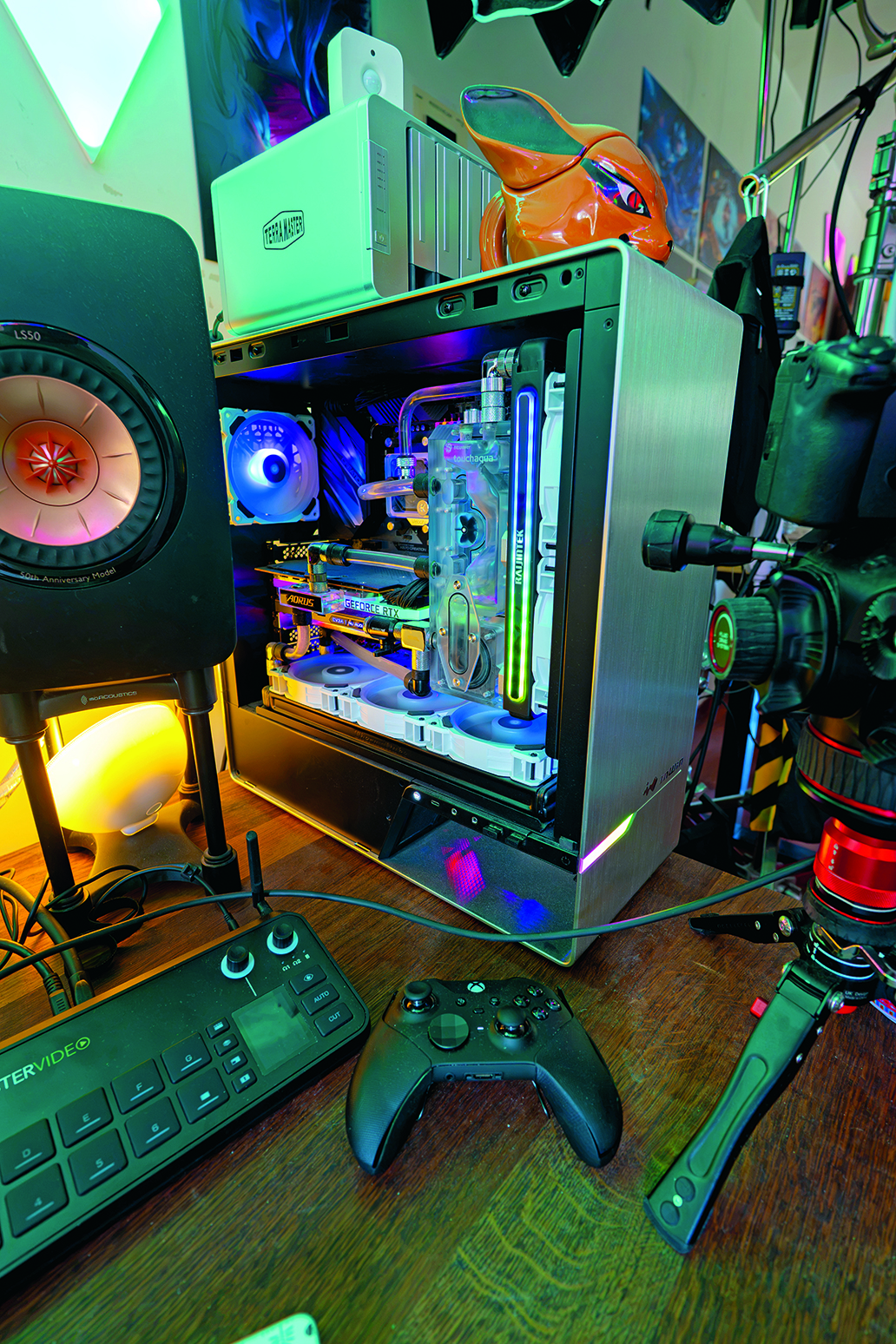
His computer, which he built himself, serves a dual purpose as both a professional workstation and a high-performance gaming rig. The intricate water-cooling loop he installed serves as a testament to his "lifelong geek" identity, providing a necessary mental break from his professional duties.
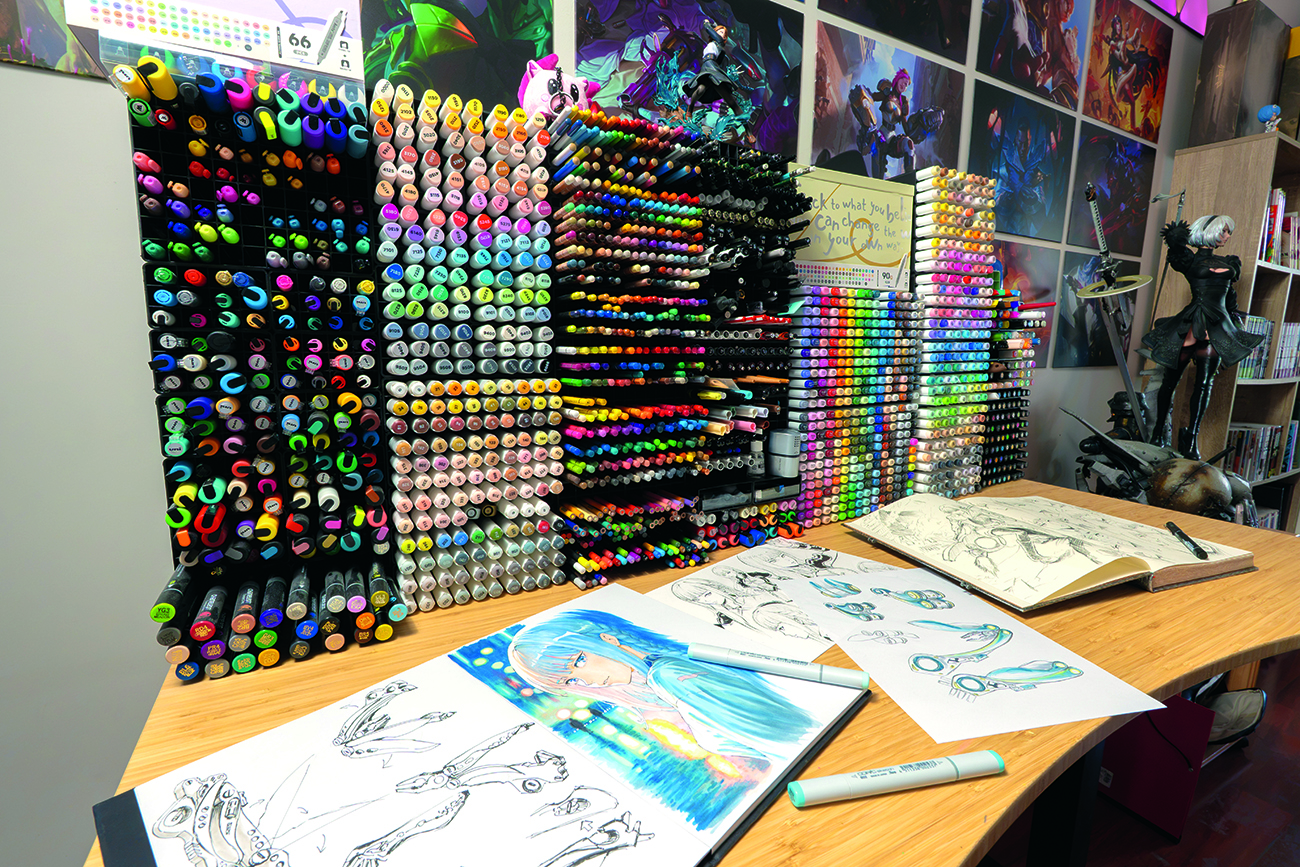
On the analog side, the contrast is stark. Wei maintains a collection of over 3,000 markers, arranged with surgical precision. As an ambassador for brands like Clairefontaine and Graph’it, he manages a constant influx of new materials, which he stores in a systematic, labeled storage system. This "marker wall" is strategically positioned so that any color or liner can be accessed without him having to leave his chair or break his creative focus.
Supporting Data: The Infrastructure of Education
The studio is not only a site for creating Astral; it is a broadcast center for his 550,000-strong online audience. Wei has integrated a professional-grade cinematography setup that includes:
- Camera: Sony FX30.
- Audio: Sennheiser MKH 416 shotgun microphone.
- Lighting: Large-scale, continuous studio-quality softboxes.
This infrastructure supports the production of high-quality courses and live critique sessions for the Manga Dojo. By treating his studio as a broadcast-ready facility, Wei has bridged the gap between solitary creation and communal education, allowing him to mentor aspiring artists on a global scale.
Overcoming Impostor Syndrome
Perhaps the most significant chapter in Wei’s career was the release of his manga Astral in 2025. For years, Wei operated as a teacher and mentor while grappling with the internal tension of being a "mangaka" who had not yet published his own full-length work.
Astral, a narrative centered on the young protagonist Nejma and her journey alongside the druidess Elane, serves as the definitive answer to his doubts. The book, which explores themes of searching for meaning and the resurgence of ancient Celtic legends, acted as a catalyst for his professional validation. "I was 40 when it came out," Wei explains, "and I’d spent years teaching manga online while quietly wondering whether I had the right to—this book is what settled that question, for good."
Implications for Modern Creators
The studio of Yé Wei offers a profound lesson for contemporary artists: the environment dictates the output. By creating a space that honors both his digital requirements and his traditional roots, he has successfully mitigated the fatigue often associated with professional creative work.
Furthermore, his collection of 12 large-scale character statues—featuring icons like Gohan from Dragon Ball—is not merely decorative. These figures serve as tactile inspiration and essential tools for studying lighting, anatomy, and drapery. The inclusion of these figures underscores his philosophy that one must "work inside the universe that made [one] want to draw in the first place."

The "Nami" Philosophy of Navigation
Even in his studio, Wei finds parallels to his favorite stories. He keeps a figure of Nami (from One Piece) on his desk, citing their shared "excellent sense of direction." This lighthearted nod to his personality highlights the importance of keeping one’s workspace reflective of the artist’s individual journey. Whether he is inking a page for his second book or guiding a student through a perspective lesson, Wei’s environment remains a carefully tuned engine for production.
Conclusion
Yé Wei’s studio is more than a room of computers and markers; it is a manifestation of a career built on discipline, technical proficiency, and an unyielding commitment to the craft of storytelling. By sharing his space, he offers not only a glimpse into his gear but a blueprint for how to build a sustainable, successful, and deeply personal career in the digital age. As he continues his work on his next book, the studio remains the silent partner in his success—a place where dreams are translated into ink and pixels, one labeled box and one disciplined morning at a time.