The sprawling, neon-soaked expanse of Leonida in Grand Theft Auto 6 offers players an unprecedented level of freedom. While the core loop of high-speed chases, daring heists, and intricate side missions forms the backbone of the experience, the true depth of Rockstar Games’ latest magnum opus lies in its granular, often overlooked mechanical complexity. For many players, the surface-level controls are sufficient to navigate the narrative; however, for those looking to immerse themselves fully in the simulation, mastering the "hidden" control scheme is the key to unlocking the true potential of the game.
Beyond the standard inputs for movement and combat, there exists a secondary layer of interaction—a suite of commands that allow for increased environmental engagement, tactical advantages during police pursuits, and a level of social interaction that breathes life into the game’s NPCs. Whether you are attempting to evade a five-star wanted level or simply lounging on the sun-drenched beaches of Vice City, understanding these advanced inputs will fundamentally shift how you play GTA 6.
The Mechanics of Immersion: Enhancing the Core Loop
The design philosophy behind GTA 6 prioritizes "lived-in" realism. Unlike its predecessors, which often felt like playgrounds designed for chaos, GTA 6 treats the state of Leonida as a living, breathing entity. To engage with this, players must move beyond the basic "drive and shoot" mentality.
Advanced Vehicle Management and Cinematic Travel
For players who wish to absorb the atmospheric density of the game world without the fatigue of constant steering, the auto-drive feature is a revolutionary addition. By setting a waypoint on your map—the further the better, to truly appreciate the scale of the map—you can initiate a cinematic experience. Once in a vehicle, hold the down arrow on the D-Pad and press Option to trigger cinematic camera mode. From there, holding the Circle button activates the auto-drive system, allowing your character to navigate the complex traffic AI of Leonida autonomously.
Furthermore, the vehicle controls extend to the minutiae of daily driving. By holding the left arrow on the D-Pad and manipulating the right stick upward, you can access a secondary menu of vehicular functions. This includes toggling hazard lights, operating power windows, and managing interior lighting—details that, while seemingly superfluous, add a layer of role-playing immersion that elevates the experience from a standard action game to a true life simulator.
Tactical Evasion: Staying Out of Sight
The heat in GTA 6 is more persistent and intelligent than in any previous iteration. When the authorities are in hot pursuit, simply outpacing them is rarely enough. Law enforcement now utilizes facial recognition and witness reports, meaning that switching vehicles is only half the battle. To truly drop off the radar, you must minimize your physical profile. By holding the Circle button while behind the wheel, you can duck, lowering your character’s head below the dashboard. This simple action can be the difference between escaping a perimeter and finding yourself in a terminal firefight.

Combat, Interaction, and Social Dynamics
The social engine of GTA 6 is remarkably sophisticated. NPCs react to your presence in real-time, and your ability to provoke or influence them is gated behind specific button combinations that many players never discover.
The "Road Rash" Influence: Aggressive Commuting
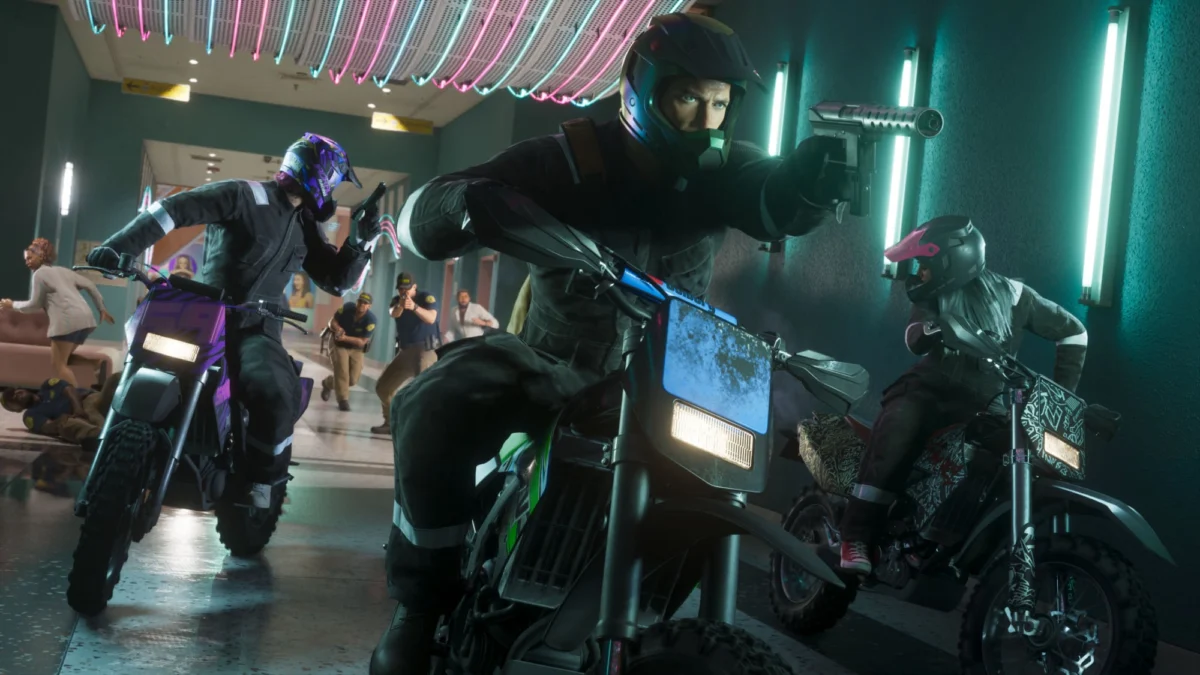
Drawing inspiration from classic vehicular combat titles like Road Rash, GTA 6 allows players to engage in physical altercations while mobile. When operating a motorcycle, pressing the Square button triggers a kick, allowing you to strike nearby riders or pedestrians. This mechanic is not limited to bikes; when performed while inside a car, the same input triggers a door-swinging maneuver, perfect for knocking down unsuspecting NPCs. For those preferring psychological warfare, pressing R3 while in a vehicle allows your character to direct taunts and trash talk toward fellow drivers, further deepening the reactive nature of the game’s traffic system.
Social Provocation and NPC Engagement
For players who lean into the "agent of chaos" archetype, the ability to "flip the bird" is a staple of the series, but it requires specific conditions to execute. Your character must be currently unarmed. Once you have cleared your hands, hold L2 to focus on an NPC, then press R1. Be warned: the AI in GTA 6 is far more temperamental than in GTA V. Provoking civilians or law enforcement is no longer a consequence-free action; every insult carries the risk of an immediate, and potentially lethal, retaliatory response.
Strategic Observation and Environmental Interaction
The world of Leonida is dense with environmental storytelling. From the cryptic nature of specific residential properties to the subtle clues scattered throughout the city, the developers have placed a high premium on player observation.
First-Person Investigation
While GTA 6 is primarily a third-person experience, the implementation of a specialized first-person mode serves a vital utility function. By holding L2 and tapping R3, you enter a locked first-person view. While this mode restricts movement, it is essential for examining environmental details, reading signage, or peering into the dark corners of locations like the notorious "Mandy’s house." This mode is intended for investigation, allowing players to pick up on narrative threads that are otherwise invisible from a wider perspective.
Resting and World-Building
The game’s pace is meant to be dictated by the player. Whether you are waiting for a specific time of day or simply taking in the sunset, the game provides a dedicated "rest" mechanic. Holding Circle against a wall or on the sand allows your character to lean or sit, while holding L3 on a ledge allows for a more casual sit-down. Engaging in these quiet moments is not merely aesthetic; listening to the ambient conversations of NPCs while resting often reveals tips for high-value targets, hidden stashes, or information regarding upcoming side quests.

Implications of Advanced Controls
The inclusion of these hidden controls serves a dual purpose: it provides a sandbox for the "power user" while simultaneously rewarding curiosity. By allowing players to customize their interaction with the world—whether through the specific tones of a police siren, accessed via L3 and the left stick, or the fluid grace of sliding across a vehicle’s hood by tapping X while sprinting—Rockstar has created a game that feels fundamentally different depending on the player’s mastery of the controller.
The Evolution of the "Sandbox"
In the context of modern game design, these controls represent a shift away from streamlined, singular gameplay paths toward a more modular, player-driven experience. The implications are clear: the future of the open-world genre is not just about the size of the map, but the depth of the interaction within it.
Official Response and Community Reception
Rockstar Games has remained characteristically tight-lipped regarding the full list of "hidden" controls, preferring to let the community discover these mechanics through trial and error. This strategy has fostered a robust ecosystem of guides, social media threads, and collaborative mapping efforts. Players have noted that these controls provide a much-needed layer of "tactile feedback," bridging the gap between the player’s intent and the character’s actions.
Conclusion
Mastering the hidden controls of GTA 6 is not just about gaining a competitive edge—it is about fully inhabiting the role of a criminal mastermind in the state of Leonida. Whether you are utilizing the rear-view mirror (R3) to check for pursuing threats, or simply using your high-beam headlights to navigate the backroads at night, these mechanics transform the game from a standard shooter into a deeply immersive, highly personal experience. As the community continues to explore the boundaries of this world, one thing is certain: those who take the time to learn these inputs will find that there is always something new to discover in the streets of Vice City.