In an era where digital life is increasingly fragmented across social media feeds and fleeting notifications, the act of intentional reflection has never been more vital—or more difficult to sustain. Today, the award-winning journaling platform Day One announced a significant evolution in its service: the introduction of Daily Chat. By shifting the paradigm from the daunting "blank page" to a dynamic, conversational interface, Day One aims to bridge the gap between lived experience and meaningful documentation.
The new feature, now rolling out across iPhone, iPad, Android, Windows, and web platforms, represents a sophisticated fusion of conversational AI and personal archiving. Designed exclusively for Day One Gold subscribers, Daily Chat is not merely a transcription tool; it is a guided reflection assistant that helps users distill the complexities of their daily lives into structured, poignant journal entries.
The Evolution of Reflection: Addressing the ‘Blank Page’ Barrier
For many, the primary obstacle to building a consistent journaling habit is the psychological friction associated with a blank screen. While the intent to record one’s life is often strong, the mental energy required to synthesize a day’s worth of events, emotions, and nuanced thoughts can lead to procrastination and eventual abandonment of the practice.
Day One’s research into user behavior highlighted a consistent pain point: users often possess the raw material for a meaningful entry but struggle with the narrative structure needed to preserve it. "Some days are full of moments worth remembering," the company noted in its launch announcement, "but sitting down to write about them can feel like the hardest part."
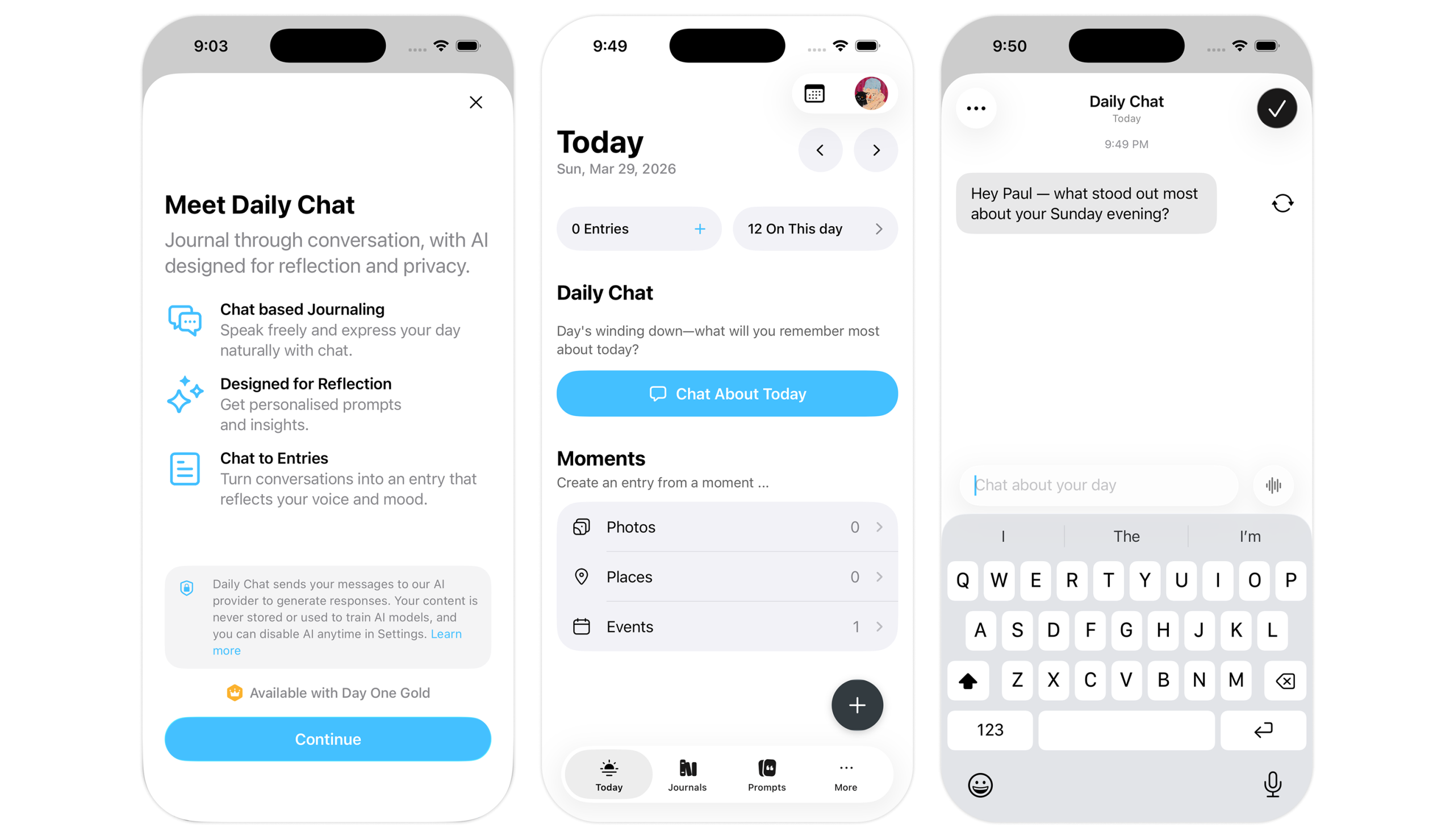
Daily Chat serves as a remedy to this inertia. By initiating a "quiet back-and-forth" dialogue, the system acts as a conversational partner. It does not just record; it inquires. By posing thoughtful, context-aware follow-up questions, the interface helps users move beyond the surface-level "what" of their day to uncover the "why" and "how." This transition from passive documentation to active, guided reflection is designed to make the journaling process feel less like a chore and more like a meditative wrap-up to the day.
A Technical Deep-Dive: How Daily Chat Operates
At its core, Daily Chat is powered by an intelligent processing layer that learns from the user over time. The feature operates through a multi-step interaction:
- Guided Inquiry: The user begins by sharing the highlights or struggles of their day. The AI responds with nuanced prompts—such as "How did that make you feel?" or "What stood out about that moment?"—to draw out deeper insights.
- Contextual Synthesis: As the conversation progresses, the system identifies key themes, emotional undertones, and specific details.
- Entry Preservation: The resulting conversation is condensed into a coherent, permanent journal entry that retains the user’s original tone, language, and mood.
A critical component of this experience is the "Memory" system. Over time, the AI builds a repository of user-specific data—people, locations, recurring interests, and values. This memory is not static; it informs future conversations, allowing the AI to ask more personalized questions based on the user’s history. For instance, if a user previously mentioned a stressful project, the AI might ask for an update during a future chat.
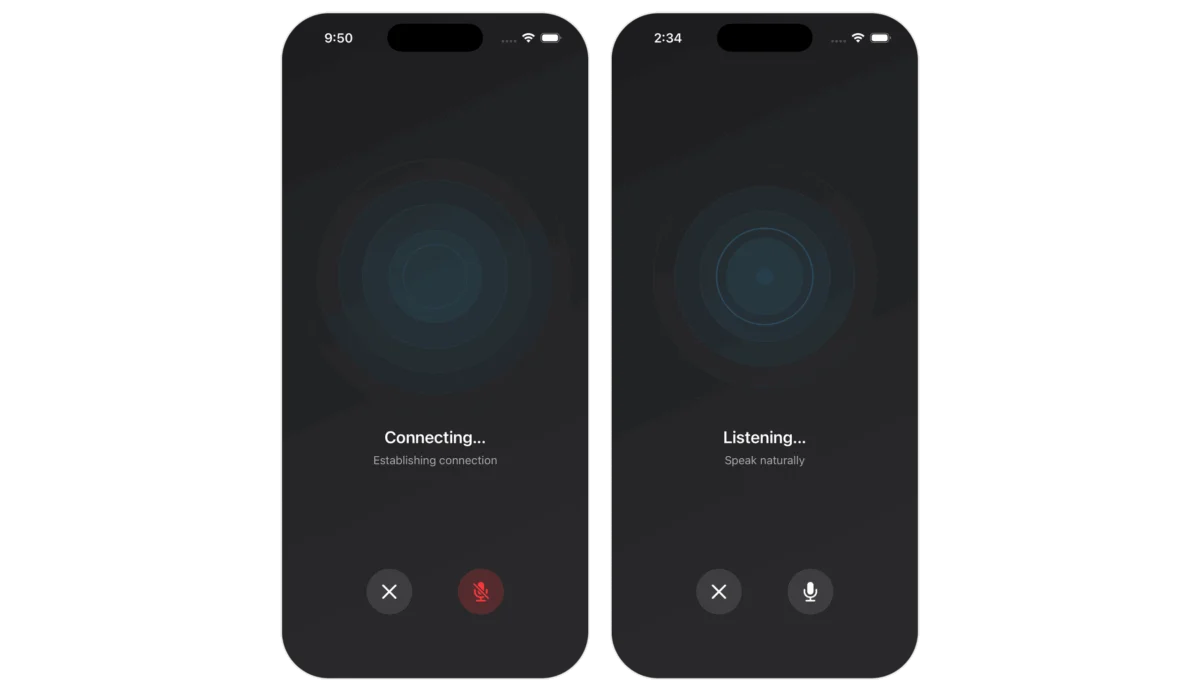
For users on the move, Day One has integrated "Voice Mode." By tapping a dedicated icon, users can engage in a hands-free, spoken-word conversation. This removes the barrier of typing, allowing for a more authentic, stream-of-consciousness style of reflection that often captures raw emotion more effectively than written prose.
Privacy, Ethics, and the AI Frontier
The integration of artificial intelligence into a personal journal—one of the most intimate digital spaces a person can maintain—brings profound questions regarding privacy and data security. Day One has positioned itself as a leader in private, encrypted memory keeping for over a decade, and the company is keenly aware that its reputation hinges on maintaining this trust.
"Journaling is one of the most personal things a person can do," the company emphasized. "Adding AI to that experience requires care, transparency, and respect for boundaries."

To mitigate user concerns, Day One has implemented several layers of protection:
- End-to-End Encryption: All memories and generated entries are protected by the same industry-leading encryption standards that have defined the Day One platform since its inception.
- Control and Transparency: While the current system leverages AI to facilitate reflection, the company has pledged to introduce a comprehensive "Memory Manager" in a future update. This will grant users total transparency into what the system has "learned" about them, allowing them to delete, edit, or curate their data as they see fit.
- Future-Proofing: Day One has stated that they are actively exploring the integration of on-device AI models. This move would theoretically allow the processing to occur entirely on the user’s hardware, removing the need to transmit data to external servers and setting a new standard for privacy-focused AI in personal productivity apps.
Implications for the Journaling Industry
The launch of Daily Chat signals a broader shift in the "Life Logging" and personal development tech sectors. We are moving away from passive data collection (such as simple step-counting or event-logging) toward "Active Reflection."
By automating the narrative structure of a journal entry, Day One is effectively democratizing the practice of reflection. Historically, deep journaling was a skill honed through years of practice; now, the technology acts as a scaffolding, helping novice journalers achieve the same level of depth as experienced writers.
Furthermore, the introduction of a "Gold" tier specifically tied to these reflective features suggests a new business model for productivity apps. Rather than charging solely for storage or cloud syncing, companies are beginning to charge for the value of the cognitive labor provided by their AI assistants. For the power user, this represents a significant ROI: the ability to maintain a comprehensive, meaningful, and searchable history of one’s life with a fraction of the time investment previously required.
Looking Ahead: The Future of the Digital Archive
As Day One integrates these new features, the implications for personal historiography are vast. When a user has a decade of "Daily Chat" entries, they will not just have a log of what they did, but a curated, AI-assisted record of who they were, how they felt, and what they valued at every stage of their life.

The company has framed this not as a static record-keeping exercise, but as a living, breathing component of personal well-being. By facilitating deeper, more frequent reflections, Day One is hoping to help users cultivate greater self-awareness and emotional intelligence.
"The moments of your day are worth preserving," the company stated in its final guidance to users. "Daily Chat helps you capture them with the context, emotion, and meaning they deserve."
For those ready to move past the blank page, the path forward is now as simple as starting a conversation. Whether it is a quick update while commuting or a deep-dive reflection during a quiet evening, the evolution of the journal has arrived, and it is designed to listen as much as it is designed to store.
As of today, the feature is available globally across all major platforms. Users are encouraged to update their applications and explore the "Today" tab to begin their first session, marking the start of a new chapter in the history of personal digital archiving.