
For over twenty-five years, Joe White operated in the high-stakes trenches of the technology and information security sectors. In a field defined by the relentless hunt for vulnerabilities, his professional currency was his judgment. He was the person companies hired to anticipate the catastrophic, to scrutinize the fine print, and to ensure that systemic risks were mitigated long before they could manifest as reality.
Yet, in a cruel irony that serves as a cautionary tale for the modern workforce, White’s most significant failure did not occur on a corporate server or through a sophisticated cyberattack. It occurred within his own mind. Suffering from chronic, undiagnosed burnout, White made a series of high-level financial decisions that resulted in the loss of $3 million in retirement savings—a catastrophe that was, in his estimation, entirely avoidable had he possessed the clarity to see his own mental decline.
The Chronology of a Silent Collapse
White’s experience challenges the conventional narrative of burnout. In the popular imagination, burnout is a sudden, dramatic shutdown—a person hitting a wall and being physically unable to continue. For White, the reality was far more insidious.
His decline was a gradual, multi-year erosion. After decades in the pressure cooker of startup environments and security architecture, the "grind" had ceased to be an anomaly and had become his baseline. He continued to perform at a high level, solving complex technical problems and navigating intricate professional demands. Because his output remained consistent, he falsely equated his continued productivity with health.
During this period of cognitive depletion, White engaged with an offshore cryptocurrency lending platform. Under normal circumstances, his professional skepticism would have likely triggered a thorough risk assessment. However, in his exhausted state, the mechanisms he used to evaluate risk were compromised. He processed the information provided by the platform, but he lacked the mental elasticity to challenge assumptions, identify hidden vulnerabilities, or pause for the necessary due diligence.
The financial consequences followed, and they were irreversible. Over the subsequent three years, White has pivoted his focus toward pursuing accountability for the platform’s failures, but his personal reflection has shifted toward a more internal, uncomfortable realization: he was the "single point of failure" in his own life.
The Anatomy of Cognitive Depletion
The clinical reality of burnout, as experienced by White, is often characterized by a profound form of "brain fog" that does not necessarily manifest as an inability to work, but rather as a fundamental shift in decision-making quality.
The Illusion of Functionality
The most dangerous symptom of burnout is the "functioning illusion." When a professional is accustomed to high-stress environments, they learn to normalize fatigue, poor sleep, and reduced concentration. Because the individual is still "getting things done," they interpret their continued output as proof of stability.
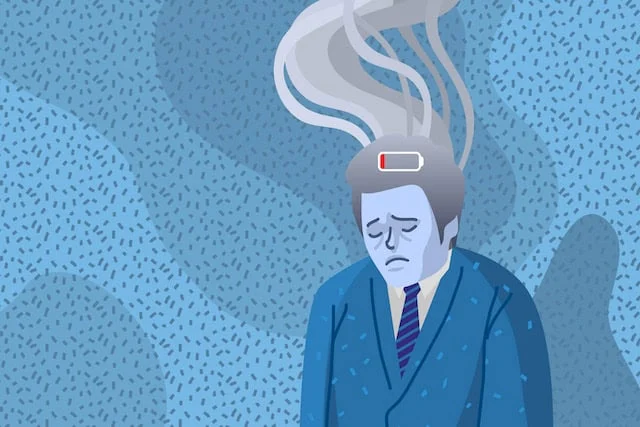
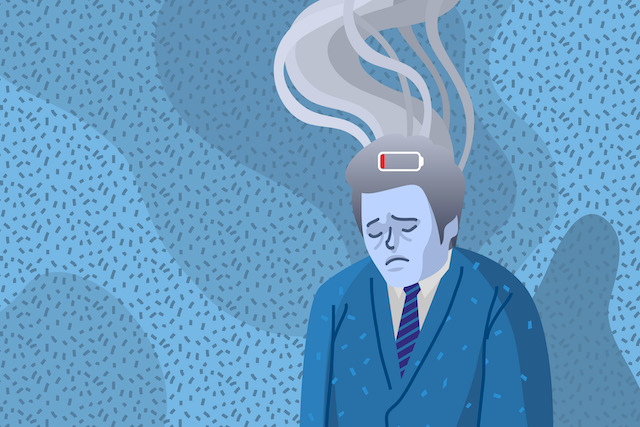
Neuroscience suggests that chronic stress affects the prefrontal cortex—the area of the brain responsible for executive functions like risk assessment, impulse control, and long-term planning. When this area is depleted, an individual may continue to execute routine tasks with competence while losing the ability to perform complex, high-stakes judgment calls. The brain is effectively "running on fumes," processing data through a filter of exhaustion that makes the risky look reasonable and the questionable look secure.
The Feedback Loop Trap
White highlights a critical danger: the reliance on the same brain that is under stress to diagnose its own condition. "I had spent years relying on the same brain to tell me whether that brain was functioning properly," he notes. This circular feedback loop is what makes burnout so difficult to detect in high-achievers. Without an external "check" or a disruption in the workflow, the individual remains trapped in a state of compromised decision-making, believing they are in control until the moment the system breaks.
Supporting Data: The Modern Epidemic
While White’s case is personal, it reflects a broader crisis in the technology and corporate sectors. According to data from the World Health Organization (WHO), burnout is now recognized as an occupational phenomenon, characterized by feelings of energy depletion, increased mental distance from one’s job, and reduced professional efficacy.
Studies in the Journal of Occupational Health Psychology indicate that burnout is not merely a state of being "tired"; it is a physiological shift that impairs cognitive performance, leading to increased errors in judgment. In high-stakes fields like finance, law, and security, this cognitive decline can lead to "decision fatigue," where the quality of choices deteriorates as the volume and complexity of decisions increase without adequate recovery periods.
Furthermore, a study by the Harvard Business Review noted that "high-performing" individuals are often the most susceptible to burnout because they possess an internal drive that compels them to push through physical and mental warning signs. This "hero culture" often prevents individuals from seeking help or slowing down, leading to a higher likelihood of significant errors in both professional and personal spheres.
Implications: A New Framework for Personal Risk Management
White’s tragedy offers a roadmap for rethinking how we manage our own lives, particularly for those in high-responsibility roles. The implications of his experience suggest that we must treat personal decision-making with the same rigor we apply to professional risk management.
Establishing "External Controls"
In professional security, when the stakes are high, we never rely on a single point of failure. We implement redundancy, "four-eyes" principles (requiring two people to authorize a transaction), and cooling-off periods. White argues that individuals should apply these same "security controls" to their personal lives.
When facing a major life decision—such as a large investment, a career change, or a major purchase—individuals who are feeling the weight of exhaustion should:
- Force a Delay: If a decision is truly important, it can wait 48 hours. This allows for the immediate pressure of the moment to subside.
- Consult a Third Party: Seek out an independent, trusted perspective. A person who is not experiencing the same level of burnout can act as a "sanity check" for assumptions that have gone unexamined.
- Audit the Condition: Before making the decision, explicitly ask: "Am I making this choice because it is sound, or because I am too tired to explore alternatives?"
Redefining Recovery
Recovery is not merely the absence of work; it is the active restoration of cognitive function. True recovery involves:
- Prioritizing Biological Basics: Sleep, nutrition, and exercise are not "luxury" items; they are the fundamental infrastructure for the brain.
- Establishing Boundaries: Maintaining a life outside of work that does not involve screens or professional problem-solving is essential for mental recalibration.
- Accepting Vulnerability: Recognizing that you are not a machine is the ultimate act of professional maturity.
Conclusion: The Lesson of the Invisible Vulnerability
Joe White’s loss of $3 million was not just a financial disaster; it was a wake-up call regarding the limitations of the human mind under duress. By sharing his story, he aims to illuminate the "invisible" nature of burnout.
The most profound takeaway from his experience is that competence is not a shield against burnout; in many cases, it is the very thing that masks the symptoms until it is too late. For those who have built their identities on being the "go-to" person, the hardest lesson is learning to stop and admit that the mind requires as much maintenance as the systems it manages.
We must shift the culture of the workplace from one that celebrates the "ability to push through" to one that values the ability to recognize when the engine is overheating. As White concludes, "I spent a career looking for vulnerabilities in complicated systems. One of the most consequential vulnerabilities I ever encountered was one I couldn’t see while I was inside it."
For anyone currently pushing themselves to the brink, the lesson is clear: your productivity is not a measurement of your health. Before the next "catastrophic" decision is made, it is vital to pause, step back, and ensure that the person making the choice is fully present, fully rested, and fully capable of seeing the reality, rather than the illusion.