For many, the resolution to "spend less" is a fragile creature. It is born on a Sunday afternoon, usually at a kitchen table with a calculator and a sense of renewed discipline. Yet, by Thursday night, that resolution is often dead—discarded in the span of eleven seconds while lounging on a couch, staring at a screen that promises a price will hold only until midnight.
The failure of the average impulse-buying resolution is not a failure of character; it is a failure of strategy. Most financial advice is general, while the act of impulse buying is hyper-specific. To win, your resolve must hold firm every single time you open an app; the retailer, meanwhile, only needs you to lose once a week to undo an entire month of progress.
The Disconnect Between Intent and Execution
The fundamental reason most "stop spending" resolutions fail is the geographical and temporal distance between the intent and the transaction. You set your rule in a calm, rational environment, but the purchase occurs in a state of high friction or high emotion.
Retailers have mastered the art of shortening the gap between desire and acquisition. Through saved payment credentials, one-tap checkout, and psychological pressure tactics like countdown timers, they have designed the shopping experience to be faster than the time it takes for your rational brain to ask, "Do I actually need this?"
Most popular advice—"avoid the mall," "make a list," or "wait 24 hours"—is well-intentioned but fundamentally flawed because it is aimed at no one in particular. It treats impulse buying as a monolithic problem, when in reality, it is a mosaic of specific triggers.
A Chronology of the Impulse Audit
To move beyond the cycle of broken rules, you must first stop treating your spending as a mystery. The answer to your financial habits is already written in the data of your past 30 days.
Phase 1: The Audit (Days 1–2)
Before you impose any new restrictions, you must perform a forensic audit of your last month of spending. Pull up your bank statement and the order histories of your most frequently used shopping apps. List every purchase you would not have put on a grocery or shopping list on the morning of that day.
For each entry, record:
- The exact amount.
- The date and time of the transaction.
- The platform where the purchase occurred.
- One word describing your emotional or physical state immediately preceding the buy (e.g., "bored," "stressed," "tired").
Phase 2: The Identification (Days 3–5)
Once you have your list, look for the "bunching." Do your impulse purchases cluster around a specific time of day, such as late at night when decision fatigue is high? Do they happen exclusively in one specific app? By identifying these patterns, you stop fighting a vague enemy and start targeting a specific behavior.
Phase 3: The Targeted Rule (Days 6–14)
Now, you create a rule that lives exactly where the trigger lives. If your audit shows that you consistently buy items from one specific app after 10 p.m., the rule is not "spend less." The rule is: "Delete the saved card from that app, log out, and remove the app from my home screen."
Supporting Data: What the Science Actually Says
The efficacy of traditional "waiting periods" is often overstated. Despite their popularity, there is little empirical evidence to suggest that a mandatory 24-hour wait produces a significant reduction in long-term regret. While these rules are low-cost to try, they function as band-aids rather than systemic fixes.
Research published in the Journal of Financial and Quantitative Analysis suggests that tracking and reflection-based interventions can significantly reduce non-essential spending. However, the data indicates that the diagnostic value of tracking is what creates change, not the tracking itself.

Regarding triggers, the science is more robust. A 2025 study in Current Psychology confirmed that urgency cues—limited-time offers and low-stock alerts—directly impact the fear of missing out (FOMO) and increase impulse-buying intentions. Similarly, research in PLOS ONE highlights the "sadness effect," where individuals in a negative emotional state consistently overvalue items, leading to higher price thresholds for purchases.
The Four Pillars of Impulse Triggers
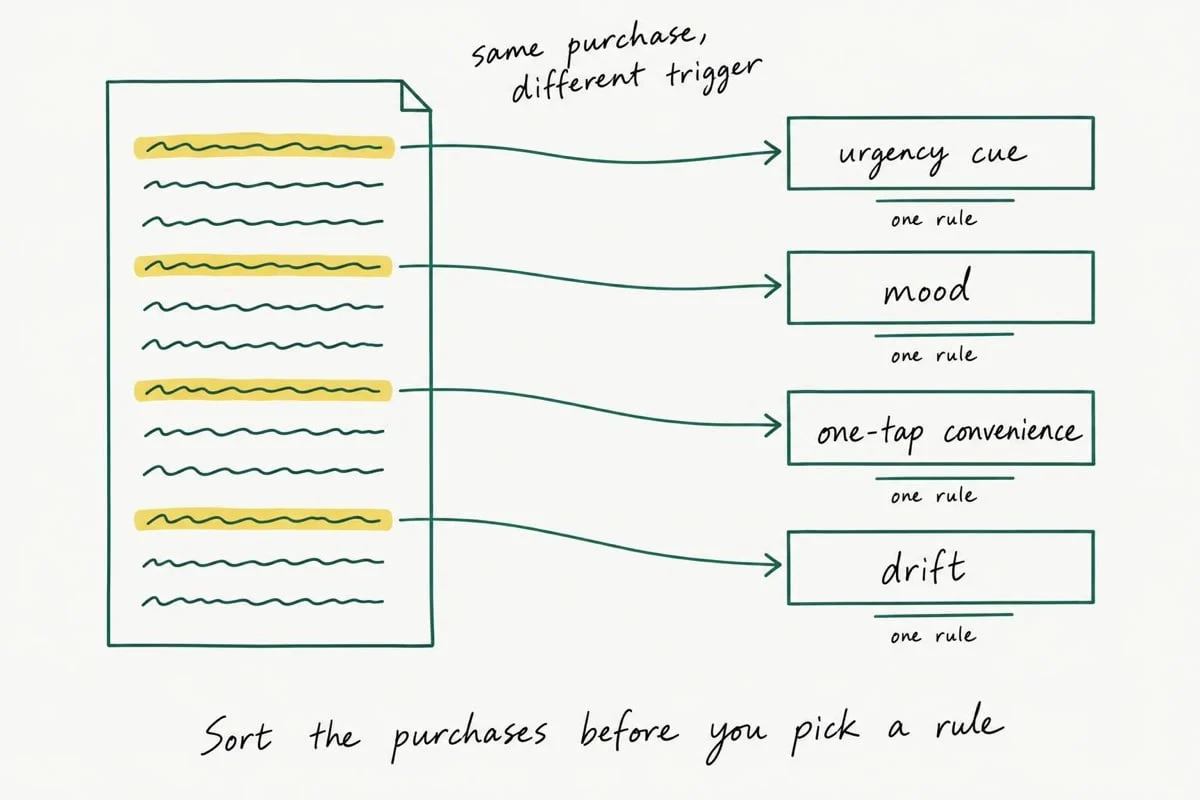
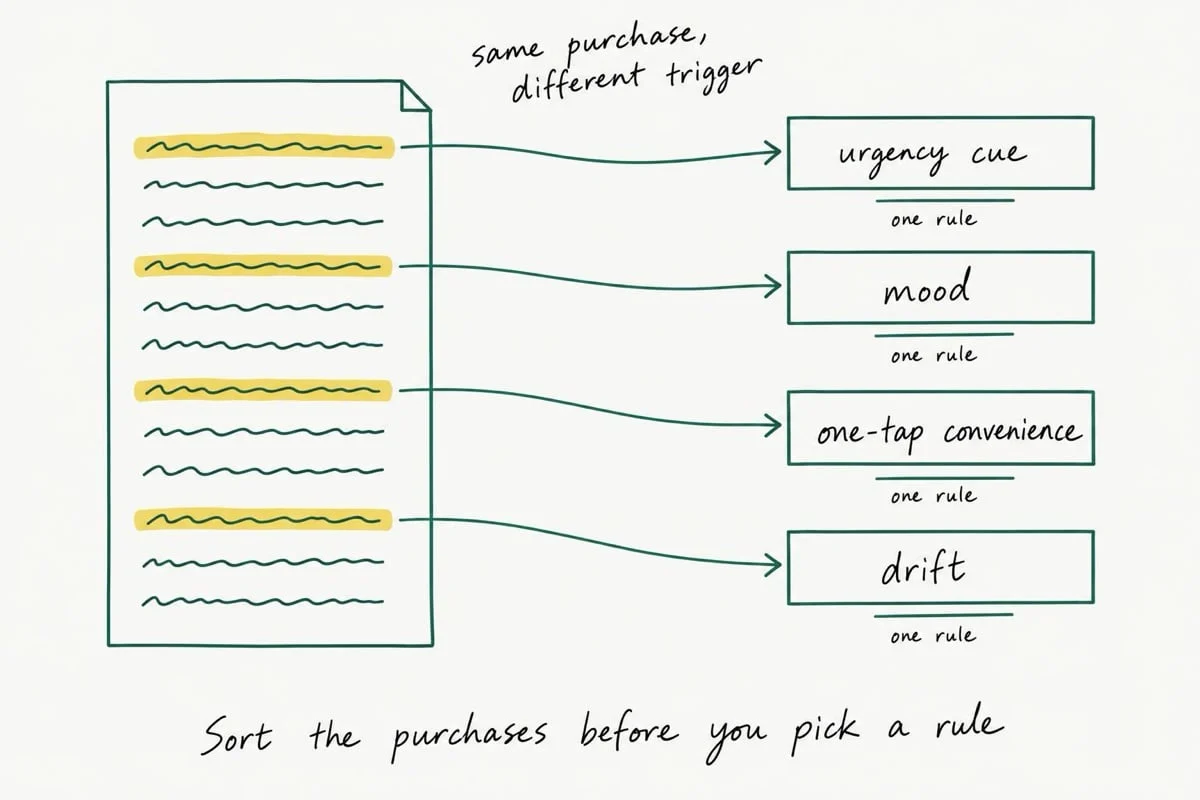
To effectively curb your spending, you must categorize your purchases into one of four distinct triggers:
- Urgency Cues: These are the countdown timers, flash sales, and "only 2 left in stock" banners. These exploit your evolutionary fear of loss.
- Mood: This is the "retail therapy" phenomenon. Whether it is sadness, stress, or boredom, your brain is seeking a dopamine hit to regulate an emotional state.
- One-Tap Convenience: This is a technological trigger. When the effort to buy is lower than the effort to think, you will inevitably buy more.
- Drift: This occurs when you open an app or walk into a store without a specific goal. Without a target, you become a blank slate for marketing algorithms.
Implications for Your Financial Health
The goal of this process is not to force you into a state of permanent deprivation. Instead, it is about shifting the decision-making window. By deleting your saved credit card, you are not banning yourself from buying the item; you are forcing yourself to go find your wallet, type in the 16-digit number, and verify the billing address.
Those 30 to 60 seconds of manual labor provide the necessary "cognitive reset." Often, by the time you have finished typing, the initial impulse has passed, and you can make an informed, rational decision about whether the purchase is truly necessary.
When Rules Fail: The "Swap, Don’t Stack" Philosophy
One of the most common mistakes is "rule-stacking." When a person fails to follow a rule, they often add another one on top, eventually building a system so complex that it becomes impossible to maintain.
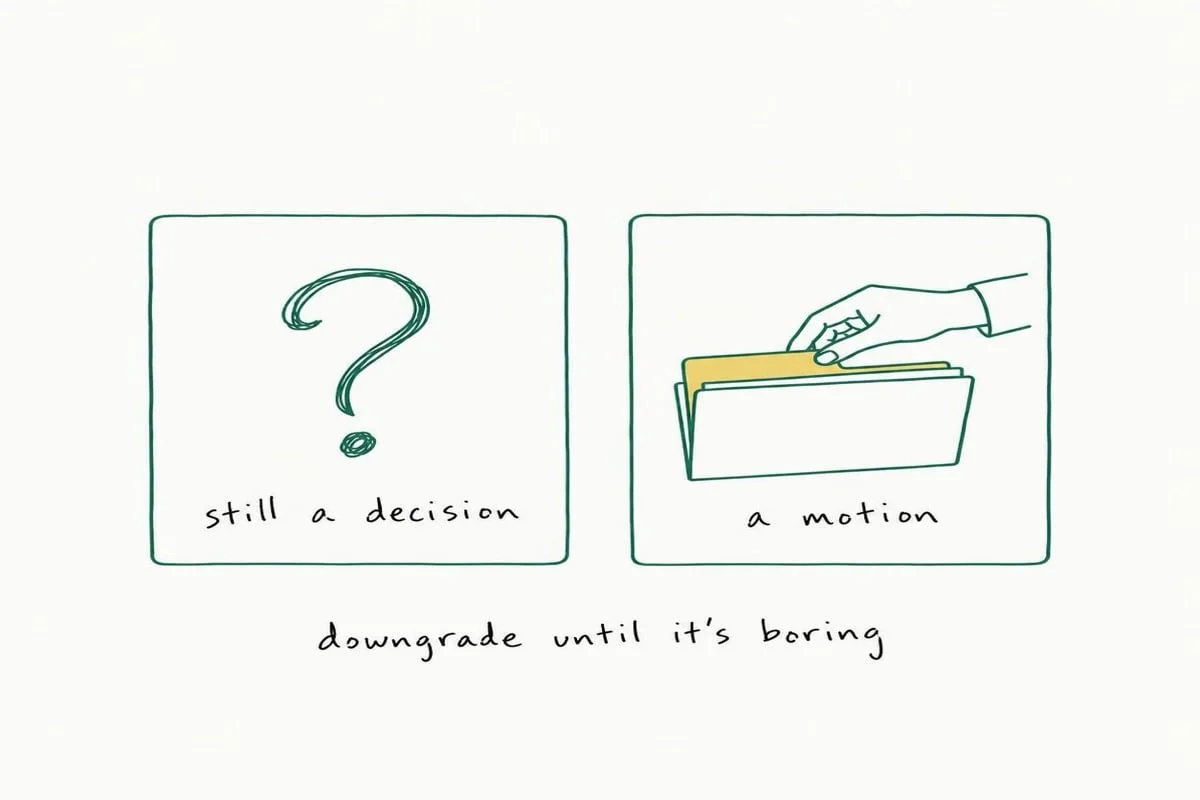
If your rule breaks twice in two weeks, acknowledge that it is the wrong rule for the trigger. Swap it for a simpler one. If you set a rule to "wait 24 hours" and you still buy the item, the rule failed because it didn’t address the underlying trigger—likely convenience or mood. Swap the rule for something that changes the environment, such as blocking the website or uninstalling the app.
A Note on Compulsive Buying
It is critical to distinguish between common impulse spending and compulsive buying disorder (CBD). While occasional impulsive lapses are a standard part of modern consumer life, CBD is characterized by a persistent pattern of shopping that causes genuine psychological distress, social impairment, or unmanageable debt.
Studies in World Psychiatry and Frontiers in Psychiatry estimate the prevalence of compulsive buying at roughly 4.9% of the population. If your spending feels entirely outside of your control, or if you find yourself hiding purchases from family members or facing financial ruin, no amount of "tracking" or "rule-setting" will be sufficient. In such cases, the most effective financial move is to seek support from a mental health professional.
Conclusion: Start Small, Start Tonight
The path to stopping impulse buying does not begin with a new budgeting app or a vow of poverty. It begins with twenty minutes of looking at your own history.
Gather your statements. Sort your transactions. Name your triggers. By placing your rules where your triggers live, you move the decision-making process from the "impulse" side of your brain to the "analytical" side. You are not trying to become a different person; you are simply building a system that makes it harder for the retailer to bypass your better judgment.
If you find that your purchases don’t cluster—if they are scattered and random—you are likely dealing with general spending habits rather than impulse triggers. In that scenario, a standard, consistent daily routine will be far more effective than any complex anti-impulse system. But for the vast majority of us, the triggers are there, waiting to be found. Once you name them, you can block them.