For years, "smart glasses" were the punchline of tech industry jokes—an awkward, buggy, and often aesthetically offensive reminder of the ill-fated Google Glass era. However, the narrative has shifted dramatically in the last 24 months. As artificial intelligence models shrink to fit on mobile hardware and optical displays become thinner, lighter, and more capable, the "face computer" is no longer a science fiction trope; it is a burgeoning consumer electronics category.
Today, tech giants from Apple and Meta to Google and Samsung are betting that the next great computing platform won’t be held in your hand or strapped to your wrist, but perched on the bridge of your nose. If you are considering gifting this technology or adopting it yourself, the landscape is vast, varied, and, at times, overwhelming.
The Evolution of Wearable Optics: A Chronology
The transition of smart glasses from novelty to utility has been a decade-long slog of miniaturization.

- 2013–2015 (The Experimental Phase): Google Glass introduced the concept of the Head-Up Display (HUD) to the public. While it failed due to privacy concerns and social stigma, it established the foundational dream of ambient computing.
- 2016–2019 (The Audio Experiment): Companies like Bose and Amazon (with Echo Frames) pivoted away from displays, focusing on "open-ear" audio. This proved that people were willing to wear tech if it looked like standard eyewear.
- 2020–2022 (The AR Renaissance): Companies like Xreal and Nreal began proving that lightweight frames could effectively replace a 100-inch monitor for gaming and media consumption by utilizing USB-C tethering.
- 2023–Present (The AI and Camera Integration): The launch of the Ray-Ban Meta glasses marked a turning point. By integrating high-quality cameras and multimodal AI, the industry finally moved from "tethered displays" to "autonomous assistants."
Understanding the Taxonomy of Modern Smart Glasses
To make an informed purchase, one must understand that the term "smart glasses" is an umbrella for four distinct categories. Most devices currently on the market occupy one of these primary roles.
1. Audio-First: The Seamless Companion
These devices are essentially high-fidelity Bluetooth earbuds built into a spectacle frame. They prioritize comfort and discreetness, allowing the user to take phone calls, listen to podcasts, or interact with an AI voice assistant without plugging their ears. They are perfect for the office worker who needs to remain aware of their surroundings while staying connected.
2. Camera-First: The Content Creator’s Lens
Representing roughly 80% of the current market interest, these frames include high-resolution cameras. They are designed for "capture-first" living—allowing users to film concerts, bike rides, or family moments without breaking the "presence" of the moment by holding up a smartphone.

3. Media-First: The Personal Cinema
These glasses act as private monitors. They generally require a wired connection (usually USB-C) to a smartphone, laptop, or gaming console. By projecting a massive virtual screen directly into your field of vision, they offer a home-theater experience on an airplane or a dual-monitor setup in a cramped hotel room.
4. HUD-Style: The Ambient Assistant
The most "futuristic" of the bunch, these glasses feature a small, often monochrome display (a Head-Up Display) that projects text, navigation, or notifications into the wearer’s peripheral vision. They are intended for all-day use, designed to be lightweight enough that they don’t feel like a gadget.
Curated Recommendations: The Best of the Current Market
For the Content Creator: Ray-Ban Meta
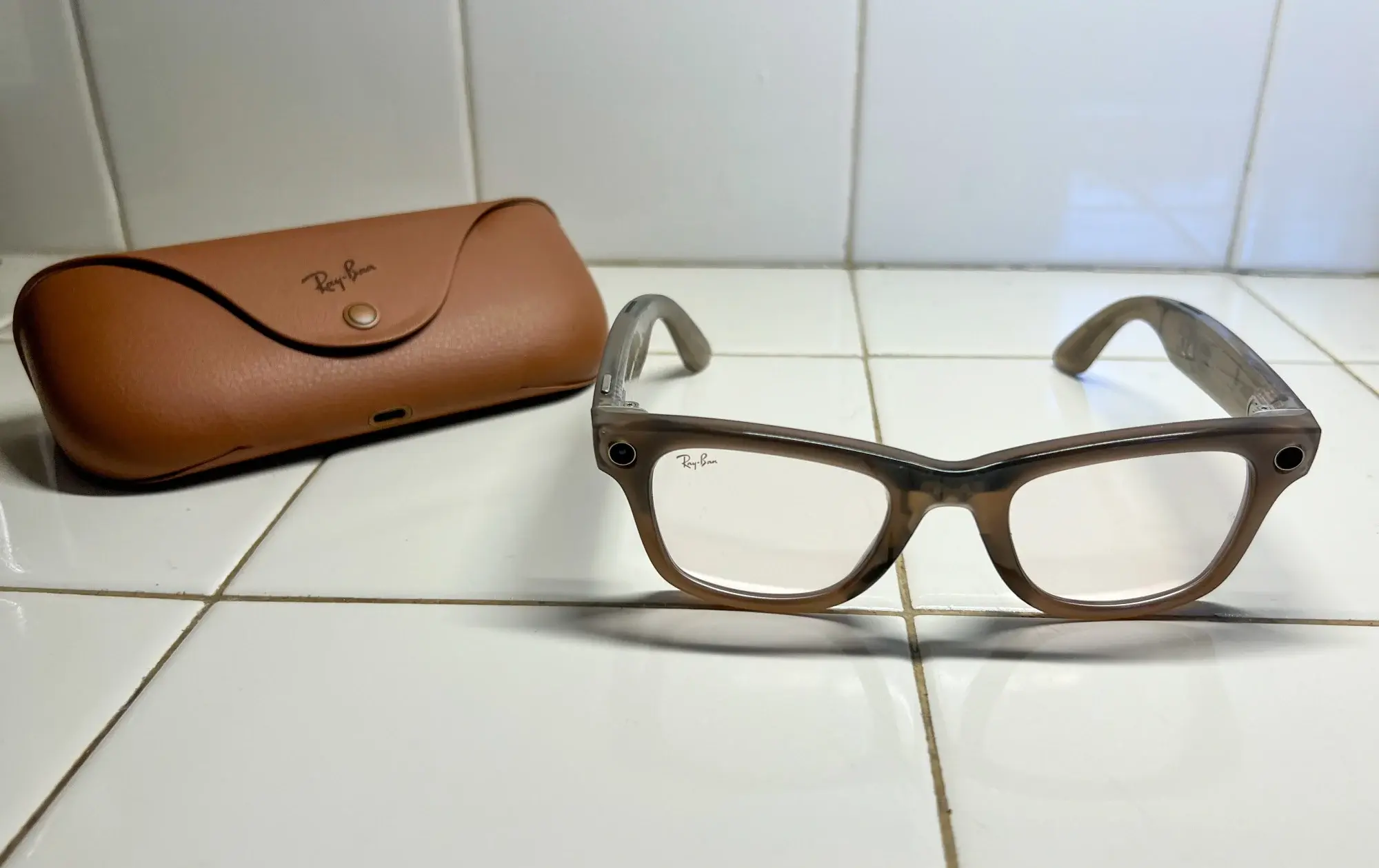
Having tested a wide array of wearables, the Ray-Ban Meta stands out as the most cohesive consumer product. They look like classic Wayfarers, feel like premium sunglasses, and pack a suite of features that are genuinely useful. The integration of a high-quality camera and an AI agent allows for hands-free documentation and instant information retrieval. While one must consider the privacy implications of wearing a camera, the convenience factor is currently unmatched.

For the Traveler and Gamer: Xreal XBX a01
If your goal is entertainment, the Xreal XBX a01 is the gold standard for "media-first" glasses. By plugging these into a Steam Deck, a smartphone, or a laptop, you gain the visual equivalent of a 147-inch 1080p display. At a price point hovering around $299, they offer a transformative experience for frequent flyers who are tired of staring at tiny tray-table screens.
For the Productivity Powerhouse: Even Realities G2
The Even Realities G2 represents the "HUD" category at its best. They don’t distract you with high-definition video; instead, they provide subtle, useful data. Whether you need a navigation arrow while walking through a new city, a quick glance at your next calendar meeting, or real-time transcription, these glasses keep your eyes up and your phone in your pocket. They are the ideal gift for the tech-forward professional.
For the High-Octane Athlete: Bleequp Rangers
For those who live for endurance sports, the Bleequp Rangers offer a rugged, performance-focused alternative. Priced at $379, these frames are designed to survive the elements. They provide turn-by-turn navigation, high-definition recording for training analysis, and a "walkie-talkie" function that is incredibly useful for group rides or runs.

The "Fashion-First" Wildcard: Chamelo Music Shield
Sometimes, technology doesn’t need to be complex to be delightful. The Chamelo Music Shield is less of a computer and more of a style statement. While they lack an AI assistant or an AR display, the ability to change the tint of your lenses with a swipe of your finger is a "wow" factor that justifies their place in the fashion-forward category.
Implications for Privacy and Society
The rapid adoption of camera-equipped smart glasses has triggered a necessary, ongoing debate regarding privacy. When any individual can record their surroundings with a subtle tap on their temple, the social contract of public spaces is challenged.
Major manufacturers have responded with various safeguards. Most, including Meta, include a physical LED light that activates whenever the camera is recording, signaling to bystanders that they are on lens. Despite these efforts, "smart glasses etiquette" remains a work in progress. As these devices become more common, society will need to develop new norms regarding where and when it is appropriate to use "face computers."

Data and Market Outlook
The market for smart glasses is projected to grow exponentially through 2030. According to recent industry reports, the convergence of AI and wearable hardware is expected to lower the barrier to entry for augmented reality (AR). While early AR headsets were heavy, expensive, and limited to enterprise users, the shift toward "smart frames" suggests that consumers prefer comfort over total immersion.
Conclusion: Is it Time to Buy?
If you are looking for a gift that feels like it’s from the future, smart glasses are the premier choice this year. The hardware is finally reaching a level of maturity where it doesn’t feel like a beta test.
Whether you opt for the functional, camera-heavy approach of the Ray-Ban Meta, the productivity-focused HUD of the Even Realities G2, or the immersive media experience of the Xreal XBX a01, you are buying into a fundamental shift in how we access information. The era of the "face computer" has arrived—and it looks remarkably like the glasses we’ve been wearing all along.