When the founders of the popular lifestyle platform Frugalwoods relocated from the urban bustle to a 66-acre homestead in the woods of rural Vermont in May 2016, they carried with them a vision that is shared by thousands of aspiring homesteaders: a life of absolute self-reliance. They imagined a modern-day Little House on the Prairie—a sustainable, organic paradise where they would cultivate every fruit and vegetable needed for the year, raise their own meat, and process their own dairy.
Seven years later, the reality of that transition offers a sobering, nuanced, and deeply human perspective on the challenges of rural living. In a recent retrospective marking the seventh anniversary of their move, the Frugalwoods authors have deconstructed their initial, idealistic assumptions, revealing that the true value of their lifestyle change lies not in total self-sufficiency, but in the freedom to choose what they do—and do not—do.
The Romanticized Vision vs. The Gritty Reality
The initial aspiration was, by any measure, gargantuan. The plan involved a comprehensive food production cycle: sowing seeds, singing to tomato plants, harvesting, meticulously canning, and consuming the bounty throughout the long, snow-covered Vermont winters.

However, the authors now concede that this vision was built upon a fundamental misunderstanding of the labor required for true subsistence. "A gargantuan assumption was that we’d grow all of our own food," the authors note. While technically possible—a feat accomplished by many dedicated farmers—it is an all-consuming, full-time endeavor. After years of testing these boundaries, the authors have reached a defining conclusion: they are not subsistence farmers, and they have no desire to be.

For those who move to the country to escape the "rat race," the authors argue that replacing office stress with the relentless, time-bound pressures of a high-production garden is a counterproductive trade. "I’ve learned that chaining myself to my vegetable garden is really no different than chaining myself to my desk and computer," the article explains.

Chronology of a "Harvest Apocalypse"
The turning point for the Frugalwoods family came in 2018, during what they now refer to as the "Kale and Chard Apocalypse." Early in their gardening journey, the couple decided to push their production capacity to the limit, planting 80 individual kale and chard plants.

The plants thrived—perhaps too well. What followed was a multi-day ordeal of harvesting, washing, and drying the greens in makeshift stations, including a child’s plastic swimming pool. The process of blanching, bagging, and freezing the massive harvest was physically and mentally exhausting, particularly while managing the needs of two small children.

The most demoralizing realization was not the labor itself, but the outcome: despite their Herculean efforts to preserve the harvest, they were unable to consume it all before it spoiled. Dumping the hard-won produce into the compost heap served as a wake-up call. It was a moment of clarity that highlighted the dangers of competing against a romanticized, external standard of "perfect" homesteading. They realized they had effectively transplanted the anxiety and performance pressure of their former professional lives into their new, supposedly liberating, rural setting.

Infrastructure and the Garden Rundown
Today, in 2023, the approach to food production on the homestead is one of intentional moderation. The sprawling, high-pressure garden plans have been replaced by a more sustainable infrastructure. The current setup focuses on three main areas:

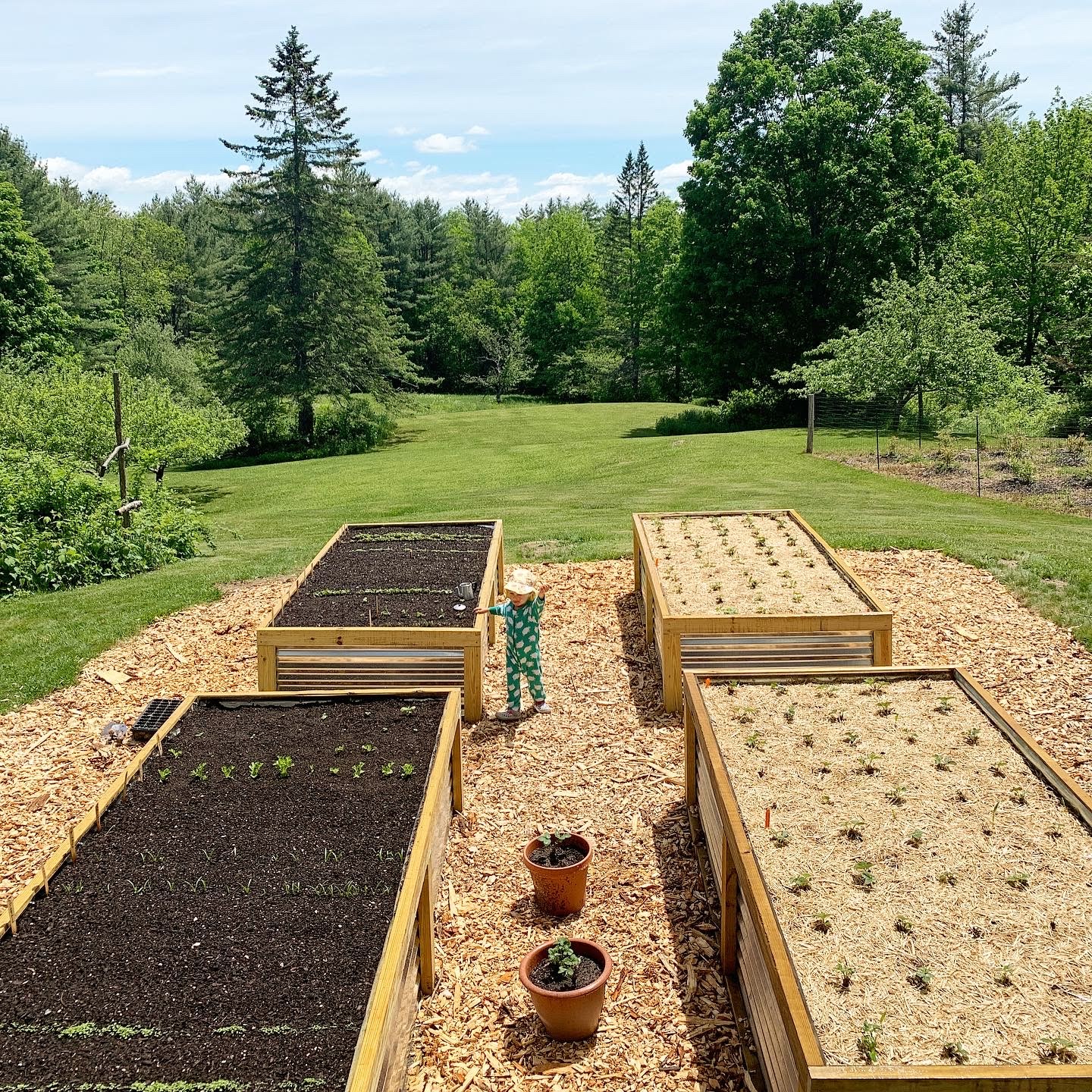
- The Porch-Adjacent Raised Beds: Built in 2020, these four beds focus on high-yield, accessible crops like strawberries, herbs, and greens. Their proximity to the house makes them a convenient, low-stress resource for daily meals.
- The "Big" Vegetable Garden: This fenced-in, semi-permanent area features cattle panels for vining crops like snap peas and tomatoes. It is designed to be manageable, providing fresh seasonal produce without demanding the labor of a commercial farm.
- Perennial Food Plots: Managed primarily by Mr. FW, these include an assortment of fruit trees and bushes.
Despite the physical expansion of these plots, the authors maintain a realistic outlook. They note that while they have invested in these systems, the output is often subject to the whims of nature—from late frosts to the "Clever Varmint Patrol" (CVP), the local wildlife that frequently raids the harvest before the humans can reach it.
The Economic and Practical Implications of Preservation
The article highlights a critical distinction between "homesteading for sustenance" and "homesteading for pleasure." For the Frugalwoods, the primary goal of the lifestyle shift was to reclaim time, joy, and freedom.

When it comes to preservation, they have moved away from the pressure to can 100 quarts of every crop. They now recognize that over-processing food—to the point where it becomes a burden or a chore that must be forced upon friends as gifts—is a sign of misalignment. "There is such a thing as over-gifting your preserved foods," they warn.

Instead, they emphasize the importance of supporting local neighbors who have chosen farming as a full-time profession. By buying from local producers, the authors not only secure high-quality food but also foster community resilience, acknowledging that their neighbors are often more efficient and skilled at large-scale production than they are.

Re-evaluating the Definition of Success
The journey from 2016 to 2023 represents a transition from "idealistic perfectionism" to "intentional acceptance." The authors emphasize that the pressures of modern society—which often demand productivity in every facet of life—are not magically erased by a move to the countryside. One must consciously reject those pressures in the garden just as one must in the office.

The final takeaway is one of gratitude. The homestead is no longer a site of struggle for self-sufficiency, but a place for balance. The authors still garden, they still preserve small batches of apple sauce, and they still involve their children in the process to teach valuable skills. But the "race to the ultimate homesteader" has ended.

"I’ve realized that the pressure for perfection isn’t limited to school or traditional jobs—it can take over anything," the authors conclude. "So we’ll plant our little plants this year and maybe remember to weed and water them. And I might can a few quarts of apple sauce. Or I might not. And either way? We will still be grateful to live out here."

This reflection serves as a vital reminder to those interested in the homesteading movement: the true measure of success is not how many jars of vegetables you line up on your pantry shelves, but how much time you have left over to enjoy the life you’ve built. By letting go of the requirement to do it all, the Frugalwoods have, in effect, achieved a more sustainable and fulfilling version of their dream than the one they initially set out to build.