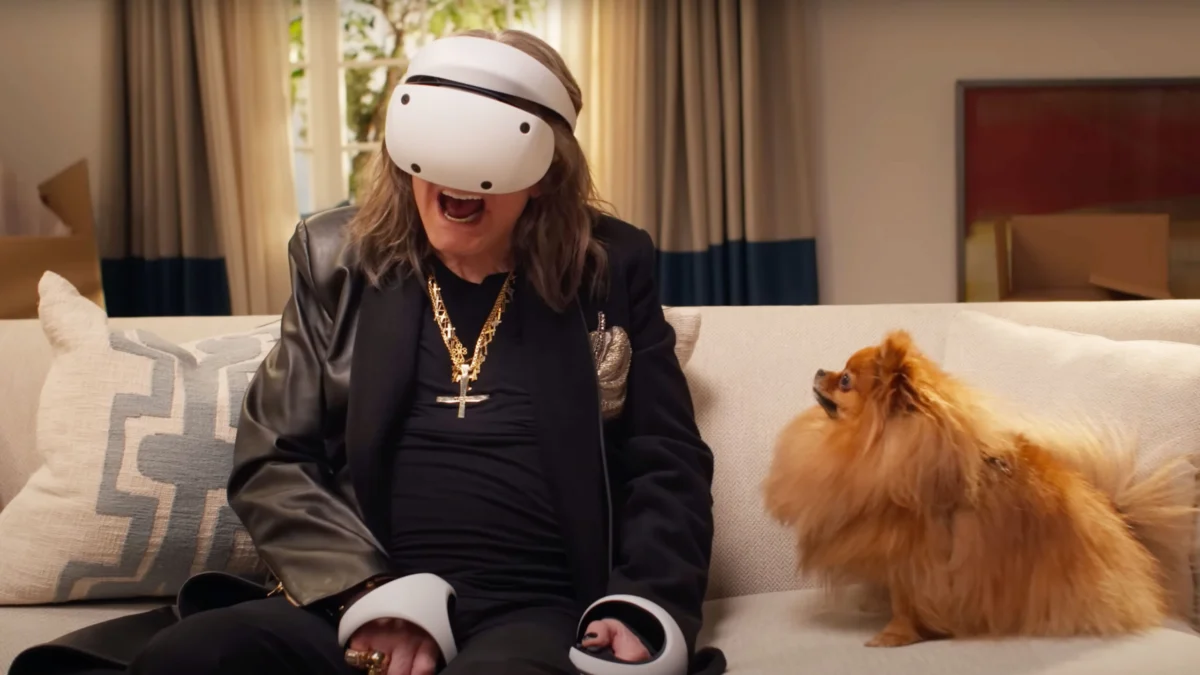
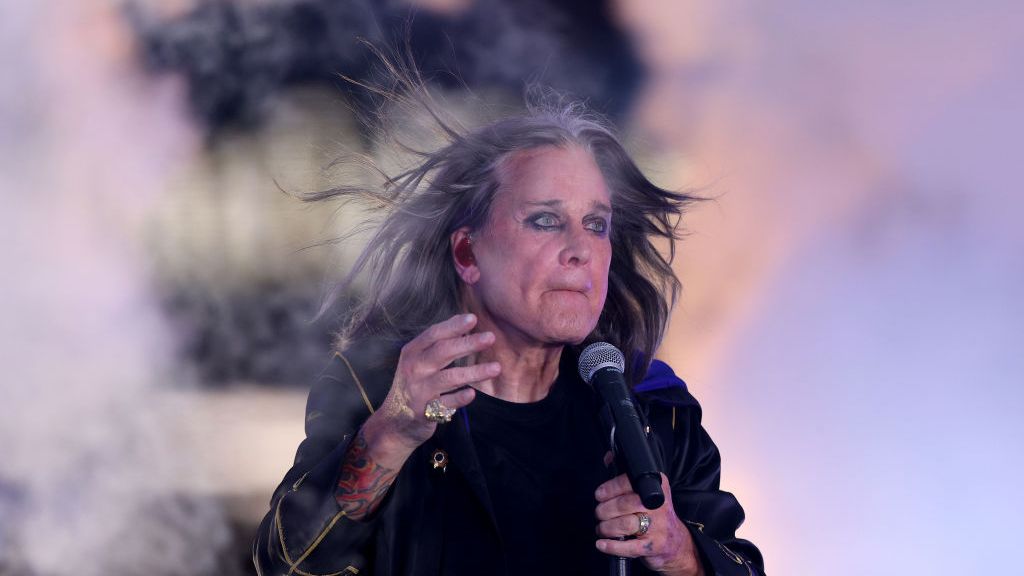
In an age where generative artificial intelligence can synthesize a symphony in seconds, paint a masterpiece from a single prompt, and "iron the air" of every digital creation, a seemingly unlikely philosopher has emerged to challenge the status quo: Ozzy Osbourne. On the anniversary of his passing, the "Prince of Darkness" is being remembered not just for his contributions to heavy metal, but for his profound insights into the nature of human artistry—insights that are proving more relevant today than ever before.
As the creative industries grapple with an existential shift brought on by the rapid integration of AI, Osbourne’s 2011 interview with The Guardian acts as a manifesto for the analog soul. His frustration with the hyper-polished, sterile nature of modern recording remains a vital warning: when we remove the "friction" of creation, we risk losing the very thing that makes art resonate—the human element.
The Genesis of the Critique: The Analog Philosophy
Ozzy Osbourne’s career was defined by the raw, kinetic energy of the 1970s and 80s rock scene. In the aforementioned interview, he reflected on the legendary sessions with the late, great guitarist Randy Rhoads. For Osbourne, the magic wasn’t in the technical perfection of a studio take; it was in the visceral, tactile reality of the music.
"Rock music is not meant to be perfect," Osbourne stated, reflecting on the classic analog recording process. "Randy Rhoads loved hearing his fingers slide up and down the strings. Nowadays everyone irons the fucking air, it’s all about technology."
This observation captures the fundamental divide between human-led creation and algorithm-driven output. When a guitarist slides their fingers across a string, there is a micro-second of physical resistance—a "flaw" that signifies labor, intent, and physical presence. In the digital age, software is designed to remove that noise. We are entering an era where we have the technical capability to remove every "imperfection" from our work, but in doing so, we are effectively sanitizing the soul out of our creative output.
Chronology of a Creative Shift: From Analog to Algorithmic
To understand the current tension, we must look at the timeline of creative automation.
- The 1980s–1990s: The Digital Dawn: The rise of Digital Audio Workstations (DAWs) and desktop publishing software democratized creation but introduced the first wave of "grid-snapping." Perfection became easier to achieve, and the "human feel" began to be treated as a variable to be corrected rather than a feature to be preserved.
- The 2000s: The Era of Optimization: As the internet accelerated, the demand for content skyrocketed. "Good enough" became the standard, and tools were developed to speed up workflows at the expense of nuance.
- 2020–Present: The Generative Explosion: The arrival of sophisticated Large Language Models (LLMs) and diffusion-based image generators marked a paradigm shift. We moved from tools that assist the human to tools that replace the human intent entirely.
This progression has led to a market saturated with high-fidelity, low-friction content. We are currently witnessing a "content glut," where the ease of production has decoupled the effort of creation from the value of the result.
Supporting Data: The Cost of Efficiency
Recent studies and industry surveys reflect a growing anxiety among creative professionals. A 2025 analysis of creative workflows found that while 78% of designers use AI to speed up their ideation process, a staggering 62% feel that their final output lacks the "distinctive character" of their earlier, manual work.
The issue is not the utility of these tools, but the psychological reliance on them. Panels of AI-integrated creatives have begun to report a phenomenon of "creative atrophy." Professionals who habitually rely on automation for the initial brainstorming and drafting phases report that their cognitive ability to "struggle through" a concept—the very process where creative breakthroughs occur—has diminished.
Furthermore, user sentiment analysis on digital art platforms indicates a growing consumer fatigue toward "hyper-smooth" imagery. Much like the resurgence of vinyl records—valued precisely for their warmth, crackle, and physical imperfections—there is an emerging market preference for "authored" work that bears the marks of human labor.
Official Responses and Industry Sentiment
The creative industry remains deeply divided. On one side of the spectrum, tech-forward agencies argue that AI is merely the next evolution of the paintbrush. They contend that by offloading the "grunt work" to AI, artists are liberated to focus on higher-level conceptualization.
However, voices from the traditional arts and craft sectors offer a counter-narrative. As noted in the ongoing discourse regarding the "AI Divide," many designers are calling for a return to "intentional friction." This involves intentionally limiting the use of automation in the early stages of a project to ensure that the fundamental idea is born from human perspective rather than statistical probability.
Industry leaders in music production are also echoing Osbourne’s sentiment. Many high-end studios are actively marketing "analog-first" workflows, emphasizing that the "human texture" of a recording—the slight tempo fluctuations, the room noise, the un-quantized drum hit—is what makes a listener feel connected to the artist.
Implications: The Future of Creative Integrity
If we follow the path of least resistance, we risk a future defined by aesthetic homogeneity. When everyone uses the same tools, trained on the same data sets, the "average" becomes the ceiling.
1. The Value of the "Flaw"
In a world of perfect AI, the flaw becomes a luxury good. Just as hand-stitched clothing holds more value than mass-produced garments, art that displays evidence of the human hand—the shaky line, the unconventional chord progression, the slightly off-center composition—will become the new marker of authenticity.
2. The Return to Process-Oriented Work
Creatives must learn to guard their process. This means distinguishing between "workflow optimization" (using tech to handle boring tasks) and "creative delegation" (using tech to handle the actual thinking). The latter is where we lose our edge. By mindfully pulling back from automation, we allow our own cognitive patterns—our unique biases, experiences, and errors—to shape the work.
3. The Human-AI Hybrid Model
The most successful creatives of the next decade will likely be "curators of friction." They will use AI for the heavy lifting but will aggressively "humanize" the results. This might mean taking an AI-generated draft and manually deconstructing it, introducing intentional mistakes, or re-recording elements to inject the physical "slide of the fingers" that Ozzy so fondly remembered.
Conclusion: Embracing the Chaos
Ozzy Osbourne’s reflection serves as a timeless reminder: perfection is the enemy of resonance. In the context of the AI revolution, we are being handed the tools to eliminate every obstacle in the creative process. However, those obstacles—the struggle to find the right word, the difficulty of mastering a chord, the frustration of a sketch that isn’t quite right—are the crucibles of creativity.
As we move forward, the challenge for the modern artist is not how to make their work faster or more perfect, but how to ensure it remains undeniably, beautifully, and messily human. We must resist the urge to "iron the air." We must protect the friction. Because in the end, it is not the AI-generated perfection that will be remembered, but the idiosyncratic, flawed, and deeply human expressions that define our culture and our humanity.
For more insights into how the creative industry is navigating this transition, read our ongoing coverage on how AI is creating a divide among creatives and explore the latest innovations in our AI in Focus 2026 series.