By Olivia Rosane and Cristen Hemingway Jaynes
Methane is a silent, invisible force, yet it is arguably the most critical variable in the immediate future of our climate. Often overshadowed by the relentless focus on carbon dioxide (CO2), methane is the second most significant contributor to the climate crisis. It is a colorless, odorless hydrocarbon found in everything from the depths of wetlands and the digestive tracts of livestock to the rusted infrastructure of basement furnaces and sprawling fossil fuel extraction sites. As global temperatures continue to climb, understanding the mechanics, sources, and mitigation strategies surrounding methane has shifted from an academic exercise to a survival imperative.
Main Facts: The Potency of Methane
At its core, methane (CH4) is a simple molecule: four hydrogen atoms bonded to a single carbon atom. Despite its simplicity, its impact on the Earth’s thermal balance is profound. Methane acts as a potent greenhouse gas, absorbing solar radiation reflected from the Earth’s surface and trapping it within the atmosphere.

While CO2 remains the primary driver of long-term climate change, methane is significantly more efficient at trapping heat. Over a 20-year period, methane is estimated to be 86 times more potent than CO2 per unit of mass. While its atmospheric lifespan is relatively short—approximately 12 years compared to the centuries that CO2 persists—this brevity is actually a strategic advantage. Because methane breaks down relatively quickly, aggressive cuts in emissions can yield immediate, tangible results in slowing the rate of global warming.
A Chronology of Methane and Industrialization
The history of atmospheric methane is inextricably linked to the trajectory of human development.
- Pre-Industrial Era: Before the Industrial Revolution, methane concentrations were relatively stable, balanced by natural sources like wetlands and natural sinks such as soil oxidation and tropospheric chemical reactions.
- The Industrial Shift: Since the 18th century, human activity has fundamentally altered this balance. The rapid expansion of fossil fuel extraction, intensive livestock agriculture, and large-scale waste management systems have caused methane concentrations to surge.
- The 2021 Glasgow Moment: At the COP26 UN climate conference, the Global Methane Pledge was launched. It marked the first major international consensus to treat methane as a standalone priority, with signatories committing to a 30% reduction in emissions by 2030.
- The Current Crisis: Despite these commitments, 2023 saw atmospheric methane concentrations reach a record-breaking 1,934 parts per billion (ppb)—a 265% increase over pre-industrial levels. Data from 2024 confirms that despite technological advancements, global emissions remain stubbornly above 120 million metric tons per year in the oil and gas sector alone.
Supporting Data: The Sources of the Surge
Human activities are responsible for approximately 60% of all atmospheric methane. The remaining 40% originates from natural sources, such as wetlands, termites, and geological seeps. However, it is the human-driven portion that is causing the most concern.

1. Agriculture (40%)
Livestock management is the largest single human source, driven primarily by "enteric fermentation"—the process by which ruminants like cows and sheep digest food, releasing methane as a byproduct. Furthermore, rice cultivation in flooded paddies creates oxygen-poor environments where methanogenesis flourishes, accounting for roughly 8% of human-caused emissions.
2. Fossil Fuels (35%)
The extraction, transport, and combustion of oil, gas, and coal are massive contributors. Methane leaks during the "venting" of unwanted gas or through faulty pipeline infrastructure are frequent. Recent satellite data has exposed the existence of "super-emitters"—specific, massive leaks from oil fields and mines that account for a disproportionate amount of total global leakage.
3. Landfills and Waste (20%)
As urbanization accelerates in developing nations, methane from decomposing organic waste in landfills and inadequately treated wastewater is projected to grow faster than any other sector, with solid waste volume expected to rise by 73% by 2050.

Official Responses and the "Bridge Fuel" Myth
For years, the fossil fuel industry promoted natural gas as a "bridge fuel," arguing that because it produces less CO2 than coal when burned, it serves as a cleaner transitionary energy source. However, this narrative is increasingly under fire.
Scientific analysis, including studies from the Department of Energy, has revealed that methane leaks—often vastly underestimated in corporate reports—effectively negate the climate benefits of natural gas. If even a small percentage of methane escapes during the extraction and transportation of Liquefied Natural Gas (LNG), its global warming potential over a 20-year period can exceed that of coal.
In response to these findings, environmental groups and climate scientists are calling for an immediate halt to the construction of new LNG export terminals. Activists like Bill McKibben have warned that the current "build-out" of LNG infrastructure in the U.S., Canada, and Australia threatens to lock the world into decades of climate-warming infrastructure, effectively overwhelming any progress made in renewable energy adoption.

Implications: The Feedback Loops and Public Health
The danger of methane is compounded by "positive feedback loops." As the climate warms, it triggers natural systems to release more methane, which in turn causes further warming.
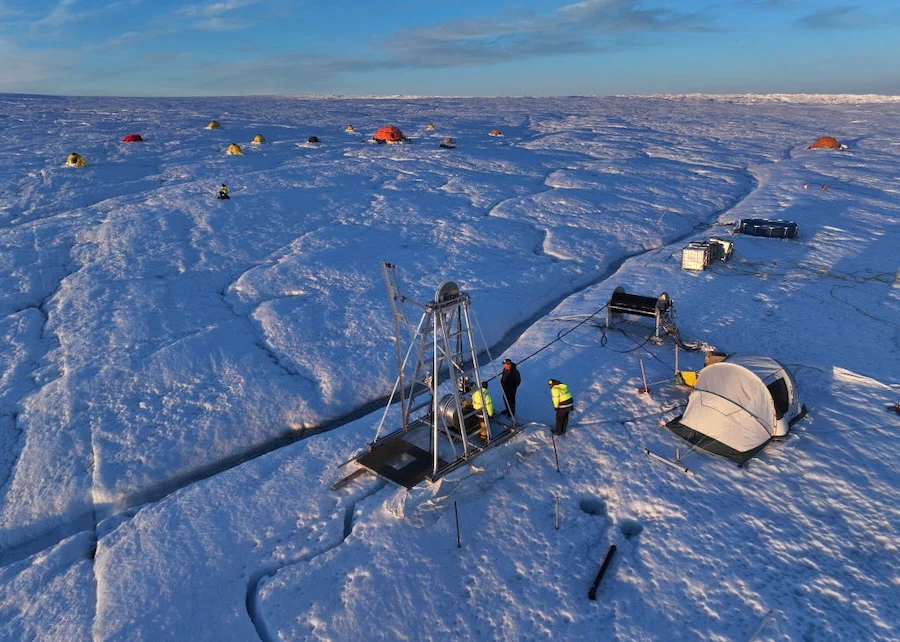
- The Permafrost Threat: Arctic permafrost holds vast quantities of organic matter and methane hydrates. As these frozen soils thaw, they release trapped carbon and methane, creating a self-reinforcing cycle of warming. Scientists estimate that Arctic and Boreal methane emissions have already increased by 9% since 2002.
- Wildfire Dynamics: Increasingly frequent and severe wildfires act as both a victim and a driver of the climate crisis. Large-scale fires release massive amounts of stored methane and CO2, simultaneously destroying carbon-sequestering forests.
- Public Health: Beyond heating the planet, methane is a precursor to ground-level ozone. This toxic pollutant is responsible for an estimated half-million premature deaths annually due to respiratory and cardiovascular complications. Every million metric tons of methane mitigated is estimated to prevent thousands of asthma-related emergencies and significant agricultural crop losses.
The Path Forward: Technical and Systemic Solutions
To limit global heating to the 1.5 degrees Celsius threshold set by the IPCC, the world must reduce methane emissions by approximately 34% by 2030. Achieving this requires a two-pronged approach:
Structural Transformation
- Dietary Shifts: Reducing global meat and dairy consumption, particularly in wealthier nations, remains one of the most effective ways to lower enteric methane production.
- Circular Economy: Moving toward zero-waste systems that prioritize composting and organic waste diversion can neutralize landfill emissions.
- Energy Transition: Phasing out fossil fuels in favor of wind, solar, and geothermal power is the only way to permanently eliminate methane emissions from the energy sector.
Technical Mitigations
- Livestock Management: Implementing seaweed-based feed supplements has shown the potential to reduce methane emissions from cattle by up to 82%.
- Infrastructure Repair: Utilizing satellite technology to identify and seal "super-emitter" leaks in oil and gas pipelines is a high-impact, immediate solution.
- Wastewater Upgrades: Modernizing treatment facilities to include secondary and tertiary processes, alongside biogas capture technology, can significantly dampen waste-sector emissions.
Conclusion: A Window of Opportunity
Methane emissions present a unique duality: they are a severe, immediate threat to the stability of our climate, yet they also represent our greatest opportunity for rapid impact. Because methane does not linger in the atmosphere like CO2, the cooling effect of aggressive mitigation would be felt within our lifetimes.

The "implementation gap"—the distance between international pledges and on-the-ground reality—must be closed. While systemic change requires political will and the regulation of powerful industries, individual action also plays a role. By shifting toward plant-forward diets, demanding the electrification of home heating, and supporting grassroots campaigns that challenge the expansion of fossil fuel infrastructure, citizens can force the hands of leaders.
The science is clear: we are running out of time to avert the most catastrophic tipping points. Methane reduction is not a panacea, but it is the most effective lever we have to pull right now. If we act with the urgency that the data demands, we can stop the invisible leak and cool a warming world.