In a significant shift of its product roadmap, the popular journaling platform Day One has announced that its "Labs" feature—a sandbox for experimental, pre-release tools—is once again accessible to Silver-tier subscribers. The move marks a pivot in the company’s relationship with its community, acknowledging the vital role that user feedback plays in the evolution of digital memory-keeping.
Main Facts: Restoring the Sandbox
Effective immediately, users subscribed to the Day One Silver plan can access Labs by updating their application to version 2026.17 or later. This update restores a feature set that had previously been gated behind the higher-priced Gold subscription since March.
Labs serves as a dedicated environment where Day One engineers and designers test unfinished features. The objective is twofold: it allows the development team to validate concepts at scale, and it empowers the most dedicated users—those who journal daily—to influence the trajectory of the software. Crucially, the company has clarified that this is not a new product launch but a strategic reversal. Access to these experimental tools is included in the Silver subscription at no additional cost.
A Chronology of Change
The journey of Day One Labs has been a volatile one, reflecting the complexities of balancing product development with user sentiment.
- The Early Days: Initially, Labs was an integrated component of the Premium (now Legacy) subscription model, allowing a broad base of users to experiment with early-stage features.
- The March Shift: In a move to simplify subscription tiers, Day One migrated Labs access exclusively to the Gold tier. This transition caused immediate friction, as many long-term users who had spent months providing data and feedback on experimental tools suddenly found themselves locked out of the features they helped refine.
- The Community Backlash: Following the March update, the company faced significant, direct feedback from its user base. Subscribers expressed disappointment that their contributions to the product’s growth were being monetized behind a higher paywall.
- The Reconciliation: Today’s announcement is a direct response to that feedback. By returning Labs to the Silver tier, Day One is acknowledging that the "co-creation" aspect of their product is not a luxury feature, but a fundamental part of their development philosophy.
Supporting Data: Why "Journaling Out Loud" Matters
The current iteration of Labs is heavily focused on a concept the company calls "journaling out loud." Data suggests that while many users find the act of typing to be a reflective practice, it can also act as a bottleneck. The "blank page syndrome" often prevents users from maintaining a consistent habit.
To address this, the current Labs environment features two primary tools:
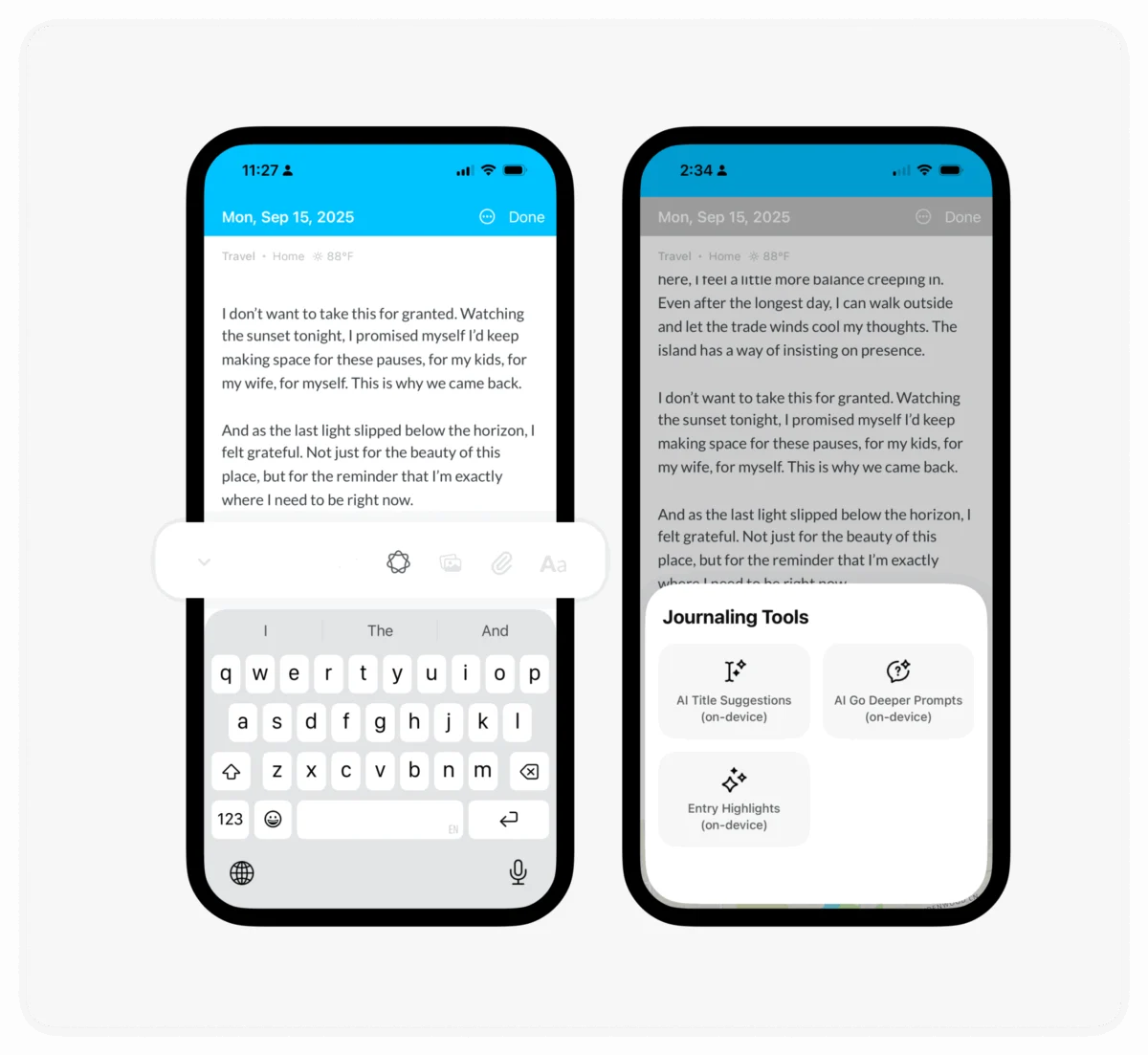
- Rebuilt Audio Recorder: This tool allows users to record audio directly into an entry. It leverages AI to generate summaries, ensuring that users can revisit the "shape" of a six-minute recording without needing to listen to the entire file.
- AI Format Transcription: This tool processes raw, spoken-word transcriptions, automatically applying punctuation, grammar, and even suggesting titles.
The company notes that these tools are specifically designed to lower the barrier to entry for journaling. By removing the friction of manual transcription and editing, they hope to improve retention rates among users who otherwise might abandon the app.
Official Responses and Privacy Stance
The return of Labs brings with it renewed concerns regarding artificial intelligence and data privacy. Day One has been proactive in addressing these, particularly as they introduce AI-driven summaries and transcriptions.
"Any Labs feature that sends your writing somewhere tells you first and asks," the company stated in an official release. They maintain that nothing is processed without explicit user consent, nothing is stored permanently on their servers for extraneous purposes, and—critically—no user data is utilized to train large language models.
The company has also established a strict "three-touch" communication policy regarding future changes:
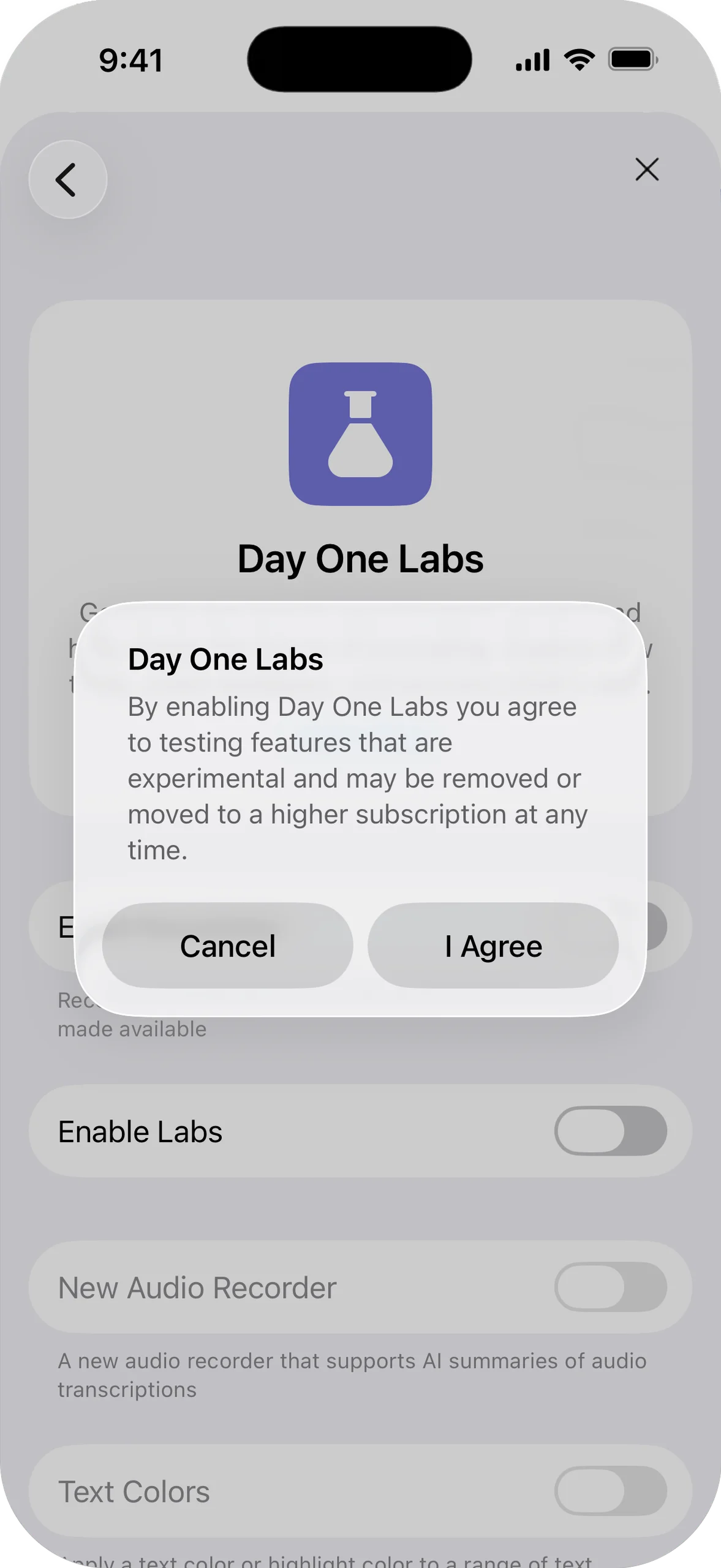
- Opt-in Confirmation: When enabling Labs, users are clearly warned that features are experimental and subject to removal or migration to higher tiers.
- In-App Badging: Every experimental feature carries a visible "Labs" badge, ensuring users are never under the impression they are using a finalized, stable product.
- Advance Warning: Before any feature graduates to a permanent status or shifts in subscription tier, the company commits to notifying users well in advance, ensuring no subscriber is caught off guard by a sudden paywall or feature removal.
Implications for the User Experience
The implications of this move go beyond simple subscription access. It signals a shift in how Day One views its user base: not merely as consumers of a finished product, but as participants in a continuous development cycle.
The Workshop Model
Labs is not a "beta" in the traditional sense. It is an active workshop. When a few hundred users test a feature, the developers learn if it functions correctly. When thousands test it, they learn if it belongs in the daily lives of their users. By including Silver subscribers in this process again, the company increases its sample size, leading to more robust data and, theoretically, a more polished final product for the entire ecosystem.
Managing Expectations
However, the company remains firm that the volatility of Labs is a feature, not a bug. "Some of what we test graduates out of Labs into the app, and some of that lands in Gold," the company explained. They have set a precedent that a feature a user relies on today may eventually require a subscription upgrade in the future. By maintaining transparency, they hope to mitigate the frustration that arose during the previous transition.
Platform Availability
Currently, the Labs experience is fragmented. While iPhone, iPad, Mac, and Web users can access the experimental tools, Android and Windows users remain on the outside looking in. The company has stated that as soon as features are ready for those platforms, they will be deployed, though they have not provided a specific timeline for cross-platform parity.
Conclusion: A New Chapter for Community Engagement
The return of Labs to the Silver tier is a rare example of a tech company walking back a monetization strategy in favor of community goodwill. It reinforces the idea that for a digital journal, the value is not just in the software code, but in the trust between the developer and the person holding the pen—or the microphone.
For those eager to participate, the process is straightforward: ensure the app is updated, navigate to the settings, and toggle on Labs. As the company invites its users back into the workshop, the success of these experimental features will rest on the feedback provided by the very people who rely on Day One to document their lives. Whether these tools eventually become standard in the Silver tier or graduate to Gold, the "journaling out loud" initiative serves as a litmus test for how much users are willing to embrace AI in their most private spaces.
As the company continues to iterate, the "Share feedback" button at the bottom of the Labs screen remains the most important interface element in the app—a direct line from the user’s experience to the developer’s workbench. In a digital world that often feels like a finished product, Day One is betting that its users prefer the messy, evolving, and collaborative nature of a workshop.