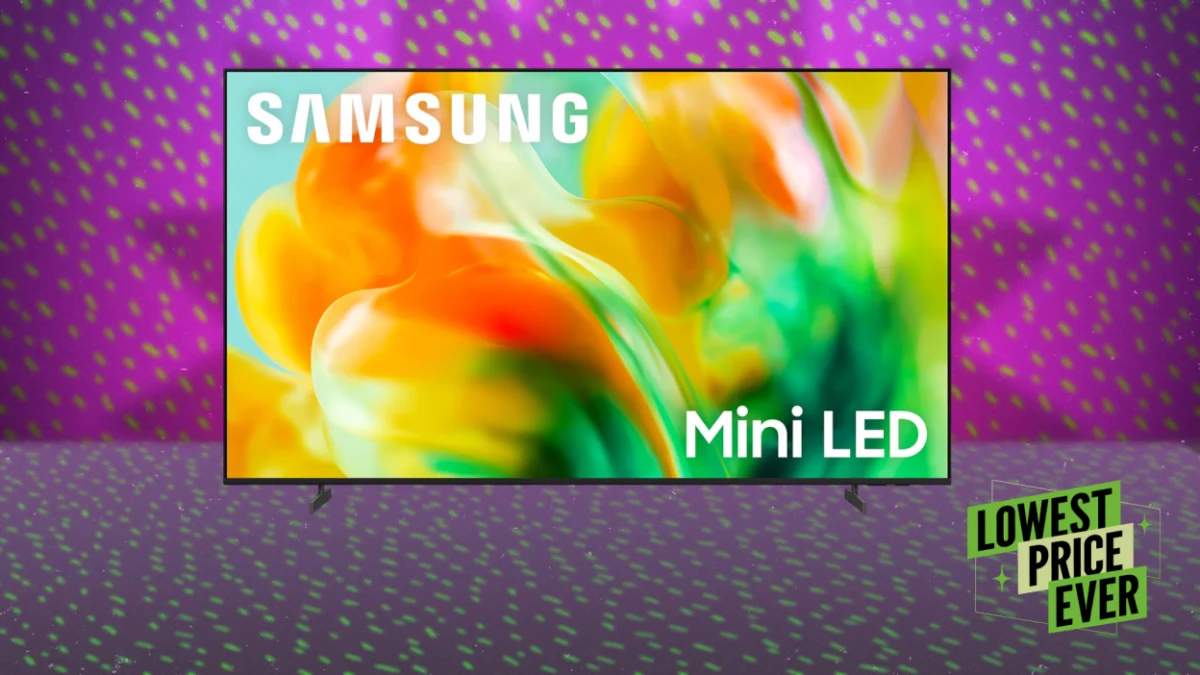
In the rapidly evolving landscape of home entertainment, the line between "budget-friendly" and "premium performance" continues to blur. Samsung’s latest 2026 release, the M80H series, arrives at a critical juncture for consumers looking to upgrade their living room setup without the eye-watering price tag of flagship OLED or high-end QLED models. Currently, the 65-inch Samsung M80H is available for $647.99—a significant reduction from its original $797.99 MSRP.
As streaming services move toward higher bitrates and gaming consoles demand more from display hardware, the M80H aims to serve as the ideal middle-ground solution. But does it deliver, or is it a compromise too far?
Main Facts: Breaking Down the M80H Specifications
The Samsung M80H is positioned as an entry-level 4K smart television that leans heavily on the brand’s proprietary software ecosystem. At its core, the TV features a Mini LED backlight system, a technology usually reserved for more expensive tiers.
Key specifications include:
- Display: 4K UHD resolution with Pure Spectrum Color technology.
- Processor: NQ4 AI Gen2 processor, specifically tuned for 4K upscaling.
- Refresh Rate: Native 144Hz, supporting variable refresh rate (VRR) and AMD FreeSync Premium.
- Smart Platform: Tizen OS with integrated Samsung Vision AI.
- Connectivity: Three HDMI 2.1 ports, built-in Alexa, and Apple AirPlay compatibility.
The 65-inch form factor has long been considered the "goldilocks" zone for modern residential media rooms. It provides enough surface area to create an immersive cinematic experience, yet it avoids the spatial dominance that makes 75-inch or 85-inch screens difficult to integrate into standard apartment living rooms or smaller media consoles.
Chronology of the M80H Release and Market Reception
The rollout of the 2026 Samsung display lineup began in the first quarter of the year, with the M80H serving as the accessible workhorse of the collection.
- Q1 2026: Samsung announces the M80H series, emphasizing the transition of AI-driven upscaling from their flagship Neo QLED line to more consumer-accessible models.
- Mid-2026: Early reviews highlight the fluid motion handling of the 144Hz panel but note the absence of local dimming.
- September 2026: Amazon and major retailers launch aggressive promotional pricing, bringing the 65-inch model to the $647.99 price point and offering deeper discounts on the 75-inch variant, which currently sees a 33% price reduction.
This pricing strategy suggests that Samsung is aggressively targeting the market segment currently dominated by mid-range competitors, leveraging its brand recognition in software and AI processing to sway fence-sitting buyers.
Supporting Data: Understanding the Performance Trade-offs
To evaluate whether the M80H is the right purchase for your specific needs, one must look at both the technological triumphs and the inevitable corners cut to reach this price point.
The AI Advantage
The inclusion of the NQ4 AI Gen2 processor is arguably the M80H’s greatest asset. In an era where much of the content consumed is still streamed at 1080p or lower, the ability of the TV to "clean up" source material is paramount. Samsung’s Auto HDR Remastering feature works in tandem with this chip, artificially expanding the dynamic range of standard dynamic range (SDR) content to mimic HDR10+ quality. While it is not a replacement for native high-definition masters, it provides a discernible clarity boost to older cable programming and classic streaming library titles.

The Limitations of the "Mini LED" Label
Consumers should exercise caution regarding the term "Mini LED." While the M80H utilizes Mini LED backlighting, it lacks local dimming. In high-end televisions, local dimming allows the TV to turn off specific zones of the backlight to create "true blacks." Without this, the M80H relies on global dimming.
- Impact on HDR: Brightness in HDR scenes may feel capped, and in dark room environments, blacks may appear as a deep charcoal or dark gray.
- Environment Suitability: This display is optimized for well-lit living rooms where ambient light can mask the lack of deep contrast. It is less ideal for a dedicated home theater basement where the room is pitch black.
Gaming Performance
For the gamer, the 144Hz refresh rate is a standout feature. Most budget TVs are capped at 60Hz or 120Hz. The inclusion of AMD FreeSync Premium ensures that screen tearing is minimized during intense gaming sessions. However, the panel does exhibit slight motion blur in high-speed, fast-moving scenes, which may be a point of contention for competitive first-person shooter (FPS) players. For casual gaming and open-world exploration, however, the M80H is more than capable.
Official Perspectives and Industry Implications
Samsung has positioned the M80H as a gateway to its "connected home" ecosystem. By integrating the Gaming Hub and Tizen’s vast library of streaming apps, the company is betting that the user experience—not just the raw hardware specs—will drive sales.
Industry analysts note that the 2026 market is defined by "Value-Plus" offerings. Consumers are no longer satisfied with "cheap" displays; they demand smart features and reliable upscaling. By bringing features like the NQ4 processor and 144Hz refresh rates down to the $600-$700 price bracket, Samsung is putting immense pressure on smaller, budget-focused TV brands that cannot match the company’s R&D investment in AI software.
However, the limited number of HDMI ports—just three—remains a sticking point for power users. In an era where a household might have a soundbar, a PlayStation 5, an Xbox, and a streaming stick, three ports force the user to invest in an HDMI switcher or prioritize connections.
Implications for the Consumer
If you are currently using a 50-inch or smaller TV and are looking to upgrade, the 65-inch M80H at its current discount is one of the most compelling value propositions of the year.
Who is this for?
- The Casual Viewer: If your primary use is streaming services (Netflix, Disney+, Max) and cable TV, the AI upscaling and natural color reproduction of the M80H will be a significant upgrade.
- The Casual Gamer: If you play adventure or RPG games, the 144Hz refresh rate and FreeSync support provide a smooth, enjoyable experience that punches above its price class.
Who should look elsewhere?
- The Cinephile: If you are a devotee of dark-room movie watching, the lack of local dimming will be noticeable. You would be better served by a more expensive model with a Full Array Local Dimming (FALD) system or an OLED panel.
- The Competitive Gamer: If your primary focus is high-refresh, low-latency competitive gaming, you may want to look for a model with a faster response time to mitigate the motion blur noted in this series.
Final Verdict
The Samsung M80H represents a pragmatic choice for the modern household. It doesn’t claim to be the best display on the market, but it does claim to be the best display for the money. By focusing on the essential elements—smart upscaling, a high refresh rate, and a user-friendly OS—Samsung has crafted a television that fits the lives of most consumers. With the 75-inch model also seeing a significant 33% discount, those with the wall space for a larger footprint may find the upgrade to be the most "cinematic" value proposition available this autumn.